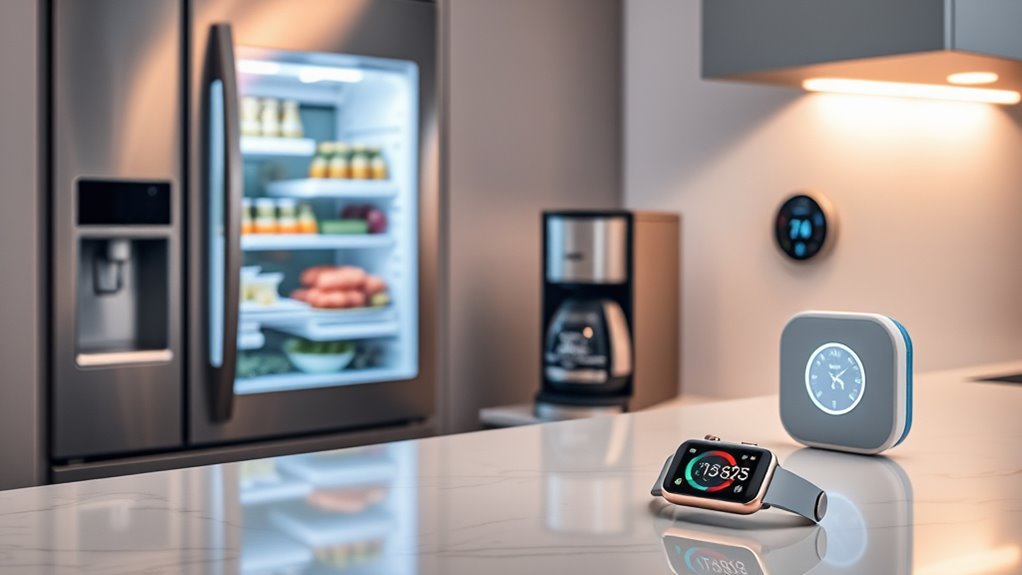

AI has transformed everyday gadgets into smarter, more intuitive tools. Voice-activated virtual assistants understand natural language and can customize shortcuts for routine tasks. Smart thermostats learn your preferences to optimize energy use, while AI security cameras detect and recognize faces for better monitoring. Wearable devices track health metrics accurately, and adaptive robots personalize support based on your actions. Keep exploring to discover how these technologies continue to evolve and enhance your daily life.
Key Takeaways
- Voice-activated virtual assistants enhance gadget responsiveness through advanced natural language understanding and customizable voice commands.
- Smart thermostats learn user preferences to optimize energy use and allow remote control via smartphones.
- AI-powered security cameras utilize facial recognition and intelligent detection for real-time, personalized monitoring.
- Wearable devices provide accurate health metrics and personalized insights using biometric sensors and privacy-conscious data handling.
- Adaptive learning robots personalize support and feedback, promoting independence and continuous improvement in user interactions.

EVEO Screen Cleaner Spray - Large Screen Cleaner Bottle - TV Screen Cleaner, Computer Screen Cleaner, for Laptop, Phone, Ipad - Computer Cleaning kit Electronic Cleaner (1 Pack)
Screen Cleaner is Your Screen’s New Bestfriend! - EVEO is proud to present a screen cleaner that’s perfectly...
As an affiliate, we earn on qualifying purchases.
Voice-Activated Virtual Assistants
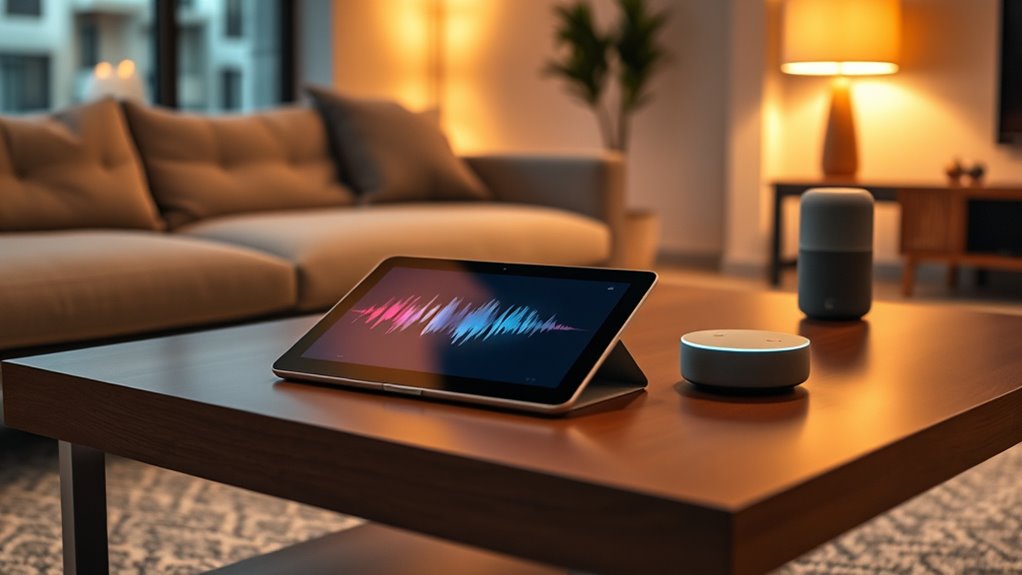
Voice-activated virtual assistants have become a common feature in many everyday gadgets, making it easier for you to control devices and access information hands-free. With advanced natural language understanding, these assistants interpret your spoken commands accurately, even when phrased casually. You can customize voice commands to fit your preferences, simplifying interactions and enhancing convenience. Whether you want to send a message, play music, or get weather updates, these assistants adapt to your way of speaking. Voice command customization allows you to create shortcuts for routine tasks, saving time. The seamless comprehension of natural language understanding ensures smooth conversations, making the technology feel more intuitive. Additionally, integrating smart appliances with virtual assistants enables a more connected and efficient kitchen experience. To improve your experience, these assistants often employ privacy management features to safeguard your personal information. As these devices become more integrated with home energy systems, they can help optimize your energy usage and improve overall efficiency. Moreover, ongoing advancements in artificial intelligence are continually expanding the range of tasks virtual assistants can perform, making them more adaptive and capable of handling complex requests. Overall, these virtual assistants transform your gadgets into smarter, more responsive tools tailored to your daily needs.

Screen Cleaner Spray (16oz - 473ml) – Best Large Cleaning Kit for LCD LED OLED TV, Smartphone, iPad, Laptop, Touchscreen, Computer Monitor, Electronic Devices, Microfiber Cloth Wipes and 2 Nozzles
SCREEN CLEANER SPRAY and cloth are designed for the high-end devices and works flawlessly for all electronic screens,...
As an affiliate, we earn on qualifying purchases.
Smart Home Thermostats
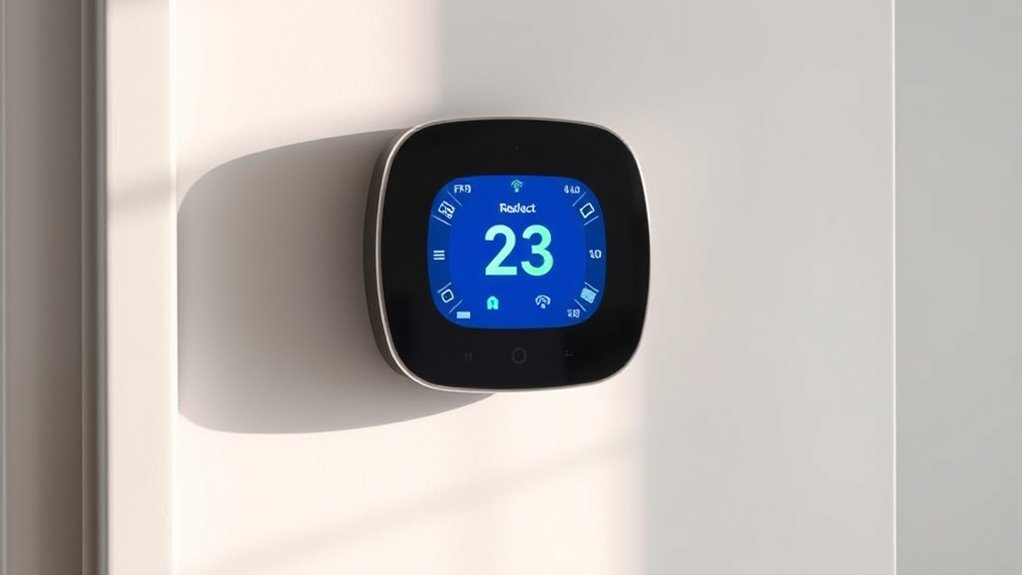
Smart home thermostats are revolutionizing how you manage indoor comfort by learning your preferences and adjusting temperatures automatically. They use AI to optimize energy efficiency, helping you save on utility bills without sacrificing comfort. With user customization, you can set schedules, preferred temperatures, and even control the thermostat remotely through your smartphone. These devices analyze your daily routines, adjusting heating and cooling based on occupancy patterns, which reduces unnecessary energy use. Some models even detect when you’re away and automatically lower or raise the temperature to conserve energy. By integrating AI, smart thermostats make it simple to maintain a cozy home while being mindful of energy consumption. Additionally, understanding essential oils and their benefits can enhance your home environment, promoting relaxation and health alongside smart technology. Incorporating energy-saving features can further maximize efficiency and reduce environmental impact, making your home both comfortable and sustainable. Recognizing the importance of advanced sensor technology can also improve the accuracy and responsiveness of these devices, ensuring optimal comfort at all times. Moreover, utilizing smart home integration allows for seamless control with other connected devices, enhancing overall home management. Incorporating field‑of‑view considerations into your smart thermostat setup can improve sensor placement for more accurate environmental monitoring.

Screen Mom Screen Cleaner Spray and Microfiber Cloth 16oz Screen Cleaner Spray and Wipe for TV, Laptop, Computer, Phone, iPad, Car Screen Cleaning Kit Electronic Cleaner Spray
STREAK FREE FORMULA FOR CRYSTAL CLEAR SCREENS: Screen Mom tv cleaner spray and cloth advanced streak-free screen cleaner...
As an affiliate, we earn on qualifying purchases.
AI-Powered Security Cameras

AI-powered security cameras enhance home safety by providing real-time monitoring and intelligent detection features. With facial recognition, you can identify familiar faces and alert authorities if an unfamiliar person is detected. Motion detection allows the camera to instantly respond to movement, reducing false alarms and ensuring you’re always aware of activity around your home. These cameras automatically differentiate between humans, animals, and objects, minimizing unnecessary notifications. To maximize their effectiveness, consider these key features: 1. Facial recognition for personalized alerts. 2. Advanced motion detection to filter out irrelevant movements. 3. Cloud storage options for easy access to recorded footage. Incorporating smart home integration can further streamline your security system and enhance automation. Additionally, many of the top-rated home security systems include user-friendly installation, making it easier for homeowners to set up and manage their security devices without professional help. Ensuring proper security camera placement is also essential for optimal coverage and effectiveness, and understanding privacy policies can help you manage data security and user consent considerations. Proper network security is crucial to prevent unauthorized access to your security footage and connected devices.

INSIGNIA 43" Class F50 Series LED 4K UHD Smart Fire TV, Voice Remote with Alexa, Stream Live TV Without Cable
4k Ultra HD (2160p resolution): Enjoy breathtaking HDR10 4K movies and TV shows at 4 times the resolution...
As an affiliate, we earn on qualifying purchases.
Intelligent Wearable Devices
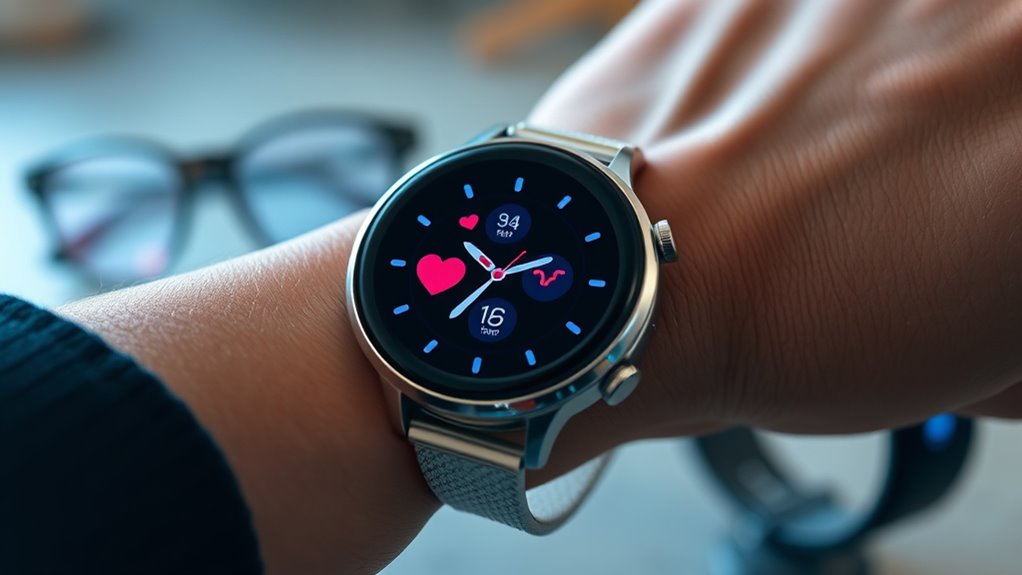
Intelligent wearable devices are transforming how you monitor your health and stay connected throughout the day. With advanced AI, these gadgets provide accurate fitness tracking, so you can easily keep an eye on your activity levels, calories burned, and sleep patterns. They also excel in health monitoring, detecting irregular heartbeats, tracking oxygen levels, and alerting you to potential health issues early. By continuously collecting and analyzing data, these devices help you make informed decisions about your wellness. Whether you’re jogging, working, or resting, your wearable stays active in the background, providing real-time insights. This smarter tech makes it simple to stay motivated, improve your fitness, and maintain overall health without invasive procedures or constant visits to a doctor. This data analysis enhances the device’s ability to deliver personalized health recommendations and alerts. Additionally, many of these devices incorporate biometric sensors that improve the accuracy of health measurements and enable early detection of potential issues. Moreover, these devices often utilize privacy-conscious data handling practices to protect your sensitive health information while still providing valuable insights. Understanding health data security is essential as these devices become more integrated into daily life, ensuring your personal information remains protected. Incorporating cultural traditions like braai can also inspire unique ways to stay active and engaged with your community, boosting your overall well-being.
Adaptive Learning Robots
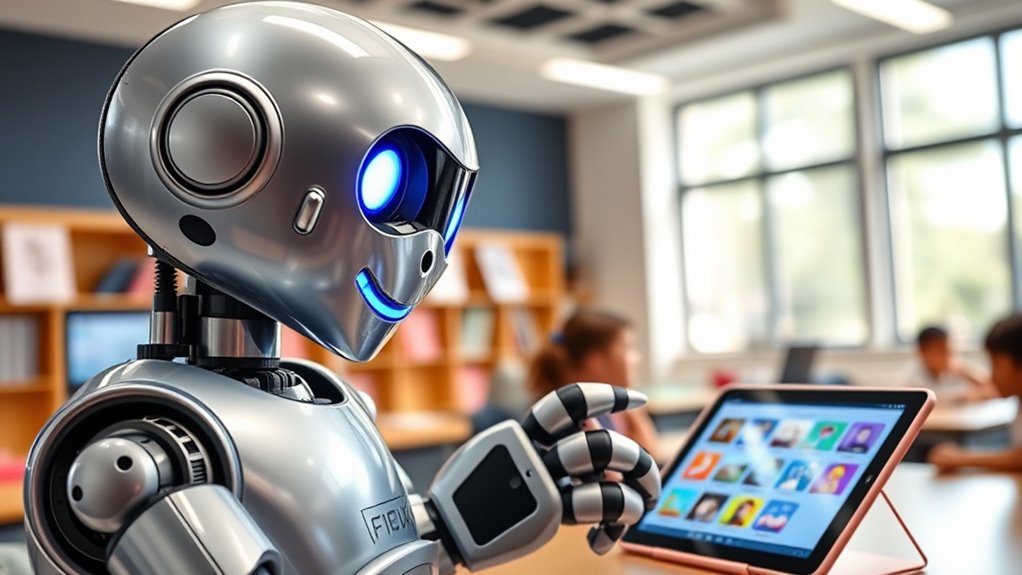
Adaptive learning robots are taking personalized assistance to the next level by adjusting their behavior based on your actions and preferences. These robots use sophisticated algorithms to deliver personalized learning experiences, making interactions more effective and engaging. As you interact with them, they analyze your responses and provide adaptive feedback to improve performance or skills. You can expect these robots to:
- Tailor their responses to your skill level, ensuring continuous growth.
- Adjust their teaching methods based on your learning pace.
- Offer real-time feedback that helps you correct mistakes and reinforce strengths, reducing the risk of infection risks during prolonged use.
- Incorporate self-sufficiency principles by adapting to your unique needs and fostering independence. Additionally, they can utilize adaptive learning algorithms to better personalize the experience over time, which enhances the personalization of the learning process. This ongoing adaptation can also help improve the reliability of the system’s responses, ensuring consistent support.
Frequently Asked Questions
How Do AI Gadgets Protect User Privacy and Data Security?
AI gadgets protect your privacy and data security by following strict privacy compliance standards and using data encryption. They ensure your personal information stays confidential by encrypting data during transmission and storage. You can trust these gadgets to prioritize your privacy, regularly update security protocols, and give you control over your data. This way, your information remains secure, and your privacy is respected while you enjoy smarter, more efficient technology.
Can AI Gadgets Learn and Adapt to Individual User Preferences Over Time?
Yes, AI gadgets can learn and adapt to your preferences over time. They use advanced learning algorithms to analyze your habits, making personalization capabilities stronger with each interaction. As you use your devices, they become smarter, tailoring responses and functions to suit your needs better. This continuous learning process guarantees your gadgets provide a more seamless, intuitive experience, enhancing convenience and usability every day.
What Are the Limitations of AI in Everyday Household Devices?
AI in household devices is like a double-edged sword; it offers convenience but faces limitations. You might find privacy concerns, as these gadgets collect personal data, and adaptability challenges, where devices struggle to fully understand your unique preferences. Sometimes, AI can misinterpret commands or fail to adapt quickly enough, making these smart devices less reliable. Despite their potential, these hurdles remind you that AI isn’t perfect yet.
How Energy-Efficient Are Ai-Powered Gadgets Compared to Traditional Devices?
AI-powered gadgets tend to be more energy-efficient than traditional devices because they optimize energy consumption through smart algorithms. You’ll notice lower power consumption and better power efficiency, as these devices adjust their operation based on usage patterns. By intelligently managing energy, AI gadgets help save electricity, reduce costs, and extend device lifespan, making them a smarter, more sustainable choice for your household.
Are AI Devices Easily Repairable or Upgradeable by Consumers?
Many AI devices make DIY repairs and hardware upgrades a challenge. You often find tightly sealed casings, complex components, and proprietary parts, making upgrades tricky. While some gadgets boast modular designs, most require specialized skills and tools. So, you might feel frustrated trying to repair or upgrade them yourself, often needing professional help. It’s a trade-off between smart features and ease of maintenance, so plan accordingly before purchasing.
Conclusion
You might think these gadgets are just fancy extras, but they truly make daily life easier and more enjoyable. With AI, your devices become smarter and more responsive, saving you time and effort. Don’t worry—these technologies are designed to be user-friendly and secure. Embrace the innovation, and you’ll find your routines smoother and more convenient, proving that smarter tech isn’t just cool—it’s truly helpful in your everyday life.