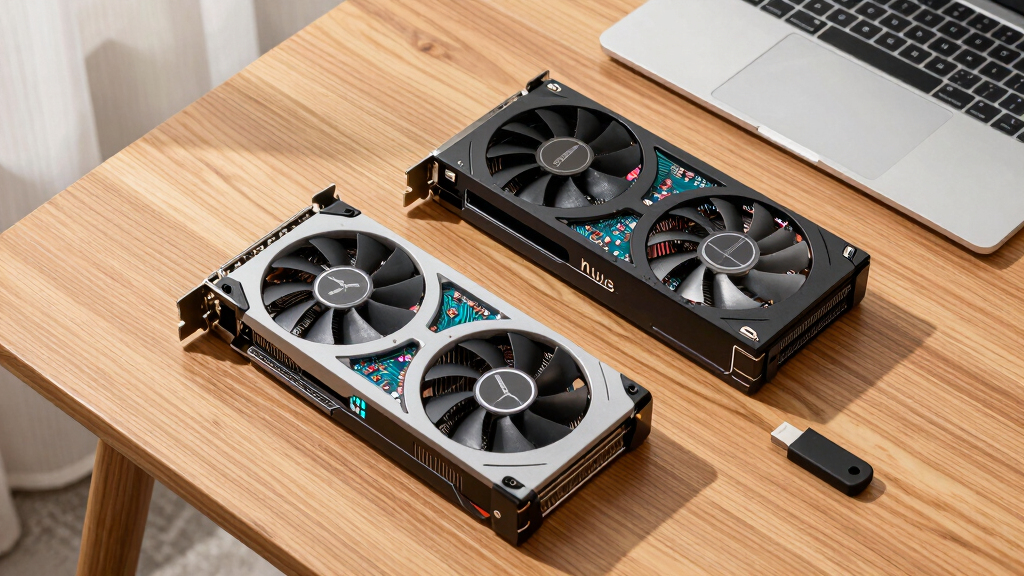

When searching for the best graphics cards for AI, the focus is on raw processing power, memory capacity, and compatibility with AI frameworks. The PNY NVIDIA GeForce RTX™ 5090 OC stands out as the overall top pick, offering exceptional speed and advanced features like DLSS 4 and PCIe 5.0. For those prioritizing efficiency and affordability, the GIGABYTE Radeon RX 9070 XT Gaming OC 16G provides solid performance without breaking the bank. The main tradeoffs in this category typically involve balancing high-end capabilities with cost and power consumption. Continue reading for a detailed breakdown of these options and what makes each one unique.
Key Takeaways
- The NVIDIA RTX 5090 leads in raw AI processing power, but comes with a premium price and high power draw.
- AMD-based cards like the Radeon AI PRO R9700 models excel in VRAM capacity, making them suitable for large-scale AI workloads.
- External GPU options like the AORUS RTX 5090 AI Box offer flexibility but may introduce latency and setup complexity.
- Memory size and bandwidth are critical for handling large datasets, with 32GB VRAM being a common threshold for professional AI tasks.
- Price-to-performance ratio varies widely; mid-tier cards can deliver competitive AI capabilities at a more accessible price point.
| GIGABYTE Radeon AI PRO R9700 AI TOP 32G Graphics Card |  | Best for High-Performance AI Model Training | Memory: 32GB GDDR6 | Architecture: RDNA 4 | Cooling System: Turbo Fan with vapor chamber and copper heatsink | VIEW LATEST PRICE | See Our Full Breakdown |
| ASUS Turbo AMD Radeon AI Pro R9700 Graphics Card with RDNA 4 Architecture and 32GB VRAM |  | Best for Reliable Long-Running AI Workloads | Architecture: RDNA 4 | VRAM: 32GB GDDR6 | Thermal Design: Phase-change GPU thermal pad, diecast shroud | VIEW LATEST PRICE | See Our Full Breakdown |
| PNY NVIDIA GeForce RTX™ 5090 OC Triple Fan, Graphics Card (32GB GDDR7, 512-bit, Boost Speed: 2527 MHz, PCIe 5.0, HDMI/DP 2.1, 3.5-Slot, NVIDIA Blackwell Architecture, DLSS 4) |  | Best for Cutting-Edge AI and Creative Workflows | GPU Clock Speed: 2017 MHz | Memory: 32GB GDDR7 | Memory Bus: 512-bit | VIEW LATEST PRICE | See Our Full Breakdown |
| GIGABYTE Radeon RX 9070 XT Gaming OC 16G Graphics Card |  | Best for High-Resolution Gaming and AI Hybrid Workloads | Graphics Coprocessor: AMD Radeon RX 9070 XT | RAM: 16 GB GDDR6 | GPU Clock Speed: 3060 MHz | VIEW LATEST PRICE | See Our Full Breakdown |
| GIGABYTE AORUS RTX 5090 AI Box External GPU |  | Best High-End External AI-Ready GPU | Graphics Coprocessor: NVIDIA GeForce RTX 5090 | RAM: 32 GB GDDR7 | GPU Clock Speed: 2407 MHz | VIEW LATEST PRICE | See Our Full Breakdown |
More Details on Our Top Picks
GIGABYTE Radeon AI PRO R9700 AI TOP 32G Graphics Card
This Radeon AI PRO R9700 stands out for its massive 32GB GDDR6 memory, making it ideal for handling the most complex AI models without bottlenecking. Compared with the NVIDIA GeForce RTX 5090, it offers a more specialized focus on AI workloads with its dedicated AI accelerators, though it sacrifices some of the raw gaming performance and advanced DLSS features of NVIDIA’s architecture. Its vapor chamber cooling and server-grade thermal gel ensure reliable operation during prolonged, intensive training sessions, but this thermal setup can lead to higher power consumption and noise levels. This card is better suited for AI researchers and enterprise environments that prioritize stability and memory capacity over gaming-centric features.
Pros:- Massive 32GB GDDR6 memory for handling large datasets and models
- Advanced vapor chamber cooling with all-copper heatsink for stable operation
- Supports PCIe Gen 5 for ultra-fast data transfer
Cons:- High power consumption due to thermal management demands
- Potentially noisy from multi-fan cooling system during full load
Best for: AI developers and researchers needing extensive VRAM for large models and long training runs
Not ideal for: Casual gamers seeking top-tier gaming performance or those with limited power supply capacity
- Memory:32GB GDDR6
- Architecture:RDNA 4
- Cooling System:Turbo Fan with vapor chamber and copper heatsink
- PCIe Version:Gen 5
- Fan Type:Double Ball Bearing Fan
Bottom line: This card offers unmatched memory capacity and thermal stability, making it ideal for AI professionals focused on large-scale model training.
ASUS Turbo AMD Radeon AI Pro R9700 Graphics Card with RDNA 4 Architecture and 32GB VRAM
The ASUS Turbo Radeon AI Pro R9700 distinguishes itself through its durable design, featuring diecast components and dual ball bearings, which extend its lifespan under continuous AI training cycles. When compared to the GIGABYTE Radeon AI PRO R9700, ASUS’s model emphasizes reliability and thermal durability, making it a great choice for data centers or enterprise environments. Its 32GB GDDR6 VRAM provides ample capacity for complex models, while the robust thermal design keeps temperatures in check, although its premium price and high power draw may deter casual users. It’s best suited for professionals who need consistent performance without the noise or maintenance concerns of less industrial designs.
Pros:- Long-lasting dual ball bearing fans for extended lifespan
- Robust thermal design with diecast shroud and backplate ensures durability
- High VRAM capacity supports extensive AI models and 8K video editing
Cons:- Premium price point may be prohibitive for casual users
- High power consumption requires strong power supply and cooling
Best for: Enterprise AI deployments and content creators requiring reliable, sustained GPU performance
Not ideal for: Budget-conscious hobbyists or those prioritizing gaming performance over stability
- Architecture:RDNA 4
- VRAM:32GB GDDR6
- Thermal Design:Phase-change GPU thermal pad, diecast shroud
- Warranty:3 years
- Display Outputs:4 x DisplayPort 2.1a
- Boost Clock Speed:2920 MHz
Bottom line: This card excels in durability and sustained performance, perfect for professional environments that prioritize reliability over cost.
PNY NVIDIA GeForce RTX™ 5090 OC Triple Fan, Graphics Card (32GB GDDR7, 512-bit, Boost Speed: 2527 MHz, PCIe 5.0, HDMI/DP 2.1, 3.5-Slot, NVIDIA Blackwell Architecture, DLSS 4)
The NVIDIA GeForce RTX 5090 OC makes a compelling case for those who need the most advanced AI acceleration paired with top-tier gaming and creative performance. It surpasses the AMD-based options with its DLSS 4, Tensor Cores, and the latest Blackwell architecture, delivering exceptional AI inference speeds and graphics rendering. The 32GB GDDR7 memory and 512-bit bus enable handling of massive datasets and ultra-high-resolution projects. Its triple-fan cooling system ensures thermal efficiency, but the overall high power draw and premium price mean it’s best suited for professional creators and AI researchers with dedicated power setups. For gamers seeking raw performance, this card offers significant AI-enhanced features that set it apart.
Pros:- Unmatched AI acceleration with Tensor Cores and DLSS 4
- Massive 32GB GDDR7 memory for large models and high-res content
- Powerful Blackwell architecture for gaming and AI tasks
Cons:- Very high price point for mainstream users
- Heavy power requirements necessitate robust PSU and cooling solutions
Best for: AI researchers, content creators, and high-end gamers who want maximum AI and rendering power
Not ideal for: Budget users or casual gamers who do not need the latest AI features or have limited power capacity
- GPU Clock Speed:2017 MHz
- Memory:32GB GDDR7
- Memory Bus:512-bit
- PCIe Version:5.0
- Video Output Interface:HDMI, DisplayPort
- Graphics Coprocessor:NVIDIA GeForce RTX 5090
Bottom line: This GPU delivers the highest AI and creative performance available, ideal for demanding professional workflows and enthusiasts with high-end setups.
GIGABYTE Radeon RX 9070 XT Gaming OC 16G Graphics Card
The GIGABYTE Radeon RX 9070 XT Gaming OC offers a balanced mix of gaming prowess and AI capability with its 16GB GDDR6 memory. While it has less VRAM than the R9700 models, its high core clock speed of 3060 MHz and support for up to 8K resolution make it a versatile choice for those combining gaming and AI tasks. Its WINDFORCE cooling system with thermal gel ensures stable operation during extended gaming or model training sessions, but the larger size and high power demands may make it less suitable for compact builds. Compared to the 32GB models, this card is better for users who want good AI performance but also prioritize gaming or have space constraints.
Pros:- High GPU Clock Speed for fast processing
- Supports ultra-high resolutions up to 8K
- Effective WINDFORCE cooling system
Cons:- Limited 16GB VRAM for large-scale AI models
- Large physical size may not fit smaller cases
- Higher power consumption compared to mid-range cards
Best for: Gamers and AI developers who need a versatile GPU capable of high-resolution output and moderate AI workloads
Not ideal for: Users requiring extensive VRAM for very large models or enterprise AI environments
- Graphics Coprocessor:AMD Radeon RX 9070 XT
- RAM:16 GB GDDR6
- GPU Clock Speed:3060 MHz
- Memory Type:GDDR6
- Interface:PCI-Express x16
- Max Resolution:7680 x 4320
Bottom line: This GPU balances gaming and AI needs well, making it suitable for high-res gaming enthusiasts who also work with AI models.
GIGABYTE AORUS RTX 5090 AI Box External GPU
The GIGABYTE AORUS RTX 5090 AI Box stands out for delivering desktop-grade AI processing in a compact external form. Compared to the PNY RTX 5090 OC, it offers a more integrated cooling system and Thunderbolt 5 support, making data transfers and thermal management more seamless. While its size limits portability, it compensates with a powerful 32GB GDDR7 GPU and advanced cooling that keeps noise levels low during intensive AI workloads. The inclusion of Thunderbolt 5/USB4 allows for rapid data exchange, which is crucial for real-time AI training or inference tasks. However, its large footprint and premium price might be a hurdle for users with space or budget constraints. This GPU is ideal for AI professionals who need desktop-class power but prefer an external setup for flexibility.
Pros:- Exceptional 32GB GDDR7 memory tailored for large AI models
- Quiet operation thanks to the WATERFORCE cooling system
- Thunderbolt 5/USB4 support enabling fast data transfer
Cons:- Large dimensions limit portability and space efficiency
- High price point may be prohibitive for some users
- External setup adds complexity compared to internal GPUs
Best for: AI researchers and professionals who require a high-performance external GPU that integrates easily with existing workstations.
Not ideal for: Enthusiasts seeking a portable or budget-friendly AI GPU solution, as the size and cost are significant considerations.
- Graphics Coprocessor:NVIDIA GeForce RTX 5090
- RAM:32 GB GDDR7
- GPU Clock Speed:2407 MHz
- Memory Clock Speed:28000 MHz
- Video Output Interface:DisplayPort 2.1, HDMI 2.1b
- Graphics Card Interface:PCI-Express x16 (5.0)
- Cooling System:240mm aluminum radiator, two 120mm silent fans
- Dimensions:11.89″ L x 6.77″ W
- Additional Features:Thunderbolt 5™, USB4, Ethernet port
Bottom line: This external GPU makes the most sense for AI professionals prioritizing raw power and seamless connectivity over portability or cost.
How We Picked
The products in this roundup were evaluated based on their performance benchmarks in AI workloads, compatibility with popular AI frameworks, and overall build quality. We also considered memory capacity, power efficiency, and connectivity options, since these influence usability in real-world scenarios. The ranking reflects a balance between cutting-edge capabilities and value, ensuring different types of buyers—whether professionals, researchers, or hobbyists—find suitable options. Our selection process prioritized models that are widely available and supported by active driver and software updates, which are essential for stable AI development.Factors to Consider When Choosing Best Graphics Cards For AI
Choosing the right graphics card for AI requires understanding several key factors that impact performance, usability, and future-proofing. Beyond raw specifications, buyers should consider how the GPU fits into their existing setup and specific workload demands. Here are the most important considerations to keep in mind:Performance and Compute Power
AI tasks demand high computational throughput, so prioritize GPUs with robust CUDA cores, Tensor cores (NVIDIA), or Stream processors (AMD). Look for benchmark results in AI-specific workloads to gauge real-world performance. Remember, the fastest card on paper may not always translate into the best value if it’s overkill for your needs.
Memory Capacity and Bandwidth
Handling large datasets and complex models requires ample VRAM—32GB or more is becoming standard for high-end AI work. Also, consider memory bandwidth, as higher bandwidth can significantly reduce data transfer bottlenecks, improving overall training and inference speeds.
Compatibility and Ecosystem
Ensure your chosen GPU supports your preferred AI frameworks such as TensorFlow, PyTorch, or others. NVIDIA cards generally have broader software support and optimized libraries, but AMD is closing the gap with recent architecture improvements. Compatibility with your existing hardware and software ecosystem can save time and frustration.
Power, Cooling, and Size
High-performance GPUs consume significant power and generate heat, requiring appropriate cooling solutions. Check your case size and power supply capacity before purchasing, especially for top-tier models like the RTX 5090. External GPU enclosures are an option but may add latency or complexity.
Price and Future-Proofing
While premium GPUs offer leading performance, they also come with steep price tags. Balance your current needs with potential future demands; investing in a slightly more capable card can extend the lifespan of your setup. Conversely, for lighter workloads, mid-tier models can provide excellent value.
Frequently Asked Questions
Is it better to choose an NVIDIA or AMD graphics card for AI?
NVIDIA generally offers broader software support, optimized libraries, and faster performance in most AI workloads due to its mature CUDA ecosystem. Many AI frameworks are specifically optimized for NVIDIA hardware, which can translate into easier setup and better stability. However, AMD’s recent architectures provide competitive performance at a lower cost, and their open ecosystem can be appealing for certain workflows. The best choice depends on your specific software compatibility and budget constraints.
How important is VRAM for AI projects?
VRAM is critical for training large models or working with big datasets, as it determines how much data your GPU can handle simultaneously. For most high-end AI tasks, 32GB of VRAM is recommended, but some specialized projects may require even more. Insufficient VRAM can lead to frequent data swapping, slowing down your workflow and increasing latency. Investing in ample VRAM ensures smoother operation and greater flexibility in your AI development.
Should I prioritize raw performance or power efficiency?
It depends on your environment and budget. High-performance GPUs like the RTX 5090 deliver unmatched speed but consume more power and generate more heat, increasing operational costs. If you’re working in a data center or have a robust cooling setup, maximum performance makes sense. For home setups or energy-conscious offices, a more efficient card might provide better long-term value without compromising too much on capability.
Are external GPUs a good option for AI work?
External GPUs, like the GIGABYTE AORUS RTX 5090 AI Box, offer flexibility for users needing mobility or limited space. They can be an excellent solution for upgrading laptops or small workstations. However, they may introduce latency and bandwidth limitations compared to internal cards, which can impact training times and inference latency. Consider your workload’s sensitivity to these factors before opting for an external GPU solution.
When should I consider a professional-grade GPU over a consumer model?
If your AI workload involves large-scale training, complex simulations, or enterprise-level applications, professional-grade GPUs like the GIGABYTE Radeon AI PRO R9700 or NVIDIA’s data center options may be worth the investment. These models typically feature higher VRAM, better durability, and more extensive support for multi-GPU configurations. For hobbyists or small-scale projects, high-end consumer models often deliver sufficient power at a lower cost.
Conclusion
For most users, the NVIDIA RTX 5090 remains the best overall choice thanks to its unmatched speed and AI-specific features, making it ideal for professionals and researchers. Those seeking a balance between cost and capability will find the GIGABYTE Radeon RX 9070 XT offers strong performance without the premium price tag. Beginners or hobbyists should consider more budget-friendly options that still support essential AI workloads. Finally, users with specialized or enterprise needs may need to look into professional-grade GPUs for maximum reliability and capacity. Your ideal pick depends on your specific workload, budget, and future-proofing requirements.