
📊 Full opportunity report: Elevate Your Workflows With AI Automation Software In 2026 on ThorstenMeyerAI.com — validation score, market gap, and execution plan.

Get the latest gadgets delivered free with Prime
- Fast, free delivery on millions of items
- Prime Video, Amazon Music and more included
- Member-only deals all year
TL;DR
AI automation software is transforming workflows in 2026, with new tools offering enhanced agent orchestration and integration capabilities. This development impacts how businesses automate tasks, improve efficiency, and adapt to evolving tech demands.
AI automation software tools are gaining significant traction in 2026, with new releases and updates from leading providers like OpenCode, Claude, and Microsoft. These tools enable more sophisticated, integrated workflows across industries, offering both no-code and code-based solutions for end-to-end automation. Learn more about how automation is transforming work in this guide. This shift is reshaping how organizations approach operational efficiency and software development, making automation more accessible and powerful than ever before.
Recent releases include OpenCode Custom Workflows, which ranks highly for its focus on agent orchestration and comprehensive automation capabilities. This aligns with trends discussed in the original analysis. Claude Code Advanced continues to serve experienced developers with its robust programming focus, while the Microsoft 365 and Copilot Handbook provides organizations invested in Microsoft’s ecosystem with extensive automation guidance. These tools emphasize workflow integration, reusability, and multi-application orchestration.
Industry analysts note that the main tradeoffs involve no-code versus code control and broad instruction versus workflow-specific depth. The emphasis remains on creating repeatable, scalable automation systems that reduce manual intervention and increase operational agility. Buyers are advised to select tools based on their specific workflow needs, technical skills, and software ecosystem compatibility.
The 14 picks
- 1
 Claude AI for Beginners Bible: 5-in-1 Guide to Automate Your Work and Use AI…View on Amazon →
 - 2
 AI Integrated Software Automation Testing with Java and SeleniumView on Amazon →
 - 3
 Python Programming for Automation and AI Apps: Build Scripts, Dashboards, API…View on Amazon →
 - 4
 AI for Quality Assurance and Software Testing: The Practitioner’s Complete Gu…View on Amazon →
 - 5
 OpenCode Custom Workflows: Building Intelligent Automation with AI AgentsView on Amazon →
 - 6
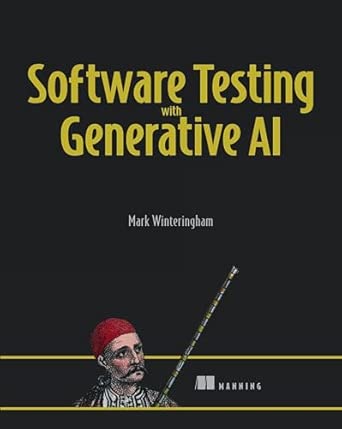 Software Testing with Generative AIView on Amazon →
 - 7
 40 Python Programming Projects for AI Agents and AutomationsView on Amazon →
 - 8
 Learning Generative AI Tools for Excel: Speed Up Your Tasks with Microsoft Ex…View on Amazon →
 - 9
 AI Email Automation for Beginners: Save Time, Increase Productivity, and Auto…View on Amazon →
 - 10
 AI Automation Made SimpleView on Amazon →
 - 11
 Python Automation Systems for AI Applications and Smart ToolsView on Amazon →
 - 12
 Using AI For AutoCAD: Boost Your Drafting, Design, and Workflow with Artifici…View on Amazon →
 - 13
 The Complete Microsoft 365 and Copilot Handbook – Volume II: Advanced Automat…View on Amazon →
 - 14
 Claude Code Advanced: Advanced Agentic Programming for Software Engineers (Cl…View on Amazon →
Impact of AI Automation on Business Operations in 2026
The rise of advanced AI automation software in 2026 has the potential to drastically improve operational efficiency across sectors. Organizations can now implement complex, multi-step workflows that previously required extensive manual effort or custom coding. This evolution supports faster decision-making, reduces errors, and enables companies to scale their automation efforts more effectively. For developers and business teams alike, these tools lower the barrier to entry for automation, fostering innovation and competitive advantage.
Evolution of AI Automation Tools Leading to 2026
Over the past few years, AI automation has progressed from simple task automation to sophisticated agent orchestration. Early tools focused on isolated applications like email or spreadsheets, but recent developments have emphasized integrated, end-to-end workflows. The 2026 landscape reflects a shift toward multi-application orchestration, reusable systems, and developer-friendly platforms, driven by advances in AI models and increased demand for operational agility. Major players like Microsoft, OpenCode, and Claude have introduced features targeting both technical and non-technical users, broadening adoption.
“2026 marks a turning point where AI automation tools no longer just assist but actively orchestrate complex workflows across multiple platforms.”
— Thorsten Meyer, AI Workflow Expert
Unresolved Questions About Long-Term Adoption
While new AI automation tools are gaining popularity, it remains unclear how widespread their adoption will become across different industries, especially smaller organizations. Questions about long-term maintenance, platform dependency, and licensing costs are still being evaluated. Additionally, the extent to which these tools will replace manual workflows versus augment existing processes is an ongoing discussion among experts.
Upcoming Developments in AI Automation for 2026 and Beyond
Next steps include further integration of AI automation tools with enterprise systems, enhanced user interfaces for non-technical users, and increased focus on security and compliance. Developers can expect new features that facilitate customization and scalability, while organizations will likely see broader adoption as these tools mature. Industry conferences and vendor updates scheduled for the remainder of 2026 will reveal more about the future trajectory of AI automation technology.
Key Questions
What are the main benefits of AI automation software in 2026?
AI automation software in 2026 offers increased efficiency, scalability, and integration capabilities, allowing organizations to automate complex workflows across multiple applications with less manual effort.
Who are the leading providers of AI automation tools this year?
Major providers include OpenCode, Claude, and Microsoft, each offering different strengths in agent orchestration, developer tools, and enterprise integration.
Is AI automation suitable for small businesses?
Yes, many tools are designed with user-friendly interfaces and scalable features, making them accessible for small and medium-sized enterprises, though considerations around cost and complexity remain.
What challenges remain for AI automation adoption in 2026?
Challenges include ensuring long-term maintenance, managing platform dependencies, addressing security concerns, and understanding licensing costs and compliance issues.
How will AI automation evolve after 2026?
Future developments are expected to focus on deeper integration, enhanced customization, and broader accessibility, further embedding AI automation into everyday business operations.
Source: ThorstenMeyerAI.com
Halloween Picks
halloween
As an affiliate, we earn on qualifying purchases.