
📊 Full opportunity report: Siemens' Vision For The Factory Floor In An AI-Powered World on ThorstenMeyerAI.com — validation score, market gap, and execution plan.
TL;DR
Siemens is advancing its factory automation strategy through a partnership with NVIDIA to create an Industrial AI Operating System. This platform aims to embed AI into manufacturing processes, focusing on physical data and domain expertise. The initiative could reshape industrial production but faces challenges related to validation and deployment timelines.
Siemens has revealed a comprehensive strategy to embed artificial intelligence into manufacturing, partnering with NVIDIA to develop an Industrial AI Operating System that aims to transform factory floors by 2026. This initiative emphasizes physical data and domain expertise over language-based AI, marking a significant shift in industrial AI development and deployment.
The core of Siemens’ approach is the Industrial Foundation Model (IFM), announced at Hannover Messe 2025, designed to process 3D models, 2D drawings, sensor telemetry, and automation logic to optimize engineering and manufacturing. Siemens states that this model is tailored specifically for physical and industrial data, unlike general-purpose language models.
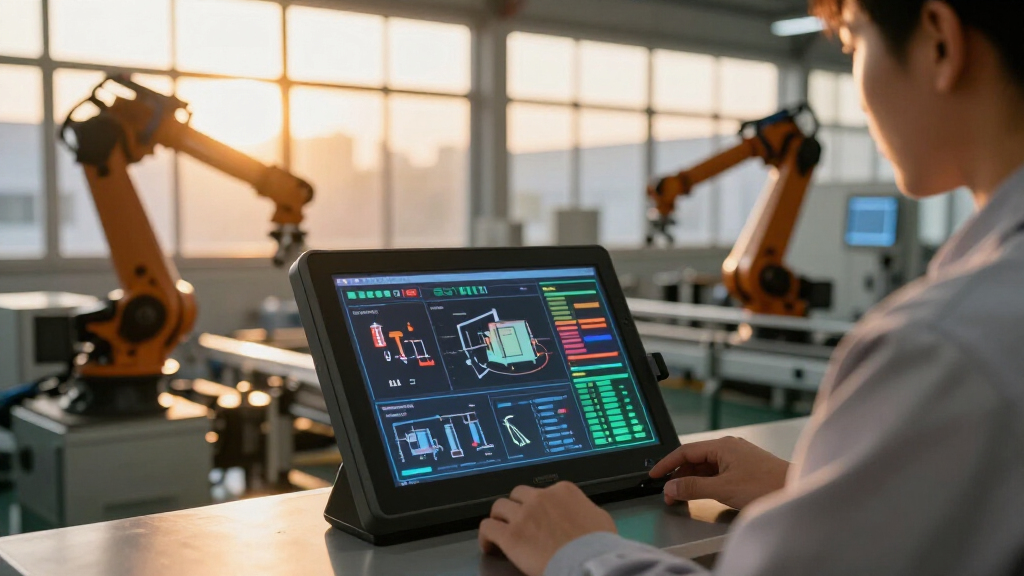
In partnership with NVIDIA, Siemens plans to build an Industrial AI Operating System that will support GPU-accelerated simulations, physics-based AI models, and real-time digital twin optimization. The first fully AI-driven, adaptive factory is expected to launch in Erlangen, Germany, in 2026, serving as a blueprint for global deployment. Early applications include digital twin tools like Digital Twin Composer, with companies like PepsiCo already testing simulations for facility upgrades.
Siemens emphasizes that its proprietary data, accumulated over a century, and deep domain expertise are key advantages, giving it a competitive edge in developing physical AI applications. The company also highlights existing customer relationships with major manufacturers, which could facilitate the integration of AI tools into ongoing operations.
The factory floor,
not the chat window.
Siemens’ bet: the biggest untapped AI value is physical — machines, factories, infrastructure — and 175 years of industrial data plus NVIDIA compute beats any frontier lab there. The vehicle: an Industrial Foundation Model and an “Industrial AI Operating System.”
A different language than text
Proprietary + physical data no frontier lab can scrape — the same “specialist beats generalist” logic this week keeps documenting, applied to steel and silicon.
Honest bull / bear
Bull
- Proprietary physical data no lab can replicate
- Domain expertise IS the barrier to entry
- Customers (PepsiCo, Audi) already in the base — warm motion
- Generative simulation: digital twins that engineer, not just mirror
Bear
- The “OS” runs substantially on NVIDIA’s stack — American silicon under a European champion
- No validated performance metrics or timelines disclosed at CES
- Geological sales cycle: decade-scale replacement
- “Industrial AI” now crowded (Palantir, Qualcomm moving in)
industrial digital twin software
As an affiliate, we earn on qualifying purchases.
As an affiliate, we earn on qualifying purchases.
Why Siemens’ Factory AI Strategy Matters
This initiative signals a shift in industrial AI focus from language-based models to physical, domain-specific AI tailored for manufacturing environments. Siemens’ approach leverages its extensive industrial data and expertise, potentially enabling more efficient, adaptive, and autonomous factory operations. If successful, this could accelerate the adoption of AI across manufacturing sectors worldwide, impacting supply chains, product quality, and factory productivity.
However, the reliance on NVIDIA infrastructure and the slow pace of industrial adoption present challenges. The project’s success will depend on validation of performance, integration into existing systems, and overcoming long sales cycles typical of industrial clients.
factory automation sensors
As an affiliate, we earn on qualifying purchases.
As an affiliate, we earn on qualifying purchases.
Background on Siemens’ Industrial AI Initiatives
Siemens has long been a leader in industrial automation and digitalization, with a vast installed base of factory equipment and operational data. Its previous announcements, including the 2025 launch of the Industrial Foundation Model, highlight a strategic pivot toward AI tailored for physical systems. The partnership with NVIDIA, announced at CES 2026, builds on Siemens’ history of integrating advanced simulation, automation, and digital twin technologies. The broader industrial AI landscape is becoming increasingly competitive, with major players like Palantir, Qualcomm, and others entering adjacent markets.
Prior to this, Siemens has demonstrated success with digital twins and automation tools, but the new focus on AI-driven, adaptive manufacturing represents a significant evolution aimed at capturing more value from industrial data and domain knowledge.
“Industrial AI is no longer a feature; it’s a force that will reshape the next century.”
— Roland Busch, Siemens CEO
GPU-accelerated simulation software
As an affiliate, we earn on qualifying purchases.
As an affiliate, we earn on qualifying purchases.
Unanswered Questions About Siemens’ Industrial AI Rollout
It remains unclear how quickly Siemens will validate and deploy the AI platform at scale, given typical industrial sales cycles. Specific hardware configurations, performance benchmarks, and deployment timelines for the Erlangen factory and other sites have not yet been disclosed. Additionally, the extent to which third-party validation or independent testing will support Siemens’ claims remains unknown.
There is also uncertainty about how European customers, concerned about reliance on American technology and infrastructure, will respond to the NVIDIA dependency embedded in the platform.
industrial AI development tools
As an affiliate, we earn on qualifying purchases.
As an affiliate, we earn on qualifying purchases.
Next Steps for Siemens’ Industrial AI Ambitions
Siemens plans to launch its first fully AI-driven factory in Erlangen in 2026, serving as a proof of concept. The company will likely release further details on performance metrics, deployment strategies, and customer case studies throughout the year. Additionally, the rollout of Digital Twin Composer and industrial copilots will be closely monitored to assess real-world impact and integration challenges. Industry observers will watch for validation from independent sources and broader adoption signals in the manufacturing sector.
Key Questions
How is Siemens’ industrial AI different from general-purpose AI models?
Siemens’ industrial AI focuses on physical data, such as 3D models, sensor telemetry, and automation logic, tailored to specific manufacturing processes. Unlike general-purpose models trained on internet data, Siemens’ models leverage proprietary, domain-specific data for more relevant and effective automation and optimization.
What are the main advantages Siemens claims for its approach?
Siemens emphasizes proprietary physical data, deep domain expertise, and existing customer relationships as key advantages. These enable more accurate, reliable, and industry-specific AI applications that are harder for competitors to replicate.
What are the risks or challenges Siemens faces with this strategy?
The reliance on NVIDIA’s infrastructure raises concerns about dependency and sovereignty, especially in Europe. Additionally, validation of performance results and the slow pace of industrial adoption could delay widespread deployment and realization of benefits.
When will we see tangible results from Siemens’ AI initiatives?
The first AI-driven factory is expected to launch in 2026, with further details on performance and customer case studies emerging throughout that year. Broader adoption will depend on validation and integration success.
Source: ThorstenMeyerAI.com