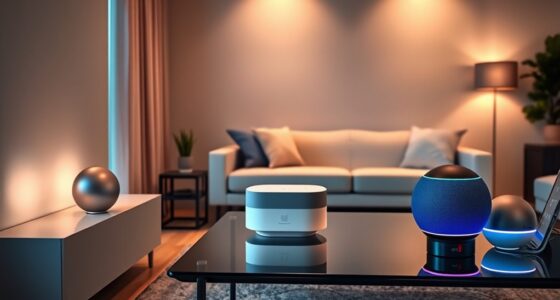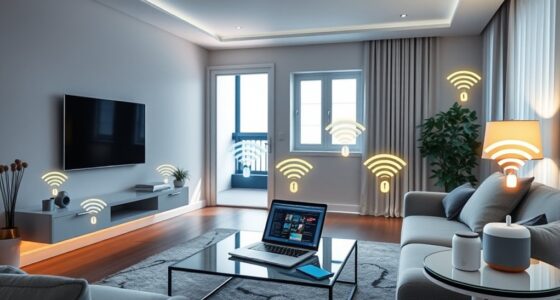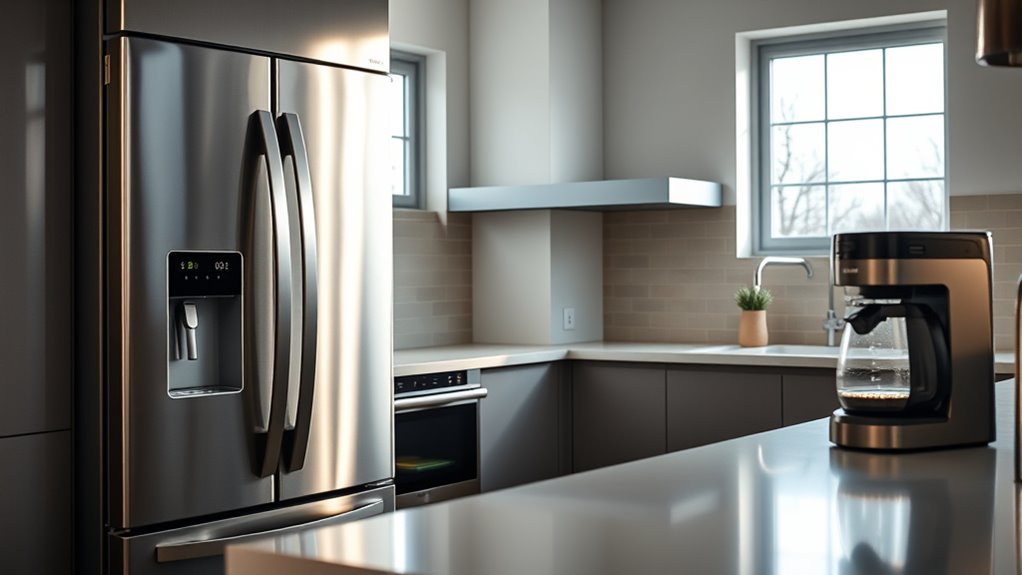

Smart fridges and appliances can truly make your life easier by automating routine tasks, allowing remote control, and optimizing energy use. They help you stay organized with features like shopping list creation and maintenance alerts. While some challenges exist, like connectivity issues and privacy concerns, ongoing innovations aim to improve security and integration. If you’re curious about how these devices can transform your household, there’s a lot more to discover.
Key Takeaways
- Voice commands and intuitive interfaces enable hands-free control and effortless household management.
- Automated scheduling and remote access improve convenience and efficiency in daily routines.
- Energy monitoring and smart controls help reduce utility bills and optimize home environment.
- Early detection of maintenance issues prevents costly repairs, extending appliance lifespan.
- Increased device integration and future features like supply ordering streamline household tasks and save time.

EVEO Screen Cleaner Spray - Large Screen Cleaner Bottle - TV Screen Cleaner, Computer Screen Cleaner, for Laptop, Phone, Ipad - Computer Cleaning kit Electronic Cleaner (1 Pack)
Screen Cleaner is Your Screen’s New Bestfriend! - EVEO is proud to present a screen cleaner that’s perfectly...
As an affiliate, we earn on qualifying purchases.
How Smart Appliances Enhance Convenience in Daily Life
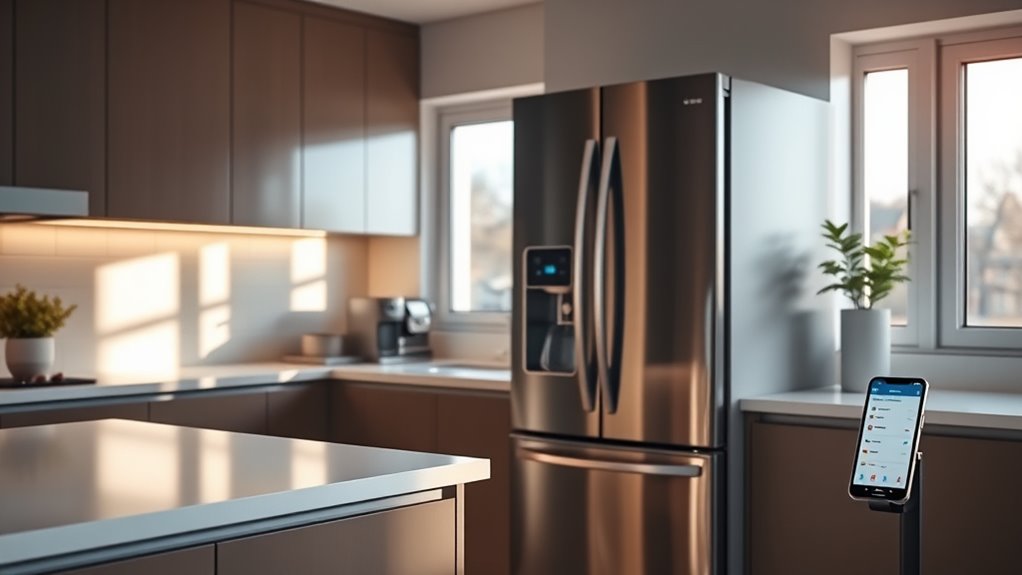
Smart appliances make everyday tasks simpler and more efficient by automating routine chores. With voice commands, you can control your devices hands-free, making it easy to adjust settings, check statuses, or get reminders without interrupting your day. User interfaces are designed to be intuitive, allowing you to navigate functions effortlessly through touchscreens or mobile apps. These features mean you spend less time managing appliances and more time on what matters. For example, you can ask your smart fridge to create a shopping list or notify you when supplies run low. This seamless integration of voice commands and user-friendly interfaces enhances your daily routine, making household management more convenient and less stressful. Additionally, energy management features help optimize power use, reducing costs and supporting sustainable living. Incorporating smart technology can further enhance efficiency by learning your habits and adjusting operations accordingly to save energy and improve performance. *Smart appliances also often include remote monitoring capabilities, allowing you to oversee your household devices from anywhere for added peace of mind.* In fact, many devices now feature automated scheduling, which can adapt to your routines and preferences for even greater convenience.

iO CLEAN Screen Cleaner Spray (16oz - 473ml) – Best Large Cleaning Kit
Screen cleaner spray and cloth. Screen cleaner spray and cloth are designed for high-end devices and work flawlessly...
As an affiliate, we earn on qualifying purchases.
The Cost and Energy Savings Potential of Intelligent Devices

While the initial investment in intelligent appliances can seem significant, these devices often lead to substantial savings over time through reduced energy consumption and lower utility bills. Their advanced technology enhances energy efficiency by optimizing power use based on your habits and needs. For example, smart thermostats adjust temperatures for maximum comfort and minimal energy waste, while smart refrigerators monitor and manage internal temperatures efficiently. Over time, these features contribute to noticeable cost reduction, making your household more economical. Additionally, many smart appliances come with energy monitoring features that help you track and further reduce your energy use. This data can also inform your choices about home energy management, leading to even greater savings. Smart devices often incorporate automated controls, which further refine energy use without requiring constant manual adjustments. Furthermore, integrating these systems with home automation platforms can streamline your entire household’s energy consumption for optimal efficiency. Although the upfront cost may be higher, the long-term savings in energy bills and maintenance often outweigh this expense. By investing in smart appliances, you can improve your home’s energy efficiency and enjoy ongoing financial benefits. Additionally, understanding electrical safety principles helps ensure your upgraded smart systems operate reliably and securely.

Screen Mom Screen Cleaner Spray 16oz Bottle for TV, Car, Laptop & Computer
STREAK FREE FORMULA FOR CRYSTAL CLEAR SCREENS: Screen Mom tv cleaner spray and cloth advanced streak-free screen cleaner...
As an affiliate, we earn on qualifying purchases.
Common Challenges and Technical Issues With Smart Fridges

Smart fridges can sometimes have trouble connecting to your home Wi-Fi or working smoothly with other devices. You might also encounter software bugs or glitches that disrupt their functionality. These issues can make managing your appliance more frustrating than it should be. Additionally, software updates can sometimes introduce new problems or compatibility issues that affect performance. Sometimes, the thermal behavior of these appliances can be unpredictable, leading to uneven cooling or storage problems that are difficult to troubleshoot. Proper navigation and mapping are essential for some smart fridges to optimize internal organization and energy efficiency. In some cases, network connectivity problems can hinder the integration of smart features, making the appliance less responsive. Being aware of security risks is important, as vulnerabilities in connected devices can lead to data breaches or unauthorized access.
Connectivity and Compatibility Issues
Connecting a smart fridge to your home network can sometimes be more complicated than expected, leading to frustrating setup experiences. One common issue is device interoperability; not all devices or platforms work seamlessly together, causing connectivity hiccups. You might find that your fridge struggles to sync with your existing smart home ecosystem or mobile apps. Firmware updates are also essential but can be problematic—they often fix bugs and improve compatibility, yet some devices delay or fail to install updates automatically. Without the latest firmware, your smart fridge might not communicate properly with other devices or access new features. These compatibility issues can leave you frustrated, requiring manual troubleshooting or even firmware reinstallation to restore proper functionality. Additionally, network stability and signal strength can impact the effectiveness of your smart appliance’s connectivity, making a reliable Wi-Fi connection crucial for optimal performance. Ensuring that your network has sufficient bandwidth and coverage can significantly reduce these issues, especially when considering the smart home ecosystem’s overall stability.
Software Glitches and Bugs
Even after overcoming initial setup and connectivity hurdles, software glitches and bugs can still disrupt your smart fridge’s performance. Sometimes, the user interface becomes unresponsive or displays incorrect information, making it frustrating to navigate. These issues often stem from outdated software updates, which can cause bugs or compatibility problems. Regularly checking for and installing software updates is vital to fix known bugs and improve functionality. However, updates don’t always go smoothly; they can temporarily disrupt the user interface or cause new glitches. When problems arise, restarting the appliance or resetting the software may help. Staying vigilant about software health is indispensable to ensure your smart fridge runs smoothly and maintains the convenience it promises. Additionally, using passive voice detection tools can help identify and improve unclear or awkward phrasing in your settings or troubleshooting instructions.

KIC CrystalVu Screen Cleaner Spray Kit (16oz) with Microfiber Cloth
Streak-Free Formula – Professional-grade electronic screen cleaner spray removes fingerprints, smudges, and oily buildup from Smart TVs, OLED...
As an affiliate, we earn on qualifying purchases.
Privacy and Security Concerns Surrounding Connected Devices

As more connected appliances enter your home, concerns about privacy and security become increasingly important. These devices collect and transmit data, which could be vulnerable if not properly protected. Implementing strong data encryption helps safeguard your information from hackers and unauthorized access. However, not all manufacturers prioritize user privacy, leaving sensitive details exposed. You should be cautious about the permissions you grant and stay informed about the security measures in place. Regular updates and security patches are essential to prevent breaches. Remember, your connected devices can improve convenience, but they also pose risks if security isn’t maintained. Being proactive about privacy settings and understanding how your data is used will help you enjoy smart appliances without compromising your security. Additionally, understanding the ventilation considerations for your smart home can help mitigate some security risks associated with connected systems. Ensuring proper network security practices can further protect your connected devices from potential threats, especially when combined with a comprehensive approach to home automation privacy. Properly configuring these connected systems can significantly reduce vulnerabilities and enhance overall security.
The Impact of Smart Technology on Household Management

Smart technology has revolutionized household management by making daily routines more efficient and streamlined. With smart devices, you can now monitor energy usage easily, reducing waste and lowering bills. Remote control features let you adjust thermostats, lighting, and appliances from anywhere, saving time and effort. This level of control helps you stay organized and responsive to household needs. For example, you can turn off appliances remotely or check energy consumption in real-time. These smart capabilities not only improve convenience but also promote energy efficiency. As a result, managing your home becomes less stressful and more environmentally friendly. By integrating household automation, you can further optimize your home environment with minimal effort.
Are Smart Appliances Worth the Investment?

When considering smart appliances, you need to weigh the cost against the convenience they offer. Will the time and effort saved make up for the higher price tag? Plus, think about whether their long-term savings, like energy efficiency, justify the initial investment.
Cost vs. Convenience
Are smart appliances truly worth the extra cost? When weighing the investment, consider their energy efficiency, which can lower your utility bills over time. These devices often optimize power use, saving you money in the long run. However, the initial price tag is higher than traditional appliances, making some question if the convenience justifies the expense. Additionally, smart appliances collect data to enhance functionality, raising concerns about user privacy. You need to decide if the benefits—such as remote control, automation, and real-time updates—outweigh the costs and privacy risks. While they can simplify daily routines, it is crucial to evaluate whether the convenience aligns with your budget and comfort level with digital security. Ultimately, the decision hinges on your priorities and lifestyle.
Long-term Savings Potential
Although the initial investment can be higher, smart appliances often deliver significant long-term savings through improved energy efficiency and reduced utility bills. These devices optimize performance by adjusting settings based on usage patterns, helping you save on electricity and water costs over time. Additionally, smart appliances can identify maintenance needs early, preventing costly repairs and extending their lifespan. While you might pay more upfront, the savings on energy consumption and lower maintenance costs can offset this expense. Over the years, these efficiencies add up, making smart appliances a worthwhile investment. If you’re looking to cut costs and reduce your environmental footprint, choosing smart appliances can be a smart move that pays off in the long run.
Future Trends and Innovations in Smart Home Technology
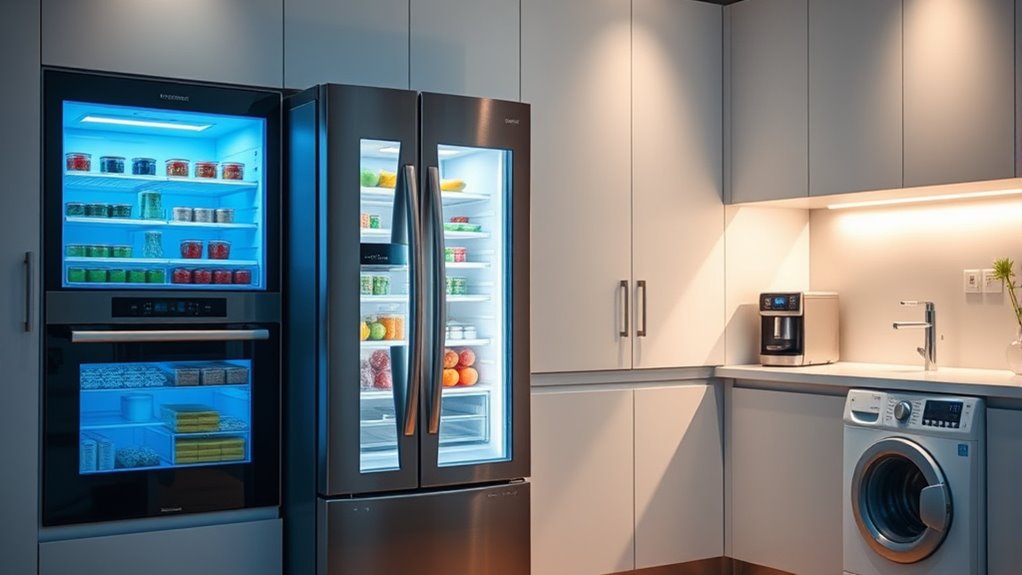
As smart home technology continues to evolve, future innovations in smart appliances promise to make everyday living more seamless and efficient. You’ll see advancements like enhanced voice control, allowing you to operate devices hands-free with simple commands. Device integration will become even more sophisticated, enabling your appliances to communicate and coordinate effortlessly, creating a truly interconnected home. Imagine your fridge automatically ordering groceries when supplies run low or your oven syncing with your schedule to prepare meals on time. These innovations will also include smarter energy management, personalized settings, and advanced security features. As these trends develop, you’ll enjoy a more intuitive, responsive, and effortless living environment that adapts to your needs and lifestyle. The future of smart home tech looks brighter than ever.
Frequently Asked Questions
How Long Do Smart Appliances Typically Last Before Needing Replacement?
Smart appliances typically last about 8 to 12 years before needing replacement, depending on their appliance lifespan and usage. You might notice performance issues or outdated features that signal it’s time for a new one. To maximize your investment, consider the replacement timeline and how well your appliances are maintained. Regular upkeep can extend their life, but eventually, technology advances will likely make replacements necessary for better efficiency and features.
Can Smart Devices Be Integrated With Existing Home Automation Systems?
Yes, you can integrate smart devices with your existing home automation systems. Many smart appliances support voice control and are compatible with popular platforms like Alexa, Google Assistant, or Apple HomeKit. To guarantee seamless integration, check device compatibility before purchasing, and follow setup instructions carefully. This way, you can control your appliances effortlessly and create a more connected, convenient home environment.
What Maintenance Is Required for Smart Refrigerators and Appliances?
You’ll need to regularly clean the filters and check for software updates to keep your smart refrigerator running smoothly. A simple wipe-down of the user interface prevents smudges and glitches, while inspecting door seals guarantees energy efficiency. Think of it as tending to a garden—small, consistent care helps your appliances stay efficient, prolonging their lifespan and keeping your kitchen running smoothly without unexpected hiccups.
Are There Health Concerns Related to Electromagnetic Emissions From Smart Devices?
Electromagnetic exposure from smart devices is generally low and considered safe by health experts. Modern smart appliances are designed with device safety in mind, minimizing any potential risks. While some worry about electromagnetic emissions, studies show that these emissions are far below harmful levels. If you’re concerned, limit prolonged close contact with devices, but overall, smart appliances are safe and don’t pose significant health risks.
How Do Manufacturers Handle Software Updates and Device Longevity?
Manufacturers prioritize software security and user privacy by providing regular updates, patching vulnerabilities, and enhancing features. They handle longevity through durable hardware, firmware updates, and customer support. While software updates keep devices secure and functional, some users worry about privacy risks. You can mitigate this by choosing brands committed to security, regularly updating your device, and understanding privacy settings. This proactive approach ensures your smart appliances stay reliable and safe over time.
Conclusion
While smart appliances aim to simplify your life, they may come with a few hiccups along the way. Still, as technology continues to evolve, these devices could become more seamless and secure, gently easing your daily routines. With a little patience and savvy choices, you might find that embracing smart home tech gently transforms your household into a more efficient and enjoyable space. After all, every innovation has its charming quirks worth exploring.