
📊 Full opportunity report: Incorporating Suzanne Ciani’s Signal Monitoring Strategies Into Music & Live Events on IdeaNavigator AI — validation score, market gap, and execution plan.

Get the latest gadgets delivered free — and shop member deals
- Fast, free delivery on millions of items
- Access to Prime Big Deal Days deals on October 6–7
- Prime Video, Amazon Music and more included
TL;DR
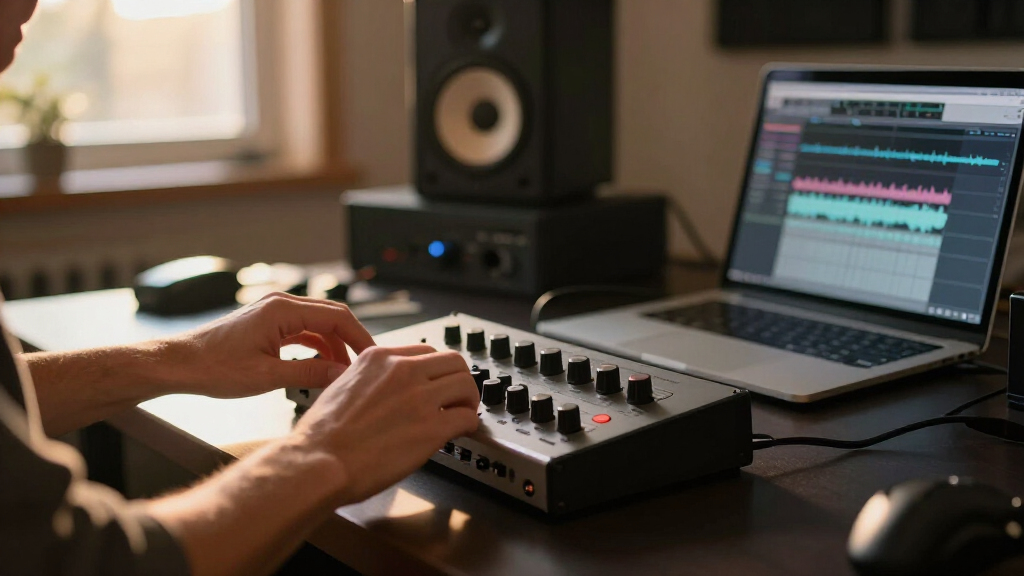
A new approach proposes using Suzanne Ciani’s Buchla Cookbook as a signal monitoring tool for promoters. This method aims to identify relevant releases and tours early, improving decision-making. The concept is currently in testing stages with potential market impact.
Promoters and managers in the live music industry are exploring a novel signal monitoring approach based on Suzanne Ciani’s Buchla Cookbook, designed to help identify relevant releases, tours, and audience demand early enough to influence booking decisions. This development aims to address the challenge of scattered information across news outlets, forums, and filings, which often delays critical decision-making in a fast-moving market.
The concept involves a specialized monitor that scans platforms like Hacker News and similar feeds for updates related to music releases, tours, and audience interest. The focus is on filtering these signals to highlight only those that impact live event planning, such as new artist releases or tour announcements relevant to promoters.
According to sources familiar with the initiative, this workflow leverages a narrow, role-specific filter to deliver concise, actionable briefs. For example, a mention of Suzanne Ciani’s Buchla Cookbook in a tech forum could trigger a notification that prompts a promoter to consider booking her upcoming live performance or to adjust marketing strategies accordingly.
The approach is currently in a testing phase, with the initial goal of validating whether delivering these filtered signals results in faster, better-informed booking decisions. The system aims to provide a same-day, role-specific read that outperforms traditional weekly news roundup methods.
Impact of Early Signal Detection on Live Event Planning
This new workflow could significantly improve the responsiveness of promoters and managers to emerging trends and artist developments. By catching relevant signals early, they can secure bookings, tailor marketing efforts, and allocate resources more effectively, potentially gaining a competitive edge in a crowded market.
Moreover, the ability to filter noise from the vast amount of industry information means decision-makers spend less time sifting through irrelevant data, allowing for more strategic planning. If successful, this approach could reshape how live event professionals monitor industry shifts and artist activity, leading to more dynamic and responsive programming.
As an affiliate, we earn on qualifying purchases.
Background on Signal Monitoring in Music Industry
Traditionally, live event promoters rely on a combination of news alerts, social media, and industry filings to track artist activity, releases, and tours. However, these sources are often unfiltered and require manual effort to interpret, leading to delays or missed opportunities.
The idea of role-specific signal monitoring has gained traction as a way to streamline this process. Suzanne Ciani’s Buchla Cookbook, a well-known resource among electronic musicians and synthesizer enthusiasts, has recently been identified as a potential trigger point for industry signals. Hacker News and similar platforms have highlighted this with an 88/100 signal score, indicating high relevance and immediacy.
Developers are now testing systems that automatically scan and filter these signals, aiming to deliver timely, relevant updates directly to decision-makers in the live music sector. This approach aligns with broader trends toward automation and data-driven decision-making in entertainment.
signal monitoring software for live events
As an affiliate, we earn on qualifying purchases.
As an affiliate, we earn on qualifying purchases.
Unconfirmed Effectiveness and Adoption Timeline
It is not yet clear how widely this signal monitoring system will be adopted or whether it will consistently lead to improved booking decisions. The testing phase is ongoing, and results are preliminary. Further validation is needed to confirm its impact on decision-making speed and accuracy.As an affiliate, we earn on qualifying purchases.
Next Steps in Validation and Deployment
Developers will continue testing the system with a broader group of promoters and managers, measuring whether the filtered signals lead to quicker, more effective booking decisions. If successful, plans include refining the filtering algorithms, expanding platform integrations, and launching a subscription service tailored for live event professionals.
Industry stakeholders expect to see initial case studies and user feedback within the next quarter, which will determine the broader rollout of this signal monitoring approach.
As an affiliate, we earn on qualifying purchases.
Key Questions
How does Suzanne Ciani’s Buchla Cookbook relate to live event booking?
The Cookbook serves as a signal source that, when monitored and filtered, can indicate relevant industry developments like artist releases or tours, helping promoters make timely booking decisions.
Who is the target user for this signal monitoring system?
The primary users are promoters and managers involved in booking and planning live shows, seeking early alerts on relevant industry activity.
Is this system currently available for use?
It is still in the testing phase, with initial trials underway to validate its effectiveness before broader deployment.
What are the main benefits of this approach?
Faster, role-specific alerts that help decision-makers respond quickly to emerging opportunities, reducing manual filtering efforts and improving responsiveness.
What challenges remain for this system?
Uncertainty about its scalability, accuracy of relevance filtering, and whether it will lead to measurable improvements in booking outcomes.
Source: IdeaNavigator AI
Fall Picks
fall essentials
As an affiliate, we earn on qualifying purchases.