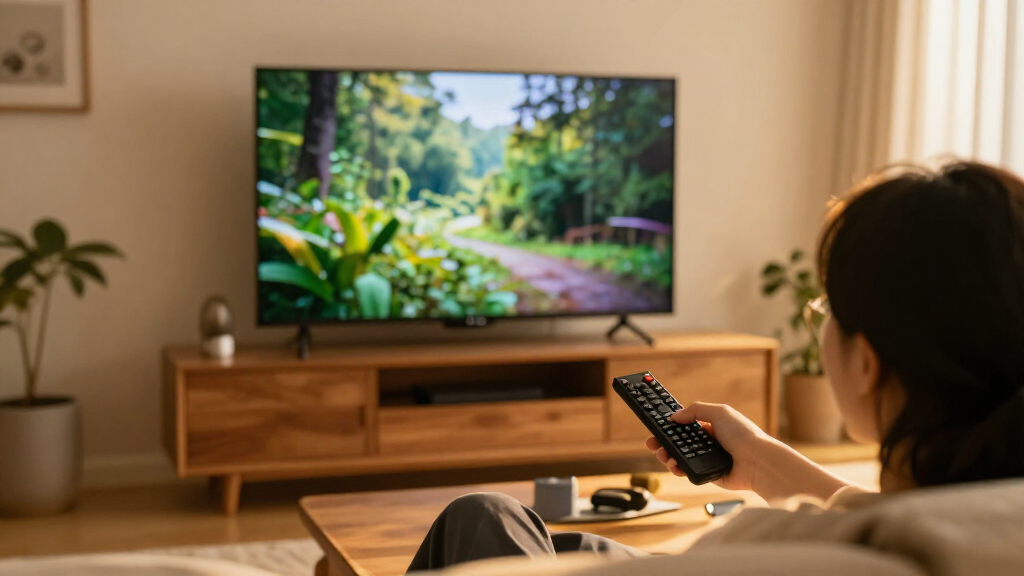

The best TV overall in this roundup is the LG 65-Inch OLED evo C6, a premium choice for buyers who prioritize contrast and picture quality. The TCL T7 Series stands out for fast gaming, while Samsung’s M70H Mini LED models offer a different route to a bright, detailed picture. The main tradeoffs are picture performance versus cost, screen size versus room fit, and a simple smart interface versus more advanced features. Budget-oriented Insignia F50 models and Roku Select QLED options show that a straightforward screen can suit everyday viewing without premium hardware. Read on for how all 15 options differ and which TV fits your room and habits.

Get the latest gadgets delivered free — and shop member deals
- Fast, free delivery on millions of items
- Access to Prime Big Deal Days deals on October 6–7
- Prime Video, Amazon Music and more included
Complete the kit



Key Takeaways
- The LG OLED evo C6 leads on picture quality: OLED contrast makes it the strongest fit for movie-focused viewing, while its premium positioning is more than casual viewers may need.
- The TCL T7 is the gaming-led option: its 144Hz panel separates it from the more basic 4K models, making refresh rate a deciding factor for compatible gaming setups.
- Mini LED and OLED serve different picture priorities: Samsung’s M70H Mini LED models suit buyers seeking a bright, detailed screen, while the LG OLED favors deep blacks and contrast.
- Roku and Fire TV options emphasize accessible streaming: Roku Select QLED models and amazon.com/dp/B0F257L7JF?tag=gadgetfee-20&ascsubtag=dc-1163108″ target=”_blank” rel=”nofollow sponsored noopener”>Insignia F50 TVs offer simpler paths to everyday viewing, with screen size and panel type helping distinguish them.
- Screen size alone does not determine value: this lineup ranges from a 43-inch Insignia to 75-inch and 65-inch options, but room layout and viewing distance should guide size before feature comparisons.
| Insignia 43-Inch F50 Series 4K UHD Smart Fire TV |  | Best Compact TV | Screen size: 43 inches | Display technology: LED | Resolution: 4K UHD (2160p) | VIEW LATEST PRICE | See Our Full Breakdown |
| Amazon Ember 55-Inch 4-Series 4K Ultra HD Smart TV with Fire TV |  | Best for Connected Streaming | Screen size: 55 inches | Resolution: 4K Ultra HD | HDR: HDR10+ | VIEW LATEST PRICE | See Our Full Breakdown |
| TCL T7 Series 65-Inch 4K QLED Smart Google TV, 144Hz |  | Best for Gaming and Motion | Screen size: 65 inches | Display technology: 4K UHD, QLED | Resolution: 4K | VIEW LATEST PRICE | See Our Full Breakdown |
| Roku 55-Inch Select Series 4K QLED Smart TV |  | Best for Simple Streaming | Screen size: 55 inches | Display technology: QLED, LED | Resolution: 4K UHD | VIEW LATEST PRICE | See Our Full Breakdown |
| Samsung 65-Inch Crystal UHD U8000H 4K Smart TV (2026) |  | Best for Straightforward Big-Screen Viewing | Screen size: 65 inches | Display technology: LED | Resolution: 4K | VIEW LATEST PRICE | See Our Full Breakdown |
| Hisense 65-Inch E6SR Series 4K UHD Hi-QLED Smart Roku TV (2026 Model) |  | Best for a Big-Screen Roku Setup | Screen size: 65 inches | Display technology: Hi-QLED | Resolution: 4K UHD | VIEW LATEST PRICE | See Our Full Breakdown |
| Insignia 50-Inch F50 Series 4K UHD LED Smart Fire TV with Alexa Voice Remote |  | Best for Smaller Rooms and Fire TV | Screen size: 50 inches | Display technology: LED | Resolution: 4K UHD (2160p) | VIEW LATEST PRICE | See Our Full Breakdown |
| Roku 65-Inch Select Series 4K QLED Smart TV (2026) |  | Best for Roku Fans Who Need More Connections | Screen size: 65 inches | Display technology: QLED, LED | Resolution: 4K UHD | VIEW LATEST PRICE | See Our Full Breakdown |
| Insignia 55-Inch F50 Series 4K UHD LED Smart Fire TV with Alexa Voice Remote (NS-55F501NA26) | | Best for an Affordable-Size Fire TV Setup | Screen size: 55 inches | Display technology: LED | Resolution: 4K UHD (2160p) | VIEW LATEST PRICE | See Our Full Breakdown |
| Samsung 55-Inch M70H Series Mini LED 4K Smart TV (2026) |  | Best for Bright-Room Viewing and Gaming Features | Screen size: 55 inches | Display technology: Mini LED | Resolution: 4K | VIEW LATEST PRICE | See Our Full Breakdown |
| Insignia 75-Inch F50 Series 4K UHD LED Smart Fire TV |  | Best for a Big Screen on a Simple Setup | Screen size: 74.5 inches (75-inch class) | Display technology: LED | Resolution: 4K UHD (2160p) | VIEW LATEST PRICE | See Our Full Breakdown |
| LG 65-Inch OLED evo C6 Series 4K Smart TV (2026) |  | Best Premium OLED for Movies and Gaming | Screen size: 65 inches | Display technology: OLED evo | Resolution: 4K | VIEW LATEST PRICE | See Our Full Breakdown |
| Hisense 55-inch CanvasTV 4K UHD QLED Google Smart TV with Art Mode |  | Best TV That Doubles as Wall Art | Screen size: 55 inches | Display: QLED Hi-Matte anti-glare | Resolution: 4K UHD | VIEW LATEST PRICE | See Our Full Breakdown |
| Roku Select Series 50-Inch 4K QLED Smart TV (2026) |  | Best for Simple Streaming in a Mid-Size Room | Screen size: 50 inches | Display technology: QLED, LED | Resolution: 4K UHD | VIEW LATEST PRICE | See Our Full Breakdown |
| Samsung 65-Inch M70H Series 4K Mini LED Smart TV (2026) |  | Best for Samsung Streaming and Bright HDR | Screen size: 65 inches | Display technology: Mini LED | Resolution: 4K | VIEW LATEST PRICE | See Our Full Breakdown |
| TV | Screen size | Resolution | Refresh rate | Display technology |
|---|---|---|---|---|
| Insignia 43-Inch F50 Series 4K | 43 inches | 4K UHD (2160p) | 60 Hz | LED |
| Amazon Ember 55-Inch 4-Series | 55 inches | 4K Ultra HD | — | — |
| TCL T7 Series 65-Inch 4K QLED | 65 inches | 4K | 144 Hz | 4K UHD, QLED |
| Roku 55-Inch Select Series 4K | 55 inches | 4K UHD | 60 Hz | QLED, LED |
| Samsung 65-Inch Crystal UHD U8 | 65 inches | 4K | 60 Hz | LED |
| Hisense 65-Inch E6SR Series 4K | 65 inches | 4K UHD | 60 Hz | Hi-QLED |
| Insignia 50-Inch F50 Series 4K | 50 inches | 4K UHD (2160p) | 60 Hz | LED |
| Roku 65-Inch Select Series 4K | 65 inches | 4K UHD | 60 Hz | QLED, LED |
| Insignia 55-Inch F50 Series 4K | 55 inches | 4K UHD (2160p) | 60 Hz | LED |
| Samsung 55-Inch M70H Series Mi | 55 inches | 4K | 60 Hz; up to 120 Hz with DLG | Mini LED |
| Insignia 75-Inch F50 Series 4K | 74.5 inches (75-inch class) | 4K UHD (2160p) | 60 Hz | LED |
| LG 65-Inch OLED evo C6 Series | 65 inches | 4K | Native 120 Hz; VRR up to 165 Hz for PC gaming | OLED evo |
| Hisense 55-inch CanvasTV 4K UH | 55 inches | 4K UHD | Native 144 Hz | — |
| Roku Select Series 50-Inch 4K | 50 inches | 4K UHD | 60 Hz | QLED, LED |
| Samsung 65-Inch M70H Series 4K | 65 inches | 4K | 60 Hz | Mini LED |
More Details on Our Top Picks
Insignia 43-Inch F50 Series 4K UHD Smart Fire TV
The 43-inch Insignia F50 is the compact pick for a bedroom, small living room, or secondary screen where 4K detail and straightforward streaming matter more than high-end motion or a large display. Its Fire TV interface brings popular apps and free ad-supported content together, while HDR10 support and upscaling can make older, lower-resolution video look more defined. Compared with the Roku 55-Inch Select Series 4K QLED, this Insignia takes up less space and offers DTS Virtual:X, but its smaller LED screen and 60 Hz refresh rate are less suited to a large, gaming-focused setup. Three HDMI ports and eARC support leave room for a console and sound system. The tradeoffs are limited screen size, subscriptions for some content, and variable app availability.
Pros:- 4K UHD resolution, HDR10 support, and upscaling for lower-resolution video
- Fire TV provides access to popular streaming apps and free ad-supported content
- DTS Virtual:X audio and HDMI eARC support
- Three HDMI ports for connecting multiple devices
Cons:- A 43-inch screen may feel undersized as the main TV in a large room
- The 60 Hz refresh rate is less suited to high-frame-rate gaming
- Some apps and content require subscriptions, and availability may vary
Best for: Apartment dwellers and bedroom viewers who want a compact 4K TV with Fire TV streaming and room for a few connected devices.
Not ideal for: People furnishing a large living room or prioritizing high-refresh-rate gaming; the 43-inch screen and 60 Hz refresh rate are limiting compared with larger, faster options.
- Screen size:43 inches
- Display technology:LED
- Resolution:4K UHD (2160p)
- Refresh rate:60 Hz
- HDR format:HDR10
- Maximum brightness:375 nits
- Audio:DTS Virtual:X
- HDMI ports:3
- Connectivity:Wi-Fi, Bluetooth, Ethernet
Our verdict“Choose the Insignia F50 if a smaller room calls for 4K and Fire TV, but pick a larger model for a main-screen setup.”
Amazon Ember 55-Inch 4-Series 4K Ultra HD Smart TV with Fire TV
The Amazon Ember 55-Inch 4-Series is the connected-home choice in this group, pairing Fire TV and Alexa+ voice control with Wi-Fi 6, AirPlay, and four HDMI inputs. HDR10+ support adds scene-by-scene picture adjustments, while the quad-core processor is designed to keep app navigation responsive. Compared with the Insignia 43-Inch F50, the Ember gives viewers a larger screen, a newer wireless standard, and one extra HDMI input; the Insignia is the simpler compact fit and lists DTS Virtual:X audio. The Ember’s Omnisense sensors can wake the display when someone enters, a convenience that may not suit buyers who prefer a TV that stays fully passive. Its clearest drawback is the 90-day limited warranty; streaming subscriptions may also be needed for some content.
Pros:- HDR10+ support for enhanced brightness and contrast handling
- Wi-Fi 6 and a quad-core processor support responsive streaming and app use
- Four HDMI inputs, AirPlay, and cloud game streaming support
- Alexa+ voice control and Omnisense wake feature add hands-free convenience
Cons:- The included limited warranty lasts only 90 days
- Some streaming content requires separate subscriptions
- No refresh-rate specification is provided in the product data
Best for: Households already using Alexa or Apple devices that want a 55-inch streaming TV, Wi-Fi 6, and several HDMI connections.
Not ideal for: Buyers seeking a long included warranty or a TV with a documented high refresh rate; the listed warranty is only 90 days, and no refresh-rate figure is provided.
- Screen size:55 inches
- Resolution:4K Ultra HD
- HDR:HDR10+
- Processor:Quad-core
- Wi-Fi:Wi-Fi 6
- Audio:Dolby Audio
- HDMI inputs:4
- Warranty:90-day limited warranty
Our verdict“Pick the Ember if Alexa, AirPlay, and flexible connections are your priorities, and its short listed warranty is acceptable.”
TCL T7 Series 65-Inch 4K QLED Smart Google TV, 144Hz
The TCL T7 Series earns its place as the gaming and motion specialist: its native 144 Hz refresh rate is a meaningful step beyond the 60 Hz panels in the Insignia F50 and Samsung U8000H, helping compatible games and fast action appear smoother. The 65-inch QLED display also supports Dolby Vision, HDR10, HDR10+, and HLG, giving it broader HDR format coverage than those more basic LED alternatives. Google TV, four HDMI ports, and two USB ports make it a capable hub for a console-heavy setup, while Dolby Atmos and DTS formats offer flexible audio support. That extra capability comes with a practical tradeoff: it is a large screen, and buyers who mainly watch standard streaming shows may not benefit much from its higher refresh rate. The supplied weight information may also be incomplete.
Pros:- Native 144 Hz refresh rate supports smoother motion in compatible games and content
- QLED display with Dolby Vision, HDR10, HDR10+, and HLG support
- Four HDMI ports and two USB ports for a multi-device setup
- Google TV plus Dolby Atmos, DTS:X, and DTS Virtual:X audio support
Cons:- Its 65-inch screen may not suit smaller rooms
- The higher refresh rate matters less for viewers who mainly watch standard streaming content
- The listed 36.6-pound weight may be incomplete
Best for: Console and PC gamers, sports viewers, and movie fans who want a 65-inch QLED screen with a high native refresh rate and broad HDR support.
Not ideal for: Casual viewers with a small room or mostly standard TV habits; the larger screen and 144 Hz capability may add little value for that use.
- Screen size:65 inches
- Display technology:4K UHD, QLED
- Resolution:4K
- Refresh rate:144 Hz
- HDR formats:Dolby Vision, HDR10, HDR10+, HLG, Open HDR
- Operating system:Google TV
- Audio:Dolby Atmos, DTS:X, DTS Virtual:X
- HDMI ports:4
- USB ports:2
Our verdict“Choose the TCL T7 if gaming motion and broad HDR support matter more than keeping the TV simple and compact.”
Roku 55-Inch Select Series 4K QLED Smart TV
The Roku 55-Inch Select Series is the straightforward streaming pick: its Roku platform, voice remote, and AirPlay 2 make it easy to access apps and cast from Apple devices without building a more elaborate smart-home setup. Its 4K QLED screen supports HDR10, HDR10+, and HLG, and the TV includes four HDMI ports plus two USB ports. Compared with the Amazon Ember 55-Inch 4-Series, Roku is the better fit for viewers who prefer Roku’s interface and want a listed brightness figure; the Ember counters with Wi-Fi 6 and a quad-core processor. The Roku’s 60 Hz refresh rate and 330-nit maximum brightness make it a weaker match for fast gaming or bright rooms. Clear-speech features and Bluetooth headphone mode add useful listening options, but do not change those picture limits.
Pros:- 4K QLED display with HDR10, HDR10+, and HLG support
- Roku streaming platform includes access to apps and free live TV
- AirPlay 2 and voice control support several common device ecosystems
- Clear-speech features and Bluetooth headphone mode support flexible listening
Cons:- The 60 Hz refresh rate is less suited to high-frame-rate gaming
- Maximum brightness is listed at 330 nits
- The product data does not specify advanced motion or gaming features
Best for: Viewers who want a 55-inch QLED TV with an easy Roku interface, Apple AirPlay 2, voice control, and private headphone listening.
Not ideal for: Gamers seeking high refresh rates or viewers watching in very bright rooms; the panel is 60 Hz and rated at 330 nits maximum brightness.
- Screen size:55 inches
- Display technology:QLED, LED
- Resolution:4K UHD
- Refresh rate:60 Hz
- HDR formats:HDR10, HDR10+, HLG
- Maximum brightness:330 nits
- HDMI ports:4
- USB ports:2
- Screen mirroring:AirPlay 2, Miracast
Our verdict“Choose the Roku Select if easy streaming and casting are priorities, but look to a faster panel for gaming.”
Samsung 65-Inch Crystal UHD U8000H 4K Smart TV (2026)
The Samsung 65-Inch Crystal UHD U8000H puts the emphasis on a large 4K screen and uncomplicated everyday viewing rather than premium motion or gaming features. Its Crystal Processor and 4K upscaling are intended to sharpen lower-resolution material, while Motion Xcelerator supports viewing up to 4K at 60 Hz. Samsung TV Plus adds free streaming channels, though network-based smart services require both an internet connection and a Samsung Account. Compared with the TCL T7 Series 65-Inch, this Samsung is the more restrained choice: it has a 60 Hz refresh rate and standard LED display instead of QLED and native 144 Hz, so it is less compelling for gaming and HDR variety. Its 300-nit maximum brightness may also limit impact in bright rooms. The upside is a familiar Samsung smart-TV setup and a large screen for regular viewing.
Pros:- 4K resolution with Crystal Processor upscaling for lower-resolution content
- Motion Xcelerator supports viewing up to 4K at 60 Hz
- Samsung TV Plus provides free streaming channels
- Three HDMI ports and support for popular streaming apps
Cons:- The 60 Hz refresh rate is less capable than the TCL T7’s native 144 Hz
- Maximum brightness is listed at 300 nits
- Network-based smart services require internet access and a Samsung Account
Best for: Samsung-oriented households that want a 65-inch 4K TV for everyday shows, streaming, and upscaled lower-resolution content.
Not ideal for: Gamers seeking high refresh rates or viewers who want a brighter, more feature-rich HDR picture; this model is 60 Hz and rated at 300 nits maximum brightness.
- Screen size:65 inches
- Display technology:LED
- Resolution:4K
- Refresh rate:60 Hz
- HDR format:HDR10+
- Processor:Crystal Processor
- Maximum brightness:300 nits
- HDMI ports:3
- Wireless:Wi-Fi 5 (802.11ac), Bluetooth
Our verdict“Choose the Samsung U8000H for a large, familiar 4K screen and everyday streaming, not for high-refresh gaming or bright-room impact.”
Hisense 65-Inch E6SR Series 4K UHD Hi-QLED Smart Roku TV (2026 Model)
The 65-inch Hi-QLED panel makes this Hisense a good fit for buyers who want a large screen with more color-focused hardware than the LED panels on the Insignia F50 models. Dolby Vision support and AI 4K upscaling can add impact to compatible HDR shows and help lower-resolution sources look more at home on a 4K display. Roku’s familiar interface, Apple AirPlay, and Game Mode Plus with VRR and ALLM add useful flexibility for streaming and console play. The tradeoff is a 60 Hz refresh rate, so it is less suited to high-frame-rate gaming than the TCL T7 Series 65-Inch, which offers 144 Hz. Its single USB port also leaves less room for accessories than TVs with more connections. Choose it for screen size and straightforward Roku access, not fast-refresh gaming.
Pros:- 65-inch Hi-QLED display with 4K resolution and Dolby Vision support
- AI 4K upscaling can improve the appearance of lower-resolution content
- VRR and ALLM support for smoother, more responsive console play
- Roku, Apple AirPlay, and DTS Virtual:X audio are built in
Cons:- 60 Hz refresh rate is less suited to high-frame-rate gaming than the TCL T7 Series 65-Inch
- Only one USB port limits accessory connections
Best for: Viewers who want a 65-inch Roku TV for streaming, mixed-quality video, and occasional console gaming.
Not ideal for: Competitive gamers seeking a high refresh rate, or households that need multiple USB connections for accessories.
- Screen size:65 inches
- Display technology:Hi-QLED
- Resolution:4K UHD
- Refresh rate:60 Hz
- HDR formats:Dolby Vision, HDR10, HLG
- Audio technology:DTS Virtual:X
- Connectivity:Wi-Fi, Ethernet, 3 HDMI ports, 1 USB port, optical audio
- Screen mirroring:Apple AirPlay
Our verdict“Pick this Hisense if you want a large Roku TV with Dolby Vision and gaming aids, but skip it if a faster panel or extra USB ports matter more.”
Insignia 50-Inch F50 Series 4K UHD LED Smart Fire TV with Alexa Voice Remote
This 50-inch Insignia F50 suits bedrooms, apartments, and secondary viewing spaces where a 65-inch screen would be excessive. It offers 4K resolution, HDR10, and upscaling in a simple Fire TV package, with Alexa voice control for finding shows or managing compatible smart-home devices. Compared with the 55-inch Insignia F50, this version takes up less wall space but gives you a smaller picture; the Roku Select Series 50-Inch QLED is the alternative to weigh if QLED display technology and Roku are higher priorities. The F50’s three HDMI ports and broad legacy connections are handy for a console, set-top box, and older equipment. Its 60 Hz panel is not aimed at high-refresh gaming, and built-in speakers may fall short for movie-focused listening. Some content also requires a subscription.
Pros:- 50-inch size fits smaller rooms more easily than the 55-inch Insignia F50
- 4K resolution, HDR10, and upscaling support
- Alexa voice remote and Fire TV streaming interface
- Three HDMI ports plus composite AV, optical, headphone, and coaxial connections
Cons:- 60 Hz refresh rate does not suit high-refresh gaming
- Built-in speakers may lack the power of a separate audio system
- Some streaming content requires paid subscriptions
Best for: Apartment dwellers and bedroom viewers who want a compact 4K TV with Fire TV and Alexa built in.
Not ideal for: Buyers wanting a large living-room screen, QLED display technology, or stronger built-in sound for films.
- Screen size:50 inches
- Display technology:LED
- Resolution:4K UHD (2160p)
- HDR format:HDR10
- Refresh rate:60 Hz
- Operating system:Fire OS
- HDMI ports:3
- Voice control:Alexa voice remote
Our verdict“Choose this Insignia for a smaller room and easy Alexa-controlled streaming; choose a larger or QLED model if screen impact or color-focused hardware matters more.”
Roku 65-Inch Select Series 4K QLED Smart TV (2026)
The Roku Select Series pairs a 65-inch QLED screen with the easy-to-navigate Roku platform, making it a strong match for households that value simple streaming access on a large display. Its four HDMI ports give it an advantage over the Hisense E6SR’s three when several consoles and media devices need to stay connected. AirPlay 2, Miracast, and Bluetooth headphone mode also make it flexible for sharing content or listening privately. HDR10, HDR10+, and HLG cover several common formats, though the listed 330-nit maximum brightness sets a limit on how forceful HDR highlights can appear. The 60 Hz refresh rate also makes this a less compelling choice for fast competitive gaming than the TCL T7 Series 65-Inch at 144 Hz. Pick it for Roku convenience and connectivity rather than peak brightness or gaming speed.
Pros:- 65-inch 4K QLED display with HDR10, HDR10+, and HLG support
- Four HDMI ports accommodate multiple connected devices
- Roku Voice, Siri, Alexa, and Google Assistant voice control
- AirPlay 2, Miracast, and Bluetooth headphone mode
Cons:- 60 Hz refresh rate trails the 144 Hz TCL T7 Series 65-Inch for fast gaming
- Listed maximum brightness of 330 nits limits HDR impact in bright viewing conditions
Best for: Roku households with several HDMI devices who want a large QLED screen and wireless listening options.
Not ideal for: Viewers prioritizing bright HDR highlights or high-refresh gaming for fast-paced console or PC play.
- Screen size:65 inches
- Display technology:QLED, LED
- Resolution:4K UHD
- Refresh rate:60 Hz
- HDR formats:HDR10, HDR10+, HLG
- Maximum brightness:330 nits
- HDMI ports:4
- Wireless connectivity:Wi-Fi, Bluetooth 5.2
Our verdict“Choose this Roku for a large, connected streaming setup, but look at a faster or brighter model if gaming performance or HDR punch is your priority.”
Insignia 55-Inch F50 Series 4K UHD LED Smart Fire TV with Alexa Voice Remote (NS-55F501NA26)
For viewers who want a 55-inch 4K screen with Fire TV and Alexa, this Insignia F50 gives streaming and everyday TV viewing a straightforward home. Its larger panel offers more room-filling viewing than the 50-inch F50, while keeping the same basic combination of HDR10, 4K upscaling, and 60 Hz refresh. Three HDMI ports and a useful mix of optical, coaxial, composite, and headphone connections make it practical for homes with both newer and older equipment. Compared with the Roku 65-Inch Select Series, it gives up QLED technology, the larger screen, and the Roku interface, but adds a familiar Fire TV route to apps and Alexa controls. The listed 300-nit maximum brightness and standard LED display are limiting factors for bright-room HDR viewing; some content also requires a subscription.
Pros:- 55-inch 4K display with HDR10 and 4K upscaling
- Fire TV streaming with Alexa voice control and compatible smart-home features
- Three HDMI ports and a broad range of other connections
- Larger viewing area than the 50-inch Insignia F50
Cons:- 60 Hz refresh rate is not suited to high-refresh gaming
- Listed maximum brightness of 300 nits limits HDR punch
- Some streaming content requires paid subscriptions
Best for: Households that want a mid-size 4K Fire TV with Alexa and connections for both current and older devices.
Not ideal for: Buyers seeking QLED color, a high refresh rate, or stronger HDR visibility in a bright room.
- Screen size:55 inches
- Display technology:LED
- Resolution:4K UHD (2160p)
- HDR format:HDR10
- Refresh rate:60 Hz
- Maximum brightness:300 nits
- Operating system:Fire OS
- HDMI ports:3
Our verdict“Pick this Insignia if you want a 55-inch Fire TV with useful connections, but choose a QLED alternative if stronger color and HDR performance matter more.”
Samsung 55-Inch M70H Series Mini LED 4K Smart TV (2026)
Among these five options, the Samsung M70H has the clearest case for buyers who want a bright Mini LED screen in a 55-inch size. Its listed maximum brightness of 1,000 nits is well above the 300-nit Insignia F50 and 330-nit Roku Select, giving HDR highlights more headroom for daytime viewing. Samsung TV Plus and Gaming Hub add free channel access and a way to explore cloud gaming, while the advertised 120 Hz DLG mode can help fast motion look smoother. There is a tradeoff: the TV’s standard refresh rate is 60 Hz, and DLG mode may reduce image sharpness, so it is not equivalent to a native 120 Hz panel. Smart services also require a Samsung Account and internet connection. This is the more feature-forward choice, but buyers focused on simple Roku or Fire TV streaming may prefer those interfaces.
Pros:- Mini LED display with listed maximum brightness of 1,000 nits
- HDR10+ support for compatible content
- DLG mode offers refresh rates up to 120 Hz for gaming
- Samsung TV Plus and Gaming Hub provide built-in entertainment options
Cons:- DLG 120 Hz mode may reduce image sharpness
- Standard refresh rate is 60 Hz, not native 120 Hz
- Samsung smart services require an account and internet connection
Best for: Viewers in brighter rooms who want Mini LED brightness, HDR10+, and gaming features on a 55-inch TV.
Not ideal for: Buyers who require native 120 Hz sharpness, want to avoid a Samsung Account, or prefer Roku or Fire TV.
- Screen size:55 inches
- Display technology:Mini LED
- Resolution:4K
- Refresh rate:60 Hz; up to 120 Hz with DLG
- HDR format:HDR10+
- Maximum display brightness:1,000 nits
- Connectivity:Bluetooth, HDMI, USB, Wi-Fi
- Weight:22.5 lb
Our verdict“Choose the Samsung for its high listed brightness and gaming extras, but skip it if you need native 120 Hz clarity or an account-free smart TV setup.”
Insignia 75-Inch F50 Series 4K UHD LED Smart Fire TV
I’d choose this Insignia when screen size and straightforward streaming matter more than advanced picture or gaming features. Its 74.5-inch LED panel gives movies and live sports a larger presence than the 65-inch Samsung M70H, while Fire TV and Alexa voice control make finding shows and controlling playback simple. 4K resolution, HDR10, and upscaling cover the essentials for mixed streaming libraries, and three HDMI ports leave room for devices such as a console and soundbar.
The tradeoff is a 60 Hz refresh rate, which is less suited to fast gaming than the LG OLED evo C6 or Hisense CanvasTV with its 144 Hz panel. DTS Virtual:X is processed through the built-in speakers, so it is not a substitute for a separate audio system. I’d pick it for a large, accessible everyday screen, not for high-refresh gaming or premium HDR performance.
Pros:- Large 74.5-inch screen with 4K UHD resolution and HDR10
- Fire TV provides access to streaming apps
- Alexa Voice Remote supports voice control
- Three HDMI ports accommodate multiple connected devices
Cons:- 60 Hz refresh rate is less suited to fast-motion gaming
- DTS Virtual:X relies on the TV’s built-in speakers
- LED display lacks the self-lit pixel contrast of the LG OLED evo C6
Best for: Households prioritizing a large 75-inch-class screen, familiar Fire TV streaming, and Alexa voice control for everyday viewing.
Not ideal for: Competitive gamers and viewers seeking high-refresh motion, OLED contrast, or a dedicated home-theater sound system.
- Screen size:74.5 inches (75-inch class)
- Display technology:LED
- Resolution:4K UHD (2160p)
- Refresh rate:60 Hz
- HDR format:HDR10
- Smart platform:Fire TV
- Audio:DTS Virtual:X
- HDMI ports:3
- Mounting pattern:VESA 400 × 300
Our verdict“Choose this Insignia if you want a large, easy-to-use streaming TV and can accept a standard 60 Hz picture and built-in audio.”
LG 65-Inch OLED evo C6 Series 4K Smart TV (2026)
I rank the LG OLED evo C6 as the premium all-rounder for viewers who want OLED contrast, cinematic formats, and serious gaming support in one 65-inch TV. Its self-lit pixels can switch off individually, giving dark scenes more precise blacks than the Mini LED Samsung M70H. Dolby Vision, Dolby Atmos, and Filmmaker Mode also make it a stronger fit for film-focused setups than the Roku Select 50-inch, which emphasizes accessible streaming and a smaller footprint.
For gaming, four HDMI 2.1 inputs, a 0.1 ms response time, and VRR up to 165 Hz for compatible PCs offer more headroom than the 60 Hz Insignia F50. The tradeoffs are practical: the highest refresh rate depends on a compatible PC graphics card, and some smart services require internet, an LG account, or subscriptions. I’d pay attention to those requirements if the TV will mostly serve as a basic streaming screen.
Pros:- Self-lit OLED pixels provide precise control of dark scenes
- Supports Dolby Vision, Dolby Atmos, and Filmmaker Mode
- Four HDMI 2.1 inputs and VRR support up to 165 Hz for PC gaming
- 0.1 ms response time and NVIDIA G-Sync and AMD FreeSync Premium support
Cons:- 165 Hz VRR requires a compatible PC graphics card
- Some streaming services and smart features require internet, an LG account, or subscriptions
- More advanced than needed for buyers seeking a simple everyday streaming TV
Best for: Movie fans and console or PC gamers who want OLED black levels, Dolby Vision, and variable refresh rate in a 65-inch set.
Not ideal for: Buyers who only need a basic streaming TV, do not plan to use its gaming or cinema features, or want to avoid account and internet requirements for smart services.
- Screen size:65 inches
- Display technology:OLED evo
- Resolution:4K
- Refresh rate:Native 120 Hz; VRR up to 165 Hz for PC gaming
- Response time:0.1 ms
- HDMI inputs:4 HDMI 2.1
- Smart platform:webOS 26
- Audio and video formats:Dolby Atmos and Dolby Vision
- Gaming features:NVIDIA G-Sync, AMD FreeSync Premium, and VRR
Our verdict“Choose the LG if you want a premium 65-inch screen for films and gaming, and will make use of its OLED and high-refresh features.”
Hisense 55-inch CanvasTV 4K UHD QLED Google Smart TV with Art Mode
The Hisense CanvasTV is the distinct choice here for buyers who want their TV to look at home on the wall when it is off. Art Mode offers more than 1,000 complimentary works and supports personal photos; the included teak frame and UltraSlim wall mount reinforce that gallery-style purpose. Its anti-glare Hi-Matte screen is also a practical match for bright rooms, where reflections can distract from viewing. Compared with the more conventional Roku Select 50-inch, the CanvasTV gives up some of that model’s compact, uncomplicated appeal in favor of a display designed to blend into a living space.
It remains a capable viewing screen, with 4K QLED resolution and a native 144 Hz refresh rate that gives sports and gaming an advantage over the 60 Hz Samsung M70H. Google TV supplies the smart platform, while DTS Virtual:X handles audio processing. The main tradeoff is that the supplied product details are limited, so I would not assume picture, connectivity, or gaming capabilities beyond those listed. Its art-focused design makes most sense if that feature will be used regularly.
Pros:- Art Mode includes more than 1,000 complimentary works and supports personal photos
- Hi-Matte anti-glare display helps reduce reflections
- Native 144 Hz refresh rate supports smooth sports and gaming motion
- Teak frame and UltraSlim wall mount are included
Cons:- Art-focused styling may be unnecessary for buyers who keep a TV off the wall or out of sight
- Available product details do not specify several common performance and connectivity items
- DTS Virtual:X is listed, but the supplied details do not describe the speaker configuration beyond that feature
Best for: Design-conscious buyers who want a 55-inch TV for a visible wall, use Art Mode or personal photos, and also watch sports or play games.
Not ideal for: Buyers who want a conventional screen-first TV, need a fully documented set of specifications, or do not expect to use the art display.
- Screen size:55 inches
- Display:QLED Hi-Matte anti-glare
- Resolution:4K UHD
- Refresh rate:Native 144 Hz
- Smart platform:Google TV
- Audio:2.0.2 sound with DTS Virtual:X
- Art collection:More than 1,000 complimentary artworks
- Included accessories:Teak frame and UltraSlim wall mount
Our verdict“Pick the CanvasTV if an art-display look and included wall-mount accessories matter as much as its 4K, 144 Hz viewing features.”
Roku Select Series 50-Inch 4K QLED Smart TV (2026)
I’d steer buyers toward this Roku when they want a mid-size 4K TV with a familiar streaming interface, rather than the larger scale of the 75-inch Insignia F50 or the gaming focus of the LG OLED evo C6. Its 50-inch QLED screen supports HDR10, HDR10+, and HLG, while Roku streaming, voice control, and Apple AirPlay cover common ways of finding and sharing content. The lost-remote finder and Bluetooth headphone mode are especially useful everyday touches: one helps when the remote disappears, the other lets someone listen privately.
This is a practical, not high-refresh, option. The 60 Hz refresh rate is a clear step below the 144 Hz Hisense CanvasTV for fast sports and gaming, and the listed 330-nit brightness is modest. Four HDMI ports provide flexibility for connected devices, but the supplied specifications list only one USB 2.0 port, so buyers with multiple USB accessories may need another solution. I see it as a convenient living-room or bedroom screen, not a performance-first display.
Pros:- 4K QLED display supports HDR10, HDR10+, and HLG
- Roku streaming includes access to apps and free live TV
- Voice remote includes a lost-remote finder
- Bluetooth headphone mode and Apple AirPlay are built in
Cons:- 60 Hz refresh rate falls short of the 144 Hz Hisense CanvasTV for fast motion
- 330-nit brightness may not suit viewers seeking a particularly bright display
- Only one USB 2.0 port is listed
Best for: Viewers who want an approachable 50-inch streaming TV with Roku, AirPlay, voice control, and a remote finder for a living room or bedroom.
Not ideal for: Fast-motion gaming fans, buyers seeking a high-refresh screen, or households that need several USB connections.
- Screen size:50 inches
- Display technology:QLED, LED
- Resolution:4K UHD
- HDR formats:HDR10, HDR10+, and HLG
- Refresh rate:60 Hz
- Brightness:330 nits
- HDMI ports:4
- USB ports:2 listed; one USB 2.0 port
- Wireless connectivity:Wi-Fi and Bluetooth 5.2
Our verdict“Choose this Roku for convenient 50-inch streaming and useful remote and headphone features, not for high-refresh gaming or extra brightness.”
Samsung 65-Inch M70H Series 4K Mini LED Smart TV (2026)
The Samsung M70H is a sensible pick for buyers who want a 65-inch 4K screen with Mini LED dimming and HDR10+, plus access to Samsung TV Plus’s more than 750 subscription-free channels. It offers a larger screen and a different picture approach from the 50-inch Roku Select: Samsung emphasizes dimming and color enhancement, while Roku’s strengths are its built-in streaming features, remote finder, and headphone mode. Gaming Hub and motion enhancement add some flexibility for play and fast action, making this a broader-use set than a basic streaming display.
Its limits matter, though. The panel’s 60 Hz refresh rate is behind the 144 Hz Hisense CanvasTV and far below the LG OLED evo C6’s PC gaming ceiling. The listed DLG 120 Hz mode reduces image sharpness, so I would not treat it as an equivalent to a native high-refresh panel. Also, the Mini LED dimming is software-based rather than full-array hardware-based. Samsung smart services require internet and a Samsung account, which makes this less appealing for viewers who want to avoid account-dependent features.
Pros:- 4K Mini LED display with HDR10+ and dimming
- Samsung TV Plus provides more than 750 subscription-free channels
- Gaming Hub and motion enhancement support gaming and fast-action viewing
- Includes Wi-Fi, Bluetooth, HDMI, and USB connectivity
Cons:- 60 Hz refresh rate is below the native 144 Hz Hisense CanvasTV and LG C6 gaming options
- DLG 120 Hz mode reduces image sharpness
- Mini LED dimming is software-based rather than full-array hardware-based
- Network-based smart services require internet and a Samsung account
Best for: Samsung ecosystem users seeking a 65-inch 4K TV with HDR10+, built-in free channels, and everyday gaming features.
Not ideal for: Competitive gamers seeking native high refresh, viewers who want full-array hardware dimming, or buyers unwilling to use a Samsung account and internet-connected services.
- Screen size:65 inches
- Display technology:Mini LED
- Resolution:4K
- Refresh rate:60 Hz
- HDR format:HDR10+
- Aspect ratio:16:9
- Connectivity:Bluetooth, HDMI, USB, and Wi-Fi
- Dimensions (D × W × H):8.7 × 56.9 × 34.7 inches
- Weight:31.7 pounds
Our verdict“Choose the M70H if Samsung’s free channels and a 65-inch HDR10+ screen appeal more than native high-refresh gaming or hardware-based full-array dimming.”
How We Picked
I compared these TVs by the factors that change the day-to-day viewing experience: picture technology, screen size, refresh-rate features, smart platform, and likely room fit. OLED and Mini LED stand out for different picture needs; QLED models add a color-focused alternative, while standard LED options keep the feature set more straightforward. I also considered whether a model’s headline feature—such as the TCL T7’s 144Hz refresh rate or the Hisense CanvasTV’s Art Mode—offers a meaningful benefit for a particular buyer rather than treating every spec as an automatic upgrade.
The ranking favors versatility and clear buyer fit over screen size or brand name alone. The LG OLED evo C6 ranks highest for its premium picture-focused role, while the TCL T7 and Samsung M70H Mini LED options follow for gaming and bright-room priorities. Roku, Fire TV, and standard 4K models rank as practical picks when ease of streaming or a range of sizes matters more than advanced picture hardware. Since this list includes different sizes and panel types, I treat each model as a choice for a specific use—not as a direct like-for-like contest.
Factors to Consider When Choosing Best TVs
Choosing among these TVs gets easier when I start with the room and viewing habits, then compare features. A few decisions can prevent paying for capabilities that go unused—or picking a screen that feels too small once it is installed.
Match Screen Size to the Room, Not Just the Wall
A larger screen can make films and sports more absorbing, but it can also dominate a small room or force awkward seating. Measure the available width and check the stand or mount dimensions before choosing between this lineup’s 43-, 50-, 55-, 65-, and 75-inch options. Viewing distance matters too: a screen that looks impressive in a showroom may feel tiring when watched from a close sofa. Buyers often focus on diagonal size and overlook cabinet width, stand placement, or glare from nearby windows. If the TV is going into a bedroom or compact apartment, a smaller model may be the more comfortable everyday choice. Choose the biggest size that fits both the space and your usual seat, rather than treating the largest option as an automatic upgrade.
Choose Panel Technology for Your Most-Watched Content
OLED, Mini LED, QLED, and standard LED are not interchangeable labels; they point toward different strengths and tradeoffs. OLED is a strong match for movie watching in dim rooms because its pixels can produce deep blacks, while Mini LED is designed to control brightness across the screen and can better suit a bright living space. QLED emphasizes color, but the label alone does not tell you how well a specific TV handles contrast or motion. Standard LED models can be a sensible fit for routine streaming when advanced picture performance is not a priority. A common mistake is to choose by technology name alone without considering room lighting and content. Think about whether you watch films at night, daytime TV, sports, or a mix before deciding which panel approach matters most.
Pay for Gaming Features Only If Your Setup Can Use Them
A high refresh rate can make supported games look and feel smoother, but it brings little benefit to viewers who mainly watch films and streaming shows. Check the capabilities of your console or PC, the games you play, and the TV’s connection specifications before treating a gaming-focused model as a necessary upgrade. The TCL T7’s 144Hz feature makes its role clearer for gaming, but buyers should still verify that their source device can take advantage of the display. Do not assume that a 4K label means every game will run at 4K and a high frame rate at the same time. If your gaming is occasional, a more basic set may leave more of your budget for screen size or a sound system. Prioritize refresh rate and gaming connections only when they match how you actually play.
Treat the Smart Platform as Part of the TV You Use Every Day
The built-in interface affects how quickly you reach apps, switch inputs, and search for shows, so it deserves attention alongside the panel. Roku and Fire TV models in this lineup give buyers familiar streaming environments, while Google TV appears on the TCL T7 and Hisense CanvasTV. The right fit often depends on which apps, voice tools, and devices you already use—not on which platform has the longest feature list. Before buying, check that your regular streaming services are supported and consider whether you want voice control or a simple remote. A common misstep is choosing a TV for its picture specs and then finding its menus or app layout frustrating. If the interface is not to your taste, an external streaming device may help, but it adds another remote or setup step.
Decide Whether Premium Picture Features Will Matter in Your Room
Paying more for a premium panel makes the most sense when you watch often enough to notice the difference and your room lets the screen show it. OLED contrast can be especially rewarding for film enthusiasts, while Mini LED’s brightness-focused approach may be more useful in a sunlit space. In a room with substantial reflections or mostly background viewing, lighting and seating position may limit the benefit of higher-end picture hardware. Check the TV’s placement relative to windows and lamps before treating a brighter or more advanced display as the fix. Buyers may get more day-to-day value from a well-sized, easy-to-use set than from features they rarely notice. Spend on picture performance when it addresses a real viewing limitation, not just because the specification sounds premium.
Plan for Sound, Mounting, and the Whole Setup
The TV is only one part of the viewing setup: its stand, wall mount, cable routing, and speakers all affect how well it fits the room. Large screens can leave less space for a soundbar or furniture, so check the stand footprint and the location of ports before installation. Built-in speakers may be adequate for casual viewing, but dialogue clarity and room-filling sound can still call for separate audio equipment. A wall mount can save space, though it may make access to rear-facing connections less convenient. Buyers sometimes compare TVs at the panel level and forget to budget room for audio or installation needs. Sketch the TV, seating, and nearby devices into the room plan before settling on a size and placement.
Frequently Asked Questions
Should I choose the LG OLED evo C6 or a Samsung M70H Mini LED TV?
Choose the LG OLED evo C6 if your main priority is movie-focused contrast, especially in a room where you often watch with the lights low. The Samsung M70H Mini LED options are a better match if you want a brightness-focused screen for a room with more ambient light. These technologies solve different viewing problems, so the choice is not simply about which label sounds more advanced. Compare the specific size you need, since the M70H models listed here come in 55- and 65-inch versions while the LG is 65 inches. If possible, judge the two types of picture in lighting similar to your home.
Is the TCL T7’s 144Hz refresh rate useful if I only watch streaming shows?
For a viewer who mainly watches shows and films, 144Hz is unlikely to be the deciding feature. Its clearest appeal is gaming with compatible equipment and content that can make use of a higher refresh rate. If gaming is rare, you may prefer to focus on screen size, smart platform, and picture technology instead. Check the capabilities of your console or PC before paying extra attention to a refresh-rate specification. The TCL T7 remains a 4K QLED option, but its gaming feature matters most when it fits your setup.
Which TV size should I buy if I am choosing between the 55-inch and 65-inch models?
Start by measuring the wall or furniture space and the distance from your usual seat, then compare those measurements with each TV’s full dimensions. A 65-inch screen can suit a larger living room, but it may feel oversized or awkward in a compact space. A 55-inch set can be easier to place and still provide a substantial screen for everyday viewing. Also account for stand width, speaker placement, and glare rather than measuring only the diagonal. If the room supports either size, base the decision on viewing distance and how prominent you want the TV to be.
Are Roku or Fire TV models better for someone who wants a simple setup?
Both can provide a direct route to streaming, but the better choice depends on the interface and devices you already prefer. Roku Select models and the Insignia F50 range put their respective streaming platforms at the center of the experience. Check your most-used apps, remote preferences, and voice-control needs before choosing. A familiar interface can make setup and daily browsing feel simpler than switching to a platform you have not used. If you already own a streaming device, you can also use it with a TV whose built-in interface is not your first choice.
Does the Hisense CanvasTV make sense if I do not plan to use Art Mode?
Its Art Mode is most useful for buyers who want the screen to serve a decorative purpose when the TV is off. If that feature does not matter to you, compare the CanvasTV with the other 55-inch options based on picture needs, smart platform, and how it fits your room. A feature that you rarely use should not outweigh everyday priorities such as screen placement or preferred streaming interface. Consider whether the TV’s appearance when idle is part of the room’s design before choosing it for that distinction. If not, another model may be a more straightforward fit for regular viewing.
Conclusion
For most buyers seeking a picture-focused centerpiece, I’d start with the LG OLED evo C6 as the best overall. The TCL T7 is my gaming pick for buyers who can use its 144Hz feature, while Samsung’s M70H Mini LED models suit those prioritizing a brightness-focused display. For a more approachable streaming setup, I’d compare the Roku Select QLED and Insignia F50 options by size and preferred interface; the Insignia models are the simpler starting point for beginners. The Hisense CanvasTV is the specific pick for buyers who want Art Mode, and the 75-inch Insignia is the large-screen choice when room fit takes priority over premium panel features. Match the TV to your room, content, and devices, and the right choice becomes clearer than a spec-sheet comparison alone.
Halloween Picks
halloween
As an affiliate, we earn on qualifying purchases.