To choose the right camera lens, think about your photography style and subjects. For landscapes, pick a wide-angle lens; for portraits, a fast prime or telephoto lens works best. Consider focal length, aperture, and compatibility with your camera body. Balance your budget with performance needs and try lenses before buying. Proper maintenance extends your lens’s life. Keep exploring to discover more tips that can help you make the perfect choice.
Key Takeaways
- Determine your photography style and subjects to select lenses that enhance your desired images.
- Consider focal length and aperture to match scene coverage and control depth of field.
- Ensure lens compatibility with your camera’s mount and sensor size for optimal performance.
- Evaluate lens features like image stabilization and autofocus for better image quality and ease of use.
- Balance your budget with lens quality, testing options, and maintenance needs for long-term satisfaction.

EVEO Screen Cleaner Spray - Large Screen Cleaner Bottle - TV Screen Cleaner, Computer Screen Cleaner, for Laptop, Phone, Ipad - Computer Cleaning kit Electronic Cleaner (1 Pack)
Screen Cleaner is Your Screen’s New Bestfriend! - EVEO is proud to present a screen cleaner that’s perfectly...
As an affiliate, we earn on qualifying purchases.
Understanding Different Types of Camera Lenses
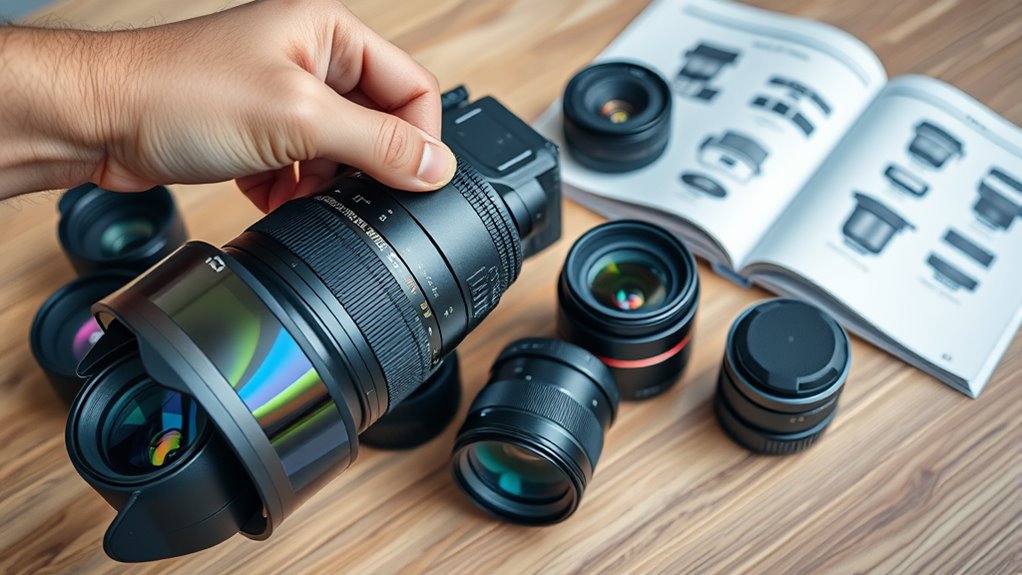
Understanding the different types of camera lenses is essential for capturing your desired shot. If you’re interested in close-up details, macro photography lenses are perfect—they allow you to focus on tiny subjects with incredible clarity. When choosing a lens, it’s important to *take into account* lens mount compatibility; not all lenses fit every camera body. For example, a macro lens designed for Canon might not work with Nikon cameras without an adapter. Knowing the specific lens mount ensures you select compatible equipment, saving you time and money. Different lenses serve various purposes, from wide-angle landscapes to telephoto wildlife shots. Familiarity with these types helps you make informed decisions, allowing you to choose the right lens for your style and the results you want to achieve. Additionally, understanding the contrast ratio of a projector can significantly influence the clarity and depth of your images, especially in dark scenes. Recognizing sensor size is also crucial, as it impacts image quality and depth of field in your photographs. In addition, being aware of lens aperture can help you control the amount of light entering the camera, affecting exposure and depth of field.

iO CLEAN Screen Cleaner Spray (16oz - 473ml) – Best Large Cleaning Kit
Screen cleaner spray and cloth. Screen cleaner spray and cloth are designed for high-end devices and work flawlessly...
As an affiliate, we earn on qualifying purchases.
Considering Your Photography Style and Needs
Think about your photography style and what subjects you love most. Focus on the lens features that matter most for your work, like zoom range or low-light performance. Choosing a lens that aligns with your needs helps you capture better images effortlessly.
Match Lens to Style
Choosing the right lens depends heavily on your photography style and the kind of images you want to create. Your style influences the lens color you might prefer, such as neutral or warmer tones, affecting the mood of your shots. Lens material also matters; lightweight plastic lenses suit casual shooting, while more durable metal ones are better for rugged conditions. If you focus on portraits, a fast prime lens offers sharp details and beautiful background blur, aligning with a softer, more intimate style. On the other hand, landscape photographers might opt for wide-angle lenses with specific lens coatings to reduce glare and enhance color accuracy. Additionally, understanding the Gold IRA Rollovers process can help you diversify your investment portfolio, ensuring your gear investment aligns with your long-term financial goals. Matching your lens to your style ensures your equipment complements your creative vision, helping you capture images that truly reflect your artistic intent. Moreover, considering lens compatibility with your camera body ensures optimal performance and image quality. Selecting the right lens also involves evaluating the focal length that best suits your typical shooting scenarios, enabling you to capture scenes more effectively. Being aware of the latest AI tools can also assist you in post-processing your images more efficiently, elevating your photography work.
Prioritize Essential Features
When selecting a lens, focusing on its key features helps guarantee it meets your specific photography needs. Consider the aperture size, image stabilization, and focal length to match your style—whether it’s portraits, landscapes, or street photography. Prioritize features that support your shooting conditions and subject matter. For example, if you shoot in low light, a lens with a wide aperture is essential, but also think about how easy it is to keep clean; lens cleaning tools are crucial for maintaining clarity. Additionally, your camera bag selection should accommodate your lens choices, ensuring safe storage and quick access. Understanding the lens compatibility with your camera body is also vital to ensure proper function and optimal image quality. Being aware of AI ethics is increasingly important for safeguarding the moral integrity of your work and maintaining trust with your audience. Moreover, selecting a lens with appropriate autofocus capabilities can greatly improve your shooting efficiency and results. To further optimize your gear, consider how sensor size compatibility influences image quality and lens performance. Recognizing the importance of pinball machine weight can help you plan for safe transportation and setup, especially if you intend to move or install larger models. By focusing on these essential features, you’ll choose a lens that enhances your creativity and keeps your gear in top shape.

Screen Mom Screen Cleaner Spray 16oz Bottle for TV, Car, Laptop & Computer
STREAK FREE FORMULA FOR CRYSTAL CLEAR SCREENS: Screen Mom tv cleaner spray and cloth advanced streak-free screen cleaner...
As an affiliate, we earn on qualifying purchases.
Key Lens Specifications to Know
Understanding key lens specifications helps you choose the right tool for your shots. Focal length range affects how much of the scene you capture, while aperture size determines your ability to shoot in low light and create background blur. Features like image stabilization can make a huge difference in sharpness, especially in handheld photography. Additionally, knowing about lens reliability and build quality ensures your investment lasts over time.
Focal Length Range
Focal length range is a crucial specification that determines what kind of photos your lens can capture. It affects your zoom versatility and focal length flexibility, giving you the ability to frame subjects differently. A wide-angle lens with a short focal length is perfect for landscapes and architecture, while a telephoto lens with a longer focal length excels in wildlife and portrait photography. Some lenses offer a zoom range, allowing you to switch between focal lengths without changing lenses, which adds convenience and adaptability. Understanding the focal length range helps you select the right lens for your preferred shooting style and subjects. Additionally, considering lens compatibility with your camera body ensures optimal performance and image quality. The aperture size also influences your lens choice, especially in low-light conditions and for achieving desired depth of field. Choosing the appropriate focal length range enhances your creative options and helps you achieve your desired photographic results.
Aperture Size Importance
Aperture size is a essential lens specification because it directly influences how much light enters the camera, affecting your ability to shoot in different lighting conditions. A wider aperture (smaller f-number) creates a shallow depth of field, making your subject stand out with a pleasing background blur, known as bokeh quality. Conversely, a smaller aperture (larger f-number) increases depth of field, keeping more of your scene in focus.
Key points to think about:
- Larger apertures produce more pronounced bokeh, ideal for portraits.
- Smaller apertures enhance overall sharpness and depth of field.
- The aperture size impacts low-light performance and exposure control, essential for versatile shooting.
Image Stabilization Features
Image stabilization features help you capture sharp, clear images even in challenging conditions or when shooting handheld. These features use advanced image stabilization techniques to reduce camera shake, allowing you to take steadier shots without a tripod. When choosing a lens, look for built-in optical stabilization or in-lens stabilization systems, as they markedly improve image quality during handheld shooting strategies. This is especially useful in low light or at slower shutter speeds. Keep in mind that some stabilization features are more effective than others, so consider how well a lens can counteract movement. By understanding these image stabilization techniques, you’ll be better equipped to select a lens that helps you achieve crisp, professional-looking photos regardless of your shooting environment. Additionally, understanding the regulatory environment surrounding camera equipment can help ensure your investments are protected and compliant with industry standards. Moreover, being aware of lens calibration options can further enhance stabilization performance and image quality. Familiarizing yourself with optical versus digital stabilization can also inform your choice of the most effective system for your specific needs. Knowing the impact on battery life of stabilization features can help you plan your shoots more effectively, especially during extended shooting sessions. Exploring advanced stabilization technologies can further improve your results in dynamic shooting scenarios.

KIC CrystalVu Screen Cleaner Spray Kit (16oz) with Microfiber Cloth
Streak-Free Formula – Professional-grade electronic screen cleaner spray removes fingerprints, smudges, and oily buildup from Smart TVs, OLED...
As an affiliate, we earn on qualifying purchases.
Matching Lens Focal Lengths to Your Subjects
Choosing the right lens depends largely on the subjects you want to capture. The focal length determines how your images will look and how versatile your zoom options are. For example, a wide-angle lens (short focal length) is perfect for landscapes and architecture, offering broad views. A standard lens (around 50mm) is great for everyday shots, providing a natural perspective. For portraits, a medium telephoto lens (85mm-135mm) enhances your subject, offering portrait enhancement and flattering features. If you want zoom versatility, consider zoom lenses that cover multiple focal lengths for flexibility. Here’s a quick guide:
- Wide-angle (16-35mm): landscapes and architecture
- Standard (50mm): everyday shots
- Telephoto (85-135mm): portraits and details
Understanding focal length helps you choose the best lens for your specific subjects and desired effects. Additionally, lens versatility plays a crucial role in expanding creative possibilities and adapting to various shooting situations.
Aperture and Its Impact on Image Quality

The size of your lens’s aperture plays a essential role in determining the sharpness, depth of field, and overall quality of your photos. A wider aperture (smaller f-number) creates a shallow depth of field, making your subject stand out against a blurred background. This effect enhances bokeh quality, giving your photos a pleasing, smooth background blur. Conversely, a narrower aperture (larger f-number) increases depth of field, keeping more of the scene in focus, which is ideal for landscapes or architectural shots. Your choice of aperture directly influences the sharpness of your subject and background separation. Understanding how aperture affects these factors allows you to control the mood and clarity of your images, helping you craft photos with the desired aesthetic and technical precision. Aperture and its impact on image quality is a fundamental concept that helps you master photographic techniques.
Compatibility With Your Camera Body

Ensuring your lens is compatible with your camera body is essential for seamless operation and ideal image quality. Compatibility depends on factors like sensor compatibility and mount types. First, check if your camera uses a specific mount type, such as Canon’s EF or Sony’s E-mount, and match it with the lens. Second, verify sensor compatibility—full-frame or crop sensor lenses are designed for different sensor sizes and affect image results. Third, consider if the lens supports your camera’s autofocus and stabilization features. Here’s a quick overview:
- Match your camera’s mount type with the lens mount.
- Confirm sensor compatibility (full-frame vs. crop sensor).
- Ensure lens features align with your camera’s capabilities.
Budget Considerations and Cost-Effective Options
If you’re working within a budget, exploring cost-effective lens options can help you get quality images without overspending. Start by doing a price comparison across different brands to find the best value for your money. Keep in mind, brand reputation matters; well-known brands often offer reliable quality, but lesser-known brands can provide excellent performance at lower prices. Consider third-party lens manufacturers that produce compatible, affordable options without sacrificing quality. Look for lenses that fit your specific needs, whether it’s a versatile zoom or a prime lens, and avoid paying for features you won’t use. By balancing price comparison with brand reputation, you can choose a lens that offers good performance without breaking your budget.
Tips for Trying and Testing Lenses Before Buying

Trying out lenses before buying is essential to make certain they meet your needs and deliver the quality you expect. Visit a store to handle different options, checking how comfortable they feel in your hands. Test the lens in good lighting to assess image quality and sharpness. While trying lenses, remember to inspect for dust or smudges, and perform lens cleaning if needed, to see how well they respond. Also, ask about proper lens storage tips to ensure longevity after purchase.
Here are some tips for testing lenses:
- Handle the lens to check for smooth focus and zoom rings.
- Capture sample shots to evaluate clarity and color reproduction.
- Inspect for dust, scratches, or other damage before finalizing your choice.
Maintaining and Caring for Your Camera Lenses
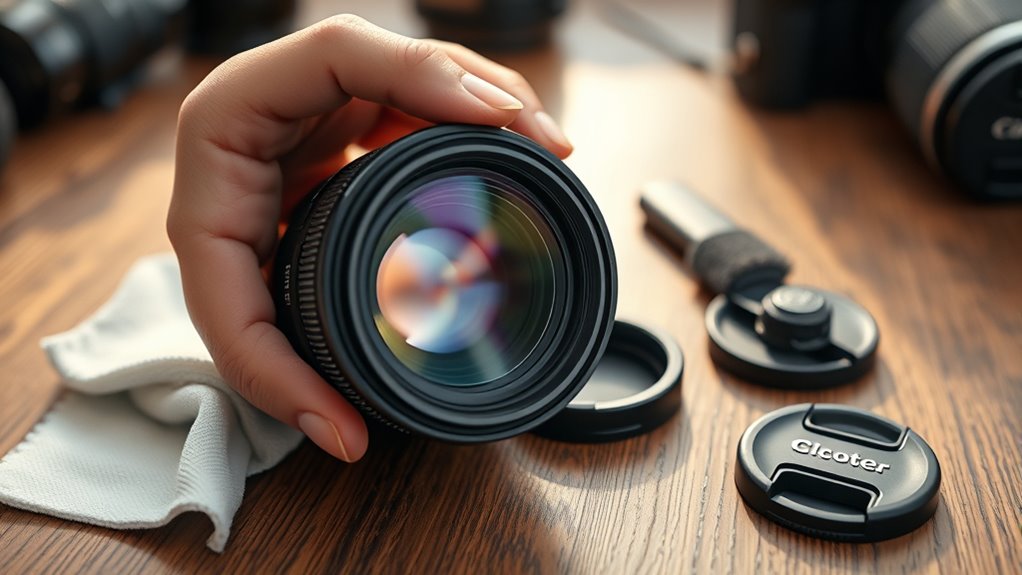
Proper maintenance and care are essential to keeping your camera lenses in top condition and ensuring they perform at their best over time. Regular lens cleaning is vital; use a gentle blower to remove dust, then a microfiber cloth and lens cleaning solution to eliminate smudges and fingerprints. Avoid touching the glass directly to prevent damage. Storage solutions also matter—keep your lenses in padded cases or dedicated compartments to protect them from dust, moisture, and accidental bumps. Always store lenses in a cool, dry place, and consider using silica gel packs to control humidity. Proper storage and regular cleaning extend your lens’s lifespan and maintain image quality, so make these practices part of your routine to enjoy peak performance for years to come.
Frequently Asked Questions
How Do I Choose a Lens for Low-Light Photography?
To choose a lens for low-light photography, focus on its aperture options—look for a wide maximum aperture like f/1.4 or f/2.8, which lets in more light. Also, consider your camera’s sensor size; larger sensors perform better in low light and work well with fast lenses. A lens with a wide aperture and compatible sensor size will help you capture clearer, brighter images even in challenging lighting conditions.
What Is the Best Lens for Portrait Photography Beginners?
Oh, you wanna master portrait photography as a beginner? Irony alert: the best lens isn’t some fancy one, but usually a 50mm or 85mm. These portrait focal lengths give you beautiful background blur and natural-looking faces. For beginner lens options, stick to these classic choices—they’re versatile and forgiving. You’ll love how they help you capture stunning portraits without overcomplicating things. Just keep your distance and focus on your subject!
How Do I Identify Counterfeit or Low-Quality Lenses?
To identify counterfeit or low-quality lenses, check for proper lens certification and packaging. Look for clear branding, serial numbers, and holograms that match official manufacturer details. Counterfeit signs include misspelled labels, blurry engravings, or inconsistent markings. Verify the seller’s reputation and compare prices with official sources. If something feels off or the lens seems unusually cheap, trust your instincts and avoid purchasing to prevent ending up with a fake or subpar product.
Can I Use Third-Party Lenses on My Camera?
Absolutely, you can use third-party lenses on your camera, but think of it like fitting a puzzle piece—compatibility hinges on lens mount compatibility. Check if the lens fits your camera’s mount and consider the brand reputation to guarantee quality and reliable performance. When you match the right third-party lens to your camera, you open up a world of creative possibilities, giving your photography a fresh, vibrant edge.
How Does Lens Weight Affect Handheld Shooting Stability?
Lens weight markedly impacts your handheld stability because heavier lenses can cause imbalance, making it harder to hold your camera steady. When a lens feels unbalanced, it strains your hands and arms, reducing overall stability. To improve handheld stability, choose lenses with better lens balance, ideally lighter ones or those with ergonomic design. Using a sturdy strap or tripod can also help, especially when working with heavier lenses.
Conclusion
Choosing the right camera lens might seem intimidating, but with a bit of research, you’ll find your perfect match. Remember, it’s all about finding a lens that fits your style and needs—don’t put all your eggs in one basket. Test, compare, and trust your instincts. When you do, you’ll be able to capture moments beautifully and make your photography journey a walk in the park. Happy shooting!