
TL;DR

Get the latest gadgets delivered free with Prime
- Fast, free delivery on millions of items
- Prime Video, Amazon Music and more included
- Member-only deals all year
Kevin Roast has introduced phoria2, a WebGL 2 rewrite of his 2013 phoria.js library, which rendered 3D through the 2D canvas context. The project’s website describes support for features including PBR materials, instancing, labels, shadows and glTF models; performance and ease-of-use statements remain the developer’s claims.
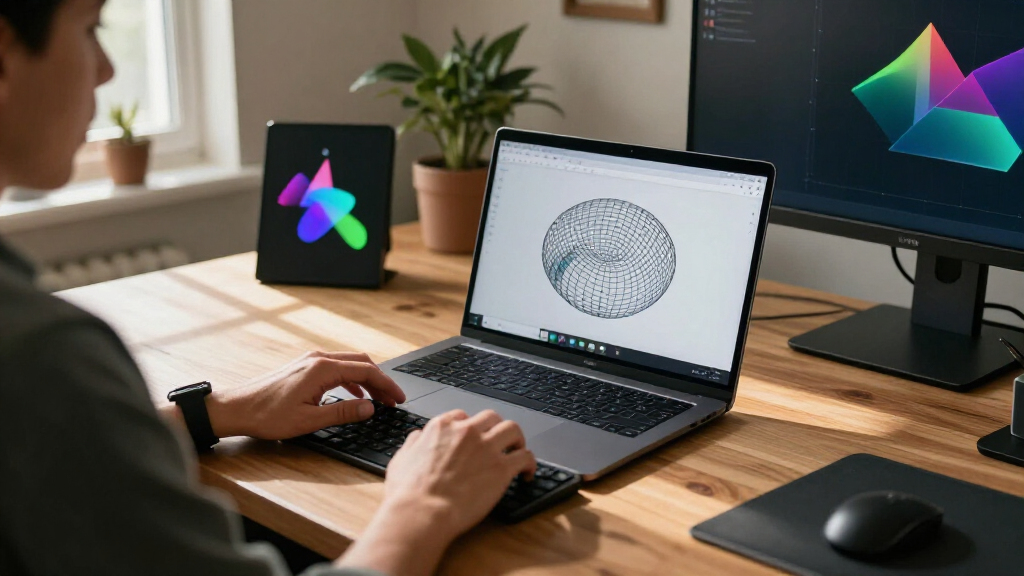
Developer Kevin Roast has published phoria2, a small JavaScript library for 3D graphics on the web that uses a WebGL 2 renderer rather than the 2D canvas rendering approach used by his earlier phoria.js project. The release recasts a library dating to 2013 for uses such as charts, labelled scenes, dashboards and product viewers, according to its project page.
The phoria2 website describes the library as a rewrite of phoria.js, which Roast says rendered 3D onto the Canvas 2D context. The new project is presented as a small, straightforward alternative for adding 3D scenes to web applications. Its code is available under the MIT license, and the page directs users to install it with npm and find documentation and a React example on GitHub.
The advertised feature set includes physically based rendering (PBR) materials, instancing, points, lines and labels, as well as picking, shadows, particles and support for glTF models. The project page also says the library uses plain ES modules and has no runtime dependencies. These are descriptions from the project’s publisher; the supplied material does not include independent testing or a detailed technical comparison with other libraries.
Roast also says views draw only when something changes and that the API validates every option, returning errors with explanations of how to fix them. The page frames this feedback as useful to both human developers and coding agents. It describes the API as learnable in an afternoon, but provides no user study or other evidence measuring how long learning takes.
A WebGL Rewrite for Small Projects
The release marks a change in implementation for Roast’s earlier project: phoria.js used canvas 2D, while phoria2 is built around WebGL 2. That makes the announcement relevant to developers looking for a compact library to create interactive 3D elements within web pages, especially for the kinds of charts, labelled scenes and product viewers listed by the project.
The advertised combination of 3D features and a low-dependency setup could appeal to teams that want scene rendering without adding a larger application framework. Error messages that suggest corrections may also help developers diagnose configuration mistakes. Those are potential benefits, not independently established outcomes: the source provides feature descriptions but no benchmarks, adoption figures, browser compatibility results or comparative evaluation.
The project’s MIT license permits broad use under its terms, and the presence of documentation and a React example gives prospective users an initial route to evaluate it. Whether phoria2 suits a particular project will depend on its rendering needs, target browsers and the details of the library’s implementation.
Products Worth Considering

EcoFlow Delta 3 Ultra 3072Wh Portable Power Station – 3600W AC Output

Bose SoundLink Flex Bluetooth Speaker (2nd Gen), Waterproof, Dustproof, USB‑C, Up to 12 hr Battery, Black

Bose QuietComfort Ultra Headphones (2nd Gen), Wireless Bluetooth Noise-Cancelling Over-Ear Headphones, Black
As an affiliate, we earn on qualifying purchases.
From Canvas 2D to WebGL 2
Roast identifies phoria2 as a rewrite of phoria.js, a 2013 JavaScript library. The older project generated 3D imagery through the two-dimensional canvas context, while the new version names WebGL 2 as its renderer. The project’s copyright line spans 2013–2026, connecting the new release to the earlier library, though it does not establish the precise release date.
The project page positions phoria2 for practical embedded visuals rather than describing it as a general-purpose 3D engine. It lists dashboards, charts and product viewers among possible uses and highlights labels, picking and glTF model support. The supplied information does not document migration from phoria.js, so users should not assume that existing projects can switch versions without changes.
““a small, fast JavaScript library for 3D on the web””
— The phoria2 project page
Performance and Compatibility Evidence
The supplied material does not give a precise launch date, benchmark results, supported-browser list, examples of production deployments or independent assessments. Roast’s descriptions of phoria2 as fast and easy to learn are project claims, not reported test findings. It is also unclear how the new API differs from phoria.js, whether existing users can migrate code, and what limitations apply to the listed rendering features.
The page points readers to documentation and a React example, but the source material does not reproduce their technical details. Prospective users would need to consult the project’s repository and test the library in their own target environments to establish compatibility and suitability.
Review the Code and Examples
The project page directs developers to npm, GitHub documentation and a React example as starting points for trying phoria2. The next practical step for interested users is to review those materials, check the library’s API and test its behavior with their intended models, scenes and browsers.
No future release schedule, roadmap or next milestone is specified in the supplied source. Further details about migration, browser support and measured performance may become clearer through the project documentation or subsequent updates from Roast.
Key Questions
What is phoria2?
Phoria2 is a JavaScript library for web 3D graphics that uses a WebGL 2 renderer. Its creator describes it as a rewrite of the older phoria.js project.
How does it differ from phoria.js?
According to the project page, phoria.js rendered 3D through the Canvas 2D context, while phoria2 uses WebGL 2. The supplied source does not detail API changes or whether code can be migrated directly.
What features does the project list?
The project page lists PBR materials, instancing, points, lines, labels, picking, shadows and particles, along with glTF model support. These are publisher descriptions; the source does not provide independent testing.
Is phoria2 open source?
Yes. Its project page says it is released under the MIT license and points users to npm, GitHub documentation and a React example.
Are performance and browser support documented?
The page calls the library fast, but the supplied material includes no benchmark results or supported-browser list. Users should check the repository and test it in their own environments.
Source: kevs3d.co.uk