
The best Garmin smartwatch for most people is the Garmin Venu 4, which pairs everyday fitness tracking with a bright AMOLED screen and broad health features. The Forerunner 165 is a more focused pick for runners who want guided training, while the Instinct 3 AMOLED better suits outdoor users who value a rugged build. Garmin’s lineup spans compact lifestyle watches, straightforward fitness models, dedicated running tools, and feature-rich multisport devices, so the main tradeoffs are simplicity versus training depth, bright displays versus battery priorities, and everyday comfort versus rugged construction. I compare all 15 models by their intended use, fit, features, and practical compromises. Read on for the full breakdown and a guide to choosing the right Garmin for your routine.

Get the latest gadgets delivered free with Prime
- Fast, free delivery on millions of items
- Prime Video, Amazon Music and more included
- Member-only deals all year
Complete the kit



Key Takeaways
- The Venu 4 is the strongest all-around choice in this lineup for buyers who want a polished daily smartwatch without stepping up to Garmin’s more specialized multisport ranges.
- Running needs split by ambition: the Forerunner 165 is a focused entry point, while the Forerunner 570 is better suited to runners seeking a more advanced training experience.
- Ruggedness changes the ownership experience: the Instinct E favors a simpler outdoor-ready approach, while the Instinct 3 AMOLED adds a more vivid display.
- Garmin’s premium multisport watches are not interchangeable: the fēnix 8 models emphasize broad outdoor and sport capability, while the epix Pro and epix Gen 2 center a premium AMOLED experience.
- Size and purpose matter as much as features: the 35 mm Lily 2 is the compact style-led choice, while the smaller fēnix 8 Sapphire 43 mm offers a more capable multisport option in a less imposing size.
| Garmin vívoactive 6 GPS Fitness Smartwatch, AMOLED Display, Slate with Black Silicone Band, Bundle |  | Best for Everyday Fitness Variety | Operating system: Garmin OS | Display: AMOLED touchscreen | Battery life: Up to 11 days | VIEW LATEST PRICE | See Our Full Breakdown |
| Garmin Venu Sq 2 GPS Smartwatch, Slate/Shadow Gray |  | Best for Straightforward Daily Tracking | Display: AMOLED with always-on mode | Battery life: Up to 11 days | GPS: Built-in | VIEW LATEST PRICE | See Our Full Breakdown |
| Garmin Lily 2 Smartwatch, 35 mm, Coconut |  | Best Compact Style Pick | Case size: 35 mm | Case material: Metal | Band material: Silicone | VIEW LATEST PRICE | See Our Full Breakdown |
| Garmin epix Pro (Gen 2) Sapphire Smartwatch, 47 mm, Black |  | Best Premium Navigation and Training Pick | Display: 1.3-inch always-on AMOLED | Lens: Scratch-resistant sapphire | Case and bezel: Titanium | VIEW LATEST PRICE | See Our Full Breakdown |
| Garmin Venu 3 Fitness Smartwatch, 45 mm, Black |  | Best for Wellness and Everyday Smart Features | Case size: 45 mm | Operating system: Garmin OS | Battery life: Up to 14 days in smartwatch mode | VIEW LATEST PRICE | See Our Full Breakdown |
| Garmin Forerunner 165 GPS Running Smartwatch, 43 mm, Black |  | Best for Runners | Display: AMOLED touchscreen | Case size: 43 mm | GPS: Built-in GPS | VIEW LATEST PRICE | See Our Full Breakdown |
| Garmin Instinct 3 AMOLED Rugged GPS Smartwatch, 45 mm, Black |  | Best Rugged AMOLED Pick | Display: 1.2-inch AMOLED | Case size: 45 mm | Battery life: Up to 18 days in smartwatch mode | VIEW LATEST PRICE | See Our Full Breakdown |
| Garmin Instinct E Rugged GPS Smartwatch, 45 mm, Charcoal |  | Best for Rugged Simplicity | Display size: 45 mm | Battery life: Up to 16 days | Water resistance: 10 ATM (100 meters) | VIEW LATEST PRICE | See Our Full Breakdown |
| Garmin fēnix 8 Pro 51mm Sapphire GPS Smartwatch, DLC Titanium, Black/Pebble Gray |  | Best Premium Connected Multisport Watch | Display: 1.4-inch AMOLED touchscreen | Case material: Titanium | Lens: Scratch-resistant sapphire | VIEW LATEST PRICE | See Our Full Breakdown |
| Garmin vívoactive 6 GPS Smartwatch, 42 mm, Slate |  | Best Everyday Fitness Pick | Display: AMOLED touchscreen | Case size: 42 mm | Battery life: Up to 11 days in smartwatch mode | VIEW LATEST PRICE | See Our Full Breakdown |
| Garmin fēnix 8 Sapphire 43 mm GPS Multisport Smartwatch, Fog Gray/Dark Sandstone | 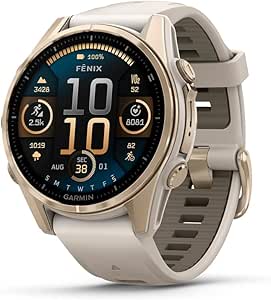 | Best Compact Premium Multisport | Display: 1.3-inch AMOLED touchscreen | Case size: 43 mm | Lens: Scratch-resistant sapphire | VIEW LATEST PRICE | See Our Full Breakdown |
| Garmin Venu 4 GPS Fitness Smartwatch, 45 mm, Black Silicone Band |  | Best Everyday Fitness Companion | Display: Bright, colorful display | Case size: 45 × 45 × 12.5 mm | Case material: Stainless steel | VIEW LATEST PRICE | See Our Full Breakdown |
| Garmin Forerunner 570 – 42 mm – Aluminum – Cloud Blue & Whitestone |  | Best for Dedicated Runners | Case size: 42 mm | Display: AMOLED touchscreen | Case material: Aluminum | VIEW LATEST PRICE | See Our Full Breakdown |
| Garmin vívoactive 5 GPS Smartwatch, 42 mm, Black |  | Best Value for Everyday Fitness | Display: AMOLED | Case size: 42 mm | Weight: 1.31 ounces | VIEW LATEST PRICE | See Our Full Breakdown |
| Garmin epix (Gen 2) Premium Active Smartwatch, AMOLED Touchscreen, Slate Steel |  | Best for Long Battery Life with AMOLED | Display: 1.3-inch AMOLED touchscreen | Smartwatch battery life: Up to 16 days in gesture mode; up to 5 days always-on | GPS battery life: Up to 42 hours in gesture mode; up to 30 hours always-on | VIEW LATEST PRICE | See Our Full Breakdown |
| Garmin smartwatch | Display | Battery life | Water resistance | Case size |
|---|---|---|---|---|
| Garmin vívoactive 6 GPS Fitnes | AMOLED touchscreen | Up to 11 days | — | — |
| Garmin Venu Sq 2 GPS Smartwatc | AMOLED with always-on mode | Up to 11 days | 50 meters | — |
| Garmin Lily 2 Smartwatch | Touchscreen with patterned lens | Up to 5 days | — | 35 mm |
| Garmin epix Pro | 1.3-inch always-on AMOLED | — | 100 meters | 47 mm |
| Garmin Venu 3 Fitness Smartwat | — | Up to 14 days in smartwatch mode | 50 meters | 45 mm |
| Garmin Forerunner 165 GPS Runn | AMOLED touchscreen | Up to 11 days in smartwatch mode; up to 19 hours in GPS mode | 50 meters | 43 mm |
| Garmin Instinct 3 AMOLED Rugge | 1.2-inch AMOLED | Up to 18 days in smartwatch mode | 10 ATM | 45 mm |
| Garmin Instinct E Rugged GPS S | — | Up to 16 days | 10 ATM (100 meters) | — |
| Garmin fēnix 8 Pro 51mm Sapphi | 1.4-inch AMOLED touchscreen | Up to 27 days in smartwatch mode | 40-meter dive rating | — |
| Garmin vívoactive 6 GPS Smartw | AMOLED touchscreen | Up to 11 days in smartwatch mode | 50 meters | 42 mm |
| Garmin fēnix 8 Sapphire 43 mm | 1.3-inch AMOLED touchscreen | — | — | 43 mm |
| Garmin Venu 4 GPS Fitness Smar | Bright, colorful display | Up to 12 days | 50 meters | 45 × 45 × 12.5 mm |
| Garmin Forerunner 570 | AMOLED touchscreen | — | — | 42 mm |
| Garmin vívoactive 5 GPS Smartw | AMOLED | Up to 11 days in smartwatch mode | — | 42 mm |
| Garmin epix | 1.3-inch AMOLED touchscreen | — | 100 meters | — |
More Details on Our Top Picks
Garmin vívoactive 6 GPS Fitness Smartwatch, AMOLED Display, Slate with Black Silicone Band, Bundle
The vívoactive 6 makes the most sense for someone who wants independent GPS, broad activity choice, and everyday smart features without stepping up to a multisport model like the epix Pro (Gen 2). Its 80-plus sports apps and suggested workouts give casual exercisers plenty of ways to structure activity, while recovery insights can help balance training with rest. The AMOLED touchscreen and up-to-11-day battery life suit daily wear, and music downloads and contactless payments add useful phone-free conveniences. Compared with the Venu 3, this bundle offers more listed sports apps but less battery life and no listed speaker or microphone for calls. The included cleaning cloth and P-Bank battery are extras, not substitutes for the watch’s own battery. Some smart features depend on a compatible phone or service.
Pros:- Built-in GPS supports outdoor activity tracking without relying on a phone for positioning.
- More than 80 sports apps provide a wide choice of activities.
- Recovery insights and suggested workouts help organize training and rest.
- Supports music downloads and contactless payments.
Cons:- Up to 11 days of battery life is shorter than the Venu 3’s listed up-to-14-day maximum.
- Some smart features depend on a compatible phone or service.
- The bundle’s added accessories do not replace the need to recharge the watch.
Best for: Everyday exercisers who want built-in GPS, varied workout options, and recovery guidance in an AMOLED watch.
Not ideal for: Buyers seeking advanced navigation, premium rugged construction, or built-in calling; the epix Pro (Gen 2) is better equipped for navigation, while the Venu 3 adds a speaker and microphone.
- Operating system:Garmin OS
- Display:AMOLED touchscreen
- Battery life:Up to 11 days
- Sports apps:More than 80
- GPS:Built-in
- Band material:Silicone
- Additional features:Bluetooth; menstrual cycle or pregnancy tracking
- Bundle includes:Microfiber cleaning cloth and P-Bank battery
Our verdict“Choose the vívoactive 6 if you want broad everyday fitness tracking and built-in GPS, but pick the Venu 3 for longer listed battery life and wrist-based calls.”
Garmin Venu Sq 2 GPS Smartwatch, Slate/Shadow Gray
The Venu Sq 2 is a practical choice for buyers who want built-in GPS, a readable AMOLED screen, and core health and activity tracking without a long list of advanced training tools. Its up-to-11-day battery life gives it a similar endurance target to the vívoactive 6, but the Sq 2 has more than 25 sports apps rather than more than 80. That smaller activity selection suits a straightforward routine; it is less compelling for people who want lots of workout modes or suggested training. 50-meter water resistance makes it suitable for swimming, and Android and iOS compatibility broadens its appeal. Compared with the smaller Lily 2, this model has built-in GPS and longer listed battery life, but its square case is less compact. Safety features may need a paired phone, setup, and network coverage, and metrics are estimates.
Pros:- Built-in GPS tracks outdoor activities without requiring a connected phone for positioning.
- AMOLED display includes an always-on mode for at-a-glance viewing.
- Up to 11 days of battery life supports extended everyday wear between charges.
- 50-meter water resistance and more than 25 sports apps suit a range of common activities.
Cons:- More than 25 sports apps offer less variety than the vívoactive 6.
- Some safety and tracking features require a paired phone, setup, and network coverage.
- Health and activity measurements are estimates, not medical readings.
Best for: Buyers who want a simple daily fitness watch with built-in GPS, a bright screen, and a focused selection of sports apps.
Not ideal for: People who want extensive workout variety or a petite, jewelry-like watch; the vívoactive 6 offers more than 80 sports apps, while the Lily 2 has a 35 mm case.
- Display:AMOLED with always-on mode
- Battery life:Up to 11 days
- GPS:Built-in
- Sports apps:More than 25
- Water resistance:50 meters
- Case material:Aluminum
- Storage:4 GB
- Compatibility:Android and iOS smartphones
Our verdict“Pick the Venu Sq 2 for uncomplicated daily tracking and built-in GPS, but choose the vívoactive 6 if you want a much broader set of sports apps.”
Garmin Lily 2 Smartwatch, 35 mm, Coconut
The Lily 2 prioritizes a small, lightweight profile over standalone sports-watch capability. Its 35 mm metal case, patterned lens, and 0.8-ounce weight make it a more discreet choice than the larger Venu 3, while its tracking covers sleep, heart rate, stress, activity, and women’s health metrics. That combination suits someone who wants wellness tracking in a compact everyday watch, not a training-focused device with extensive workout options. The tradeoff is clear: GPS works through a compatible smartphone, unlike the built-in GPS on the Venu Sq 2 and vívoactive 6, and battery life is up to five days rather than up to 11 on those models. Notifications and safety tools also rely on phone pairing and network coverage. It is the style-led pick, not the best fit for phone-free runs.
Pros:- Compact 35 mm metal case and 0.8-ounce weight suit buyers who find larger watches cumbersome.
- Tracks sleep, respiration, Body Battery, stress, heart rate, and women’s health metrics.
- Patterned lens conceals the touchscreen display for a less conventional smartwatch look.
- Offers LiveTrack, incident detection during select activities, and Assistance when paired as required.
Cons:- GPS requires a compatible smartphone rather than working independently.
- Up to five days of battery life is substantially shorter than the Venu Sq 2’s listed up-to-11-day maximum.
- Notifications and safety features depend on smartphone pairing and network coverage.
Best for: Buyers who prefer a petite, lightweight smartwatch for daily wear and want sleep, stress, heart-rate, and women’s health tracking.
Not ideal for: Runners or outdoor exercisers who want GPS without carrying a phone, or anyone prioritizing long battery life; the Venu Sq 2 and vívoactive 6 last longer and include built-in GPS.
- Case size:35 mm
- Case material:Metal
- Band material:Silicone
- Display:Touchscreen with patterned lens
- Battery life:Up to 5 days
- GPS:Connected GPS via compatible smartphone
- Weight:0.8 ounces
- Activity tracking:Yoga, Pilates, cardio, dance fitness, mindful breathing, walks, and runs
Our verdict“Choose the Lily 2 for a compact, style-conscious health tracker, but opt for the Venu Sq 2 if phone-free GPS and longer battery life matter more.”
Garmin epix Pro (Gen 2) Sapphire Smartwatch, 47 mm, Black
The epix Pro (Gen 2) is the lineup’s specialist for buyers who want premium materials, detailed navigation, and extensive multisport tools rather than a lighter everyday fitness watch. Its preloaded maps and multi-GNSS navigation with SatIQ are meaningful advantages over the Venu 3, whose listed features focus more on wellness, general sports tracking, and connected phone functions. The sapphire lens, titanium bezel, and built-in LED flashlight suit demanding outdoor use, while the 100-meter water resistance adds a tougher brief than the Venu 3’s 50 meters. It also has a 1.3-inch always-on AMOLED display. The tradeoff is its 47 mm, 70 g build, which is less discreet than the 45 mm Venu 3, and the product data does not specify an exact battery duration. Health metrics are estimates, and Pulse Ox availability varies by country.
Pros:- Preloaded maps and multi-GNSS navigation with SatIQ support route-focused outdoor use.
- Sapphire lens and titanium bezel provide a premium, scratch-resistant construction.
- Built-in LED flashlight offers variable intensities and strobe modes.
- 100-meter water resistance exceeds the Venu 3’s listed 50-meter rating.
Cons:- The 47 mm, 70 g case is larger and heavier than the 45 mm Venu 3.
- The supplied product data gives no exact battery-life duration for direct endurance comparison.
- Pulse Ox is unavailable in some countries, and health metrics are estimates rather than medical measurements.
Best for: Outdoor athletes and multisport users who want preloaded maps, advanced satellite navigation, durable premium materials, and a built-in flashlight.
Not ideal for: Buyers seeking a lightweight, simple daily smartwatch or a specific battery-life benchmark; the Venu 3 has a smaller case and a stated up-to-14-day smartwatch-mode battery life.
- Display:1.3-inch always-on AMOLED
- Lens:Scratch-resistant sapphire
- Case and bezel:Titanium
- Case size:47 mm
- Weight:70 g
- Water resistance:100 meters
- Satellite navigation:GPS; multi-GNSS with SatIQ
- Connectivity:Bluetooth, USB, and Wi-Fi
Our verdict“Choose the epix Pro (Gen 2) if maps, multisport capability, and rugged premium construction are priorities; the Venu 3 is a simpler, smaller everyday alternative.”
Garmin Venu 3 Fitness Smartwatch, 45 mm, Black
The Venu 3 is a balanced pick for buyers who want wellness tracking and practical smartwatch functions in one device. Sleep coaching and Body Battery energy monitoring give its health focus more day-to-day direction than the Venu Sq 2’s simpler activity-led proposition, while built-in GPS and more than 30 sports apps cover regular workouts. Its up-to-14-day smartwatch-mode battery life also tops the vívoactive 6 and Venu Sq 2’s listed up-to-11-day figures. A speaker and microphone allow calls and voice features when paired with a compatible phone, a capability not listed for those alternatives. The compromises are a 45 mm case that may feel large on smaller wrists and phone dependence for calling and messaging. Like other Garmin health trackers here, its metrics are estimates rather than medical measurements.
Pros:- Up to 14 days of smartwatch-mode battery life exceeds the listed maximums for the vívoactive 6 and Venu Sq 2.
- Sleep coaching and Body Battery add context to everyday wellness tracking.
- Built-in GPS and more than 30 sports apps cover common indoor and outdoor activities.
- Speaker and microphone support calls and voice features when paired with a compatible smartphone.
Cons:- Calling and messaging features require a compatible paired smartphone.
- The 45 mm case may be too large for buyers seeking a petite fit like the Lily 2.
- Health measurements are estimates and are not medical readings.
Best for: Buyers who want guided sleep and energy tracking, built-in GPS, a broad everyday fitness feature set, and phone-paired calling from a 45 mm watch.
Not ideal for: People who want a compact case or advanced preloaded-map navigation; the Lily 2 is much smaller, while the epix Pro (Gen 2) is better suited to route-focused outdoor use.
- Case size:45 mm
- Operating system:Garmin OS
- Battery life:Up to 14 days in smartwatch mode
- Storage:8 GB
- Water resistance:50 meters
- Navigation:Built-in GPS
- Sports apps:More than 30
- Compatibility:iPhone and Android smartphones
Our verdict“Pick the Venu 3 for longer listed battery life and a strong mix of wellness tracking and phone-paired calling, but choose the epix Pro (Gen 2) for maps and advanced outdoor navigation.”
Garmin Forerunner 165 GPS Running Smartwatch, 43 mm, Black
The Forerunner 165 is the clearest choice here for runners who want training guidance without moving up to a bulkier multisport watch. Its built-in GPS, wrist-based heart rate tracking, adaptive training plans, and recovery insights bring the focus to planning and reviewing runs, while the AMOLED touchscreen and physical buttons offer two ways to operate it. Compared with the vívoactive 6, the Forerunner’s appeal is its more running-centered training setup rather than a wider selection of sports apps. Its up to 11-day smartwatch battery life is practical for everyday wear, though GPS use brings that figure down to up to 19 hours. Skip it if you want rugged construction or extensive outdoor navigation; the Instinct 3 AMOLED is better suited to those demands. Safety and tracking features also depend on a paired phone and network coverage.
Pros:- Built-in GPS and wrist-based heart rate tracking support run recording without carrying a separate GPS device.
- Adaptive training plans and recovery insights help runners structure workouts.
- AMOLED touchscreen is paired with button controls for flexible operation.
- Up to 11 days of battery life in smartwatch mode.
Cons:- Battery life falls to up to 19 hours in GPS mode.
- Safety and tracking features require a paired smartphone and network coverage.
- Garmin Pay availability depends on supported countries and payment networks.
Best for: Runners who want built-in GPS, adaptive training plans, and recovery guidance in a watch that also works for daily wear.
Not ideal for: Hikers and outdoor users who need a rugged case or the Instinct 3 AMOLED’s compass, altimeter, and multi-band GPS.
- Display:AMOLED touchscreen
- Case size:43 mm
- GPS:Built-in GPS
- Battery life:Up to 11 days in smartwatch mode; up to 19 hours in GPS mode
- Water resistance:50 meters
- Storage:4 GB
- Activity profiles:25+
- Compatibility:Android and iPhone
Our verdict“Choose the Forerunner 165 if running plans and recovery tools matter more to you than the Instinct 3 AMOLED’s rugged outdoor equipment.”
Garmin Instinct 3 AMOLED Rugged GPS Smartwatch, 45 mm, Black
The Instinct 3 AMOLED pairs a vivid 1.2-inch screen with the rugged equipment that distinguishes this lineup’s outdoor watches. A metal-reinforced bezel, 10 ATM water rating, and stated thermal and shock resistance suit demanding outdoor use, while multi-band GPS with SatIQ, a compass, and a barometric altimeter offer more navigation support than the Forerunner 165. Its built-in flashlight is a useful extra for visibility and close-up tasks, and the watch is rated for up to 18 days in smartwatch mode. Compared with the more basic Instinct E, this model adds an AMOLED display and flashlight, but buyers focused on long battery life alone may find the E’s simpler feature set adequate. Pulse Ox availability varies by country, and health readings are estimates, not medical measurements.
Pros:- Metal-reinforced bezel and 10 ATM water rating suit demanding outdoor activities.
- Multi-band GPS with SatIQ, compass, and barometric altimeter add navigation capability.
- Built-in flashlight offers variable intensities and strobe modes.
- Up to 18 days of battery life in smartwatch mode.
Cons:- Its rugged 45 mm design may feel bulky to buyers seeking a compact everyday watch.
- Pulse Ox is unavailable in some countries, and health metrics are estimates rather than medical readings.
Best for: Outdoor users who want a rugged, water-resistant Garmin with an AMOLED screen, multi-band GPS, and a built-in flashlight.
Not ideal for: Buyers who want a smaller, running-focused watch or do not need the extra outdoor hardware over the Instinct E.
- Display:1.2-inch AMOLED
- Case size:45 mm
- Battery life:Up to 18 days in smartwatch mode
- Case material:Fiber-reinforced polymer
- Bezel:Metal-reinforced
- Navigation:Multi-band GPS with SatIQ, 3-axis compass, barometric altimeter
- Water resistance:10 ATM
- Storage:4 GB
Our verdict“Pick the Instinct 3 AMOLED if you want a rugged outdoor watch with a bright display and more navigation hardware than the Instinct E.”
Garmin Instinct E Rugged GPS Smartwatch, 45 mm, Charcoal
The Instinct E is the straightforward outdoor pick: it keeps the rugged case, multi-GNSS navigation, compass, and altimeter, without the Instinct 3 AMOLED’s specified AMOLED display and built-in flashlight. That simpler approach still delivers up to 16 days of battery life, 10 ATM water resistance, and stated thermal and shock resistance, making it better suited to users who prioritize durability and dependable activity tracking over screen flair. It also covers daily health metrics and smartphone notifications, and works with Android and iOS phones. Compared with the Forerunner 165, it is more oriented toward outdoor durability and navigation than coached running. The tradeoff is a less elaborate feature set: its listed memory is 128 MB, and Pulse Ox availability varies by country. Health readings are estimates, not medical assessments.
Pros:- Up to 16 days of battery life in smartwatch mode.
- 10 ATM water resistance and stated thermal and shock resistance support rugged use.
- Built-in GPS, multi-GNSS navigation, compass, and barometric altimeter.
- Tracks health and activity and provides smartphone notifications.
Cons:- Does not list the Instinct 3 AMOLED’s AMOLED display or built-in flashlight.
- The listed 128 MB memory is modest compared with the Instinct 3 AMOLED’s 4 GB.
- Pulse Ox availability varies by country, and health metrics are estimates.
Best for: Hikers, campers, and active users who want a durable Garmin with navigation tools and long smartwatch battery life, without prioritizing an AMOLED display.
Not ideal for: Buyers who want a bright AMOLED screen, a built-in flashlight, or the Instinct 3 AMOLED’s more feature-rich package.
- Display size:45 mm
- Battery life:Up to 16 days
- Water resistance:10 ATM (100 meters)
- Durability:Engineered to MIL-STD-810 for thermal and shock resistance
- Navigation:Built-in GPS, multi-GNSS, 3-axis compass, barometric altimeter
- Memory:128 MB
- Case material:Fiber-reinforced polymer
- Compatibility:Android and iOS
Our verdict“Choose the Instinct E if ruggedness and navigation matter more than the Instinct 3 AMOLED’s brighter display and extra features.”
Garmin fēnix 8 Pro 51mm Sapphire GPS Smartwatch, DLC Titanium, Black/Pebble Gray
The fēnix 8 Pro is the most capable pick here for buyers who want more than a conventional smartwatch: it combines mapping and multisport tracking with satellite and LTE connectivity, two-way messaging, and SOS support. Its titanium case and sapphire lens are built for demanding use, while a 1.4-inch AMOLED screen, music storage, and LED flashlight broaden its everyday usefulness. The listed battery life reaches up to 27 days in smartwatch mode, exceeding the Instinct 3 AMOLED’s 18 days. The major tradeoff is that satellite, LTE, and SOS features require an active subscription, and coverage varies by location; local rules may also restrict satellite devices. At 51 mm, it is a substantial watch, and buyers who only need fitness tracking may be better served by the smaller Forerunner 165.
Pros:- Satellite and LTE connectivity support two-way messaging and SOS features when an active subscription and coverage are available.
- Titanium case and scratch-resistant sapphire lens are suited to demanding use.
- Mapping, multisport tracking, music storage, and a built-in LED flashlight cover a wide range of needs.
- Up to 27 days of battery life in smartwatch mode.
Cons:- Satellite, LTE, and SOS features require an active subscription.
- Connectivity coverage and availability vary by location, and some jurisdictions restrict satellite devices.
- The 51 mm case may be too large for buyers who prefer a smaller watch.
Best for: Experienced outdoor and multisport users who want mapping, premium materials, and subscription-based satellite and LTE messaging or SOS features.
Not ideal for: Buyers seeking a smaller, simpler fitness watch or anyone unwilling to pay for a subscription to use satellite, LTE, and SOS services.
- Display:1.4-inch AMOLED touchscreen
- Case material:Titanium
- Lens:Scratch-resistant sapphire
- Connectivity:Satellite and LTE; active subscription required
- Battery life:Up to 27 days in smartwatch mode
- Water resistance:40-meter dive rating
- GPS systems:GLONASS, GPS, Galileo
- Features:Multisport tracking, activity tracking, music storage, LED flashlight, mapping
Our verdict“Choose the fēnix 8 Pro if you need premium navigation and connected safety features, and accept the large case and subscription requirements.”
Garmin vívoactive 6 GPS Smartwatch, 42 mm, Slate
The vívoactive 6 makes the most sense for buyers who want a general-purpose fitness watch rather than a specialist running or rugged-outdoor model. Its more than 80 sports apps give it broader activity coverage than the Forerunner 165’s 25+ profiles, while built-in GPS, health and sleep tracking, personalized coaching, and nap detection support everyday wellness and workouts. The 42 mm case and AMOLED touchscreen make it a more everyday-oriented choice than the 45 mm Instinct 3 AMOLED, which adds rugged construction and outdoor navigation tools instead. Battery life is rated for up to 11 days in smartwatch mode. The vívoactive 6 does not list the Forerunner’s adaptive running plans, so runners seeking focused training guidance may prefer that model. Health metrics are estimates, and Garmin Pay depends on supported countries and payment networks.
Pros:- More than 80 sports apps cover a wide range of indoor and GPS activities.
- AMOLED touchscreen and 42 mm case suit everyday wear.
- Up to 11 days of battery life in smartwatch mode.
- Health tracking, sleep coaching, nap detection, music storage, and notifications support daily use.
Cons:- Does not list the Forerunner 165’s adaptive training plans.
- Lacks the Instinct 3 AMOLED’s rugged construction and listed compass and altimeter.
- Health metrics are estimates, and Garmin Pay depends on supported countries and payment networks.
Best for: Everyday fitness users who want a 42 mm AMOLED Garmin with broad sports-app coverage, sleep tools, and built-in GPS.
Not ideal for: Runners who want the Forerunner 165’s adaptive training plans or outdoor users who need the Instinct 3 AMOLED’s rugged build and navigation hardware.
- Display:AMOLED touchscreen
- Case size:42 mm
- Battery life:Up to 11 days in smartwatch mode
- GPS:Built-in GPS
- Water resistance:50 meters
- Sports apps:More than 80
- Health metrics:Heart rate, menstrual cycle, sleep duration, step count
- Additional features:Activity tracking, nap detection, music storage, Garmin Pay, notifications
Our verdict“Pick the vívoactive 6 for broad everyday fitness and sleep features, but choose the Forerunner 165 for more focused running guidance.”
Garmin fēnix 8 Sapphire 43 mm GPS Multisport Smartwatch, Fog Gray/Dark Sandstone
The 43 mm fēnix 8 Sapphire packs serious outdoor and training tools into a smaller case than many premium multisport watches. Its scratch-resistant sapphire lens, multi-band GPS with SatIQ, navigation features, and built-in flashlight suit people who move between demanding workouts and outdoor routes. The AMOLED display is vivid and easy to read, while up to 10 days of smartwatch battery life offers a useful balance between screen quality and endurance. Compared with the epix (Gen 2), this fēnix adds the flashlight and newer call and voice-assistant support when paired with a phone, but the epix can last longer in smartwatch mode. The tradeoff is that this feature-rich model may be more watch than casual fitness users need, and some health features depend on region or availability.
Pros:- Sapphire lens adds scratch resistance for frequent outdoor use
- Multi-band GPS with SatIQ supports route tracking across varied environments
- Built-in LED flashlight is useful during early or late outings
- Up to 10 days of smartwatch battery life
Cons:- Call and voice-assistant functions require a paired smartphone
- Some health features, including ECG and Pulse Ox, have regional or availability limits
- Its extensive multisport and navigation toolkit may be unnecessary for basic fitness tracking
Best for: Outdoor athletes who want premium GPS, multisport tracking, and a more compact watch with a bright AMOLED screen.
Not ideal for: Casual walkers seeking simple activity tracking, or buyers who need phone-free calling and voice assistance.
- Display:1.3-inch AMOLED touchscreen
- Case size:43 mm
- Lens:Scratch-resistant sapphire
- Case material:Alloy steel
- GPS:Built-in multi-band GPS with SatIQ
- Smartwatch battery life:Up to 10 days
- GPS battery life:Up to 28 hours
- Other features:LED flashlight, music storage, Garmin Pay, health and activity tracking
Our verdict“Choose the fēnix 8 Sapphire if you want advanced outdoor tracking and a durable AMOLED watch in a compact case.”
Garmin Venu 4 GPS Fitness Smartwatch, 45 mm, Black Silicone Band
The Venu 4 is a strong match for buyers who want broad health and fitness tracking without the expedition-focused complexity of the fēnix 8. Its more than 80 sports apps, sleep tracking, training plans, built-in GPS, and bright color display cover a wide range of everyday routines, while the stainless steel case gives it a more polished feel than the Forerunner 570’s aluminum build. Up to 12 days of battery life also gives it an edge over both the Forerunner 570 and fēnix 8 in their stated smartwatch modes. The built-in flashlight and phone-paired calling add practical convenience. The tradeoff is that this is not the pick for advanced multi-band navigation, and its health readings are estimates; some breathing variation features also depend on Pulse Ox availability.
Pros:- Up to 12 days of battery life in smartwatch mode
- More than 80 sports apps support varied exercise routines
- Stainless steel case and bright color display suit everyday wear
- Built-in flashlight and phone-paired calling add convenience
Cons:- Health metrics are estimates and are not a substitute for medical advice
- Some breathing variation features require Pulse Ox, which may not be available in every country
- Built-in GPS is not specified as multi-band navigation
Best for: Fitness-minded everyday users who want a wide selection of sports modes, sleep insights, and long battery life in a polished watch.
Not ideal for: Trail athletes who prioritize multi-band GPS navigation, or buyers who expect health metrics to provide medical diagnoses.
- Display:Bright, colorful display
- Case size:45 × 45 × 12.5 mm
- Case material:Stainless steel
- Band:Black silicone
- Battery life:Up to 12 days
- Water resistance:50 meters
- GPS:Built-in GPS
- Sports apps:More than 80
Our verdict“Pick the Venu 4 for broad everyday fitness and health features, especially if you value longer battery life over advanced outdoor navigation.”
Garmin Forerunner 570 – 42 mm – Aluminum – Cloud Blue & Whitestone
The Forerunner 570 makes the most sense for runners who want training guidance and readiness information front and center. Its personalized training plans, readiness scoring, multi-sport profiles, and incident detection offer more workout-focused direction than the Venu 4, while its 42 mm case is aimed at smaller wrists. The AMOLED touchscreen works alongside physical buttons, giving runners two ways to control the watch during activity. Battery life reaches up to 10 days in smartwatch mode and 18 hours with GPS, and the built-in microphone and speaker support calls. One listing detail needs care: the supplied data calls the watch not water resistant but also lists a 50-meter depth rating, so that conflict should be checked with Garmin before buying for swimming. Its smaller fit may also be restrictive for some wrists.
Pros:- Personalized training plans and readiness scoring support workout planning
- AMOLED touchscreen is paired with physical button controls
- Up to 10 days of smartwatch battery life and 18 hours in GPS mode
- Built-in microphone and speaker enable calls from the wrist
Cons:- Supplied water-resistance information conflicts between ‘not water resistant’ and a 50-meter depth rating
- 42 mm sizing may not suit buyers who prefer larger watches
- GPS battery life is shorter than the stated smartwatch runtime
Best for: Runners with smaller wrists who want structured training plans, readiness scoring, and multisport tracking.
Not ideal for: Swimmers who need clear, reliable water-resistance information, or buyers seeking the longer battery life and broader everyday focus of the Venu 4.
- Case size:42 mm
- Display:AMOLED touchscreen
- Case material:Aluminum
- Band material:Silicone
- Smartwatch battery life:Up to 10 days
- GPS battery life:Up to 18 hours
- Training features:Personalized training plans and readiness scoring
- Controls and calls:Buttons, touchscreen, built-in microphone and speaker
Our verdict“Choose the Forerunner 570 if structured running guidance and a smaller fit matter more to you than the Venu 4’s longer battery life.”
Garmin vívoactive 5 GPS Smartwatch, 42 mm, Black
The vívoactive 5 is the straightforward everyday fitness choice in this group: it combines an AMOLED display, health and sleep insights, built-in GPS, and more than 30 sports apps without the runner-specific training emphasis of the Forerunner 570 or the outdoor navigation depth of the fēnix 8. Up to 11 days of smartwatch battery life supports regular tracking without frequent charging, and music storage plus Garmin Pay make it useful beyond workouts. Its 42 mm case and 1.31-ounce listed weight also make it a lighter option than the larger Venu 4. The compromises are a smaller sports-app selection than the Venu 4’s more than 80 and no stated built-in calling feature. Health readings are estimates, and some connectivity functions rely on a paired phone.
Pros:- AMOLED display presents watch information in a colorful format
- Up to 11 days of battery life in smartwatch mode
- Music storage and Garmin Pay add use beyond workout tracking
- 42 mm case and listed weight of 1.31 ounces make it a lighter option
Cons:- More than 30 sports apps are fewer than the Venu 4’s more than 80
- Health metrics are estimates rather than medical measurements
- Some connectivity features require a paired smartphone
Best for: Everyday fitness users who want GPS, sleep and health tracking, music storage, and contactless payment in a light 42 mm watch.
Not ideal for: Athletes who want extensive training plans or advanced outdoor navigation, or buyers who want the Venu 4’s larger sports-app selection.
- Display:AMOLED
- Case size:42 mm
- Weight:1.31 ounces
- Battery life:Up to 11 days in smartwatch mode
- GPS:Built-in
- Sports apps:More than 30
- Connectivity:Bluetooth, USB, Wi-Fi
- Additional features:Music storage, Garmin Pay, health and sleep tracking
Our verdict“Pick the vívoactive 5 for dependable everyday fitness features and a lighter feel, rather than the deeper training tools of the Forerunner 570.”
Garmin epix (Gen 2) Premium Active Smartwatch, AMOLED Touchscreen, Slate Steel
The epix (Gen 2) suits buyers who want an AMOLED screen but place a premium on longer stated battery life. It lasts up to 16 days in gesture mode, ahead of the fēnix 8’s up to 10 days, and its GPS runtime also reaches up to 42 hours in gesture mode. Built-in sports apps, training tools, health monitoring, and 100-meter water resistance make it a capable option for varied activity. Compared with the newer fēnix 8 Sapphire, though, the epix listing does not include a built-in flashlight or specify SatIQ; multi-band GNSS is supported on Sapphire editions, so buyers should check the exact edition before relying on it. Always-on display use cuts smartwatch battery life to up to five days, making screen settings a meaningful tradeoff.
Pros:- Up to 16 days of smartwatch battery life in gesture mode
- Up to 42 hours of GPS battery life in gesture mode
- 100-meter water resistance
- Sports apps, training tools, and health monitoring in one watch
Cons:- Always-on display use reduces smartwatch battery life to up to five days
- Multi-band GNSS is specific to Sapphire editions
- Compared with the fēnix 8 Sapphire, the supplied feature list does not specify a built-in flashlight or SatIQ
Best for: Active users who want an AMOLED Garmin with long gesture-mode battery life, GPS navigation, and strong water resistance.
Not ideal for: Buyers who require the fēnix 8’s built-in flashlight or specified SatIQ navigation, or who keep the display always on and want long intervals between charges.
- Display:1.3-inch AMOLED touchscreen
- Smartwatch battery life:Up to 16 days in gesture mode; up to 5 days always-on
- GPS battery life:Up to 42 hours in gesture mode; up to 30 hours always-on
- Water resistance:100 meters
- Case material:Steel
- Band material:Silicone
- Navigation:Built-in GPS; multi-band GNSS supported on Sapphire editions
- Health monitoring:Heart rate, blood oxygen, respiration, stress, and sleep
Our verdict“Choose the epix (Gen 2) if gesture-mode endurance and 100-meter water resistance matter more than the fēnix 8’s specified navigation and flashlight features.”

How We Picked
I ranked these Garmin watches by how well each model fits a clear buyer need, not by feature count alone. I weighed fitness and health tools, GPS and sport capabilities, display readability, durability, comfort, and the complexity of day-to-day use. I also considered whether a watch’s strengths are useful to its intended owner: a runner may benefit more from training-focused controls than from a broad lifestyle feature set, while a casual wearer may prefer a clear screen and straightforward activity tracking.
The order gives priority to useful versatility and a clear value in capability, then places more specialized watches according to how well they serve their audience. That is why the Venu 4 leads as the broadest everyday fit, while dedicated running, rugged, compact, and premium multisport models follow for narrower needs. The lineup includes several generations and product families; buyers should compare the specific features and size they need rather than assume that a newer name or a higher-end range is automatically a better match.
| Garmin smartwatch | GPS |
|---|---|
| Garmin vívoactive 6 GPS Fitnes | Built-in |
| Garmin Venu Sq 2 GPS Smartwatc | Built-in |
| Garmin Lily 2 Smartwatch | Connected GPS via compatible smartphone |
| Garmin epix Pro | — |
| Garmin Venu 3 Fitness Smartwat | — |
| Garmin Forerunner 165 GPS Runn | Built-in GPS |
| Garmin Instinct 3 AMOLED Rugge | — |
| Garmin Instinct E Rugged GPS S | — |
| Garmin fēnix 8 Pro 51mm Sapphi | — |
| Garmin vívoactive 6 GPS Smartw | Built-in GPS |
| Garmin fēnix 8 Sapphire 43 mm | Built-in multi-band GPS with SatIQ |
| Garmin Venu 4 GPS Fitness Smar | Built-in GPS |
| Garmin Forerunner 570 | — |
| Garmin vívoactive 5 GPS Smartw | Built-in |
| Garmin epix | — |
Factors to Consider When Choosing Best Garmin Smartwatches
Garmin’s range can look like a ladder from basic to premium, but it is more useful to choose by routine and wearing preference. These factors help separate a daily fitness watch from a running tool or an outdoor multisport device, and can prevent paying for capabilities you will rarely use.
Choose a watch around your main activity
Start with the activity you do most often, not the longest feature list. For general exercise, sleep, and everyday wellness, a lifestyle-focused watch can be easier to live with than a model built around training metrics. Runners may benefit from purpose-built workout and training tools, while hikers and multisport users may value navigation and a tougher construction. A common mistake is choosing an outdoor watch for its rugged look even when most use will be at a desk or gym. If your activities vary, favor a watch whose core controls and tracking suit the activity you repeat weekly.
Match the display to your habits
A bright AMOLED display can make maps, notifications, and workout summaries easier to read, especially indoors and in everyday settings. Display choice also affects how you interact with the watch, so think about whether you check information at a glance or spend time exploring menus. Do not assume that the most vivid screen is automatically best for long outdoor days; battery behavior and display settings matter too. A simpler display may suit users who value a restrained interface or spend more time outside. Compare the screen in light of your routine rather than treating display technology as a stand-alone upgrade.
Treat fit and case size as functional choices
Case diameter affects more than appearance: a large watch can feel cumbersome during sleep tracking, strength training, or all-day wear. Smaller models may be more comfortable on narrow wrists, but can offer a different screen experience and may make dense workout information harder to read. Try to compare the listed case size with a watch you already wear, and consider the strap and case profile as well. Buyers often focus on the watch face while overlooking whether they will keep it on overnight, when continuous wellness tracking can be useful. Pick the size you can comfortably wear through both workouts and rest.
Pay for training depth only if you will use it
Advanced training features can help runners plan workouts and interpret progress, but they add little if you mainly want steps, basic activity records, and notifications. Before choosing a specialist model, ask whether you will follow structured sessions or use performance data to adjust training. A dedicated running watch may make more sense than a premium multisport watch for someone focused on road running. On the other hand, people who switch between sports or spend time outdoors may benefit from broader activity support. Avoid paying for a deep toolset simply because it sounds more capable.
Balance rugged construction against daily comfort
Rugged watches are designed for demanding environments, but their larger, more assertive builds may not suit every wrist or workplace. If your watch regularly faces rough conditions, a durable outdoor model can be a sensible choice; if not, a lighter lifestyle design may be more comfortable. Check whether the watch’s build and controls match how you use it, including whether you operate it during exercise or in wet conditions. A frequent error is treating ruggedness as a free benefit when it can come with extra bulk or a less subtle look. Choose durability for a real use case, not as a substitute for deciding what features you need.
Compare generations and overlapping families carefully
This roundup includes multiple generations and product families, including Venu, vívoactive, epix, fēnix, Instinct, and Forerunner models. Names alone do not tell you which watch has the right combination of size, display, sport tools, and construction for your needs. Compare the exact model listing and case size, especially when two watches appear similar or one carries a newer generation label. Buyers can overvalue a newer model while overlooking an older watch that already covers their everyday requirements. Make a short list of must-have functions first, then compare only the models that meet them.
Frequently Asked Questions
Which Garmin smartwatch is the best choice if I want one watch for workouts and everyday wear?
The Venu 4 is the most balanced starting point in this lineup for buyers who want fitness tracking alongside a polished everyday experience. It suits people who do a mix of workouts but do not need a watch built around one sport. The vívoactive 6 is another sensible direction if you want a more straightforward fitness-oriented option. Choose a Forerunner instead if running training is your main priority, or a fēnix if you need broader outdoor and multisport capability. The best fit depends on which features you will use often, not which model has the longest feature list.
Should I choose a Forerunner or a Venu for running?
Choose a Forerunner when running is central to your routine and you want the watch’s design and tools focused on training. The Forerunner 165 offers a clear running-oriented entry point, while the Forerunner 570 is aimed at runners who want a more advanced experience. A Venu can be a better fit if running is one part of a broader mix of fitness and daily smartwatch use. Consider whether you plan workouts, follow training progress, or mainly want to record runs. If those running-specific tools would sit unused, the more general-purpose option may suit you better.
Is an Instinct watch a better choice than a fēnix for outdoor use?
Not automatically: the two families serve different priorities. Instinct models are the more direct choice for buyers who want a rugged outdoor watch, with the Instinct 3 AMOLED adding a vivid screen compared with the simpler Instinct E approach. The fēnix watches are better suited to buyers seeking a broader premium multisport and outdoor feature set, including a smaller 43 mm option in this lineup. Compare the size, screen preference, and sport capabilities you will actually use. If you do not need the fēnix range’s wider toolkit, an Instinct may be the more fitting choice.
How do I decide between a Garmin AMOLED watch and a model with a simpler display?
Pick AMOLED if a bright, colorful screen is a high priority for viewing daily information, workout summaries, and watch faces. The Venu, Forerunner 165, Instinct 3 AMOLED, and epix options in this roundup make that style of display part of their appeal. A simpler display may be a better match if you prefer a more restrained look or want to prioritize other aspects of the watch over screen presentation. Battery life depends on the specific model and settings, so do not rely on display type alone to predict how often you will charge. Check the exact watch’s documented battery expectations against your own use, including GPS workouts and always-on display settings.
Is the smallest Garmin here a good choice for a small wrist?
The 35 mm Lily 2 is the most compact, style-led option in this group and makes sense when a large sports watch would feel out of place. A smaller watch can be more comfortable throughout the day and during sleep, but compact styling may not provide the same sport-focused experience as a dedicated Forerunner or multisport model. If you want advanced activity capability in a smaller case, the fēnix 8 Sapphire 43 mm is another option to compare, though it belongs to a more feature-rich family. Consider both case size and the kind of data you want to see on the screen. Choose the Lily 2 for compact everyday wear, not simply because it is the smallest model.
Conclusion
For most buyers, I recommend the Garmin Venu 4 as the best overall choice because it balances everyday fitness and smartwatch use without centering the experience on a single sport. The vívoactive 5 or vívoactive 6 makes more sense for buyers seeking a straightforward fitness watch, with the specific model choice depending on the features and size they prefer. For a beginner who wants a clear starting point, I would look at the Forerunner 165 for running or the Venu 4 for mixed daily fitness. If you want a premium multisport watch, compare the fēnix 8 models with the epix Pro based on size, screen, and outdoor needs. For rugged use, pick an Instinct; for a compact, style-led fit, choose the Lily 2. The right Garmin is the one whose size, tools, and daily experience match the activities you actually do.