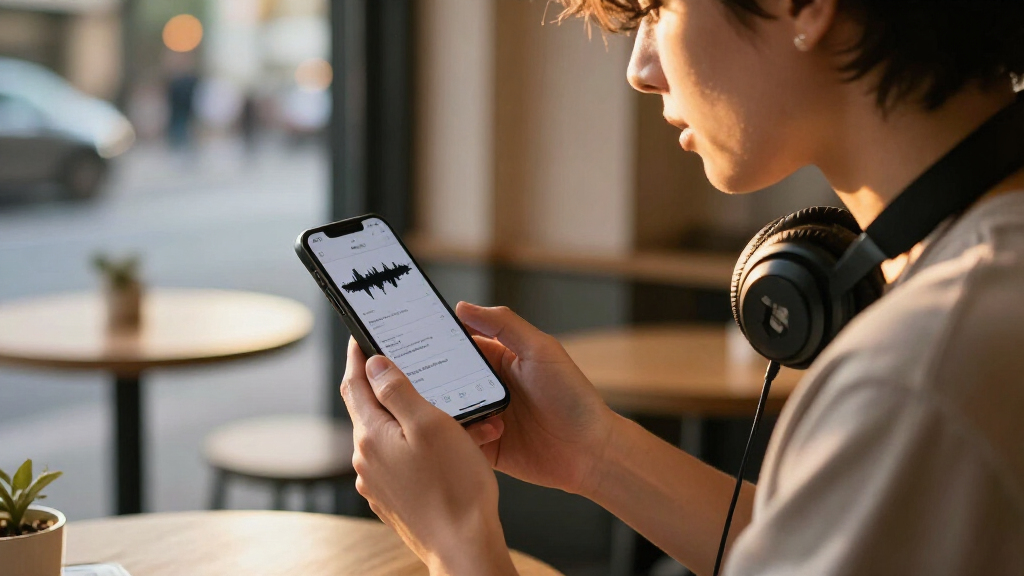

🔍 Read the full analysis: The December 11 ChatGPT Voice Changes At A Glance on ThorstenMeyerAI.com

Get the latest gadgets delivered free with Prime
- Fast, free delivery on millions of items
- Prime Video, Amazon Music and more included
- Member-only deals all year
TL;DR
OpenAI says Advanced and Standard voice will be removed from ChatGPT on December 11, 2026, and users still using them will move to GPT-Live. The company says nearly all ChatGPT voice users already use GPT-Live, but some users report differences in interruptions, conversational style and accessibility. Live video and screen sharing will remain on Advanced voice for now.
OpenAI will retire Advanced and Standard voice from ChatGPT on December 11, 2026, leaving GPT-Live as the voice mode in the app’s settings. The change, announced November 10, will move users who still have either older mode selected to GPT-Live, while some features, including live video and screen sharing, will continue using Advanced voice for now.
OpenAI’s newsroom account said on X that it is retiring the two modes and that voice usage has “nearly doubled” since GPT-Live launched in July. The company also said “virtually all” people using voice in ChatGPT now use GPT-Live. Those are OpenAI’s descriptions; the announcement did not include figures or a breakdown of usage.
According to OpenAI help-center guidance quoted by Interesting Engineering and FourWeekMBA, users can continue using Advanced or Standard voice during the period before the switch. On December 11, both will be removed from Settings > Voice, and users who selected either one will be switched to GPT-Live. The cited help-center guidance says previous conversations will remain in chat history and can be continued by text or voice; spoken continuations will use GPT-Live.
There are temporary exceptions. Live video and screen sharing will continue to run on Advanced voice until GPT-Live supports those capabilities, with no date given for that change. Voice with custom GPTs is also listed as continuing on Advanced voice until December 11, when custom GPTs themselves are scheduled for retirement, according to the help-center wording quoted by FourWeekMBA.
The December 11 Voice Changes At A Glance
OpenAI will retire Advanced and Standard voice in ChatGPT, moving remaining users to GPT-Live. Some features and user questions remain unresolved.
What changes for users
Users who still have either older mode selected will move to GPT-Live when the modes leave Settings.
Users can continue using Advanced or Standard voice, according to cited help-center guidance.
Both modes are scheduled to disappear from voice settings, and selected users move to GPT-Live.
Previous chats remain in history; spoken continuations use GPT-Live.
How the voice modes differ
The modes differ in how they process speech, not just how they sound.
| Mode | How it works |
|---|---|
| Standard voice | Speech recognition, a language model, then text-to-speech |
| Advanced voice | Processes speech directly and waits for the user to finish |
| GPT-Live | Full-duplex: listens and speaks at the same time |
What remains in transition
Some capabilities and user concerns do not have a stated resolution date.
- Live video and screen sharing remain on Advanced voice until GPT-Live supports them.
- Custom GPT voice continues on Advanced voice until the scheduled custom GPT retirement.
- OpenAI has not given a date for GPT-Live support for live video or screen sharing.
- Users have raised concerns about interruptions, conversational style, accessibility, and preserving older voices.
For developers and businesses
The ChatGPT settings change is not described as a voice API deprecation.
- Check API notices for the specific older audio or voice models your integrations use.
- Do not assume the ChatGPT transition date applies to API integrations.
How the Voice Switch Affects Users
For most users, OpenAI presents the change as a move to the voice system they already use. But removing two choices also affects people who prefer their particular sound or interaction style, and those who depend on voice to use ChatGPT. User reports describe interruptions, conversational filler and voices that feel different from the ones they had selected. Those reports are not a measured account of how common the problems are, but they point to a practical concern: a replacement can be available without feeling equivalent to every user.
The issue may also matter for people who use voice for accessibility reasons. Users on OpenAI’s community forum have said they rely on voice, according to the source material. OpenAI’s cited announcement does not describe specific accessibility accommodations or explain whether users can keep an older voice through another setting. The transition therefore combines a stated product simplification with questions about continuity for individual users.
For developers and companies, the ChatGPT setting change should be distinguished from an API shutdown. The source material says this is not an announced deprecation of the voice API. However, OpenAI’s API documentation lists shutdown dates for several older audio and voice models between January 6 and February 26, 2027. Businesses using those models should check the relevant API notices rather than assume the ChatGPT date applies to their integrations.
Products Worth Considering

Samsung Odyssey OLED G5 27-Inch QHD Gaming Monitor

Apple AirPods Pro 3 Wireless Earbuds with Active Noise Cancellation

LG UltraGear 34G600A-B 34-Inch Curved WQHD Gaming Monitor, 160Hz
As an affiliate, we earn on qualifying purchases.
From Three Voice Systems to GPT-Live
The modes differ in how they process speech, not only in how they sound. Standard voice uses a sequence of speech recognition, a language model and text-to-speech, according to help-center material quoted by FourWeekMBA. Advanced voice processes speech directly but waits for the user to finish before answering. GPT-Live is described as full-duplex, meaning it can listen and speak at the same time.
OpenAI introduced GPT-Live on July 8 as a new generation of voice models for human-AI interaction and said it would power ChatGPT Voice. Its developer documentation describes the API model GPT-Live-1 as able to handle real-time conversations and delegate reasoning or tool use to a backend agent. The company’s stated direction is to bring features from the older modes into GPT-Live and improve response depth, continuity and personalization, according to reports citing OpenAI materials.
The announcement also overlaps with a separate planned change to custom GPTs. OpenAI said in September that it planned to retire custom GPTs across ChatGPT plans and move creators to plugins, according to MIXED. The supplied material says an Enterprise migration FAQ gives December 11 as the date custom GPTs stop running in those workspaces. That is a related product change, not evidence that every voice feature or API will be removed on the same schedule.
““I’m beyond disappointed because ChatGPT means a lot to me.””
— A ChatGPT user quoted in TechRadar
Open Questions About the Change
OpenAI has not said when GPT-Live will support live video or screen sharing, so those functions will remain tied to Advanced voice after the main settings change. It is also unclear whether users will have a way to retain an older voice or adjust GPT-Live to reproduce its sound and conversational behavior.
The scale of user opposition is not established by the available material. TechRadar described critics as a small but vocal group; a thread titled “Keep Standard Voice Mode!” on OpenAI’s forum had 100 posts when checked on November 12. That count is a snapshot of one discussion, not a measure of all affected users. OpenAI has not provided detailed usage data behind its claim that virtually all voice users have moved to GPT-Live.
The cited help-center pages were not machine-readable to the source writer, so the transition details and exceptions here rely on wording reported by Interesting Engineering and FourWeekMBA. The X announcement and OpenAI’s stated rationale are attributed directly to the company. Separately, the exact effect of the ChatGPT change on any particular third-party service depends on which API models that service uses.
December 11 Switch and API Dates
Until December 11, 2026, users can keep using Advanced or Standard voice in ChatGPT, according to the help-center guidance quoted in the reports. On that date, both modes are scheduled to disappear from the voice settings, and users who had selected them will move to GPT-Live. Existing chat history is expected to remain available; the source material says users do not need to migrate conversations manually.
After the switch, the main unresolved product milestone is when GPT-Live will take over live video and screen sharing. Developers should separately track OpenAI’s published API notices: the source material lists older audio and voice model shutdowns from January 6 through February 26, 2027. Those dates concern specified API models and should not be treated as the timetable for the ChatGPT voice settings change.
Key Questions
Which ChatGPT voice modes are being removed?
OpenAI plans to remove Advanced voice and Standard voice from ChatGPT on December 11, 2026. GPT-Live is set to remain as the voice mode in Settings > Voice.
Will users lose their old voice conversations?
No deletion of prior conversations is described in the help-center guidance quoted by Interesting Engineering. The source says old chats remain in history and can be continued in text or voice; voice continuations will use GPT-Live.
What happens to live video and screen sharing?
They will continue using Advanced voice until GPT-Live supports them. OpenAI has not announced when that capability will be added to GPT-Live.
Does this retire OpenAI’s voice API?
The ChatGPT change is not described as an API deprecation. The source material says OpenAI’s API documentation separately lists shutdown dates for some older audio and voice models in early 2027, so developers should check the notices for the specific models they use.
Why is OpenAI making the change?
OpenAI says voice usage has “nearly doubled” since GPT-Live launched in July and that “virtually all” ChatGPT voice users now use it. The company did not provide detailed figures or a breakdown alongside those claims.
Source: ThorstenMeyerAI.com