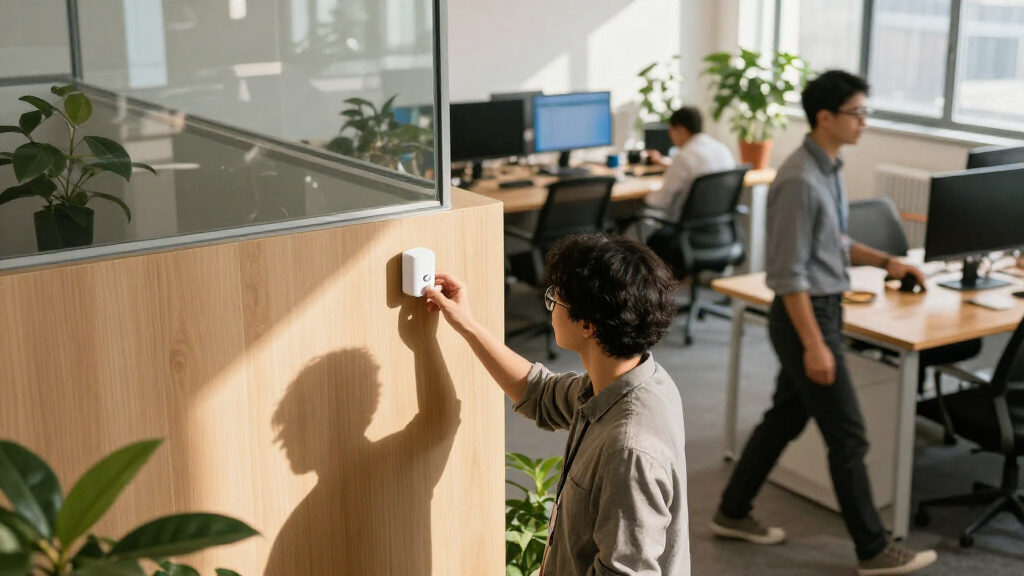
When selecting the best motion sensors for offices, the primary challenge lies in balancing reliable occupancy detection with user comfort and energy efficiency. The ENERLITES Dual Technology Ceiling Occupancy Sensor stands out as the top overall pick because its dual-sensor approach minimizes false shutoffs in static work environments, a common flaw in cheaper PIR-only models. For those prioritizing smart integration without rewiring, the SwitchBot Smart mmWave Radar Presence Sensor offers exceptional sensitivity for detecting subtle movements like typing. However, buyers must weigh the tradeoff between hardwired reliability and wireless convenience, as well as the privacy implications of camera-based versus non-invasive detection methods. This guide breaks down these nuances to help you choose the right device for your specific office layout and workflow.

Get the latest gadgets delivered free with Prime
- Fast, free delivery on millions of items
- Prime Video, Amazon Music and more included
- Member-only deals all year
Complete the kit



Key Takeaways
- Dual-technology sensors (PIR plus ultrasonic or microwave) significantly reduce false shutoffs in offices where employees sit still for long periods.
- Hardwired ceiling-mounted units offer superior coverage for open-plan layouts but require professional installation, whereas plug-in or switch-swap models suit small private offices.
- mmWave radar technology provides the highest sensitivity for detecting stationary presence but may interfere with nearby Wi-Fi or Bluetooth devices if not properly shielded.
- Privacy-focused buyers should avoid sensors with integrated cameras, opting instead for passive infrared or ultrasonic models that do not capture visual data.
- Ambient light sensors are critical for daylight harvesting in offices with large windows, preventing lights from turning on during naturally bright hours.
| ENERLITES Dual Technology Ceiling Occupancy Sensor, MDC-50V-W | 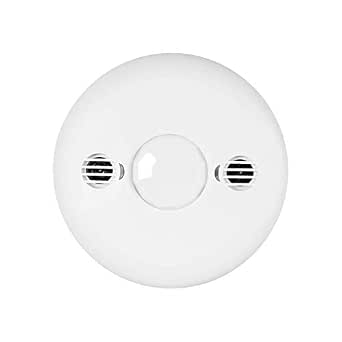 | Best for Small-Movement Detection | Sensing technologies: Passive infrared (PIR) and ultrasonic | Mounting: Ceiling mount | Recommended mounting height: 8–10 feet | VIEW LATEST PRICE | See Our Full Breakdown |
| Leviton Decora PIR Wall Switch Occupancy Sensor, ODS06-IDW, White |  | Best Wall-Switch Replacement | Sensor type: Passive infrared (PIR) | Field of view: 180 degrees | Coverage: Approximately 1,600 sq ft | VIEW LATEST PRICE | See Our Full Breakdown |
| Lithonia Lighting CM PDT 10 R Ceiling Mount 360-Degree Motion Sensor with Dual Technology |  | Best for Longer Detection Range | Sensing technology: Passive infrared (PIR) and microphonics | Mounting: Ceiling mount | Detection range: Up to 28 feet | VIEW LATEST PRICE | See Our Full Breakdown |
| Akamatis HPS v4PL Dual-Sensor Presence and Motion Detector with Ambient Light Sensor |  | Best for Home Assistant Offices | Sensors: 24 GHz mmWave radar, quad-element PIR, LTR329 ambient light sensor | Maximum range: 20 ft (6 m) | PIR field of view: 120 degrees | VIEW LATEST PRICE | See Our Full Breakdown |
| OMNI Low Voltage Ultrasonic and PIR Ceiling Sensor |  | Best for Large Indoor Coverage | Sensing technology: Ultrasonic and passive infrared (PIR) | Coverage: Up to 2,000 sq ft; 360 degrees | Maximum range: 8 feet | VIEW LATEST PRICE | See Our Full Breakdown |
| SwitchBot Smart mmWave Radar Presence Sensor (2-Pack) |  | Best for Smart Office Automation | Detection Technology: mmWave Radar, Light Sensor, PIR | Detection Frequency: 60 GHz | Detection Range: 8 m moving / 5 m stationary | VIEW LATEST PRICE | See Our Full Breakdown |
| Ring Motion Detector with Pet-Friendly Mode |  | Best for Security Integration | Detection Range: 30 ft. | Field of View: 90° | Connectivity: Amazon Sidewalk or Z-Wave | VIEW LATEST PRICE | See Our Full Breakdown |
| AH Lighting 360° Ceiling Occupancy Motion Sensor, Hardwired PIR Switch, White, 5-Pack |  | Best Value for Commercial Spaces | Detection Type: PIR | Coverage: 360° | Maximum Range: 15 feet | VIEW LATEST PRICE | See Our Full Breakdown |
| motion sensors for office | Mounting | Maximum range | Coverage | Power source |
|---|---|---|---|---|
| ENERLITES Dual Technology Ceil | Ceiling mount | 10 feet | PIR up to 1,600 sq ft; ultrasonic up to 1,000 sq ft | — |
| Leviton Decora PIR Wall Switch | — | — | Approximately 1,600 sq ft | — |
| Lithonia Lighting CM PDT 10 R | Ceiling mount | — | — | Corded electric |
| Akamatis HPS v4PL Dual-Sensor | Wall mount; adjustable two-axis mount | 20 ft (6 m) | — | — |
| OMNI Low Voltage Ultrasonic an | Ceiling mount | 8 feet | Up to 2,000 sq ft; 360 degrees | — |
| SwitchBot Smart mmWave Radar P | — | — | — | 2 AAA batteries |
| Ring Motion Detector with Pet- | — | — | — | 2 AA alkaline batteries |
| AH Lighting 360° Ceiling Occup | — | 15 feet | 360° | Hardwired (Neutral required) |
More Details on Our Top Picks
ENERLITES Dual Technology Ceiling Occupancy Sensor, MDC-50V-W
The ENERLITES MDC-50V-W suits offices where people spend long stretches seated, since its PIR and ultrasonic sensors can detect smaller movements such as typing or turning pages. Its 360-degree ceiling view makes it a stronger fit for shared rooms than the Leviton Decora wall switch, which detects from one wall, while six trigger modes give installers room to tune how the two technologies respond. The adjustable delay, from 5 seconds to 30 minutes, also offers more flexibility than a fixed-timer sensor. The tradeoff is a tighter installation brief: it is intended for an 8–10-foot ceiling and has a stated maximum range of 10 feet. I would skip it if the office needs broad coverage from a high ceiling or if the existing lighting controls are not compatible.
Pros:- PIR and ultrasonic sensing can pick up small movements during desk work.
- 360-degree coverage suits a centrally mounted office sensor.
- Six trigger modes allow different responses to occupancy.
- Adjustable 5-second to 30-minute delay supports different room-use patterns.
Cons:- Recommended for ceiling heights of 8–10 feet, limiting placement options.
- Maximum range is listed as 10 feet.
- Compatible only with certain lights and the specified ENERLITES momentary switch.
Best for: Small and midsize offices with seated workers who need a ceiling sensor to keep lights on during quiet desk work.
Not ideal for: Offices with high ceilings, broad open-plan areas, or lighting controls outside the stated compatibility limits.
- Sensing technologies:Passive infrared (PIR) and ultrasonic
- Mounting:Ceiling mount
- Recommended mounting height:8–10 feet
- Maximum range:10 feet
- Coverage:PIR up to 1,600 sq ft; ultrasonic up to 1,000 sq ft
- Field of view:360 degrees
- Trigger modes:6
- Adjustable time delay:5 seconds–30 minutes
- Power and compliance:120/277 VAC; UL/CUL listed; California Title 20 and 24 compliant
Our verdict“Choose the ENERLITES when quiet, seated office work calls for dual-sensor detection and the ceiling and lighting setup match its requirements.”
Leviton Decora PIR Wall Switch Occupancy Sensor, ODS06-IDW, White
For a private office or enclosed room with an existing single-pole switch, the Leviton ODS06-IDW offers a straightforward way to add occupancy sensing without adding a ceiling device. Its standard-wallbox fit and manual pushbutton control let staff switch lights on or off directly, while its 180-degree PIR view is suited to detecting someone entering or moving around a room. High-inrush stability circuitry is designed to support LED loads. Compared with the ceiling-mounted ENERLITES MDC-50V-W, Leviton has a simpler installation concept but lacks dual sensing and full-room 360-degree coverage; its PIR-only approach may be less suited to detecting very slight movement from a seated worker. The 30-second minimum delay also gives less short-timer flexibility than ENERLITES. This is a room-by-room switch upgrade, not a ceiling sensor for a large shared workspace.
Pros:- Fits a standard wallbox as a single-pole switch replacement.
- Manual pushbutton allows direct light control.
- High-inrush stability circuitry is designed to support LED loads.
- Adjustable delay spans 30 seconds to 30 minutes.
Cons:- Designed for single-pole wall-switch installations rather than ceiling placement.
- PIR-only sensing is less suited than dual technology to subtle movement.
- IP20 protection makes it an indoor-use choice.
Best for: Office managers upgrading a standard single-pole wall switch in private offices or small enclosed rooms, especially with LED lighting.
Not ideal for: Open-plan offices or rooms where a wall-mounted PIR sensor may miss occupants outside its field of view or detect subtle seated movement poorly.
- Sensor type:Passive infrared (PIR)
- Field of view:180 degrees
- Coverage:Approximately 1,600 sq ft
- Switch and mounting:Single-pole; wall mount; fits standard wallbox
- Operating voltage:277 V AC
- Wattage:600 W
- Adjustable delay:30 seconds–30 minutes
- Control:Pushbutton; manual on/off
- Compliance:CEC Title 24, RoHS, UL
Our verdict“Choose the Leviton for an enclosed office that needs a wall-switch occupancy upgrade with manual control and LED-load support.”
Lithonia Lighting CM PDT 10 R Ceiling Mount 360-Degree Motion Sensor with Dual Technology
The Lithonia CM PDT 10 R is the range-focused ceiling pick in this group, with detection listed up to 28 feet and a full 360-degree view. Its combination of PIR and microphonics can help maintain occupancy detection when a person is partly hidden from the sensor, making it a candidate for classrooms and low-ceiling shared rooms where desks or partitions interrupt direct sight. Compared with the ENERLITES MDC-50V-W, Lithonia lists a substantially longer detection range, while ENERLITES offers six trigger modes and a specified adjustable time delay. The Lithonia description does not provide a delay range, so buyers should verify control requirements before specifying it. Its plastic housing and stated 68°F operating temperature also call for care when matching it to the installation environment. I would choose it for reach and integration flexibility, not for a clearly documented timer setup.
Pros:- Detection range is listed up to 28 feet.
- 360-degree ceiling coverage suits shared rooms.
- PIR and microphonics provide two sensing methods.
- Isolated low-voltage relay supports flexible integration.
Cons:- Plastic construction may be less durable than sturdier housing materials.
- The product data does not specify an adjustable time delay.
- The stated operating temperature is limited to 68°F.
Best for: Facilities teams fitting classrooms or shared office areas that need ceiling-mounted 360-degree sensing across a longer stated detection range.
Not ideal for: Buyers who need a documented adjustable delay, robust metal construction, or clearly specified operation across a wide temperature range.
- Sensing technology:Passive infrared (PIR) and microphonics
- Mounting:Ceiling mount
- Detection range:Up to 28 feet
- Detection angle:360 degrees
- Relay:Isolated low-voltage relay
- Power source:Corded electric
- Dimensions:4.55 × 4.55 × 1.55 inches
- Material:Plastic
- Operating temperature:68°F listed
Our verdict“Choose the Lithonia when long-range ceiling coverage and dual technology matter more than a clearly specified timer or wider temperature data.”
Akamatis HPS v4PL Dual-Sensor Presence and Motion Detector with Ambient Light Sensor
The Akamatis HPS v4PL is the specialist option for a smart office already built around Home Assistant. Its 24 GHz mmWave radar detects stationary presence as well as movement, which can help keep lights on when someone is reading or working without much motion. A quad-element PIR sensor adds a second detection method, and the ambient light sensor can contribute to lighting automations. The adjustable two-axis mount helps aim it at a desk or work zone, unlike the fixed ceiling placement of the OMNI ultrasonic and PIR sensor. That flexibility comes with a different kind of setup burden: it requires Home Assistant, continuous 5 V USB-C power, and a cable that is not included. Unlike the hardwired office sensors here, it is not a direct lighting-control replacement on its own. I would skip it for a standalone installation.
Pros:- 24 GHz mmWave radar detects stationary presence as well as movement.
- Quad-element PIR adds a second sensing method.
- Ambient light sensor can support lighting automations.
- Adjustable two-axis mount helps target a work area.
Cons:- Requires an existing Home Assistant installation.
- Needs continuous 5 V USB-C power.
- USB-C cable is not included.
Best for: Home Assistant users who want stationary-presence detection and light-level data for desk or room automations.
Not ideal for: Office buyers seeking a standalone hardwired lighting sensor, or anyone without Home Assistant and a nearby USB-C power source.
- Sensors:24 GHz mmWave radar, quad-element PIR, LTR329 ambient light sensor
- Maximum range:20 ft (6 m)
- PIR field of view:120 degrees
- Mounting:Wall mount; adjustable two-axis mount
- Power:USB-C, 5 V
- Compatible platform:Home Assistant
- Firmware:Pre-flashed Akamatis ESPHome
- Dimensions:0.71 × 1.26 × 2.32 inches
Our verdict“Choose the Akamatis for a Home Assistant office that needs desk-level presence automations and can supply continuous USB-C power.”
OMNI Low Voltage Ultrasonic and PIR Ceiling Sensor
The OMNI is aimed at larger indoor rooms where a ceiling sensor needs to cover a broad area: it lists 360-degree coverage up to 2,000 square feet, the largest stated coverage figure among these hardwired-style dual-technology choices. Ultrasonic and PIR sensing work together with self-adjusting technology intended to reduce false triggers, while timer modes and optional relay or photocell control give installers several ways to tailor a lighting setup. Compared with the ENERLITES MDC-50V-W, OMNI claims a larger coverage area, but its stated maximum range is only 8 feet and it needs a separate universal voltage power pack. That makes the coverage figure less useful unless the room layout, mounting height, and system components suit the installation. Its 8–12-foot mounting recommendation also narrows placement choices. I would favor it for a properly planned indoor system, not a quick standalone retrofit.
Pros:- Lists 360-degree coverage across up to 2,000 sq ft.
- Ultrasonic and PIR sensing include self-adjusting technology.
- Timer modes, motion indicator LEDs, and optional relay and photocell control support tailored installations.
- High-impact polymer housing is intended for indoor use.
Cons:- Requires a separate universal voltage power pack.
- Maximum range is listed as 8 feet despite the larger coverage-area figure.
- Designed for indoor installation at a recommended height of 8–12 feet.
Best for: Facilities teams fitting a large indoor office or shared room with a compatible low-voltage system and a universal voltage power pack.
Not ideal for: Buyers who need a standalone sensor, have ceilings outside the 8–12-foot recommendation, or need more than the listed 8-foot maximum range.
- Sensing technology:Ultrasonic and passive infrared (PIR)
- Coverage:Up to 2,000 sq ft; 360 degrees
- Maximum range:8 feet
- Mounting:Ceiling mount
- Recommended mounting height:8–12 feet
- Power:DC; universal voltage power pack required
- Housing material:High-impact injection-molded polymer
- Controls:Timer modes; optional relay and photocell control
- Compliance:UL and cUL listed; California Title 24 compliant
Our verdict“Choose the OMNI for a large indoor office with a compatible power pack and a mounting layout that fits its 8-foot range.”
SwitchBot Smart mmWave Radar Presence Sensor (2-Pack)
This sensor stands out because it detects stationary presence, solving the common office annoyance of lights turning off while you sit still at your desk. Unlike the Ring Motion Detector, which relies on traditional PIR movement, the SwitchBot uses 60 GHz mmWave radar to sense subtle breathing or micro-movements. It supports local automations without a hub for basic tasks, though advanced features and Apple Home integration require the separate SwitchBot Hub. The magnetic base allows for easy angle adjustments on metal surfaces or walls. While it offers superior presence detection compared to basic PIR models, the dependency on a hub for complex ecosystems adds cost and setup friction for users not already in the SwitchBot ecosystem.
Pros:- Detects stationary humans using mmWave radar
- Flexible magnetic mounting allows angle adjustment
- Supports local automations without a hub
- AI filtering reduces false triggers from fans
Cons:- Apple Home integration requires a SwitchBot Hub
- Conflicting battery life estimates in documentation
Best for: Smart office users who want lights to stay on while they are sitting still, and those already using SwitchBot devices.
Not ideal for: Buyers who want a simple plug-and-play solution without additional hubs, or those outside the SwitchBot ecosystem.
- Detection Technology:mmWave Radar, Light Sensor, PIR
- Detection Frequency:60 GHz
- Detection Range:8 m moving / 5 m stationary
- Detection Angle:120°
- Power Source:2 AAA batteries
- Mounting Type:Magnetic base / Wall mount
- Compatible Platforms:Apple Home, Alexa, Google Home, Home Assistant
Our verdict“This is the ideal choice for smart offices where consistent lighting during stationary work is the primary goal.”
Ring Motion Detector with Pet-Friendly Mode
This detector prioritizes security monitoring over automated lighting control, making it distinct from the SwitchBot Smart mmWave Radar. It connects via Amazon Sidewalk, eliminating the need for a central hub in many locations, whereas the Ring Alarm system requires a base station for Z-Wave. The pet-friendly mode effectively filters out animals under 50 lbs, a feature critical for offices with pets but irrelevant for most lighting sensors. However, unlike the AH Lighting 360° Ceiling Sensor, it does not directly control lights. It serves as an alert system rather than an automation switch. Its 30-foot range is standard, but the reliance on the Ring app for arming and disarming limits its utility for simple ‘lights on/off’ automation tasks.
Pros:- No base station needed for Sidewalk connectivity
- Pet-friendly mode filters animals under 50 lbs
- Long battery life up to 2 years
- Integrates with professional monitoring services
Cons:- Does not directly control lights or fans
- Professional monitoring requires a paid subscription
- Sidewalk availability varies by location
Best for: Offices already using Ring security systems or those needing intrusion alerts rather than lighting automation.
Not ideal for: Users seeking automatic light switching without a security subscription or hub infrastructure.
- Detection Range:30 ft.
- Field of View:90°
- Connectivity:Amazon Sidewalk or Z-Wave
- Power Source:2 AA alkaline batteries
- Battery Life:Up to 2 years
- Pet Friendly:Yes, under 50 lbs
- Operating Temperature:32°F to 120°F
Our verdict“Choose this if your primary need is office security alerts rather than automated lighting control.”
AH Lighting 360° Ceiling Occupancy Motion Sensor, Hardwired PIR Switch, White, 5-Pack
Designed for permanent installation, this 5-pack offers significant value for offices needing uniform coverage across multiple rooms. Unlike the battery-powered SwitchBot Smart mmWave Radar, this unit requires hardwiring and a neutral wire, making it unsuitable for renters or quick DIY setups. It provides 360° ceiling coverage, eliminating blind spots that wall-mounted units like the Ring Motion Detector might miss. The adjustable sensitivity and time delay allow customization for different office zones. However, the 15-foot range is limited compared to larger sensors, and the PIR technology may fail to detect stationary users, potentially turning off lights during quiet work periods.
Pros:- 360° ceiling coverage eliminates blind spots
- Hardwired power eliminates battery replacements
- Adjustable sensitivity and delay settings
- California Title 24 compliant for energy codes
Cons:- Requires professional installation and neutral wire
- PIR technology may not detect stationary users
Best for: Property managers or IT staff outfitting multiple conference rooms or open office areas with existing electrical infrastructure.
Not ideal for: Renters or users without access to electrical wiring or a neutral wire in ceiling boxes.
- Detection Type:PIR
- Coverage:360°
- Maximum Range:15 feet
- Mounting Height:10–15 feet
- Power Source:Hardwired (Neutral required)
- Compliance:California Title 24, UL/cUL
- Quantity:5-Pack
Our verdict“This is the practical choice for large-scale commercial installations where permanent, battery-free operation is required.”
How We Picked
I evaluated these motion sensors based on their ability to maintain lights during static work sessions, a frequent pain point in office environments. I prioritized models with dual-technology detection or advanced radar capabilities, as single-sensor PIR units often fail to detect subtle movements like keyboard typing. I also assessed installation complexity, distinguishing between hardwired units requiring an electrician and user-friendly swap-in switches or wireless sensors. Coverage area and adjustability were key factors, ensuring that options ranged from small private offices to large open-plan spaces. Finally, I considered smart home integration and privacy features, favoring devices that offer robust occupancy logic without compromising employee confidentiality.
| motion sensors for office | Mounting |
|---|---|
| ENERLITES Dual Technology Ceil | Ceiling mount |
| Leviton Decora PIR Wall Switch | — |
| Lithonia Lighting CM PDT 10 R | Ceiling mount |
| Akamatis HPS v4PL Dual-Sensor | Wall mount; adjustable two-axis mount |
| OMNI Low Voltage Ultrasonic an | Ceiling mount |
| SwitchBot Smart mmWave Radar P | — |
| Ring Motion Detector with Pet- | — |
| AH Lighting 360° Ceiling Occup | — |
Factors to Consider When Choosing Best Motion Sensors For Offices
Choosing the right motion sensor goes beyond simple on/off functionality. Office environments present unique challenges, such as static employees, glass partitions, and varying lighting needs. Here are the critical factors to weigh before making a purchase.Detection Technology and False Shutoffs
The most common complaint with office motion sensors is the lights turning off while someone is still working. This happens because standard Passive Infrared (PIR) sensors detect large changes in heat, missing static individuals. Dual-technology sensors combine PIR with ultrasonic or microwave detection to fill this gap. Ultrasonic sensors emit high-frequency sound waves to detect micro-movements, while microwave sensors use radio waves. For open offices where employees sit still for hours, microwave or mmWave radar options are superior. However, these sensitive technologies can sometimes detect movement through thin walls or glass, leading to false positives if not carefully calibrated. PIR-only models are cheaper but require you to set longer hold times or install multiple units to cover blind spots.
Installation Complexity and Power Source
Hardwired ceiling sensors are the standard for commercial buildings because they offer consistent power and wide coverage. They typically require a neutral wire and professional installation, which adds to the upfront cost. Conversely, swap-in wall switches are ideal for retrofitting older offices or private rooms where rewiring is impractical. These replace existing light switches and fit into standard electrical boxes. Wireless or battery-operated sensors offer the easiest installation but require periodic battery changes and may suffer from connectivity issues in large spaces. When choosing, consider whether you have access to electricians or if a DIY approach is necessary. For multi-room setups, hardwired systems often provide more reliable automation logic than wireless mesh networks.
Privacy and Data Collection Concerns
Offices are sensitive environments, and employees are increasingly wary of surveillance. Sensors with integrated cameras or microphone capabilities can raise legal and ethical concerns. Passive detection technologies like PIR and ultrasonic do not capture images or audio, making them safer for privacy compliance. If you choose a smart sensor with cloud connectivity, verify whether it stores motion logs or personal data. Some advanced mmWave sensors can create coarse-grained presence maps, but they do not identify individuals. Always check the manufacturer’s data policy and ensure the device complies with local workplace privacy laws. Avoid sensors that require extensive personal account linking if you want to keep office automation separate from personal digital identities.
Coverage Area and Mounting Position
A sensor’s effectiveness depends heavily on its placement relative to the room’s layout. Ceiling-mounted sensors generally provide better coverage for open areas, detecting motion from above without being blocked by furniture or partitions. Wall-mounted units are better for narrow corridors or small offices where ceiling space is limited. Check the coverage diameter and height specifications carefully. A sensor rated for 15 feet may only effectively cover 10 feet in a cluttered office due to obstructions. For L-shaped rooms or spaces with glass partitions, you may need multiple sensors or a model with adjustable sensitivity zones. Glass can reflect infrared signals, causing false triggers, so placement away from large windows is often necessary.
Smart Integration and Automation Logic
Modern offices benefit from sensors that communicate with other smart devices. Basic occupancy sensors simply turn lights on or off, but smart-enabled models can adjust blinds, HVAC systems, or security alarms. Look for compatibility with your existing ecosystem, such as Zigbee, Z-Wave, or Wi-Fi. Integration allows for complex rules, such as keeping lights on during lunch breaks or dimming them based on ambient light levels. However, adding smart features introduces potential points of failure, such as network outages or firmware bugs. For critical infrastructure, a standalone hardwired sensor with local logic is more reliable than one dependent on cloud processing. Determine if you need simple automation or a fully integrated smart office solution.
Frequently Asked Questions
Why do my office lights turn off while I am still working?
This usually happens because standard PIR sensors cannot detect subtle movements like typing or reading. These sensors look for significant changes in heat signatures, which are absent when you sit still. To fix this, switch to a dual-technology sensor that combines PIR with ultrasonic or microwave detection, which picks up micro-movements. Alternatively, increase the hold time setting on your current sensor, though this wastes energy when the room is truly empty. For static work environments, mmWave radar sensors offer the best solution by detecting breathing and minor shifts in position.Are motion sensors a privacy risk in the workplace?
Most standard office motion sensors use passive infrared or ultrasonic technology, which does not capture images or audio, posing minimal privacy risks. However, smart sensors with cameras or microphone arrays can raise legal and ethical concerns. It is important to choose devices that do not record visual data and to inform employees about the presence of any detection systems. Check local regulations regarding workplace surveillance to ensure compliance. If privacy is a major concern, stick to non-invasive technologies like PIR or ultrasonic sensors that only report occupancy status rather than detailed activity data.Can motion sensors detect movement through glass partitions?
Yes, some technologies can. Microwave and mmWave sensors often penetrate thin glass or drywall, which can cause false triggers from adjacent rooms. PIR sensors generally do not detect through glass but can be fooled by reflections from large windows. To mitigate this, use sensors with adjustable sensitivity or directional detection zones. In open-plan offices with glass walls, consider using ultrasonic sensors or ceiling-mounted PIR units positioned to avoid direct line-of-sight to reflective surfaces. Some advanced models allow you to define exclusion zones to prevent cross-talk between adjacent office spaces.Do I need a neutral wire for office motion sensors?
Most hardwired ceiling and wall-mounted occupancy sensors require a neutral wire to power the internal electronics. Older office buildings often lack neutral wires in switch boxes, which limits your options to devices that do not need one or requires pulling new wiring. Check your existing switch box or consult an electrician. If a neutral wire is unavailable, you might need to use a wireless sensor, a battery-operated model, or a specialized switch that bypasses the neutral requirement, though these may have limited features or reliability compared to standard hardwired units.How do ambient light sensors affect energy savings?
Ambient light sensors prevent lights from turning on when there is sufficient natural daylight, a feature known as daylight harvesting. In offices with large windows, this can lead to substantial energy savings by reducing unnecessary electric lighting. Without this feature, motion sensors might turn lights on during bright daytime hours, wasting energy. Look for sensors with adjustable lux thresholds to customize the light level at which artificial lights activate. This ensures that lights only engage when natural light is insufficient, optimizing both comfort and efficiency throughout the day.Conclusion
Selecting the right motion sensor depends on your office layout, technical constraints, and privacy priorities. For the most reliable performance in open-plan spaces, the ENERLITES Dual Technology Ceiling Occupancy Sensor is the best overall choice due to its ability to detect static presence without false shutoffs. If you need a simple, cost-effective upgrade for small private offices, the Leviton Decora PIR Wall Switch offers ease of installation and solid performance. For tech-savvy users seeking smart integration and high sensitivity, the SwitchBot Smart mmWave Radar is ideal, provided you manage potential interference. Budget-conscious buyers looking to cover multiple rooms should consider the AH Lighting 360° Ceiling Pack for its value and simplicity. Ultimately, prioritize dual-technology or radar-based sensors for static work environments to avoid the frustration of lights turning off during work.