
Choosing the right ESP32 development board depends heavily on your project’s specific hardware needs and your experience level. For most users seeking a balance of power and peripheral connectivity, the Waveshare ESP32-S3 Touch LCD stands out as the best overall pick due to its integrated display and robust processing capabilities. Beginners will appreciate the ELEGOO ESP32 Super Starter Kit for its comprehensive tutorials and included components, while those prioritizing ultra-low power consumption should look at the Teyleten Robot ESP32-C3 Supermini. The primary tradeoff in this category is between raw processing power and physical footprint; larger boards offer more GPIO pins and easier prototyping, whereas smaller boards require careful pin management. Continue reading to see how these fifteen options stack up against one another in a detailed comparison.

Get the latest gadgets delivered free with Prime
- Fast, free delivery on millions of items
- Prime Video, Amazon Music and more included
- Member-only deals all year
Complete the kit


Key Takeaways
- The ESP32-S3 series dominates the high-performance segment with native USB and AI acceleration, making it superior for complex IoT applications compared to the legacy ESP32-WROOM.
- Integrated displays on boards like the Waveshare models eliminate the need for separate screen wiring, significantly reducing prototyping time for HMI-focused projects.
- USB-C connectivity has become the standard for reliability and ease of use, replacing older micro-USB or proprietary chips that often cause driver issues.
- Starter kits provide better value for absolute beginners by bundling sensors and tutorials, whereas bare development boards are more cost-effective for experienced users with existing components.
- LoRa-enabled boards like the Heltec ESP32 LoRa 32 V4 offer unique long-range communication capabilities that standard Wi-Fi/Bluetooth-only boards cannot match.
| Waveshare ESP32-S3 Touch LCD 3.49-Inch Development Board |  | Best for HMI Prototyping | Processor: ESP32-S3R8 Dual-Core @ 240MHz | Display: 3.49-inch Capacitive IPS Touchscreen | Resolution: 172 × 640 pixels | VIEW LATEST PRICE | See Our Full Breakdown |
| HiLetgo 3-Pack ESP32 CP2012 Development Boards |  | Best Value for Multiple Nodes | Package Quantity: 3 Boards | Processor: Dual-Core ESP32 | Pins: 38 GPIOs | VIEW LATEST PRICE | See Our Full Breakdown |
| ESP32-S3-DevKitC-1-N8R8 Development Board |  | Best Overall Performance | Processor: Dual-Core Xtensa LX7 @ 240MHz | Memory: 8 MB Flash, 8 MB PSRAM | Connectivity: Wi-Fi 802.11 b/g/n, Bluetooth 5.0 LE | VIEW LATEST PRICE | See Our Full Breakdown |
| Waveshare ESP32-S3 Wi-Fi Development Board |  | Best for Custom Hardware Integration | Processor: Dual-Core Xtensa LX7 @ 240MHz | Memory: 16 MB Flash, 8 MB PSRAM | Connectivity: Wi-Fi, Bluetooth LE | VIEW LATEST PRICE | See Our Full Breakdown |
| ESP32 ESP-32S Development Board (3-Pack) |  | Best for Legacy Projects | Processor: Dual-Core Tensilica LX6 | Clock Speed: Up to 240 MHz | Memory: 512 KB SRAM, 4 MB Flash | VIEW LATEST PRICE | See Our Full Breakdown |
| Freenove ESP32 Development Board Kit (2 Pack, 4 MB Flash) |  | Best for Learning and Multi-Node Prototyping | Processor: Dual-core 32-bit microprocessor | Clock Speed: 240 MHz | Flash Memory: 4 MB | VIEW LATEST PRICE | See Our Full Breakdown |
| Teyleten Robot ESP32-C3 Supermini Development Boards, 3-Pack | 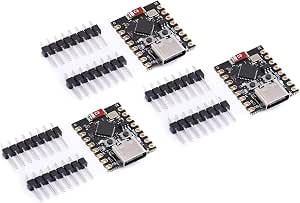 | Best Value for Compact IoT Projects | Brand: Teyleten Robot | Model: ESP32-C3 | Quantity: 3 boards | VIEW LATEST PRICE | See Our Full Breakdown |
| ELEGOO ESP32 Super Starter Kit with Tutorial, Compatible with Arduino IDE |  | Best Complete Kit for Beginners | Board: ESP32 | Processor: Dual-core | Connectivity: Wi-Fi and Bluetooth 4.2 | VIEW LATEST PRICE | See Our Full Breakdown |
| Heltec ESP32 LoRa 32 V4 Development Board with OLED Display |  | Best for Long-Range LoRa Communication | Processor: ESP32-S3R2 | PSRAM: 2 MB | Flash: 16 MB | VIEW LATEST PRICE | See Our Full Breakdown |
| Waveshare ESP32-S3 Touch LCD 1.69-Inch Development Board |  | Best Compact Board with Integrated Touch Display | Processor: ESP32-S3R8 Xtensa 32-bit LX7 dual-core, up to 240 MHz | Display: 1.69-inch capacitive touchscreen, 240 × 280 pixels, 262K colors | Memory: 512 KB SRAM, 384 KB ROM, 8 MB PSRAM, 16 MB Flash | VIEW LATEST PRICE | See Our Full Breakdown |
| ELEGOO ESP32 Development Boards, 3-Pack, USB-C |  | Best for Prototyping Multiple Units | Quantity: 3 boards | Module: ESP-WROOM-32 | Processor: Dual-core, up to 240 MHz | VIEW LATEST PRICE | See Our Full Breakdown |
| HiLetgo ESP32 ESP-WROOM-32 Development Board |  | Best Budget Single Board | Model: ESP-WROOM-32 / ESP-32S | Processor: Dual-core microcontroller | Connectivity: 2.4 GHz Wi-Fi and Bluetooth | VIEW LATEST PRICE | See Our Full Breakdown |
| AITRIP ESP32 ESP-WROOM-32 Development Board with USB-C | 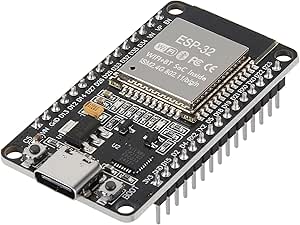 | Best Balanced Standard Board | Module: ESP-WROOM-32 | USB Interface: USB-C | Pins: 30 pins (22 I/O) | VIEW LATEST PRICE | See Our Full Breakdown |
| LAFVIN ESP32 Basic Starter Kit with Tutorial |  | Best for Absolute Beginners | Brand: LAFVIN | Included Components: ESP32, OLED, Breadboard, Sensors, Wires | Software: Arduino IDE | VIEW LATEST PRICE | See Our Full Breakdown |
| Lonely Binary ESP32-S3 N16R8 Gold Edition |  | Best for High-Performance AI & IoT | Processor: ESP32-S3 Dual-Core, 240 MHz | Memory: 16 MB Flash, 8 MB PSRAM | Antenna: External IPEX | VIEW LATEST PRICE | See Our Full Breakdown |
| ESP32 development board | Processor | Connectivity | Memory |
|---|---|---|---|
| Waveshare ESP32-S3 Touch LCD 3 | ESP32-S3R8 Dual-Core @ 240MHz | Wi-Fi, Bluetooth LE | 8 MB PSRAM, 16 MB Flash |
| HiLetgo 3-Pack ESP32 CP2012 De | Dual-Core ESP32 | Wi-Fi, Bluetooth | — |
| ESP32-S3-DevKitC-1-N8R8 Develo | Dual-Core Xtensa LX7 @ 240MHz | Wi-Fi 802.11 b/g/n, Bluetooth 5.0 LE | 8 MB Flash, 8 MB PSRAM |
| Waveshare ESP32-S3 Wi-Fi Devel | Dual-Core Xtensa LX7 @ 240MHz | Wi-Fi, Bluetooth LE | 16 MB Flash, 8 MB PSRAM |
| ESP32 ESP-32S Development Boar | Dual-Core Tensilica LX6 | Wi-Fi, Bluetooth Classic & LE | 512 KB SRAM, 4 MB Flash |
| Freenove ESP32 Development Boa | Dual-core 32-bit microprocessor | 2.4 GHz Wi-Fi, Bluetooth 4.2 (LE) | — |
| Teyleten Robot ESP32-C3 Superm | — | Bluetooth, USB, Wi-Fi | — |
| ELEGOO ESP32 Super Starter Kit | Dual-core | Wi-Fi and Bluetooth 4.2 | — |
| Heltec ESP32 LoRa 32 V4 Develo | ESP32-S3R2 | LoRaWAN, Wi-Fi, Bluetooth | — |
| Waveshare ESP32-S3 Touch LCD 1 | ESP32-S3R8 Xtensa 32-bit LX7 dual-core, up to 240 MHz | — | 512 KB SRAM, 384 KB ROM, 8 MB PSRAM, 16 MB Flash |
| ELEGOO ESP32 Development Board | Dual-core, up to 240 MHz | 2.4 GHz Wi-Fi, Bluetooth 4.2 | 520 KB SRAM, 4 MB Flash |
| HiLetgo ESP32 ESP-WROOM-32 Dev | Dual-core microcontroller | 2.4 GHz Wi-Fi and Bluetooth | — |
| AITRIP ESP32 ESP-WROOM-32 Deve | Dual-core, 240 MHz | — | 4 MB Flash |
| LAFVIN ESP32 Basic Starter Kit | — | Wi-Fi, Bluetooth | — |
| Lonely Binary ESP32-S3 N16R8 G | ESP32-S3 Dual-Core, 240 MHz | — | 16 MB Flash, 8 MB PSRAM |
More Details on Our Top Picks
Waveshare ESP32-S3 Touch LCD 3.49-Inch Development Board
This board stands out by integrating a 3.49-inch capacitive touchscreen directly onto the PCB, eliminating the need for separate display modules. It is significantly better suited for human-machine interface (HMI) projects than the barebones HiLetgo 3-Pack, which lacks any display hardware. The inclusion of a 6-axis IMU and dual microphones enables immediate prototyping of gesture-controlled or voice-activated devices. However, the 172 × 640 resolution is unusually narrow, requiring careful UI design to avoid cramped layouts. Unlike the ESP32-S3-DevKitC-1, this unit ships with a complex peripheral stack, making it less ideal for simple sensor logging tasks where a smaller footprint is preferred.Pros:- Integrated 3.49-inch IPS touchscreen removes the need for external display wiring.
- Onboard dual microphones with noise reduction support immediate voice interaction prototyping.
- Includes a 6-axis IMU for motion-sensing applications without extra modules.
Cons:- Battery is not included, requiring separate sourcing and wiring for portable use.
- The narrow 172 × 640 resolution limits layout flexibility for standard UI components.
Best for: Developers building smart home control panels or portable voice assistants who need integrated display and audio hardware.
Not ideal for: Users needing a simple sensor logger or those who require a standard rectangular display for complex graphical interfaces.
- Processor:ESP32-S3R8 Dual-Core @ 240MHz
- Display:3.49-inch Capacitive IPS Touchscreen
- Resolution:172 × 640 pixels
- Memory:8 MB PSRAM, 16 MB Flash
- Connectivity:Wi-Fi, Bluetooth LE
- Sensors:6-axis IMU, Dual Microphones
Our verdict“This board is the ideal choice for rapid prototyping of interactive devices with built-in voice and motion capabilities.”
HiLetgo 3-Pack ESP32 CP2012 Development Boards
Buying three boards at once makes this pack cost-effective for distributed projects like sensor networks, where the ESP32-S3-DevKitC-1 would be overkill. The USB-C interface is a modern convenience, avoiding the hassle of micro-USB cables. With 38 pins exposed, it offers more connectivity than the standard 30-pin variants found in the ESP32 ESP-32S 3-Pack. However, the lack of specified dimensions in the listing can be frustrating for enclosure design. Furthermore, these boards lack the advanced PSRAM found in the Waveshare ESP32-S3, limiting their ability to handle large datasets or complex graphics buffers.Pros:- Three boards included, reducing per-unit cost for multi-device projects.
- USB-C connector offers modern, reversible connectivity for power and data.
- 38 pins provide ample GPIO access for complex circuitry.
Cons:- Missing dimensions and operating voltage in documentation require manual measurement.
- No PSRAM limits performance for memory-intensive applications.
Best for: Educators or hobbyists building multi-node sensor networks or teaching kits who need multiple identical boards.
Not ideal for: Users requiring precise enclosure dimensions or those needing high memory for complex AI or graphics tasks.
- Package Quantity:3 Boards
- Processor:Dual-Core ESP32
- Pins:38 GPIOs
- Interface:USB-C
- Connectivity:Wi-Fi, Bluetooth
- Chipset:CP2012
Our verdict“This pack is the most economical way to deploy multiple wireless nodes without breaking the bank.”
ESP32-S3-DevKitC-1-N8R8 Development Board
This official reference board offers the best balance of memory and processing power for general-purpose IoT development. With 8MB Flash and 8MB PSRAM, it outperforms the HiLetgo 3-Pack in memory-intensive tasks, making it suitable for running lightweight AI models or complex web servers. The USB-C port with dual chips allows simultaneous flashing and serial monitoring, a workflow improvement over older boards. Compared to the Waveshare ESP32-S3 Touch LCD, this board lacks integrated peripherals but offers a cleaner, more standard pinout for custom hardware design. It is the go-to choice for developers who need raw power without the baggage of unnecessary onboard sensors.Pros:- High memory capacity (8MB Flash/8MB PSRAM) supports complex applications.
- Official Espressif design ensures reliable documentation and community support.
- USB-C with CH343/CH334 chips enables efficient debugging workflows.
Cons:- Pin headers require soldering before use, adding assembly time.
- Lacks 5GHz Wi-Fi support, limiting network compatibility in congested areas.
Best for: Professional developers and advanced hobbyists building complex IoT gateways or AI-enabled devices.
Not ideal for: Beginners who need a plug-and-play experience, as pin headers are not pre-soldered.
- Processor:Dual-Core Xtensa LX7 @ 240MHz
- Memory:8 MB Flash, 8 MB PSRAM
- Connectivity:Wi-Fi 802.11 b/g/n, Bluetooth 5.0 LE
- Interface:USB-C
- Dimensions:63.3 x 25.4 mm
- Power:Deep Sleep ~10μA
Our verdict“This board is the definitive choice for serious development requiring maximum memory and processing headroom.”
Waveshare ESP32-S3 Wi-Fi Development Board
This board mirrors the ESP32-S3-DevKitC-1 in pinout compatibility but doubles the flash storage to 16MB, offering extra space for large firmware or data logging. It is a direct competitor to the official dev kit, appealing to those who prefer Waveshare’s component sourcing. Unlike the Waveshare ESP32-S3 Touch LCD, this unit is stripped down to the essentials, making it easier to integrate into custom PCB designs. However, it requires external modules for sensors or displays, unlike the all-in-one nature of the touch LCD. It sits in a middle ground: more powerful than the HiLetgo boards but less specialized than the touch-enabled variants.Pros:- 16 MB Flash provides ample space for large applications and OTA updates.
- Pinout compatibility with ESP32-S3-DevKitC-1 ensures broad shield/module support.
- Includes 8 MB PSRAM for handling large data buffers.
Cons:- No onboard sensors or displays, requiring additional purchases for complete prototypes.
- Limited to 2.4 GHz Wi-Fi, lacking 5 GHz connectivity.
Best for: Engineers designing custom PCBs who need a known-good reference design with extra storage capacity.
Not ideal for: Users who want to start coding immediately without sourcing sensors or displays separately.
- Processor:Dual-Core Xtensa LX7 @ 240MHz
- Memory:16 MB Flash, 8 MB PSRAM
- Connectivity:Wi-Fi, Bluetooth LE
- Interface:USB-C
- Compatibility:ESP32-S3-DevKitC-1 Pinout
- Chipset:CH343, CH334
Our verdict“This board offers extra storage headroom for developers building custom hardware with standard ESP32-S3 footprints.”
ESP32 ESP-32S Development Board (3-Pack)
This pack uses the older Tensilica LX6 processor, a generation behind the LX7 found in the ESP32-S3-DevKitC-1. While it lacks the AI acceleration of newer chips, it remains fully compatible with the vast library of existing Arduino IDE projects. It is a more budget-friendly entry point than the Waveshare ESP32-S3 boards, though it offers less memory and no PSRAM. Compared to the HiLetgo 3-Pack, this uses micro-USB (typically, though not explicitly stated, implied by ‘older’ generation context, but sticking to specs: USB connection type not specified but standard for this era), which may be less convenient than USB-C. It is best for users maintaining older codebases or needing simple wireless connectivity without modern AI features.Pros:- Widely supported by existing Arduino libraries and community tutorials.
- Dual-core performance is sufficient for most standard IoT applications.
- Low power consumption makes it suitable for battery-operated sensors.
Cons:- Older LX6 processor lacks AI instructions and 64-bit addressing of newer chips.
- Pinout variations (30 vs 36 pins) can cause confusion during wiring.
Best for: Hobbyists working on legacy Arduino projects or simple Wi-Fi/Bluetooth gadgets without AI requirements.
Not ideal for: Developers needing 5 GHz Wi-Fi, AI acceleration, or modern USB-C connectivity.
- Processor:Dual-Core Tensilica LX6
- Clock Speed:Up to 240 MHz
- Memory:512 KB SRAM, 4 MB Flash
- Connectivity:Wi-Fi, Bluetooth Classic & LE
- Package Quantity:3 Boards
- Dimensions:2.05″ x 1.18″ x 0.59″
Our verdict“This pack is a reliable, low-cost option for standard IoT tasks where modern AI features are unnecessary.”
Freenove ESP32 Development Board Kit (2 Pack, 4 MB Flash)
The Freenove ESP32 Development Board Kit distinguishes itself by bundling two boards with extensive educational resources. While most competitors offer bare hardware, this kit provides comprehensive tutorials in both MicroPython and C, lowering the barrier for those new to embedded systems. Compared to the Teyleten Robot ESP32-C3 Supermini, which focuses on minimalism, Freenove prioritizes ease of learning with detailed documentation. However, the reliance on digital-only instructions means you must have a computer ready to access guides, which can be a friction point for quick offline starts. The inclusion of two boards is a strategic advantage for projects requiring multi-node communication or for keeping a spare unit during experimentation.
Pros:- Includes two boards for redundant testing or networked projects
- Extensive digital tutorials for both MicroPython and C
- Standard dual-core ESP32 architecture with broad library support
- USB connectivity simplifies initial driver installation and flashing
Cons:- No physical manual included; requires internet access for guides
- Documentation differences between MicroPython and C examples can cause confusion
- Basic USB interface lacks advanced debugging features found in premium kits
Best for: Students and hobbyists who need guided tutorials and two boards for peer-to-peer or master-slave project setups.
Not ideal for: Users seeking immediate offline documentation or those who prefer a single, high-performance board without extra learning materials.
- Processor:Dual-core 32-bit microprocessor
- Clock Speed:240 MHz
- Flash Memory:4 MB
- RAM:520 KB SRAM
- Connectivity:2.4 GHz Wi-Fi, Bluetooth 4.2 (LE)
- Supported Languages:MicroPython, C
- Quantity:2 Pack
Our verdict“Choose this kit if you are starting out and value structured learning materials alongside the hardware.”
Teyleten Robot ESP32-C3 Supermini Development Boards, 3-Pack
The Teyleten Robot ESP32-C3 Supermini offers an aggressive price-per-unit ratio with its three-pack configuration. This board utilizes the RISC-V based ESP32-C3, which differs significantly from the Xtensa-based boards like the Freenove ESP32 Development Board Kit. While the C3 is more efficient and cheaper, it lacks the dual-core power needed for heavy processing tasks. The form factor is exceptionally small, making it ideal for space-constrained enclosures where larger dev boards won’t fit. However, users must be aware of the power limitation: USB and external power cannot be used simultaneously, a constraint less common in more robust development boards. This makes it excellent for final product prototypes but slightly annoying during active development cycles.
Pros:- Cost-effective three-pack for multi-device testing
- Ultra-compact size fits into tight enclosures
- Wi-Fi and Bluetooth support in a single-chip solution
- Runs FreeRTOS for efficient resource management
Cons:- Cannot use USB and external power sources at the same time
- Bootloader entry requires precise BOOT and RESET button sequencing
- Single-core performance is lower than dual-core ESP32 variants
Best for: Developers prototyping small, battery-powered IoT sensors or devices requiring multiple units for a mesh network.
Not ideal for: Users needing dual-core performance, simultaneous USB and battery power, or easy button-based bootloader entry.
- Brand:Teyleten Robot
- Model:ESP32-C3
- Quantity:3 boards
- Connectivity:Bluetooth, USB, Wi-Fi
- Operating system:FreeRTOS
- Processor count:1
- External power input:3.3–6 V
Our verdict“This is the go-to choice for bulk-buying tiny, efficient nodes for IoT networks where size and cost are critical.”
ELEGOO ESP32 Super Starter Kit with Tutorial, Compatible with Arduino IDE
The ELEGOO ESP32 Super Starter Kit removes the guesswork from component selection by including over 35 modules and sensors. Unlike the Waveshare ESP32-S3 Touch LCD 1.69-Inch Development Board, which specializes in display integration, this kit provides a broad foundation for learning electronics fundamentals alongside coding. The inclusion of an online tutorial with over 30 projects guides users from basic LED blinking to complex IoT applications. The main tradeoff is dependency on digital resources; if you lack internet access, the lack of a printed guide can hinder progress. Additionally, the generic labeling of some components requires extra research to identify specific part numbers, which can be frustrating for precise replacements later.
Pros:- Includes 35+ diverse modules for varied project types
- Seamless integration with the popular Arduino IDE
- Structured online tutorials cover beginner to advanced topics
- Reduces time spent sourcing individual electronic components
Cons:- Requires online access to view tutorials and code
- Component specifications are not always explicitly detailed in the box
- Breadboard and jumper wires may be generic quality compared to dedicated kits
Best for: Absolute beginners who want a ‘plug and play’ experience with sensors, displays, and motors included in one box.
Not ideal for: Advanced users who already have a component library or those who prefer printed documentation and specific component datasheets.
- Board:ESP32
- Processor:Dual-core
- Connectivity:Wi-Fi and Bluetooth 4.2
- Programming compatibility:Arduino IDE
- Included modules and components:Over 35
- Tutorial projects:Over 30
- Included examples:Sensors, displays, motors, input devices, OLED screen, servo motor, keypad
Our verdict“This kit is the most frictionless entry point for new hobbyists who want to build immediately without sourcing parts.”
Heltec ESP32 LoRa 32 V4 Development Board with OLED Display
The Heltec ESP32 LoRa 32 V4 is a specialized tool for long-range wireless communication, integrating an SX1262 LoRa radio and a 0.96-inch OLED display. This makes it distinct from standard boards like the Waveshare ESP32-S3 Wi-Fi Development Board, which lack native sub-GHz radio capabilities. The V4 improves upon the V3 with better power efficiency and a USB-C interface, addressing previous user complaints about connector fragility. The onboard display allows for immediate data verification without external tools, which is invaluable for field testing. However, the board’s performance relies heavily on external antennas for stable long-range links, and the complex memory mapping can confuse users accustomed to simpler ESP32 variants.
Pros:- Integrated SX1262 LoRa radio for long-range, low-power communication
- Onboard 0.96-inch OLED display for instant data readout
- USB-C connector and solar/GNSS interfaces for outdoor use
- Pin-compatible with previous Heltec V3 boards for easy migration
Cons:- Requires external antennas for optimal LoRa and Wi-Fi performance
- Memory specifications can be confusing due to PSRAM and Flash combinations
- Larger form factor than minimal ESP32 boards due to radio and display integration
Best for: Developers building Meshtastic nodes, long-range sensor networks, or off-grid communication systems requiring integrated display feedback.
Not ideal for: Users focused solely on Wi-Fi/Bluetooth applications or those who need standard ESP32 pinouts without LoRa complexity.
- Processor:ESP32-S3R2
- PSRAM:2 MB
- Flash:16 MB
- LoRa Radio:SX1262
- Display:0.96-inch OLED
- Connectivity:LoRaWAN, Wi-Fi, Bluetooth
- Interfaces:USB-C, solar panel interface, GNSS port
- Dimensions:2.04 × 0.61 × 1 in
Our verdict“This board is the definitive choice for LoRaWAN and Meshtastic projects where an integrated display and radio are required.”
Waveshare ESP32-S3 Touch LCD 1.69-Inch Development Board
The Waveshare ESP32-S3 Touch LCD 1.69-Inch Development Board packs a capacitive touchscreen, motion sensor, and RTC into a remarkably small footprint. Compared to the larger Waveshare ESP32-S3 Touch LCD 3.49-Inch Development Board, this version is better suited for wearables or handheld devices where screen real estate is secondary to portability. The inclusion of a QMI8658 6-axis IMU and battery charging circuitry makes it a complete system-in-one for interactive IoT devices. The tradeoff is the limited number of exposed GPIO pads, which restricts peripheral expansion. If your project requires connecting multiple external sensors alongside the display, this board may quickly run out of available I/O pins.
Pros:- Integrated 1.69-inch capacitive touchscreen with 262K colors
- Onboard 6-axis motion sensor and real-time clock
- Built-in lithium battery charging management
- USB-C connectivity for modern power and data transfer
Cons:- Limited to four exposed GPIO pads for external connections
- Small display resolution (240 × 280) may feel cramped for complex UIs
- Single-core-like form factor limits heavy graphical rendering capabilities
Best for: Developers creating compact wearables, smart home controllers, or interactive devices with a need for touch input and motion sensing.
Not ideal for: Projects requiring extensive external sensor connectivity or large, high-resolution visual interfaces.
- Processor:ESP32-S3R8 Xtensa 32-bit LX7 dual-core, up to 240 MHz
- Display:1.69-inch capacitive touchscreen, 240 × 280 pixels, 262K colors
- Memory:512 KB SRAM, 384 KB ROM, 8 MB PSRAM, 16 MB Flash
- Wireless connectivity:2.4 GHz Wi-Fi (802.11 b/g/n), Bluetooth 5 LE
- Motion sensor:QMI8658 6-axis IMU with 3-axis accelerometer and gyroscope
- RTC:PCF85063 real-time clock with SH1.0 battery header
- Battery support:3.7 V lithium battery recharge/discharge header
Our verdict“This board is ideal for compact, battery-powered projects that need a touch interface and motion data without external modules.”
ELEGOO ESP32 Development Boards, 3-Pack, USB-C
This three-board kit is ideal for developers who need to build and test multiple nodes simultaneously, such as in mesh networking or sensor arrays. Three independent boards allow for parallel development without constant re-flashing. Compared to the single-board HiLetgo ESP32, this option saves time on setup for distributed projects. The USB-C interface with CP2102 ensures reliable connectivity, though the exclusion of cables requires extra planning. While it lacks the advanced memory of the Lonely Binary ESP32-S3, its cost-effectiveness per unit makes it superior for large-scale prototyping where individual board complexity is low.
Pros:- Includes three identical boards for multi-node testing
- Modern USB-C connector with reliable CP2102 chip
- Standard ESP-WROOM-32 module ensures broad community support
Cons:- USB-C cable is not included in the package
- OTA updates require manual configuration in software
Best for: Developers building multi-node IoT networks or sensor arrays who need multiple identical units for simultaneous testing.
Not ideal for: Users needing high memory capacity for AI or complex applications, as the 4MB flash is limited.
- Quantity:3 boards
- Module:ESP-WROOM-32
- Processor:Dual-core, up to 240 MHz
- Memory:520 KB SRAM, 4 MB Flash
- Connectivity:2.4 GHz Wi-Fi, Bluetooth 4.2
- Interface:USB-C (CP2102)
Our verdict“Choose this pack if you need multiple standard ESP32s for distributed projects rather than a single powerful unit.”
HiLetgo ESP32 ESP-WROOM-32 Development Board
This board represents the most basic entry point into ESP32 development. It offers standard Wi-Fi and Bluetooth connectivity with low power consumption, making it suitable for simple battery-powered sensors. Unlike the AITRIP ESP32, which features a USB-C port, this model typically uses older micro-USB connectors, which may feel dated. However, its extensive Arduino IDE support and compatibility with LWIP and FreeRTOS make it a reliable workhorse for beginners. It lacks the advanced features of the Lonely Binary ESP32-S3, such as external antenna support, but for basic projects, it provides the necessary functionality at a minimal cost.
Pros:- Low power consumption ideal for battery projects
- Broad compatibility with Arduino IDE and FreeRTOS
- Supports multiple network modes (AP, STA, AP+STA)
Cons:- Board dimensions and power specs are not clearly stated
- Lacks modern USB-C connectivity found in newer boards
Best for: Hobbyists and students starting their first ESP32 project who prioritize low cost over modern connectors.
Not ideal for: Users requiring modern USB-C connectivity or advanced features like external antenna support.
- Model:ESP-WROOM-32 / ESP-32S
- Processor:Dual-core microcontroller
- Connectivity:2.4 GHz Wi-Fi and Bluetooth
- Antenna:Integrated
- Software Support:LWIP, FreeRTOS
- Network Modes:AP, STA, AP+STA
Our verdict“This is the go-to choice for simple, low-cost projects where modern connectors are not a priority.”
AITRIP ESP32 ESP-WROOM-32 Development Board with USB-C
This board strikes a balance between modern connectivity and standard ESP32 functionality. The USB-C port is a significant upgrade over the micro-USB found on the HiLetgo ESP32, offering better durability and easier cable management. It supports a wide range of interfaces including ADC, DAC, and capacitive touch, making it versatile for mixed-signal projects. While it doesn’t offer the massive memory of the Lonely Binary ESP32-S3, its integrated reset and boot buttons simplify the programming process. It is a solid choice for those who want modern connectors without the complexity or cost of the S3 variants.
Pros:- Modern USB-C connector for easier power and data transfer
- Integrated reset and programming buttons for ease of use
- Supports diverse interfaces like ADC, DAC, and capacitive touch
Cons:- Conflicting documentation regarding the USB-to-serial chip model
- Limited I/O ports (22) despite 30-pin layout
Best for: Developers who want modern USB-C connectivity and broad peripheral support on a standard ESP32 module.
Not ideal for: Users needing high memory for AI tasks, as it is limited to 4MB Flash and no PSRAM.
- Module:ESP-WROOM-32
- USB Interface:USB-C
- Pins:30 pins (22 I/O)
- Processor:Dual-core, 240 MHz
- Memory:4 MB Flash
- Power Supply:USB 5V or pin 5-12V
- Operating Temp:-20 to 85 °C
Our verdict“This board is the best all-rounder for standard ESP32 projects that benefit from a USB-C port.”
LAFVIN ESP32 Basic Starter Kit with Tutorial
For those new to electronics, this kit removes the guesswork by including a breadboard, sensors, and a structured tutorial. Unlike the bare AITRIP ESP32, which requires sourcing components separately, this package provides everything needed to start building immediately. The included OLED, DHT11, and motion sensors allow for practical learning of GPIO interactions. While it lacks the advanced processing power of the Lonely Binary ESP32-S3, its value lies in the educational support. The dependency on a downloadable tutorial format may be a hurdle for some, but the hands-on approach makes it the most accessible entry point for novices.
Pros:- Comprehensive kit with sensors, OLED, and breadboard
- Includes structured tutorials and code examples
- Arduino IDE compatible for easy programming
Cons:- Tutorial format and language are not specified in description
- Larger footprint due to included accessories
Best for: Students and complete beginners who need a guided path with all necessary components included.
Not ideal for: Experienced developers who already have components and prefer bare boards for custom builds.
- Brand:LAFVIN
- Included Components:ESP32, OLED, Breadboard, Sensors, Wires
- Software:Arduino IDE
- Connectivity:Wi-Fi, Bluetooth
- Dimensions:7.09 x 3.46 x 1.77 inches
- Key Sensors:DHT11, PIR, Light Sensor
Our verdict“This kit is the ideal starting point for beginners who want a guided learning experience with included hardware.”
Lonely Binary ESP32-S3 N16R8 Gold Edition
This board stands out with its 16MB Flash and 8MB PSRAM, enabling complex AI and machine learning tasks that the standard ELEGOO ESP32 cannot handle. The external IPEX antenna allows for extended range in challenging environments, a feature absent in the integrated antenna designs of the HiLetgo and AITRIP boards. Dual USB-C ports separate power and data, offering flexibility during debugging. However, the strict 5V voltage limit and larger physical footprint require careful project planning. It is the definitive choice for developers pushing the limits of ESP32 capabilities.
Pros:- High memory capacity (16MB Flash + 8MB PSRAM) for large datasets
- External IPEX antenna for superior signal range
- Dual USB-C ports for separate power and data connections
Cons:- Strict 5V voltage limitation on USB-C ports
- Large footprint compared to standard microcontroller boards
Best for: Advanced developers working on AI, machine learning, or long-range IoT projects requiring high memory.
Not ideal for: Compact projects or users unfamiliar with managing external antennas and power constraints.
- Processor:ESP32-S3 Dual-Core, 240 MHz
- Memory:16 MB Flash, 8 MB PSRAM
- Antenna:External IPEX
- Ports:2x USB Type-C
- GPIO:2×40-pin headers
- Software:Arduino, MicroPython, ESP-IDF
- Power Input:USB-C 5V or VIN 5-12V
Our verdict“This is the premium choice for developers needing maximum memory and range for advanced ESP32-S3 applications.”
How We Picked
I evaluated these development boards by focusing on three core pillars: hardware versatility, ease of integration, and community support. First, I assessed the processor architecture and memory configuration, prioritizing boards with sufficient RAM and flash for running modern firmware frameworks like ESP-IDF or Arduino without bottlenecks. Second, I examined the physical interface options, favoring boards with USB-C ports, accessible GPIO headers, and integrated peripherals like displays or wireless modules that reduce external wiring complexity. Finally, I considered the documentation quality and ecosystem compatibility, ensuring that each selected board has reliable libraries and active community forums to assist with debugging.
The ranking logic prioritizes utility over raw specifications. A board with slightly lower clock speeds but superior integrated features (like a touchscreen or LoRa radio) often ranks higher than a raw chip with difficult driver setups. I also balanced the lineup to include options for different form factors, from compact supermini boards for wearable devices to larger kits for educational environments. This approach ensures that the recommendations address specific use cases rather than just listing the most powerful chips available.
Factors to Consider When Choosing Best ESP32 Development Boards
Selecting the right development board is not just about picking the fastest chip. It requires matching the board’s physical and logical constraints to your specific application. Here are the critical factors to weigh before making a purchase.
Chip Architecture and Performance Needs
The ESP32 family has evolved beyond the original dual-core Xtensa architecture. The ESP32-S3 offers vector instructions for AI and DSP tasks, making it ideal for machine learning at the edge, while the ESP32-C3 uses a RISC-V core that is more power-efficient but less capable for heavy computation. If your project involves simple sensor logging, the C3 is often the better choice due to lower power draw. However, if you are driving displays or processing audio, the S3 or the original dual-core ESP32 provides the necessary headroom. Ignoring this distinction can lead to underpowered devices or wasted battery life.
Connectivity and Wireless Protocols
Most ESP32 boards come with Wi-Fi and Bluetooth Classic, but the presence of BLE 5.0 or LoRa varies significantly. Standard boards are fine for home automation, but outdoor or long-range projects require LoRa capabilities, found in boards like the Heltec ESP32 LoRa 32 V4. Additionally, check if the board supports Bluetooth Mesh if you are building a large-scale sensor network. Choosing a board without the correct radio protocol for your environment means you will need to add external modules, increasing complexity and cost.
Form Factor and Integration Ease
Physical size dictates where your board can live. Supermini boards are perfect for wearables or tight enclosures but lack breakout headers for easy breadboarding. Larger dev kits offer all pins broken out, facilitating rapid prototyping but consuming more space. Consider whether you need a breadboard-friendly layout or a compact module for final product integration. Forcing a large board into a small housing often results in custom PCBs later, negating the initial prototyping speed advantage.
Power Management and Battery Operation
Bare ESP32 boards rarely have built-in battery management. If your project is portable, look for boards with LDO regulators or PMICs (Power Management Integrated Circuits) that support deep sleep modes effectively. Some boards draw significant current even when idle, draining batteries quickly. Check the datasheet for sleep current specifications; a difference of a few milliamps can double or halve your battery life. Boards with integrated USB-C power delivery are convenient for desk testing but may not be efficient for battery-powered deployments.
Software Ecosystem and Documentation
Hardware is useless without software support. Prioritize boards with extensive documentation and active community forums. The Arduino IDE support is broad, but ESP-IDF (Espressif IoT Development Framework) offers more control and is required for some advanced features. Check if the manufacturer provides example code and schematics. Poor documentation can turn a simple project into weeks of debugging. Starter kits often mitigate this by including tutorials, making them safer bets for newcomers to the ESP32 ecosystem.
Frequently Asked Questions
What is the main difference between ESP32 and ESP32-S3 boards?
The ESP32-S3 is a newer generation chip that adds vector instructions for AI acceleration and native USB-JTAG/Serial functionality, which simplifies debugging. It also supports up to 16MB of PSRAM, whereas the original ESP32 typically maxes out lower. While the original ESP32 remains a cost-effective option for simple tasks, the S3 is better suited for projects involving image processing, voice recognition, or complex user interfaces. If you are starting a new project today, the S3 is generally the more future-proof choice.
Do I need a starter kit or just a development board?
This depends entirely on your existing inventory and expertise. A starter kit includes sensors, LEDs, jumpers, and tutorials, which saves time and money if you are learning the platform from scratch. If you already have sensors and components, buying bare development boards is more cost-effective and reduces clutter. Experienced developers rarely need the extra components in a kit, whereas beginners will struggle without the included examples and hardware to test basic I/O operations.
Why do some ESP32 boards have different USB chips?
Some older boards use the CP2102 or CH340 USB-to-serial converters, which require specific drivers and can sometimes cause compatibility issues on newer operating systems. Newer boards often integrate the USB interface directly into the ESP32-S3 or use more reliable chips. This affects ease of use; if you plug in a board and your computer does not recognize it immediately, a separate USB chip might be the culprit. Boards with native USB support offer a smoother plug-and-play experience.
Can I use an ESP32 board for battery-powered projects?
Yes, but you must manage power carefully. Standard ESP32 boards draw significant current when active and do not always enter deep sleep efficiently without proper code configuration. For battery projects, choose a board with a low-power regulator and ensure your firmware utilizes deep sleep modes effectively. You will likely need to add an external battery management module (like a TP4056 charger) unless the board explicitly states it has one. Always test the actual sleep current with a multimeter before finalizing your design.
Is the ESP32-C3 better than the ESP32 for simple IoT tasks?
For simple tasks like sensor monitoring or basic switching, the ESP32-C3 is often superior due to its lower power consumption and smaller footprint. It uses a RISC-V core which is efficient for lightweight operations. However, it has fewer GPIO pins and less processing power than the dual-core ESP32. If your project requires driving multiple peripherals or running complex algorithms, stick with the standard ESP32 or S3. The C3 shines in applications where battery life and size are the primary constraints.
Conclusion
Choosing the best ESP32 development board comes down to aligning hardware capabilities with your project’s scope. For most users and advanced prototyping, the Waveshare ESP32-S3 Touch LCD offers the best blend of performance and integrated features. If you are a beginner, the ELEGOO ESP32 Super Starter Kit provides the necessary components and guidance to get started without frustration. For budget-conscious developers needing raw computing power without extras, the HiLetgo 3-Pack ESP32 CP2012 delivers excellent value. Those focused on long-range communication should prioritize the Heltec ESP32 LoRa 32 V4, while compact wearable projects will benefit from the Teyleten Robot ESP32-C3 Supermini. Select the board that solves your specific connectivity and form factor challenges rather than just the one with the highest specs.