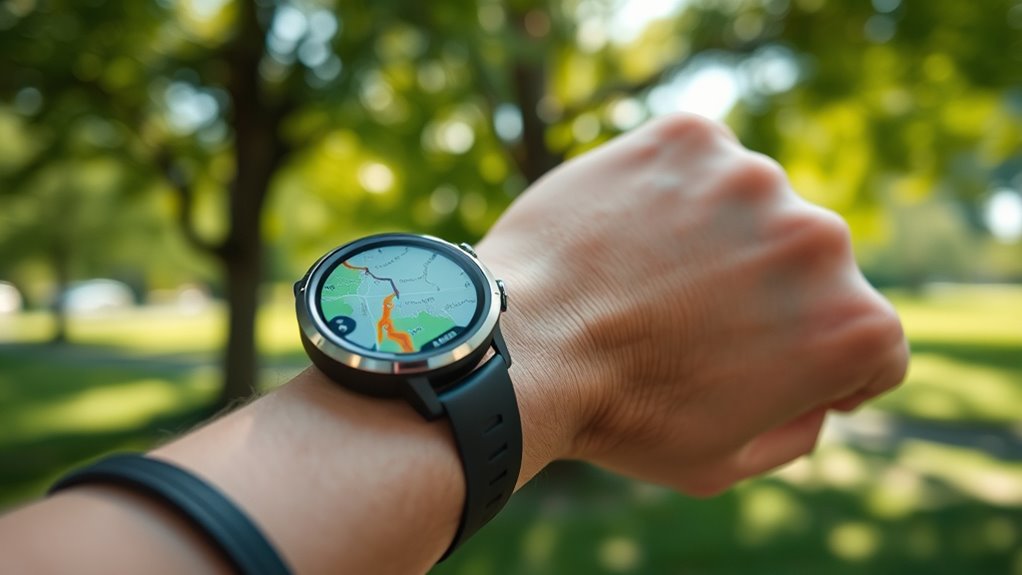

Workout GPS devices typically offer more accurate and reliable tracking than phone GPS, especially in challenging environments like dense forests or urban areas. They are designed with better antennas and algorithms, reducing signal loss and providing precise data during long sessions. Phones can struggle with interference and shorter battery life, making them less reliable over extended periods. If you want to understand how these differences impact your workouts, there’s more to uncover below.

Get the latest gadgets delivered free with Prime
- Fast, free delivery on millions of items
- Prime Video, Amazon Music and more included
- Member-only deals all year
Key Takeaways
- Dedicated GPS devices typically provide more precise and consistent location tracking compared to phone GPS, especially in challenging environments.
- Advanced antennas and algorithms in dedicated devices improve signal accuracy and reduce errors during complex or dense terrain workouts.
- Phone GPS accuracy can vary due to interference, device quality, and environmental factors, leading to less reliable tracking.
- Dedicated devices are designed for optimal outdoor visibility, enhancing readability and reducing tracking errors in bright or adverse conditions.
- Overall, dedicated GPS devices generally offer higher accuracy than phone GPS for detailed workout and performance tracking.
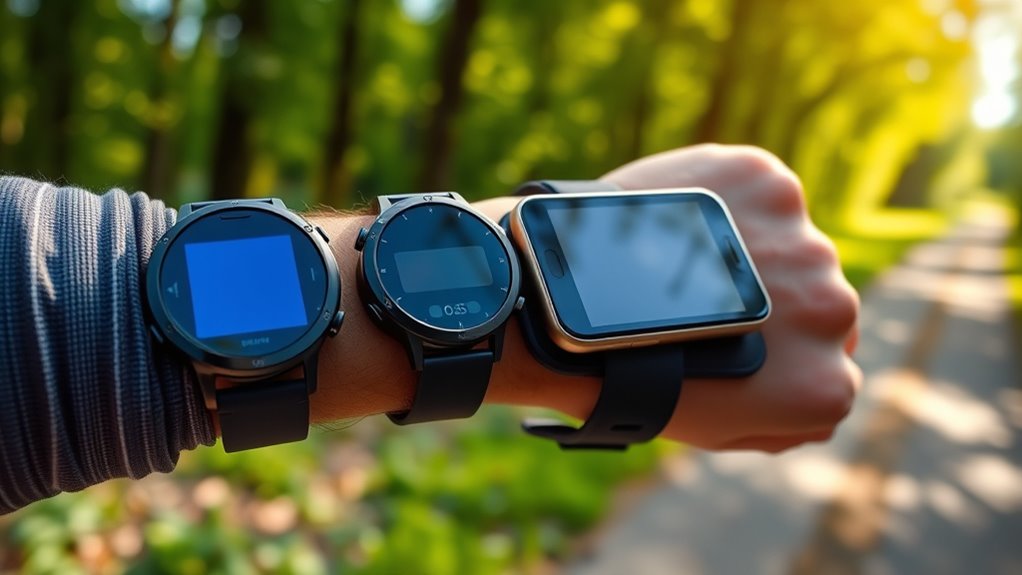
When choosing a GPS device for your workouts, you might wonder whether a dedicated workout GPS or your phone’s GPS is the better option. Both have their advantages, but one key factor to weigh up is how each handles battery life and data privacy. Your phone’s GPS is convenient and multifunctional, but it can drain your battery quickly, especially during long workouts. Dedicated workout GPS devices are often designed with optimized battery performance, allowing you to track your activities for hours without needing a recharge. This means you’re less likely to run out of juice mid-run or ride, giving you peace of mind during extended sessions. Conversely, if privacy is a concern, you might want to think twice before relying solely on your phone’s GPS. Smartphones tend to sync data to cloud services, which can raise questions about data privacy and security. Some workout apps collect detailed location data, and unless you’re vigilant about privacy settings, your movements could be accessible to third parties or vulnerable to hacking.
Dedicated workout GPS devices often store data locally on the device or sync with secure apps on your phone, giving you more control over your information. They are generally designed with privacy in mind, allowing you to limit data sharing and keep your workout details private. Additionally, because these devices are built solely for activity tracking, they tend to offer more accurate and consistent GPS signals. They often feature advanced antennas and algorithms that minimize signal loss and improve precision, especially in challenging environments like dense forests or urban areas with tall buildings. Your phone’s GPS, while generally accurate, can sometimes struggle with signal accuracy due to interference or the quality of your device’s antenna. This can lead to slightly inconsistent tracking, which might matter if you’re trying to analyze detailed metrics or improve your performance. Furthermore, the contrast ratio of dedicated devices often contributes to clearer displays in various lighting conditions, enhancing usability during outdoor workouts.
In the end, the choice hinges on your priorities. If you want a device that lasts through long workouts without frequent recharging and offers better control over your privacy, a dedicated workout GPS may be the better choice. On the other hand, if convenience and multi-functionality are more important, your phone’s GPS can serve well, provided you’re aware of its limitations. Both options have their merits, but understanding how they perform in terms of battery life and data privacy will help you choose the device that best fits your workout style and personal comfort level.
As an affiliate, we earn on qualifying purchases.
Frequently Asked Questions
How Does GPS Accuracy Vary in Different Weather Conditions?
Weather conditions can affect your GPS accuracy by causing signal interference, especially in heavy rain, fog, or snow. These conditions weaken satellite signals, making your device struggle to pinpoint your location precisely. You might notice more errors or fluctuations in your GPS data during bad weather. To get the best accuracy, try to stay in open areas with clear skies, minimizing signal interference and ensuring your device tracks your route more reliably.
Do Workout GPS Devices Have Better Battery Life Than Phones?
Workout GPS devices practically have superpowers when it comes to battery efficiency. They’re engineered for minimal power consumption, so you can run endlessly without worrying about draining your battery like your phone. Phones, with their multitasking and large screens, gobble up power quickly. So, if long-lasting battery life is your goal, workout GPS devices beat phones easily, keeping you out longer and pushing your limits without power worries.
Can GPS Accuracy Affect My Workout Performance Tracking?
Yes, GPS accuracy can impact your workout performance tracking. If your GPS signal is weak or inconsistent, it might misrecord your distance, pace, or route, leading to inaccurate workout data. This can make it harder to monitor progress or set realistic goals. To get the best results, verify you’re in an area with a strong GPS signal and keep your device updated, so your workout data remains precise.
Are There Specific Brands Known for Superior GPS Accuracy?
Like a lighthouse guiding ships, certain brands stand out for their GPS accuracy. Garmin and Suunto are known for their reliable device features and strong reputation, making them top choices for athletes. They consistently deliver precise tracking, helping you stay on course. When choosing a device, consider these brands to guarantee your workout data is accurate and trustworthy, giving you confidence in your performance.
How Does Signal Interference Impact GPS Performance During Exercise?
Signal interference can disrupt your GPS performance during exercise, causing inaccuracies or delays in tracking your route. It happens when signals from satellites are blocked or weakened by tall buildings, dense trees, or electronic devices nearby. Your device’s compatibility with various signals also plays a role; some devices handle interference better than others. To improve accuracy, choose a device with strong signal reception and avoid areas with high interference during your workout.
As an affiliate, we earn on qualifying purchases.
Conclusion
When it comes to tracking your workout, think of workout GPS and phone GPS as two explorers on a quest—each with their own strengths. While workout GPS often stays laser-focused like a hawk, your phone GPS can sometimes get distracted like a squirrel chasing shadows. For the most accurate path on your fitness journey, trust the dedicated GPS as your trusty compass, guiding you through every mile with precision and confidence. Your adventure deserves nothing less.
As an affiliate, we earn on qualifying purchases.
GPS sports watch with long battery life
As an affiliate, we earn on qualifying purchases.
As an affiliate, we earn on qualifying purchases.
Halloween Picks
halloween
As an affiliate, we earn on qualifying purchases.