
To improve GPS accuracy on your watch, start by ensuring you’re in an open area with a clear view of the sky to get a strong satellite lock. Regularly update your device’s firmware and software to benefit from the latest improvements. Calibrate your watch’s GPS often and avoid indoor or interference-heavy zones during initial setup. Optimizing these settings can make your tracks more precise—if you want to learn more, keep exploring these useful tips.

Get the latest gadgets delivered free — and shop member deals
- Fast, free delivery on millions of items
- Access to Prime Big Deal Days deals on October 6–7
- Prime Video, Amazon Music and more included
Key Takeaways
- Always start workouts in open, unobstructed areas to establish a strong satellite connection.
- Regularly update your watch’s firmware and GPS software for improved accuracy and bug fixes.
- Enable high-accuracy mode or similar settings within the watch’s GPS configuration.
- Perform routine calibration by walking or cycling in open environments to align GPS signals.
- Minimize interference by avoiding indoor or densely obstructed locations during initial GPS lock-on.
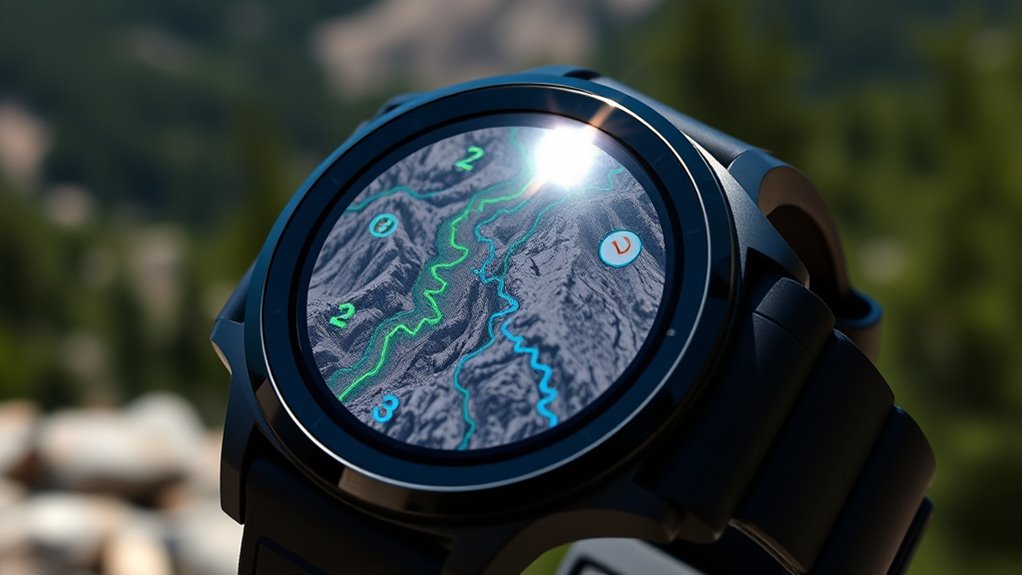
GPS accuracy on watches has become a key feature for athletes and outdoor enthusiasts alike, but it can vary depending on several factors. One of the most important elements influencing this accuracy is the quality of satellite signals your device receives. When you’re out running, cycling, or hiking, your watch relies on signals from multiple satellites orbiting the Earth. The stronger and clearer these signals are, the more precise your tracking will be. Obstructions like tall buildings, dense trees, or even weather conditions can weaken satellite signals, leading to inaccuracies or signal dropouts. To combat this, many watches use advanced algorithms to fill in gaps, but the best way to improve accuracy is to guarantee your device is receiving ideal satellite signals. Ensuring optimal satellite reception is essential for maintaining high GPS precision during your activities.
Calibration techniques play a crucial role in maintaining and enhancing GPS accuracy. Most watches offer a way to calibrate the device, ensuring that the GPS system is aligned with your actual position. This process often involves starting a calibration routine, which may include walking or cycling a specific distance in an open area. During calibration, your watch learns the patterns of satellite signals in your environment, helping it to interpret signals more precisely during your workouts. Some watches also allow you to manually update or reset GPS settings, which can help if you notice inconsistent tracking or drifting away from your actual route. Regular calibration is especially important if you frequently change locations or if your watch has been stored for a long period.
Another effective calibration technique is to keep your watch’s firmware updated. Manufacturers often release updates that improve GPS performance, fix bugs, and enhance signal processing algorithms. Updating your device ensures you’re taking advantage of the latest improvements, which can considerably boost accuracy. Additionally, placing your watch in a clear, open area before starting your activity can help it lock onto satellite signals more quickly and reliably. Avoid starting workouts in areas with heavy signal interference or when indoors, as these conditions can compromise the initial lock and overall accuracy.
Frequently Asked Questions
How Does Weather Affect GPS Accuracy on Watches?
Weather interference can markedly impact your watch’s GPS accuracy by causing signal disruption. When it’s stormy, rainy, or foggy, signals bounce or weaken, leading to less precise tracking. Clouds, rain, and storms interfere with satellite signals, making your watch’s location data less reliable. To improve accuracy, keep an eye on weather conditions and consider updating your watch’s firmware or adjusting settings during adverse weather.
Can Software Updates Improve GPS Precision?
Yes, software updates can improve GPS precision. They often include firmware improvements that enhance satellite signal processing and fix bugs affecting accuracy. Regularly calibrate your watch’s software to ensure peak performance, as this enhances GPS tracking reliability. Keep your device updated with the latest firmware, and you’ll benefit from improved software calibration, which helps your watch provide more precise location data during your activities.
Do Different Watch Brands Have Varying GPS Accuracy?
Like comparing different horses in a medieval joust, you’ll find that various watch brands do have differing GPS accuracy. Some brands excel with better signal consistency, providing more reliable location data, while others may lag behind. When choosing, consider brand comparison and how well each maintains signal strength during your activities. Keep in mind, even the best watches can benefit from firmware updates to enhance GPS performance.
How Long Does a GPS Fix Typically Take?
A GPS fix usually takes about 30 seconds to a couple of minutes, depending on satellite connectivity and signal interference. When you turn on your watch, it quickly searches for satellites, but obstacles like buildings, dense trees, or weather can delay this process. To speed it up, make sure your watch has a clear view of the sky, and sometimes, a warm start helps get a fix faster.
Is External GPS Antenna Compatibility Available?
Yes, external GPS antenna compatibility is available on some watches. You should check the compatibility check before purchasing, as not all models support this feature. An external antenna can substantially enhance GPS signal reception in challenging environments, improving accuracy. Make sure your watch explicitly states compatibility with external antennas, and follow the manufacturer’s instructions to install and connect it properly for ideal tracking performance.
Conclusion
By tweaking your watch’s GPS settings, you can unlock pinpoint accuracy that rivals a satellite’s eye. It’s like giving your device superpowers, turning every jog, hike, or bike ride into a flawless adventure. Don’t settle for sketchy tracks—embrace these tips and watch your watch’s precision soar to legendary heights. With the right settings, you’ll never question your route again; your watch will be so accurate, it might as well have a GPS genius inside!
Halloween Picks
halloween
As an affiliate, we earn on qualifying purchases.