GPS accuracy drifts mainly because of environmental interference like tall buildings, forests, or atmospheric conditions that weaken or block signals. Your device’s sensors can also cause errors if misaligned or uncalibrated. To improve accuracy, use open areas with fewer obstructions, keep your device updated, and regularly calibrate sensors. Even with these steps, interference can still happen, but understanding these factors helps you improve your positioning—more tips await if you explore further.

Get the latest gadgets delivered free — and shop member deals
- Fast, free delivery on millions of items
- Access to Prime Big Deal Days deals on October 6–7
- Prime Video, Amazon Music and more included
Key Takeaways
- Environmental obstructions like tall buildings and dense forests interfere with satellite signals, causing drift.
- Signal distortion from atmospheric conditions can weaken GPS accuracy temporarily.
- Regular device calibration and firmware updates help reduce sensor errors and improve position precision.
- Using open areas and multi-system satellite support enhances signal reception and stability.
- Understanding environmental challenges allows users to choose optimal locations for more accurate GPS readings.
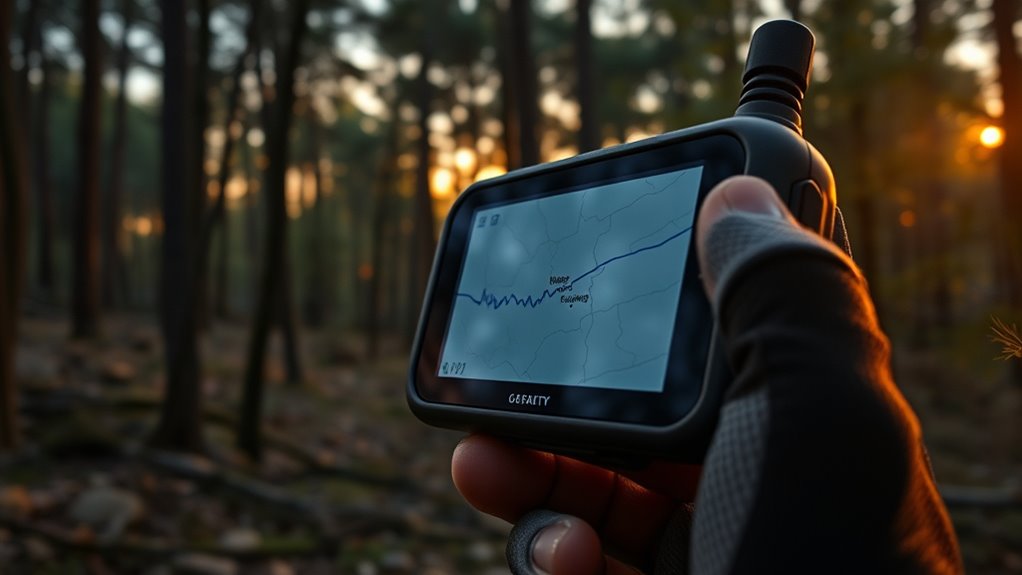
Have you ever wondered how precise your GPS really is? It might seem like a miracle that your device can pinpoint your location within a few meters, but the reality is that GPS accuracy can drift over time. One of the main culprits behind this inconsistency is satellite signal interference. Various factors, such as tall buildings, dense forests, or even atmospheric conditions, can disrupt the signals bouncing between satellites and your device. When these signals weaken or get distorted, your GPS struggles to determine your exact position, leading to inaccuracies or sudden jumps in your location. To combat this, many users turn to device calibration methods that help improve accuracy. Calibration can involve resetting your GPS receiver, updating firmware, or recalibrating sensors like the compass and accelerometer. These steps ensure your device’s internal systems are aligned, reducing errors caused by drift or sensor misalignment.
Understanding how satellite signal interference affects your GPS can help you troubleshoot issues more effectively. For instance, if you’re steering in a canyon or urban area with tall skyscrapers, signals tend to bounce or be blocked, causing positional errors. Moving to a more open space often helps stabilize these signals, resulting in better accuracy. Additionally, some devices use multiple satellite systems beyond GPS, like GLONASS or Galileo, which can improve reliability and precision when signals are interfered with. However, even with multiple systems, interference remains a challenge. That’s where device calibration methods come into play. Regularly calibrating your device ensures that the internal components, such as the compass and gyroscope, are aligned correctly with the GPS signals, minimizing drift and enhancing overall accuracy.
Environmental factors are unavoidable, but understanding how satellite signal interference impacts your GPS and employing proper device calibration methods can considerably improve your navigation experience. For instance, the accuracy of your GPS signal can be significantly improved by choosing optimal locations and maintaining your device properly. Whether you’re hiking, driving, or using GPS for outdoor activities, taking these steps ensures you get the most accurate positioning possible, reducing frustration and making your journeys safer and more efficient.
As an affiliate, we earn on qualifying purchases.
Frequently Asked Questions
How Does Atmospheric Interference Affect GPS Signals?
Atmospheric interference affects your GPS signals mainly through ionospheric delay and signal multipath. Ionospheric delay slows down signals as they pass through charged particles, causing location errors. Signal multipath happens when signals bounce off surfaces like buildings or water, confusing your device. To improve accuracy, use devices with advanced signal processing, avoid tall structures, or go to open areas where atmospheric effects are minimized.
Can Weather Conditions Impact GPS Accuracy?
Weather conditions definitely impact your GPS accuracy. When weather patterns bring heavy rain, snow, or thick clouds, signal attenuation occurs, weakening the GPS signals you rely on. This results in drift or less precise positioning. So, if you’re *orienteering* during storms or fog, expect some fluctuations. Staying aware of current weather can help you understand why your GPS might be less reliable at times and plan accordingly.
What Role Do Satellites Play in Signal Drift?
Satellites play a essential role in signal drift by affecting satellite geometry and signal triangulation. When satellites are spread out in ideal positions, your device gets better signals, reducing drift. Poor satellite geometry, where satellites are clustered together, can cause inaccuracies. This weakens signal triangulation, leading to drift. So, the more satellites in good positions your GPS can access, the more accurate your location stays.
How Does Device Hardware Influence GPS Precision?
Your device’s hardware directly affects GPS precision through its chipsets and antenna design. A high-quality chipset processes signals more efficiently, reducing errors and improving accuracy. An optimized antenna design ensures stronger, clearer signals, especially in challenging environments like urban canyons or indoors. Together, these hardware features minimize signal drift and enhance your device’s ability to pinpoint locations accurately, providing you with more reliable navigation and positioning.
Are There Specific Locations Where GPS Is Less Accurate?
Yes, GPS tends to be less accurate in urban canyons and dense foliage. In urban areas, tall buildings block satellites, causing signal reflections and multipath errors. Dense foliage, like forests, obstructs satellite signals, reducing precision. You can improve accuracy by staying in open spaces, updating your device’s software, and using GPS apps with enhanced filtering. These steps help mitigate signal issues in tricky environments, giving you better location data.
As an affiliate, we earn on qualifying purchases.
Conclusion
Imagine your GPS as a lighthouse beam flickering in the fog, sometimes drifting off course. To keep your navigation steady and true, you can clear the fog by updating your device, ensuring a strong signal, and using modern technology. When you do, your GPS becomes a reliable compass, guiding you smoothly through the maze of streets and open skies. With a little care, you’ll always find your way, no matter how thick the fog gets.
As an affiliate, we earn on qualifying purchases.
GPS accuracy enhancement accessories
As an affiliate, we earn on qualifying purchases.
As an affiliate, we earn on qualifying purchases.
Fall Picks
fall essentials
As an affiliate, we earn on qualifying purchases.