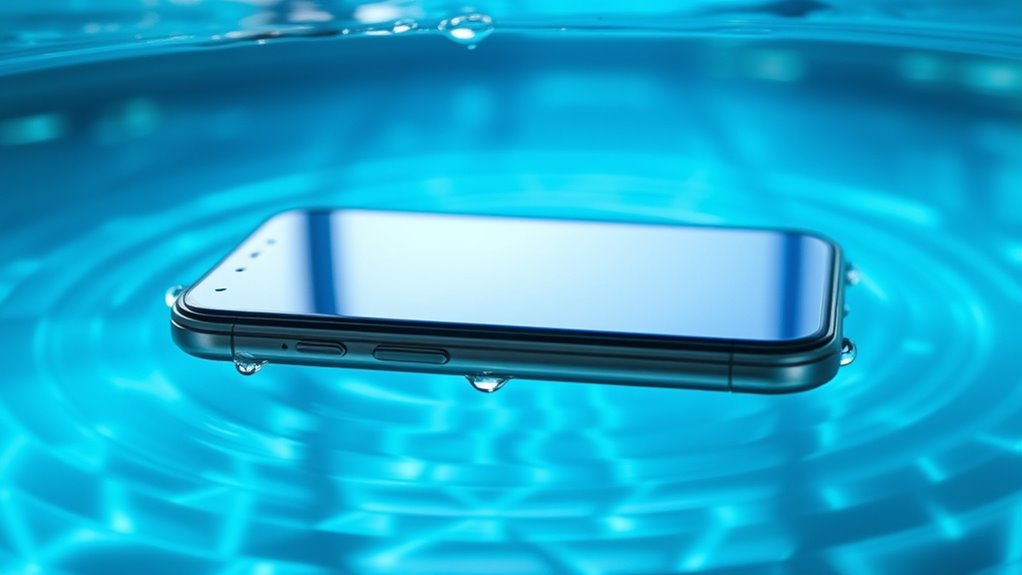

An IP rating, or Ingress Protection rating, shows how well your phone resists dust and water. The first digit indicates dust protection, while the second shows water resistance. For example, an IP68 rating suggests good dust and water resistance, but it doesn’t mean your phone is fully waterproof—limits like depth and time still apply. To truly understand what your phone can handle, you’ll want to know more about these ratings and their specifics.
Key Takeaways
- IP rating indicates a device’s dust and water resistance, with two digits representing protection levels.
- Higher IP digits mean better protection; for example, IP68 offers dust-tight and water-resistant features.
- IP ratings specify limits; devices are not fully waterproof and should not be submerged beyond rated conditions.
- Even with high IP ratings, physical damage or aging seals can compromise waterproof capabilities.
- Always verify the specific IP rating and manufacturer guidelines before exposing your phone to water or dusty environments.

If you’re considering a waterproof phone, understanding its IP rating is essential. The IP, or Ingress Protection, rating system helps you determine how well a device is protected against dust and water. It’s a standardized way to know what level of dust protection and water resistance levels a phone offers. This rating is indicated by two digits: the first for dust protection and the second for water resistance. A higher number generally means better protection, but it’s important to know what each digit actually signifies so you can choose a phone that suits your needs.
The first digit in the IP rating ranges from 0 to 6 and indicates how well your phone is protected against dust. If your device has a dust protection rating of 0, it offers no protection at all—dust particles can easily enter and damage the internal components. On the other hand, a rating of 6 means your phone is dust-tight, preventing any ingress of dust, which is ideal if you spend a lot of time outdoors or in dusty environments. Knowing this helps you understand whether your device can withstand exposure to dust or if you need to take extra precautions.
The second digit in the IP rating, which ranges from 0 to 9, reveals the water resistance levels of your phone. A device with a water resistance level of 1 can handle accidental splashes, but it’s not suitable for submersion. When you see a rating of 5, your phone can handle water jets from any direction, making it resistant to rain or splashes during outdoor activities. The highest rating, 9, indicates the phone can survive high-pressure, high-temperature water jets, which is perfect for more extreme conditions or water sports. It’s vital to note that even if your phone has a high water resistance level, it doesn’t mean it’s completely waterproof in all scenarios. Manufacturers specify limits, so you shouldn’t intentionally submerge your phone beyond the rated depth and duration. Additionally, the waterproof seals used in these devices can degrade over time, reducing their effectiveness. Many phones advertise a certain IP rating, but it’s wise to double-check what that rating specifically covers. For example, a phone might be rated IP68, meaning it has the highest dust protection and can be submerged in water up to a certain depth for a limited time. However, even with a high IP rating, physical damage or aging seals can compromise its protective features over time. So, while these ratings give a good baseline, you should still handle your device carefully and avoid exposing it to conditions beyond its specified limits.
Top picks for "phone really waterproof"
Open Amazon search results for this keyword.
As an affiliate, we earn on qualifying purchases.
Frequently Asked Questions
Can an Ip-Rated Phone Survive in Saltwater Environments?
Your IP-rated phone isn’t designed to survive in saltwater environments. Marine environments and saltwater damage can corrode seals and internal components, even if your device has a high IP rating. Exposure to saltwater risks compromising waterproof features and causing long-term damage. To protect your phone, avoid submerging it in saltwater, and consider using specialized waterproof cases if you need to use it near or in marine settings.
Do All Waterproof Phones Have the Same Durability?
Not all waterproof phones have the same durability. Many water resistance myths suggest that any water-resistant device can handle all conditions, but waterproof versus water-resistant ratings vary. Some phones survive splashes, while others withstand submersion longer or in deeper water. Always check the IP rating specifics, as higher ratings indicate better durability. Don’t assume your device is equally tough in every water environment; understanding these differences helps protect your phone.
How Often Should I Check My Phone’s Waterproof Seals?
Picture your phone’s waterproof seals like tiny gates guarding against water damage. You should check these seals during regular waterproof testing, ideally every few months, especially if your phone is exposed to water often. Seal inspection helps spot cracks or wear early. By doing this, you keep your device safe and guarantee those protective barriers stay intact, so your phone remains water-resistant in every splash or rainstorm.
Are There Specific Brands Known for Better Waterproofing?
Some brands are known for better waterproofing thanks to higher waterproof standards and brand reliability. You should look at brands like Panasonic, Sony, and Samsung, which often meet or exceed industry standards like IP67 or IP68. These brands invest in quality seals and materials, giving you more confidence your device can handle water exposure. Always check the specific model’s waterproof certification to guarantee it matches your needs.
What Maintenance Is Required to Keep Waterproof Features Effective?
A stitch in time saves nine, so you should regularly perform waterproof testing and seal inspections on your device. Keep the seals clean and free of debris, and replace them if they show signs of wear. Ensuring the waterproof features stay effective means checking for cracks or damage after drops or exposure to water. Routine maintenance helps prevent water ingress, so your device stays protected longer.
Conclusion
So, now that you’ve got the scoop on IP ratings, you can confidently decide if your phone can brave the rain or plunge into the pool. Remember, even if your device has a high rating, it’s not invincible—think of it like a knight’s armor, not a suit of steel. Keep an eye on those ratings and be cautious. After all, you wouldn’t toss a smartphone into the river expecting a perfect swim, would you?