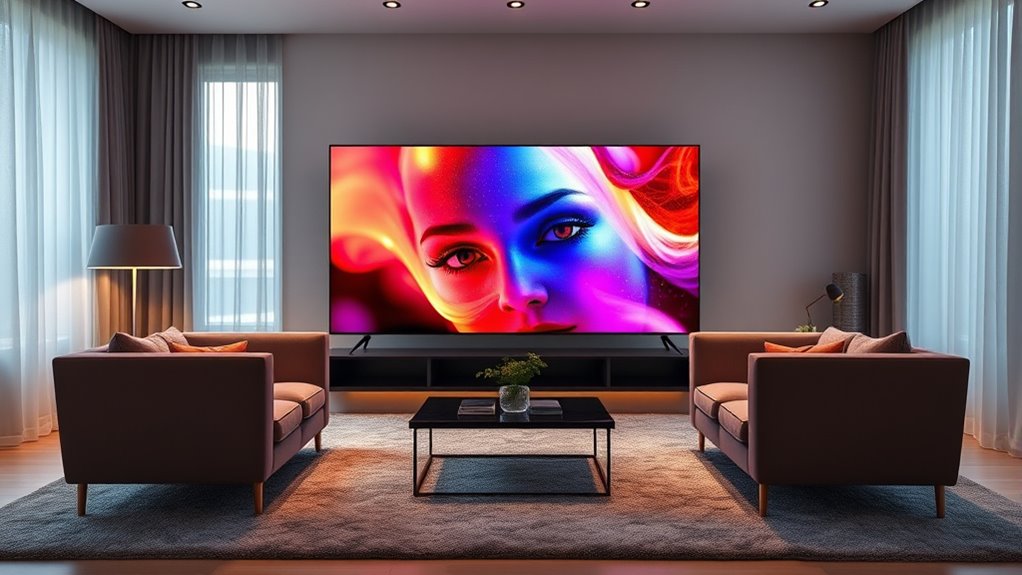
To pick the perfect TV size, consider your room’s dimensions, seating distance, and resolution. For example, in a smaller room, a 55-inch screen is usually ideal, while larger spaces can handle 75 inches or more. Keep in mind that sitting too close to a big screen can cause eye strain, and a small screen in a large room may feel underwhelming. If you want to find the right balance, there’s more to discover ahead.
Key Takeaways
- Measure your room dimensions to ensure the TV size complements the space without overwhelming it.
- Use the ideal viewing distance (1.5 to 2.5 times the screen size) to find a comfortable fit.
- Consider your room’s layout; large TVs can dominate small spaces, while small rooms benefit from moderate sizes.
- Match TV resolution with size; higher resolutions allow larger screens in tighter spaces without pixelation.
- Balance immersion and comfort by choosing a size that fits the room, viewing distance, and personal preferences.
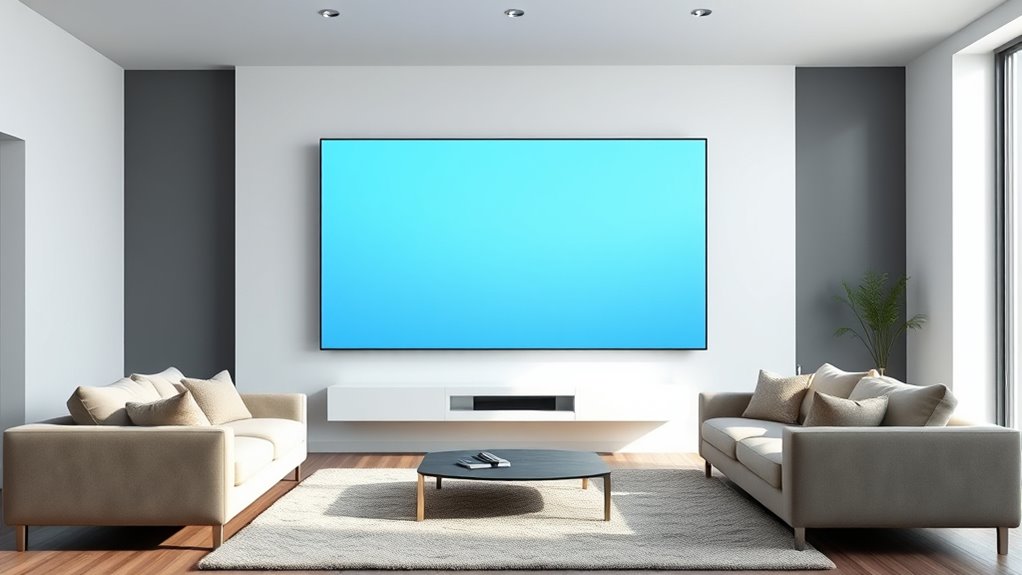
Choosing the right TV size can considerably enhance your viewing experience, but with so many options available, it’s easy to feel overwhelmed. The key factors to consider are your screen resolution and the viewing distance from your seating area. These elements directly influence how comfortable and immersive your TV experience will be. If your TV has a high screen resolution, such as 4K or 8K, you can generally sit closer without noticing pixelation, which allows for a larger screen in a smaller room. Conversely, if your TV has a lower resolution, sitting too close might reveal pixel gaps, diminishing picture quality.
Choosing a high-resolution TV allows closer viewing and bigger screens in smaller rooms.
Your viewing distance plays a vital role in selecting the ideal TV size. A good rule of thumb is to sit at a distance that’s approximately 1.5 to 2.5 times the diagonal size of your screen. For example, if you plan to sit about 8 feet away, a TV between 55 and 75 inches might be perfect. Sitting too close to a large screen can cause you to strain your eyes or miss details at the edges, while sitting too far away might lessen the impact of high-resolution images, making your entertainment less engaging.
It’s also important to consider the layout of your room. Smaller rooms naturally limit the size of the TV you should choose, as a gigantic screen might overwhelm the space and dominate your field of view. Bigger isn’t always better if it makes the room feel cramped or uncomfortable. On the other hand, a too-small TV in a large room can feel underwhelming, reducing the immersive quality of your viewing experience.
When choosing your TV size, don’t forget to factor in the TV’s aspect ratio and your preferred viewing habits. If you love cinematic experiences, a larger screen can mimic the theater feel, but only if your room and viewing distance support it. Remember, the best size balances your room dimensions, viewing distance, and the TV’s screen resolution for essential clarity. Additionally, understanding the difference between screen resolutions can help you make an informed decision about how close you can comfortably sit without compromising picture quality.
Top picks for "pick perfect size"
Open Amazon search results for this keyword.
As an affiliate, we earn on qualifying purchases.
Frequently Asked Questions
What Is the Ideal TV Size for Small Rooms?
For small rooms, a TV size between 32 to 43 inches works best. This size guarantees you get a good viewing experience without overwhelming the space. Make certain to calibrate the screen properly for ideal picture quality and consider wall mounting options to save space and create a sleek look. Keep the TV at eye level for comfort, and avoid going too large, which can make the room feel cramped.
How Does TV Resolution Affect Size Choices?
Think of screen resolution as the brushstroke detail in your cinematic masterpiece; higher resolution means sharper images, so you can enjoy a larger TV without sacrificing clarity. When choosing size, consider that a 4K screen allows for bigger displays while maintaining viewing comfort, avoiding pixelation. So, go bigger confidently, knowing that a high-resolution TV keeps your picture crisp and your eyes happy, even at impressive sizes.
Can a Larger TV Cause Eye Strain?
A larger TV can cause eye strain if the screen size overwhelms your viewing distance or if you sit too close. When the screen size is too big for your room, your eyes work harder to focus, leading to discomfort. To avoid eye strain, choose a screen size that matches your room’s dimensions and maintain a proper viewing distance. Keep lighting balanced and take regular breaks to protect your eyes.
How Far Should I Sit From My TV?
You should sit about 1.5 to 2.5 times the diagonal size of your TV away. This distance ensures ideal viewing angles and sound quality, avoiding strain or discomfort. Keep in mind, sitting too close can cause eye strain and distort the picture, while sitting too far reduces immersion. Find a comfortable spot that balances clear visuals and good sound, enhancing your overall viewing experience.
Is 4K Necessary for Larger Screens?
A 4K screen resolution isn’t strictly necessary for larger screens, but it’s highly recommended. When you sit at an ideal viewing distance, 4K offers sharper, more detailed images that prevent pixelation and enhance your experience. If you’re closer to a big screen, 4K resolution makes a noticeable difference. So, if you want clear, vibrant visuals without distraction, investing in a 4K TV is a wise choice.
Conclusion
Ultimately, finding the perfect TV size takes a thoughtful touch. Don’t delay in deciding what size suits your space, and don’t drown in doubt. By balancing your room’s layout with your viewing distance, you’ll bring blissful balance to your viewing experience. Remember, bigger isn’t always better—it’s about finding that perfect fit, fitting your fun, function, and furnishings. So, make your choice confidently, create comfort, and enjoy every cinematic moment without compromise.