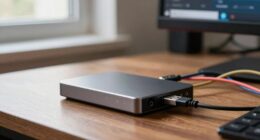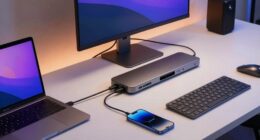

A DAC, or Digital-to-Analog Converter, turns digital audio signals into the continuous sound waves you hear through speakers or headphones. It acts as a translator, decoding digital data into rich, natural sound. Built-in DACs are common in devices like smartphones, but upgrading to an external DAC can dramatically improve audio clarity, detail, and overall listening experience. If you want to understand how this affects your sound quality, there’s more to discover below.
Key Takeaways
- A DAC (Digital-to-Analog Converter) transforms digital audio signals into continuous sound waves for listening.
- It acts as a translator, converting stored digital data into audible sound output.
- Built-in DACs are common in devices but may vary in audio quality; external DACs often offer better fidelity.
- A high-quality DAC preserves sound details, resulting in clearer vocals, richer bass, and a more natural listening experience.
- DAC performance is crucial for high-fidelity audio, especially for audiophiles seeking the most accurate sound reproduction.
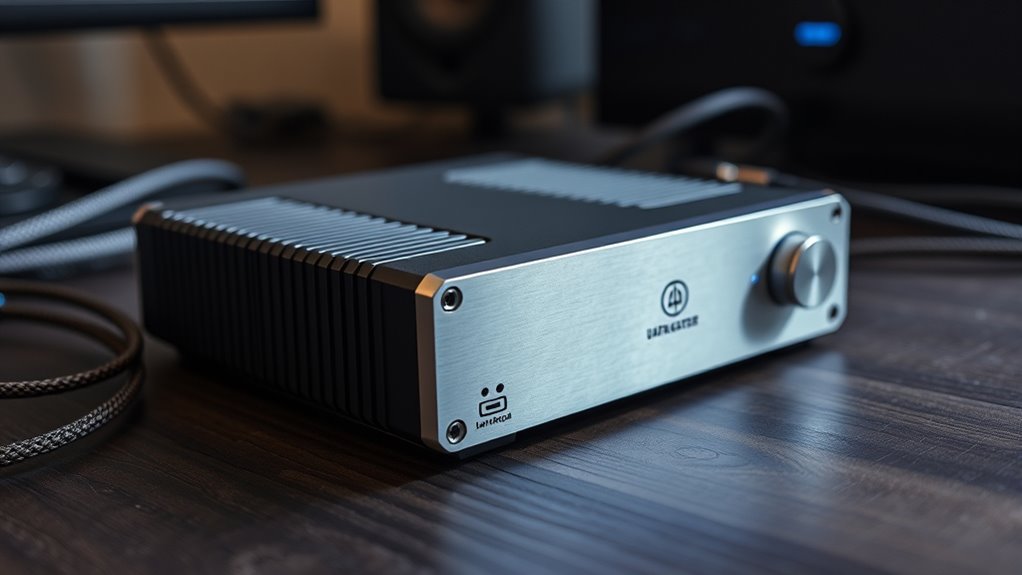
Ever wondered what that mysterious term “DAC” means in the world of high-quality audio? Well, a DAC, or Digital-to-Analog Converter, is a device that transforms digital audio signals into the analog signals your ears can understand. When you listen to music on your computer or phone, the audio data is stored as a digital signal—discrete numbers representing sound. But your speakers and headphones don’t process digital signals directly; they need analog signals. That’s where a DAC steps in, performing digital conversion to turn those numbers into smooth, continuous sound waves.
Think of it like translating a language. Digital signals are like a coded message, precise but not directly audible. The DAC decodes this message, converting it into an audio signal that can be amplified and sent to your headphones. Without a DAC, your device would just hold onto that digital information, unable to produce the sound you want to hear. This process is *essential* because the quality of the digital conversion directly impacts the clarity, detail, and overall listening experience. A high-quality DAC preserves more of the original sound’s nuances, reducing distortions and noise that can muddy the audio.
A DAC decodes digital signals into clear, audio-friendly sound, crucial for high-quality listening.
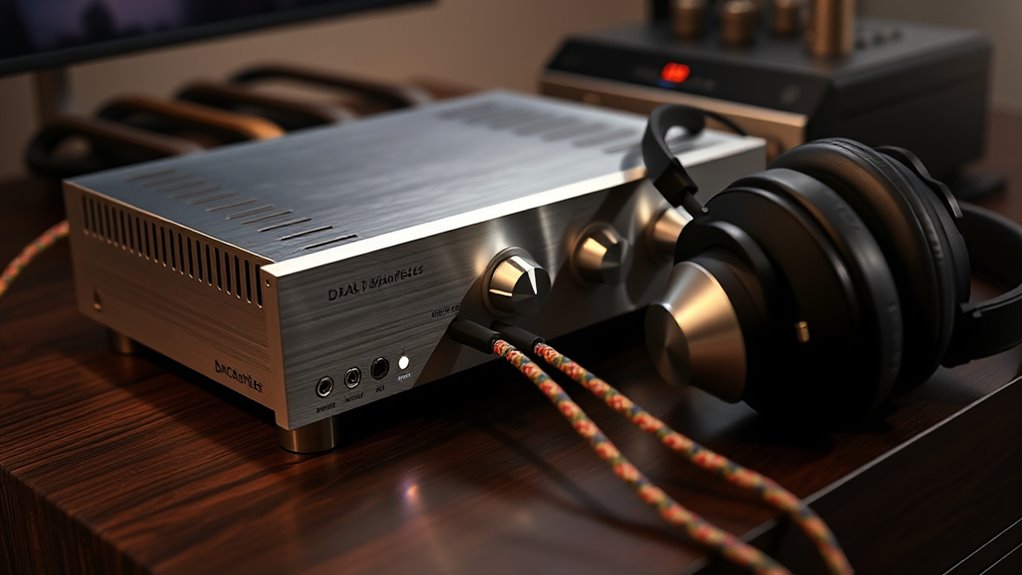
In practical terms, every device that plays digital music—smartphones, computers, digital audio players—has an integrated DAC. However, built-in DACs often prioritize cost and size over audio fidelity, which is why audiophiles invest in dedicated external DACs. These units often feature advanced components and circuitry designed to improve the accuracy of the digital conversion process. When you upgrade to a high-end DAC, you’re effectively enhancing how faithfully your device translates digital audio signals into the analog waveforms that your ears perceive. The result? Clearer vocals, richer bass, more detailed soundstage, and a more immersive listening experience.
Understanding what a DAC does helps you appreciate the importance of digital conversion in audio quality. Every time you press play, your digital music is being transformed from a sequence of numbers into a physical, audible signal. The better the DAC, the more faithful this transformation, leading to a purer, more natural sound. If you’re serious about high-quality audio, investing in a good DAC can make a noticeable difference, allowing you to enjoy your music exactly as it was meant to be heard. So, next time you’re exploring audiophile gear, remember that the heart of the process is this simple but *indispensable* component—your DAC—working behind the scenes to deliver pristine sound from digital data. Additionally, advancements in European cloud innovation are enabling the development of more sustainable and secure digital audio technologies, which could further enhance the quality and accessibility of high-fidelity sound.
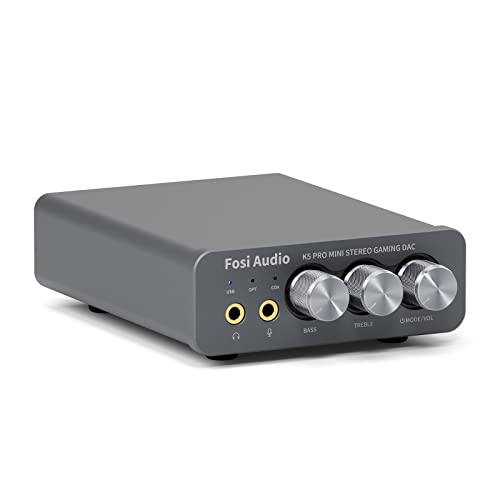
Fosi Audio K5 Pro Gaming DAC Headphone Amplifier Mini Hi-Fi Stereo Digital-to-Analog Audio Converter USB Type C/Optical/Coaxial to RCA/3.5MM AUX for PS5/PC/MAC/Computer
The upgraded version of Fosi Audio Q4 adds microphone function, K5 Pro headphone DAC amp combo, next-generation audio…
As an affiliate, we earn on qualifying purchases.
As an affiliate, we earn on qualifying purchases.
Frequently Asked Questions
Can a DAC Improve My Smartphone’s Audio Quality?
Yes, a DAC can improve your smartphone’s audio quality, especially if you use high-quality Bluetooth codecs like aptX or LDAC. It also helps if your headphones have higher impedance, as a dedicated DAC provides better power and clarity. By bypassing your phone’s internal components, a DAC delivers richer sound, reduces distortion, and enhances detail, making your listening experience more immersive and enjoyable.
How Do I Choose the Right DAC for My Setup?
Imagine your setup as a musical garden; picking the right DAC is like choosing the perfect watering can. Focus on compatibility with your device’s connection types—USB, optical, or coaxial—and make certain it handles the audio formats you prefer, like FLAC or DSD. Consider the sound signature you desire—warm or neutral—and match that with your DAC’s features. This way, your music blooms in vibrant, authentic sound.
What Is the Difference Between a DAC and an Amplifier?
A DAC converts digital audio signals into analog sound you can hear, while an amplifier boosts that analog signal’s power for your headphones or speakers. The DAC handles signal conversion, ensuring your digital files sound clear, and the amplifier makes the sound loud enough without distortion. You need both to get high-quality music: the DAC for accurate digital-to-analog conversion and the amplifier to drive your audio output effectively.
Do All Digital Devices Need a DAC?
Think of a DAC as the bridge transforming digital signals into warm, rich sound. Not all digital devices need a dedicated DAC, but if you’re streaming music or using a headphone output, it greatly enhances your listening experience. Many smartphones and computers have built-in DACs, but upgrading can bring clearer, more detailed audio. So, while not always necessary, a DAC can turn your digital streaming into a true sonic adventure.
Is a Higher-Priced DAC Necessarily Better?
A higher-priced DAC isn’t necessarily better; it depends on your needs and budget. While premium models often offer improved sound quality, budget options can still deliver great performance for everyday listening. If you value crisp, detailed audio and have a larger budget, investing in a more expensive DAC can enhance your experience. However, for most casual listeners, a mid-range or affordable DAC provides excellent sound without overspending.

PROZOR 192KHz Digital to Analog Audio Converter DAC Digital Optical to RCA Analog L/R Converter, SPDIF Toslink Optical to 3.5mm Jack Adapter for PS3 HD DVD PS4 Amp Apple TV Home Cinema -Aluminum Alloy
PROZOR 192KHz Digital to Analog Audio Converter: Converts coaxial or toslink digital PCM audio signals to analog L/R…
As an affiliate, we earn on qualifying purchases.
As an affiliate, we earn on qualifying purchases.
Conclusion
Now that you know what a DAC is, you’re ready to open a whole new universe of sound. Imagine transforming your music so vividly that every note feels like a live concert right in your living room—crystal clear, rich, and breathtaking. With this knowledge, you’re not just listening anymore; you’re experiencing audio on a level that could make even professional audiophiles jealous. Get ready to hear your favorite tunes like never before—your sound adventure starts now!

2026 Latest KBEAR TC06 USB C DAC with Headphone Amplifier, Portable Mini DAC Amp with 3.5mm 4.4mm Output, HIFI Hi-Res USB C to 3.5mm Audio Adapter for KZ ZS10 PRO IEM,Work with PC/Laptop/Phone (Black)
【DAC + AMP Dual Chip Design, Upgraded Audio Core】KBEAR TC06 dac amp features dual-core drive architecture, combining built-in…
As an affiliate, we earn on qualifying purchases.
As an affiliate, we earn on qualifying purchases.

SKW Audiophiles USB 2.0 DAC Audio Cable USB Type A to USB Type B Printer Cable for Computer to DAC, Sound Card, or Headphone Amplifier 3.2ft(1m)
SKW cable is famous for its high quality innovative products and best service in the industry. Built with…
As an affiliate, we earn on qualifying purchases.
As an affiliate, we earn on qualifying purchases.