
The key to fixing bad audio is ensuring you have the right ear tip size. When your tips fit snugly, they block out noise, prevent sound leakage, and direct sound properly into your ear canal. If they’re too loose or tight, your sound quality suffers. Take time to try different sizes—starting small and adjusting until you feel no discomfort and the fit is secure. Keep going, and you’ll discover more ways to transform your listening experience.
Key Takeaways
- Using the correct ear tip size creates a proper seal, improving noise isolation and overall sound quality.
- Properly fitted ear tips prevent sound leakage and distortion, ensuring clearer audio.
- Starting with the smallest size and adjusting helps find the most secure and comfortable fit.
- Choosing the right size reduces discomfort and fatigue during extended listening sessions.
- A secure fit enhances bass response and prevents audio from becoming muffled or uneven.
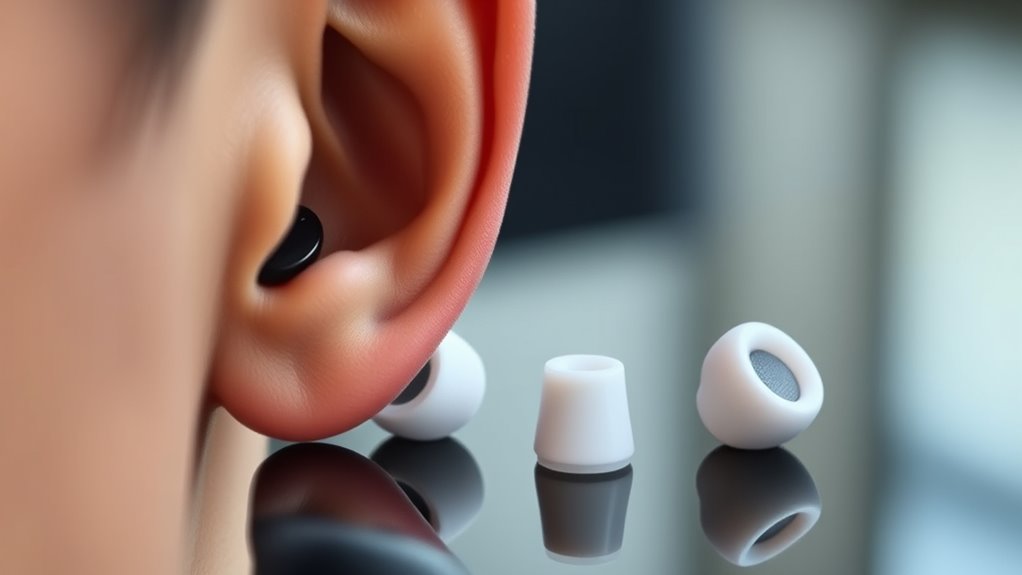
Choosing the right ear tip size is vital for getting the best fit and sound quality from your earbuds. When your ear tips are properly sized, you’ll experience a comfort fit that makes listening more enjoyable and less fatiguing. Ill-fitting tips can cause discomfort after a short period, leading you to frequently adjust or remove your earbuds. By selecting the correct size, you guarantee a snug, secure fit that stays in place, even during movement or exercise. A comfort fit also helps prevent soreness and pressure buildup, allowing you to enjoy long listening sessions without distraction.
Choosing the right ear tip size ensures comfort, secure fit, and improved sound quality during your listening sessions.
Beyond comfort, the right ear tip size plays an indispensable role in noise isolation. When your ear tips fit well, they form a better seal inside your ear canal. This seal blocks out ambient noise, so you don’t have to turn your volume up to unsafe levels to hear your music clearly. Effective noise isolation enhances your audio experience by delivering richer, clearer sound and deepening bass response. It also reduces external distractions, making it easier to focus whether you’re commuting, working, or relaxing at home.
Choosing the correct size isn’t just about comfort and noise isolation—it impacts overall sound quality. An improper fit can cause sound leakage, where audio escapes from your earbuds, diminishing the clarity of your listening experience. It can also lead to uneven sound distribution inside your ear, resulting in distorted audio. When your ear tips are the right size, they help direct sound properly into your ear canal, providing a more balanced and immersive sound profile. You’ll notice a marked difference in how punchy and precise your music feels.
To find the best fit, start with the smallest size and try inserting the ear tips into your ears. If they feel loose or fall out easily, switch to a larger size. Conversely, if they feel tight or cause discomfort, try a smaller option. Some earbuds come with multiple sizes, so take advantage of this for optimal results. Remember, a perfect fit isn’t necessarily the largest or smallest; it’s the one that feels secure without causing pain or pressure. Once you find that sweet spot, you’ll enjoy improved comfort, better noise isolation, and superior sound quality—making your earbuds truly effective and enjoyable to use. Additionally, understanding Free Floating design principles can help you select accessories that enhance your overall listening experience.
Frequently Asked Questions
Can Ear Tip Size Affect Noise Cancellation?
Yes, ear tip size can affect noise cancellation. When you choose the right size, your ear tips create a better seal, enhancing noise isolation and blocking out ambient noise. This improved seal allows your device’s noise cancellation features to work more effectively, giving you clearer sound. Conversely, an ill-fitting tip reduces noise isolation and ambient awareness, making it harder to enjoy your audio without external distractions.
How Often Should I Replace My Ear Tips?
You should replace your ear tips every few months to maintain ideal ear tip hygiene and durability. Over time, ear tips can accumulate dirt, earwax, or become worn, which affects comfort and sound quality. Regular replacements ensure a snug fit, better noise isolation, and prevent infections. Keep an eye on signs of wear and cleanliness, and swap them out as needed to keep your audio experience fresh and hygienic.
Are Silicone or Foam Tips Better for Sound Quality?
You’ll find foam tips generally offer better sound quality because they conform to your ear canal, providing a better seal. Silicone tips are more durable and easier to clean, making them ideal if you prioritize longevity. Foam is softer and more comfortable for long wear, but they wear out faster. Choose based on your comfort preferences and how much you value material durability for consistent sound quality over time.
Do Ear Tips Impact Battery Life of Wireless Earbuds?
Like a knight’s armor, ear tips don’t directly impact your earbuds’ battery life, but their durability and comfort matter. Poorly fitting or flimsy tips can cause you to adjust or replace them more often, which might lead to more frequent charging. Properly sized, durable tips improve comfort and guarantee a snug fit, helping your earbuds stay connected and efficient longer. So, choose quality tips to keep your listening smooth and hassle-free.
Can Improper Sizing Cause Ear Infections?
Yes, improper ear tip sizing can increase your ear infection risk. If the tips don’t fit well, they trap moisture and debris, creating a breeding ground for bacteria. To reduce this risk, practice good hygiene by cleaning your earbuds regularly and choosing the right size for a snug but comfortable fit. Properly fitting ear tips help keep your ears dry, healthy, and free from infection.
Conclusion
Getting your ear tip size right is like fitting a key perfectly into a lock — it makes all the difference. When your ear tips aren’t snug, your audio suffers, and comfort takes a hit. Take the time to find the right size, and you’ll notice clearer sound and a better listening experience. Don’t settle for less; a small adjustment can transform your earbuds from background noise to immersive sound.