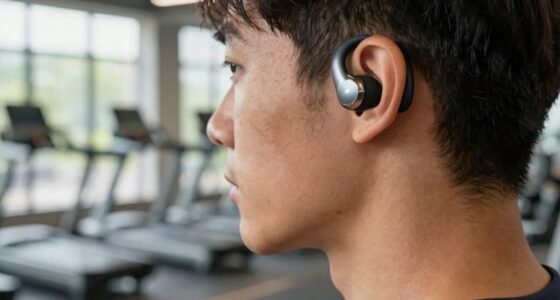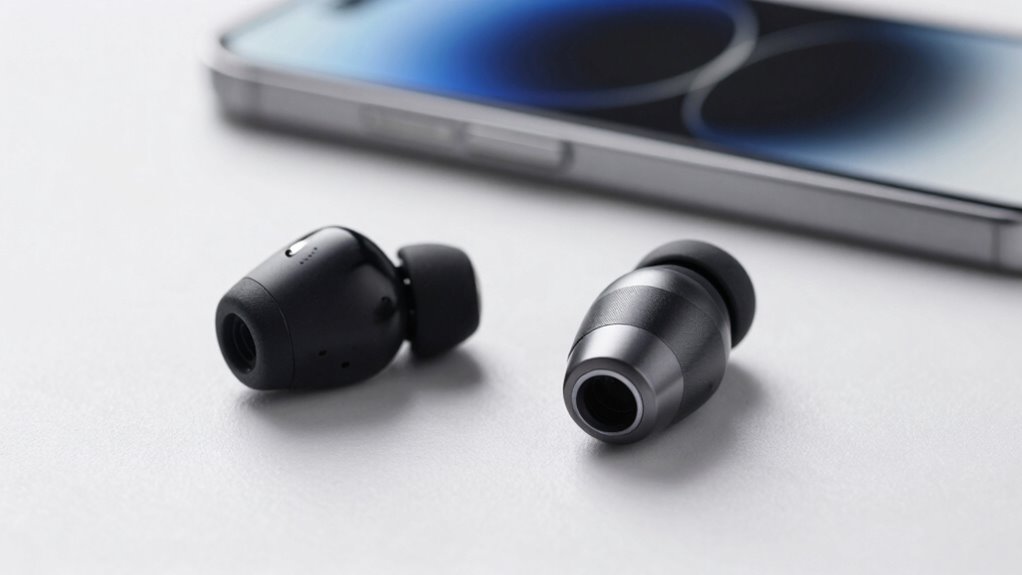

Yes, consumer tech is blurring the lines between earbuds and hearing aids through advanced features like noise cancellation, wireless connectivity, and biometric tracking. Modern devices now combine high-quality sound with health monitoring, making them more versatile and stylish. As companies shift focus from solely medical tools to lifestyle accessories, the distinctions are becoming less clear. If you want to explore how these innovations impact users and regulations, there’s more to discover ahead.
Key Takeaways
- Advances in miniaturization and digital tech have led earbuds and hearing aids to share similar features and designs.
- Both devices now offer wireless connectivity, noise cancellation, and biometric tracking, blurring their functional boundaries.
- Marketing efforts aim to rebrand hearing aids as lifestyle accessories, reducing stigma and appealing to younger consumers.
- Regulatory shifts, like over-the-counter options, make hearing technology more accessible, similar to consumer earbuds.
- The convergence of features and aesthetics is increasingly merging earbuds and hearing aids into a unified hearing tech market.
The Evolution of Personal Audio Devices and Hearing Technology
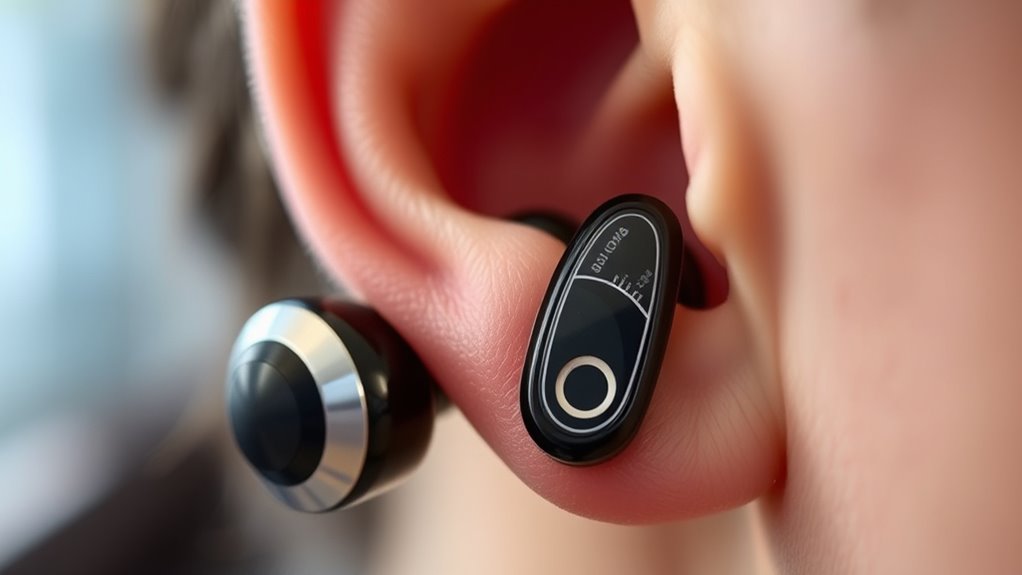
The evolution of personal audio devices and hearing technology reflects a rapid progression driven by advancements in miniaturization and digital engineering. Today’s earbuds deliver impressive audio quality, rivaling traditional headphones, while maintaining sleek, modern design aesthetics that appeal to consumers. As technology shrank, manufacturers prioritized both sound clarity and style, making devices more discreet and fashionable. Hearing aids have also benefited from this innovation, offering better sound processing and cleaner audio experiences. You now find devices that seamlessly blend into your lifestyle, combining high-level audio performance with attractive, unobtrusive designs. The miniaturization of technology has played a crucial role in making these devices more powerful and versatile, allowing for features like noise cancellation and wireless connectivity to be integrated into compact forms. Enhanced digital signal processing capabilities have further improved the quality and reliability of these devices. This ongoing evolution means you can enjoy superior sound quality, whether for entertainment or hearing support, all while embracing compact, stylish forms that integrate effortlessly into everyday life. Additionally, advanced audio technology has contributed to creating more personalized listening experiences, further blurring the lines between consumer tech and medical hearing solutions. The integration of body-specific features in some devices also helps optimize sound delivery based on individual ear shapes and needs, enhancing the overall user experience.
Features That Bridge the Gap Between Earbuds and Hearing Aids

As technology advances, many features now common in high-quality earbuds and hearing aids are blurring the lines between the two devices. Enhanced sound quality is a key feature, allowing for clearer speech, better noise reduction, and more natural audio experiences. Battery life has also improved considerably, with both devices offering longer usage times to meet daily demands. These improvements mean you can enjoy immersive listening with earbuds that provide hearing aid-like clarity, or use hearing aids with advanced connectivity features similar to earbuds. The integration of smart controls, adaptive noise management, and longer-lasting batteries creates a seamless experience. This convergence helps users access essential hearing and audio features in a single device, making technology more versatile and user-friendly.
Regulatory and Certification Challenges in Hearing Tech Integration

Integrating advanced hearing technology into consumer earbuds presents significant regulatory and certification hurdles that manufacturers must navigate. You’ll face strict regulatory hurdles designed to guarantee safety, privacy, and effectiveness. Certification standards vary by region, requiring compliance with specific guidelines. To successfully bring these devices to market, you need to:
- Meet medical device regulations in key markets like the US and EU.
- Obtain necessary certifications such as FDA approval or CE marking.
- Ensure data privacy standards are upheld, especially for health-related information.
- Keep pace with evolving standards for wireless communication and audio quality.
- Additionally, considering the vetted nature of hearing tech, manufacturers must conduct thorough testing to ensure reliability and performance consistency across different environments.
These challenges demand rigorous testing and documentation, making regulatory approval a complex but essential process for blending consumer tech with professional hearing solutions.
User Experience and Accessibility: Comparing Functionality and Comfort
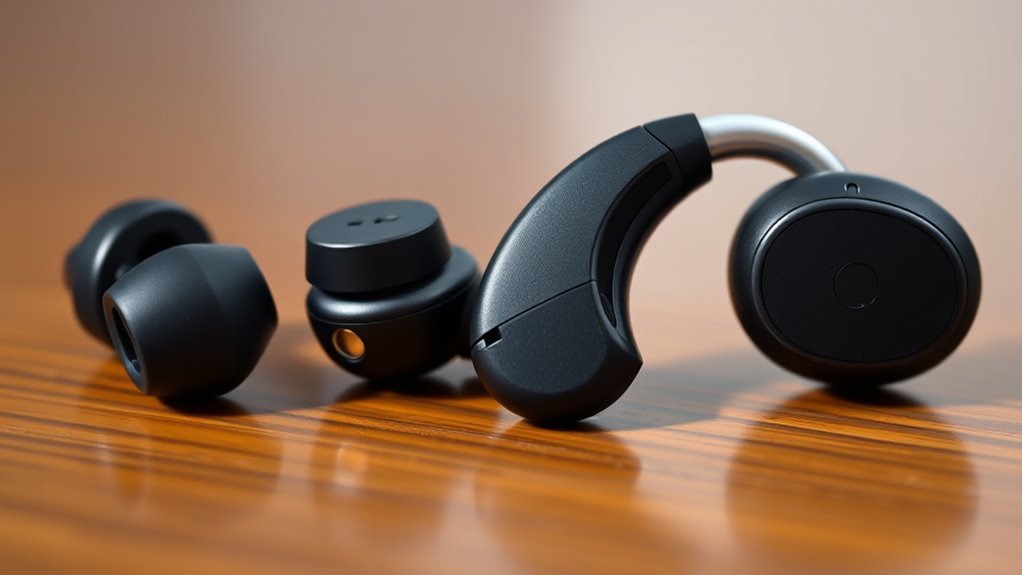
Balancing regulatory compliance with user experience is key when comparing earbuds and hearing aids. You’ll notice that sound customization plays a vital role in both devices, allowing you to tailor audio to your preferences or hearing needs. Hearing aids often offer advanced sound tuning options, but earbuds are catching up with customizable equalizers and settings. Fit comfort is equally important; hearing aids are designed for long-term wear and need to fit snugly without causing discomfort, while earbuds prioritize lightweight design and ease of use. Both must balance secure fit with comfort, especially for extended wear. Ultimately, your experience depends on how well each device adapts to your ear shape and how effortlessly you can access personalized sound settings.
Industry Perspectives: Innovations and Market Trends

You’re likely to notice how emerging wearable tech is reshaping the audio industry, blending health and entertainment functions. Companies are expanding into new markets with innovative strategies to reach broader audiences. Meanwhile, shifts in regulations are influencing product development, ensuring safety and compliance while fostering innovation. Additionally, local automation is increasingly integrated into hearing devices and earbuds, enhancing personalized experiences and accessibility for users. As AI-driven personalization algorithms continue to evolve, they play a crucial role in tailoring device functionalities to individual needs, further bridging the gap between consumer tech and medical-grade hearing solutions. The ongoing development of styling options also allows these devices to blend seamlessly with personal fashion choices, making them more acceptable in everyday settings. Furthermore, advances in AI-powered diagnostics are helping manufacturers improve device performance and user experience, highlighting how AI is transforming both consumer and medical hearing technologies. Recognizing the importance of user comfort and discretion is driving innovation in device design and materials, making these technologies more user-friendly.
Emerging Wearable Technologies
Emerging wearable technologies are transforming how we address hearing health and communication needs, blurring the lines between consumer electronics and medical devices. You’re seeing innovations that combine biometric tracking with sleek designs, making devices more intuitive and personalized. This convergence allows for a wider range of features and customization options, enhancing user experience across diverse markets. 1. Biometric tracking allows real-time monitoring of health metrics, enabling early detection of hearing issues. Additionally, incorporating personal branding options enables users to express their individual style, driving greater adoption. 2. Aesthetic customization lets you choose styles and colors, ensuring your device reflects your personality. 3. Advanced sensors enhance sound quality, adapting to your environment seamlessly. 4. Connectivity features integrate wearables with smartphones, offering effortless control and data sharing. Incorporating safety standards from medical device regulations helps ensure these devices are reliable and secure for users. The market growth driven by consumer demand and technological advancements is making hearing devices more accessible, functional, and stylish, shifting expectations for both medical and consumer markets. Additionally, the integration of user-centered design principles ensures these devices are comfortable and easy to operate for a wide range of users, further accelerating adoption. The integration of biometric tracking and aesthetic customization signals a new era in wearable tech.
Market Expansion Strategies
As wearable hearing technologies become more sophisticated and personalized, companies are actively exploring market expansion strategies to reach broader audiences. One key approach is increasing market penetration by targeting new demographics, such as younger consumers or tech-savvy users, through innovative product features. They’re also leveraging branding strategies to reposition hearing devices as lifestyle accessories rather than medical tools, removing stigma and enhancing appeal. Collaborations with consumer electronics brands help blur the lines between earbuds and hearing aids, making products more accessible. Additionally, companies are expanding distribution channels, including online platforms, to attract a wider customer base. These strategies aim to normalize hearing tech, boost sales, and foster brand loyalty in a competitive landscape where consumer perceptions continue to evolve. UST projector rankings by throw, brightness, color accuracy, and input lag and ALR screen and cabinet pairing guides are examples of how technical specifications and optimized setups can influence consumer choices and perceptions across different tech markets.
Regulatory Environment Shifts
Regulatory shifts are considerably shaping the development and market acceptance of both earbuds and hearing aids. You’ll notice that changing rules around regulatory hurdles and certification standards influence product design and innovation.
- Governments are updating certification standards to include over-the-counter hearing devices, easing access and reducing delays.
- Stricter regulatory hurdles push manufacturers to prioritize compliance, ensuring safety and effectiveness.
- Emerging regulations aim to bridge the gap between consumer tech and medical devices, blurring lines further.
- Companies adapt quickly, maneuvering evolving policies to bring new hearing solutions to market faster.
These shifts create opportunities and challenges, requiring you to stay informed about the latest regulatory environment to understand how it impacts product development and market dynamics.
Ethical and Privacy Considerations in Hearing-Related Consumer Devices

Have you ever considered the ethical and privacy challenges that come with using hearing-related consumer devices like earbuds and hearing aids? These devices collect sensitive data, raising concerns about data privacy and how your information is used. Manufacturers may share or sell your listening habits, location, or health data without clear consent. Ethical sourcing also matters—ensuring devices are produced responsibly without exploiting workers or harming the environment. As these devices become more integrated with health monitoring, the potential for misuse or breaches increases. You need to be aware of how your data is protected and whether companies follow ethical practices. Staying informed helps you make smarter choices about the devices you use, balancing convenience with privacy and ethical responsibility. Additionally, understanding vetted privacy policies and the types of cookies used can help you better manage your data security. Being aware of data security measures can further empower you to safeguard your personal information, especially as wearable health devices become more prevalent, emphasizing the importance of ethical and transparent data handling.
Frequently Asked Questions
How Do Regulatory Standards Differ Between Consumer Earbuds and Medical Hearing Aids?
You’ll find that regulatory standards differ markedly between consumer earbuds and medical hearing aids. Manufacturing standards and labeling requirements are stricter for hearing aids to ensure safety and efficacy, often requiring approval from agencies like the FDA. In contrast, earbuds face lighter regulations focused on consumer safety and product labeling. This means hearing aids undergo rigorous testing, while earbuds can be marketed with fewer safety and performance guarantees.
Can Consumer Earbuds Be Legally Marketed as Hearing Aids in All Regions?
You can’t legally market consumer earbuds as hearing aids everywhere. Market approval and advertising regulations vary regionally, often requiring medical device certifications for hearing aids. While some regions may loosen rules, most authorities strictly regulate how products are labeled and promoted. So, you need to double-check local laws before claiming earbuds serve as hearing aids, ensuring compliance and avoiding legal issues while confidently communicating their true purpose.
What Are the Long-Term Health Implications of Using Earbuds as Hearing Aids?
Using earbuds as hearing aids long-term can lead to musculoskeletal strain from improper fit and prolonged use. You might also experience auditory fatigue, causing ear discomfort or reduced hearing sensitivity over time. It’s important to limit usage, maintain proper hygiene, and consult a healthcare professional if you notice persistent issues. Regular breaks and correct fitting help minimize health risks and protect your hearing health.
How Do Data Privacy Laws Impact the Development of Hearing-Enhancement Features?
Coincidentally, data privacy laws considerably shape how hearing-enhancement features develop. You need to be aware that strict regulations protect your user privacy and data security, which can slow down innovation or require more secure data handling practices. Developers must prioritize transparency and compliance, ensuring your sensitive health data remains protected. This focus helps build trust, but it also challenges companies to balance innovation with safeguarding your personal information effectively.
Are There Ethical Concerns Regarding the Commercialization of Hearing Aid Technology in Earbuds?
Yes, there are ethical concerns about commercializing hearing aid technology in earbuds. You should consider whether companies obtain proper consumer consent before collecting or using hearing data. Additionally, marketing ethics come into play when promoting these features, ensuring they’re transparent and not misleading. As a user, you deserve clear information about how your hearing data is used and protected, maintaining trust and respecting your privacy rights.
Conclusion
So, as you marvel at earbuds that diagnose your ear health and hearing aids that double as wireless earbuds, remember: the line between tech and therapy is blurring faster than your favorite playlist. Soon, you’ll be questioning if your device is a stylish accessory or a serious medical tool—probably both. Just don’t forget to read the fine print; after all, privacy might be the next thing to get lost in the noise.