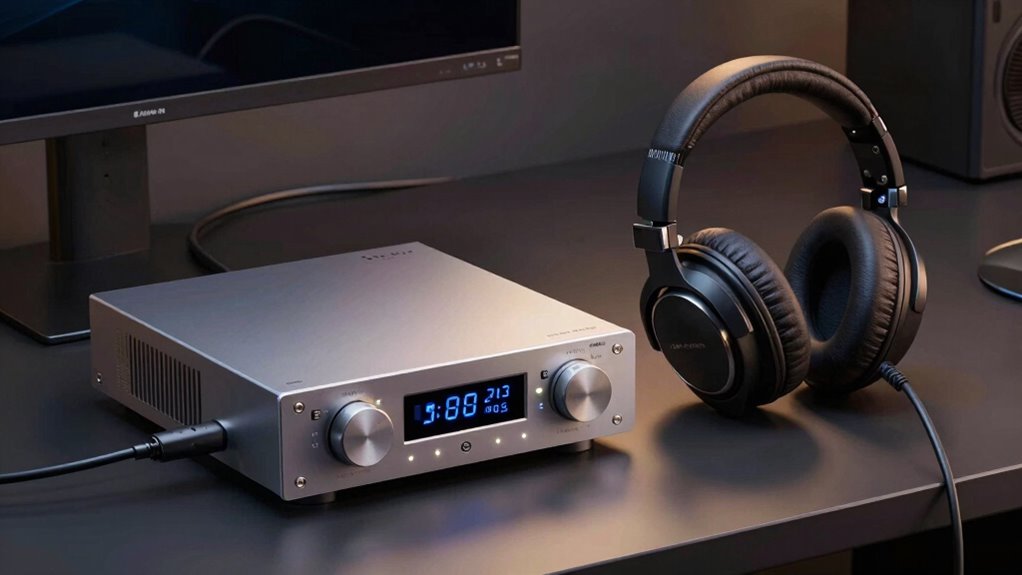

A DAC, or digital-to-analog converter, transforms digital music signals into the sound waves you hear through your headphones. Using a high-quality DAC can improve sound clarity, detail, and reduce noise, especially with high-impedance or high-resolution headphones. Whether you need one depends on your gear and how much you care about sound quality. If you want to explore how a DAC can elevate your listening experience, there’s more to discover ahead.

Get the latest gadgets delivered free with Prime
- Fast, free delivery on millions of items
- Prime Video, Amazon Music and more included
- Member-only deals all year
Key Takeaways
- A DAC converts digital audio signals into analog sound, affecting clarity and detail.
- External DACs often provide better sound quality than built-in ones, especially with high-impedance headphones.
- Signs you need a DAC include dull sound, background noise, and lack of clarity at higher volumes.
- A DAC enhances sound details, reduces distortion, and improves overall listening experience.
- Use a DAC when listening to high-resolution formats or with demanding, high-impedance headphones for optimal sound.
Understanding the Role of a DAC in Audio Playback

A Digital-to-Analog Converter (DAC) plays a crucial role in transforming digital audio signals into the analog sound waves your headphones can produce. When you play music, the DAC processes various audio file formats like MP3, FLAC, or WAV, converting them into signals your headphones understand. The quality of the DAC affects how accurately these signals are rendered, impacting sound clarity and detail. Additionally, headphone impedance influences how easily the DAC can drive your headphones; higher impedance headphones require more power for maximum performance. If your DAC isn’t compatible with your headphone impedance or struggles with certain audio formats, your sound quality might suffer. Understanding this interplay helps you choose the right DAC for your setup to enjoy better, more faithful audio playback. For optimal performance, selecting a DAC with high resolution capabilities can further enhance your listening experience. Moreover, considering compatibility with your headphones’ impedance ensures you get the best sound output without distortion or insufficient volume. Recognizing the importance of digital-to-analog conversion can guide you in choosing equipment that delivers a richer, more immersive audio experience.
How a DAC Transforms Digital Signals Into Sound

When digital audio is played, the data stored in files like MP3 or FLAC must be converted into analog signals that your headphones can produce. This process involves a vital step called analog conversion, where the DAC transforms the digital bits into a continuous electrical signal. To guarantee smooth sound, the DAC uses digital filtering to remove high-frequency noise and unwanted artifacts from the digital data. Digital filtering cleans up the signal before the analog conversion, resulting in clearer, more accurate sound. The DAC carefully interprets the digital information, shaping it into a waveform that closely matches the original recording. Without this conversion process, your headphones wouldn’t be able to produce sound from digital files, making digital filtering and analog conversion essential for high-quality listening. Additionally, understanding concepts like Free Floating can help in appreciating how certain designs in audio equipment aim to reduce vibrations and improve sound quality. Furthermore, digital-to-analog conversion is a crucial element in ensuring the fidelity of the audio signal throughout the playback process.
Types of DACs and Their Features

You’ll find both built-in and external DACs available, each offering different advantages. External DACs often provide superior sound quality and more features, while built-in options are convenient and integrated. Understanding their features and connectivity options helps you choose the right DAC for your audio setup. Additionally, selecting a DAC with proper connectivity options ensures compatibility with your devices and optimal performance. To maximize your listening experience, consider the power supply and how it may affect overall audio quality. Furthermore, the heritage of the companies manufacturing DACs can influence the quality and reliability of the devices. Recognizing the science behind digital-to-analog conversion can help you appreciate how different DACs impact your sound, especially as advancements in digital signal processing continue to evolve.
Built-in vs. External DACs
Built-in DACs are integrated directly into devices like smartphones, laptops, and audio receivers, offering convenience and space-saving design. These DACs are sufficient for everyday listening, especially if you primarily stream music or use headphones with moderate amplification needs. However, built-in DACs can sometimes limit sound quality, as they’re designed to balance cost and performance. If you’re into high-quality music streaming or want better headphone amplification, an external DAC might be worth considering. External DACs usually deliver cleaner, more detailed audio by reducing internal noise and providing higher fidelity. They’re especially beneficial if you use high-impedance headphones or seek audiophile-grade sound. While built-in DACs are convenient, external options give you the flexibility to upgrade your setup and enjoy richer, more accurate audio. Additionally, audio fidelity can be significantly improved with the right DAC, making your listening experience more immersive and precise.
Features and Connectivity
Are you familiar with the different types of DACs and their features? There’s a variety, from desktop models to portable options designed for on-the-go use. Some DACs support wireless streaming, allowing you to connect effortlessly to smartphones, tablets, or computers without cables. Portable options are compact and battery-powered, perfect for travel or commuting, and often include multiple connectivity options like USB, Bluetooth, or optical inputs. Higher-end DACs might feature advanced filters, multiple outputs, or compatibility with high-resolution audio formats. When choosing a DAC, consider your setup and how you prefer to connect—wired or wireless—and whether portability is a priority. These features can markedly enhance your listening experience, especially when paired with quality headphones. Additionally, understanding digital-to-analog conversion can help you select a DAC that best meets your audio quality needs.
Signs That Your Headphones Might Benefit From a DAC

If your headphones sound weak or lack clarity, it might be time to contemplate a DAC. You could also notice more background noise or static, which can interfere with your listening experience. These signs often indicate that your current setup isn’t delivering the best audio quality possible. Upgrading to a dedicated digital-to-analog converter can significantly enhance your sound quality and listening experience. Additionally, a DAC can reduce electrical noise that affects audio clarity, making your music sound more detailed and immersive.
Weak Audio Quality
Have you noticed that your headphones sound dull, muddy, or lack clarity even at higher volumes? This weak audio quality could be a sign that your setup isn’t delivering the best sound possible. Sometimes, audio compression during digital transfer reduces detail and dynamic range, making music feel flat. Additionally, if your headphones have high impedance, they require more power to perform well. Without a proper DAC, your device might not supply enough clean power, resulting in weaker, less vibrant sound. Upgrading to a quality DAC can help bypass these issues, providing a clearer, more detailed audio signal. If your audio feels underwhelming despite decent headphones, it’s worth considering whether a DAC could improve your listening experience.
Noisy Background Sounds
Weak audio quality isn’t the only sign your headphones might need an upgrade; persistent background noise can also be a telltale sign. If you notice constant background interference that hampers your listening experience, your headphones may struggle to process the audio cleanly. Enhanced noise cancellation can help block out external sounds, but if background noise remains noticeable, a better digital-to-analog converter (DAC) might be necessary. A high-quality DAC improves overall sound clarity and reduces unwanted interference, allowing your headphones to deliver cleaner audio. If background sounds still sneak in despite noise cancellation features, upgrading your DAC could make a noticeable difference. Additionally, understanding the role of a DAC in audio signal processing can help you make more informed decisions about your audio setup. This ensures you enjoy a more immersive listening experience without distraction from ambient noise or interference. Furthermore, choosing the right DAC can be especially beneficial when pairing your headphones with high-impedance audio sources, as it helps optimize power delivery and sound fidelity. Properly matching your DAC to your equipment can maximize audio quality, which in turn can improve overall listening experience. Selecting a DAC with low distortion can further enhance clarity and reduce signal degradation during playback.
Comparing Built-in DACs vs. External DAC Devices

While many headphones come with built-in DACs, these integrated components often prioritize convenience over sound quality. Built-in DACs are suitable for casual listening, especially during wireless streaming, but they may struggle with high-impedance headphones or demanding audio formats. External DAC devices typically offer superior sound clarity, better dynamic range, and reduced interference, making them ideal for audiophiles. They also allow you to tailor your setup based on headphone impedance, ensuring best power delivery. Vetted
The Impact of a DAC on Sound Quality and Listening Experience

Upgrading from a built-in DAC to an external one can markedly transform your listening experience. A high-quality DAC clarifies sounds, reduces distortion, and enhances detail, making your music sound richer and more immersive. This improvement is especially noticeable across various music genres, whether you prefer jazz, electronic, or classical, as each benefits from cleaner, more accurate audio. Your listening preferences also influence how much a DAC impacts your experience; if you value crisp vocals or deep bass, a better DAC can deliver those nuances more faithfully. Overall, a dedicated DAC can elevate your sound, making every note clearer and more dynamic, so you feel more connected to your favorite tracks. This upgrade guarantees your headphones perform at their best, revealing details you might have missed before. Vintage-inspired audio equipment can further enhance your listening setup by blending retro aesthetics with modern sound quality.
Factors to Consider When Choosing a DAC for Headphones

Choosing the right DAC for your headphones involves balancing several key factors to guarantee you get the best sound quality for your needs. First, consider the audio file formats you use most often, as some DACs handle high-resolution files better. Next, check your headphone impedance; high-impedance headphones require more power and a DAC with a stronger output. Also, think about your listening environment and portability needs—whether you prefer a compact device or a desktop setup. Additionally, safe and clear power considerations can influence the longevity and performance of your equipment, making it essential to select a DAC that aligns with your overall home audio safety and efficiency. Understanding audio output specifications can help you match your DAC to your existing or future audio gear and ensure optimal compatibility. Moreover, paying attention to power management features can help prevent damage to your headphones and improve overall sound fidelity. Considering heat dissipation is also important, as some high-performance DACs generate heat that needs effective management for consistent operation. Proper power regulation can also contribute to stable audio performance and protect your investment over time.
Do You Really Need a DAC? Assessing Your Listening Needs

Determining whether you need a DAC depends on how you listen to music and the quality you expect. If you mainly stream compressed audio files like MP3s or listen on budget headphones with low impedance, a DAC might not substantially improve your sound. However, if you prefer high-resolution audio formats such as FLAC or WAV, a good DAC can unlock better clarity and detail. Additionally, consider your headphone impedance; high-impedance headphones often benefit from a dedicated DAC or amplifier that can deliver sufficient power and reduce distortion. If your current setup already handles your preferred audio formats smoothly and your headphones are easily driven, you may not need a DAC. But if you’re seeking a richer, more accurate sound, evaluating these factors helps determine if investing in a DAC is worthwhile.
Frequently Asked Questions
Can a DAC Improve the Bass Response of My Headphones?
Yes, a DAC can improve the bass response of your headphones by providing better bass enhancement and sound clarity. When you use a high-quality DAC, it delivers a cleaner, more accurate audio signal, which helps deepen the bass and makes it more pronounced. This results in a richer listening experience, especially if your current device struggles with low-end reproduction. Upgrading your DAC can truly elevate your headphone sound quality.
Are Portable DACS Better Than Desktop Models for Everyday Use?
Think of a DAC as the bridge between your music and your ears. Portable DACs are like nimble boats offering convenience on the go, perfect for daily use. Desktop models act as mighty ships, providing desktop power for richer sound when you’re stationary. If you prioritize portability, go portable. For ultimate audio quality at home, desktop models deliver better performance and more power, making your listening experience truly immersive.
Do All Headphones Benefit Equally From an External DAC?
Not all headphones benefit equally from an external DAC because headphone compatibility varies. High-impedance or audiophile-grade headphones often see noticeable improvements with an external DAC, offering clearer sound and better detail. In contrast, internal DACs in smartphones or budget devices may suffice for lower-quality headphones. If your headphones are high-end or you’re seeking the best sound quality, investing in an external DAC makes a significant difference.
How Does a DAC Affect Latency During Gaming or Video Watching?
A DAC is like a translator that turns digital signals into sound. It can reduce audio delay, helping you avoid lag during gaming or video watching. However, some external DACs might introduce slight sync issues if not compatible or high-quality. Overall, a good DAC minimizes latency, ensuring your audio matches your visuals, but cheaper models may cause minor delays, so choose wisely for the best experience.
Is a Higher-Priced DAC Necessarily Better for Casual Listening?
A higher-priced DAC isn’t always better for casual listening. While premium options often offer superior build quality and brand reputation, affordable choices can sound excellent and meet your needs without breaking the bank. Focus on reputable brands that provide good reviews and reliable performance. If you’re just enjoying music casually, an affordable DAC can deliver great sound, so investing in the most expensive model isn’t necessary.
Conclusion
Think of a DAC as the bridge turning raw digital signals into a vibrant musical landscape. If your headphones feel like they’re missing depth or clarity, a good DAC can unveil that hidden symphony. But remember, not everyone needs a costly upgrade—sometimes, it’s about finding the right fit for your ears. Trust your senses, and let the music guide you to the perfect soundscape.
Halloween Picks
halloween
As an affiliate, we earn on qualifying purchases.