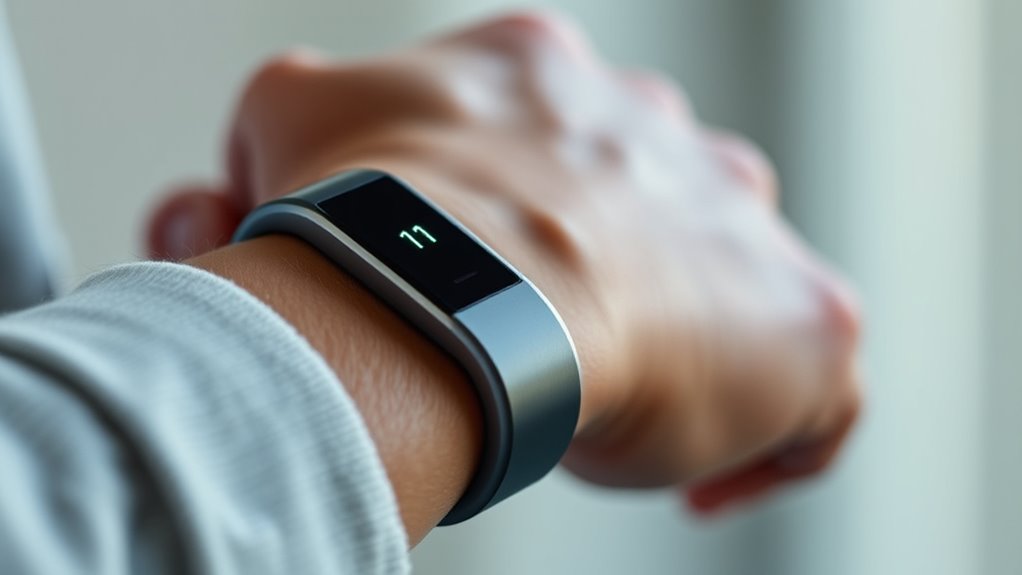

Wearable tech tracks your health by using sensors like optical sensors for heart rate, accelerometers for activity, and sleep monitors to analyze rest patterns. These devices process the signals through algorithms to give you real-time insights on your fitness and wellness. Factors like device placement, movement, and environmental conditions can influence accuracy. Staying aware of these factors and maintaining your device properly can improve your data; for more details, there’s plenty to explore.
Key Takeaways
- Wearables use sensors like optical PPG and ECG to monitor heart rate, sleep, and activity in real time.
- Data accuracy depends on proper device calibration, placement, user compliance, and environmental factors.
- Algorithms process sensor signals, using calibration and filtering to refine health metrics.
- Wearables track activity through motion sensors like accelerometers and gyroscopes, differentiating various physical activities.
- Regular updates, correct usage, and understanding privacy policies enhance data reliability and user trust.
How Wearables Collect Health Data
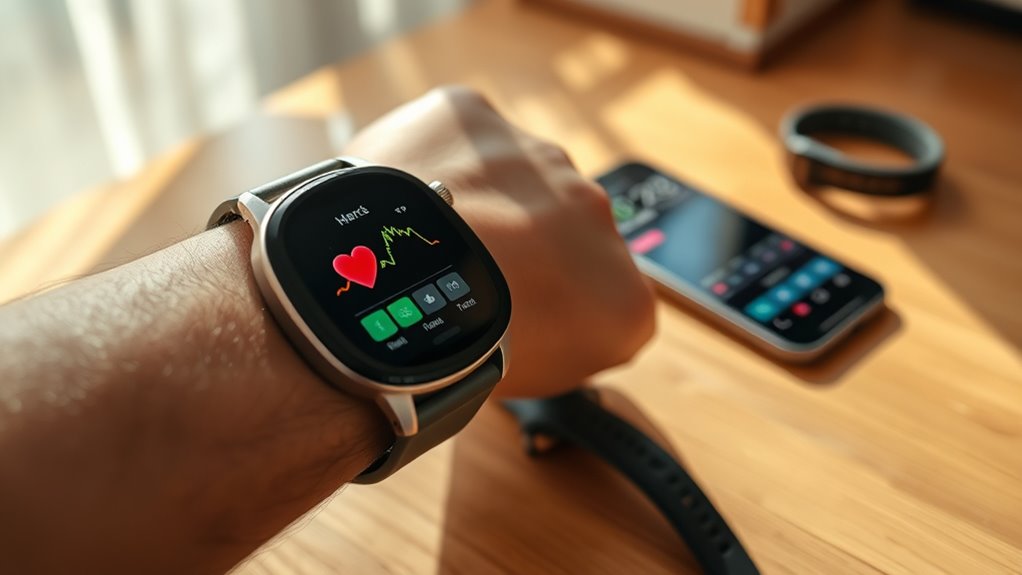
Wearables collect health data by using built-in sensors that monitor various physiological signals. As you wear these devices, they track metrics like heart rate, sleep patterns, and activity levels in real time. Staying engaged with your device helps guarantee accurate data collection, but it also raises concerns about data privacy. You might worry about how your health information is stored and who has access to it. Manufacturers often implement security measures to protect your data, but it’s essential to stay informed about privacy policies. Your involvement and consistent use improve the quality of insights you receive, making these devices more beneficial. Understanding how wearables gather your health data and the security measures in place helps you make better decisions about your privacy and health management. Additionally, being aware of data accuracy and how it can vary based on device quality and user behavior can help you better interpret the information provided. Proper device calibration and understanding sensor limitations are also important factors in ensuring reliable data. Regular updates and maintenance can further enhance the accuracy of measurements, especially if you follow manufacturer guidelines for wearable device maintenance.
Common Types of Wearable Devices
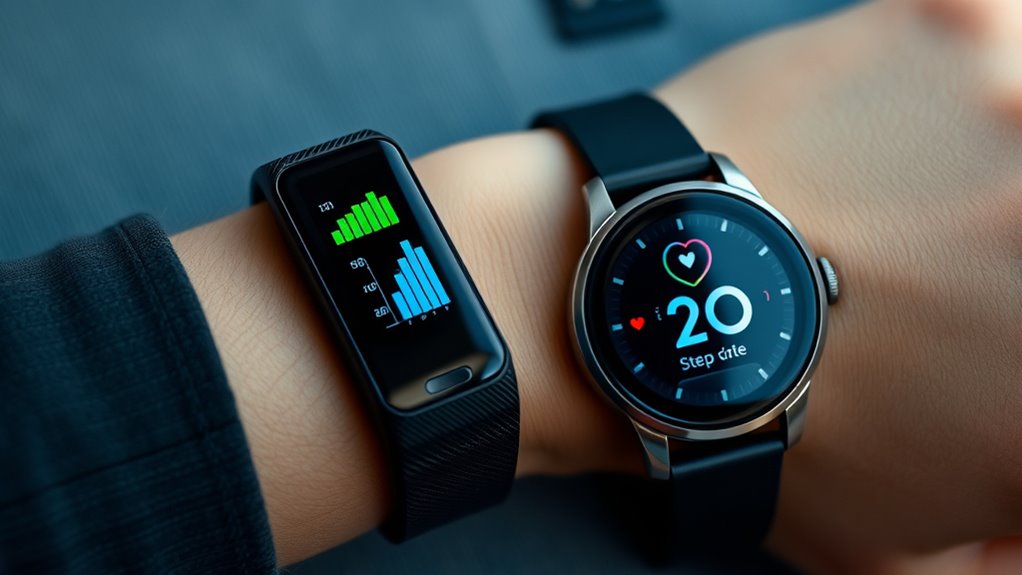
There are several common types of wearable devices designed to help you monitor your health and fitness. Fitness trackers, like wristbands or smartwatches, are popular for tracking steps, activity levels, and sleep patterns, aligning with current fitness trends. Fitness bands are lightweight and often focus on core metrics, while smartwatches combine health features with other functions like notifications and apps. Fitness rings are compact devices worn on your finger, offering discreet monitoring options. You’ll want to contemplate device compatibility when choosing, ensuring your device syncs seamlessly with your smartphone or other gadgets. Each type caters to different preferences and goals, making it easier to stay motivated and informed about your health journey. Additionally, choosing a device made from Suprem fabric can enhance comfort and durability during extended wear, supporting your health monitoring efforts. Moreover, understanding the accuracy of wearable tech is essential for making informed health decisions based on your device’s data.
Heart Rate Monitoring: How It Works

Heart rate monitoring works by measuring the electrical or optical signals generated by your body during each heartbeat. Wearable devices use sensors like photoplethysmography (PPG) or ECG to detect these signals, providing real-time data. This method not only tracks your fitness but also enhances biometric authentication, confirming your identity based on your unique heartbeat pattern. The wearable design guarantees comfort and continuous monitoring, making it seamless to stay aware of your heart health. Factors like skin tone, movement, and device placement can influence accuracy. Understanding how these sensors work helps you gauge the reliability of your device. Here’s a quick comparison:
| Sensor Type | How It Works |
|---|---|
| Optical (PPG) | Uses light to detect blood flow |
| Electrical (ECG) | Measures electrical signals |
| Wearable Design | Ensures comfort and consistent data |
| Biometric Authentication | Heartbeat as a unique ID |
| Accuracy Factors | Skin tone, movement, device fit |
Additionally, advancements in sensor technology continue to improve the precision of heart rate data, making wearable health devices more reliable and user-friendly over time. This ongoing progress contributes to more accurate health tracking and greater confidence in wearable health measurements.
Tracking Sleep and Rest Patterns

Wearable devices use various sleep monitoring techniques to track your rest patterns accurately. These tools analyze movement, heart rate, and even breathing to provide insights into your sleep quality. Understanding how well these methods work helps you make informed decisions about your health and recovery. Additionally, some devices may incorporate essential oils for sleep support to enhance relaxation and improve sleep quality. Advances in sleep science technology continue to improve the precision of these devices, making their insights more reliable and useful for everyday wellness.
Sleep Monitoring Techniques
Have you ever wondered how wearable devices can accurately monitor your sleep? They use advanced sensors to perform sleep cycle analysis, tracking your light, deep, and REM sleep stages. These devices also consider sleep environment factors like room temperature, noise, and light, which influence your rest quality. By analyzing movement, heart rate, and breathing patterns, wearables provide insights into your sleep patterns and overall rest quality. Here’s a quick look at how they work:
| Technique | Data Used | Purpose |
|---|---|---|
| Sleep cycle analysis | Movement, heart rate | Detect sleep stages |
| Environmental factors | Light, noise, temperature | Optimize sleep environment |
| Heart rate monitoring | Heart rate variability | Assess sleep quality |
| Movement tracking | Body movement | Identify rest disruptions |
These techniques help you understand your sleep better and improve your rest over time.
Rest Pattern Accuracy
Accurately tracking your sleep and rest patterns is essential for understanding your overall health, but it can be challenging due to the complexity of sleep cycles and individual differences. Wearable tech uses sensors to estimate rest quality, but accuracy varies. Here’s what influences it:
- The device’s ability to detect sleep stages, like REM and deep sleep, which are vital for a complete sleep cycle analysis.
- How well it measures nap quality, including duration and restfulness, to provide a full picture of your rest.
- The algorithms’ sensitivity to individual differences, ensuring it captures your unique sleep patterns accurately.
- The importance of validation studies that compare wearable data to clinical sleep assessments to gauge their reliability.
- Factors like sensor placement and movement can also impact the accuracy of sleep tracking data, emphasizing the need for proper device use. Additionally, ongoing research into sleep tracking technology helps improve the precision of these devices over time. Moreover, advancements in sensor accuracy contribute to more reliable sleep data collection.
Understanding how various body measurements influence device performance can further enhance the accuracy of sleep tracking. While wearables give useful insights, they may not perfectly reflect your actual sleep cycle or nap quality, so consider them as guides rather than precise diagnostics.
Step Counting and Activity Measurement

Step counting and activity measurement are central features of wearable health devices, providing you with real-time feedback on your physical movement. These features rely on device integration, combining accelerometers, gyroscopes, and other sensors to accurately track steps and activity levels. When your device seamlessly integrates with your smartphone or app, it enhances user engagement, making it easier to monitor progress and set goals. The more intuitive the integration, the more motivated you’ll feel to stay active. Wearable tech can differentiate between walking, running, or even standing, giving you detailed insights into your daily movement patterns. With consistent use, these devices help you stay accountable and promote healthier habits through clear, immediate feedback on your activity levels. Additionally, understanding the underlying technology — such as air fryer technology — can help users appreciate the precision and reliability of these measurements. Accurate data collection also depends on sensor calibration, which ensures your device maintains measurement accuracy over time. Advances in wearable sensor technology continue to improve the fidelity of activity tracking, and ongoing innovations are making these devices more reliable and precise, providing users with more trustworthy health insights.
Estimating Calories Burned and Energy Expenditure

When estimating calories burned, wearable devices rely on sensor technologies like accelerometers and heart rate monitors to gather data. These readings are processed through algorithms that calculate energy expenditure, but factors like body composition and activity intensity can influence accuracy. Understanding these elements helps you better interpret your device’s estimates and improve tracking reliability. Additionally, the use of calibration techniques can enhance the precision of measurements by adjusting for individual differences. Recognizing the limitations of these devices is important, especially when considering predictive validity in health monitoring.
Sensor Technologies Used
Sensor technologies in wearable health devices primarily estimate calories burned and energy expenditure by analyzing data from various inputs like motion, heart rate, and skin temperature. Biometric sensors capture these signals, which are then combined through data fusion to improve accuracy. This process integrates multiple data streams to create a comprehensive picture of your activity. Key sensor types include:
- Accelerometers and gyroscopes that track movement and activity levels.
- Heart rate monitors that measure your pulse for intensity insights.
- Skin temperature sensors that provide additional context on metabolic rate.
Algorithms for Estimation
Algorithms for estimating calories burned and energy expenditure process data collected from wearable sensors to generate accurate assessments of your physical activity. They rely on techniques like algorithm calibration to fine-tune models based on individual data, improving accuracy over time. Data smoothing plays a pivotal role by filtering out noise and irregularities in sensor signals, ensuring cleaner inputs for calculations. These algorithms analyze variables such as movement patterns, heart rate, and sensor orientation to estimate energy use. By continuously adjusting parameters through calibration and smoothing, the algorithms adapt to your unique physiology and activity style. This combination helps produce more reliable estimates, although some variability remains. Overall, these estimation algorithms are essential for translating raw sensor data into meaningful insights about your calorie burn and energy expenditure.
Factors Affecting Accuracy
Several factors can influence the accuracy of calorie burn and energy expenditure estimates from wearable devices. First, sensor calibration is vital; if sensors aren’t properly calibrated, data can be off. Second, user behavior impacts readings—heavy arm movements or inconsistent wearing habits can skew results. Third, device placement matters; wearing the device too loose or in the wrong spot reduces measurement precision. Additionally, individual differences like body composition and activity type affect accuracy. Understanding these factors helps you interpret data more realistically. For example, if your device isn’t calibrated correctly, your calorie estimates might be overstated or understated. Similarly, changing how you wear your device or engaging in unusual activities can lead to less reliable data. Being aware of these influences helps you get better insights from your wearable tech.
Factors Affecting the Accuracy of Wearable Data

The accuracy of data collected by wearable devices can be influenced by various factors, and understanding these is essential for reliable health tracking. One key factor is sensor calibration; if sensors aren’t properly calibrated, data may be off, leading to inaccurate readings. Regular calibration guarantees the device captures precise measurements. User compliance also plays a critical role—if you don’t wear the device correctly, consistently, or follow usage instructions, data quality declines. Proper placement on your wrist or body ensures sensors can accurately detect signals. Additionally, movement artifacts or environmental conditions, like temperature or humidity, can affect readings. By maintaining good sensor calibration and adhering to recommended usage, you can improve the reliability of your wearable’s data, making your health insights more trustworthy.
Tips for Improving Data Reliability
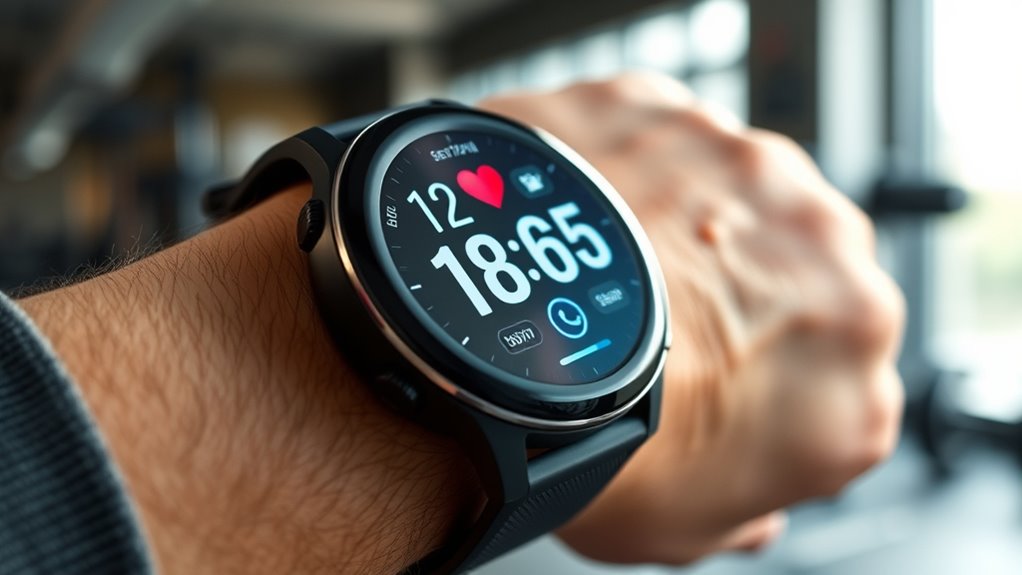
To guarantee your wearable device provides consistent and accurate data, focus on practical steps to enhance its reliability. First, keep your device updated with the latest firmware to improve data accuracy and security, supporting data privacy. Second, ensure proper fit and consistent wear, as loose or inconsistent placement can skew results and reduce user engagement. Third, regularly sync your device with the app, which helps maintain data integrity and allows you to monitor trends effectively. Additionally, actively engaging with the app’s features encourages better device use and awareness of data privacy settings. By following these tips, you’ll improve data reliability, strengthen user engagement, and better safeguard your personal health information.
Frequently Asked Questions
Can Wearables Detect Health Conditions Before Symptoms Appear?
Wearables can often detect health conditions before symptoms appear by using early detection and predictive analytics. They monitor essential signs like heart rate, sleep patterns, and activity levels, alerting you to potential issues early on. While not 100% accurate, these devices provide valuable insights that can prompt you to seek medical advice sooner, potentially catching problems early and improving outcomes. Always remember, they complement, but don’t replace, professional healthcare.
How Do Wearables Handle Privacy and Data Security?
Wearables prioritize your privacy by using data encryption to protect your health information. They also require your user consent before sharing or storing any data, ensuring you control what’s shared. Manufacturers implement secure systems to prevent unauthorized access, and many offer options to delete or limit data sharing. Stay informed about their privacy policies and settings to keep your health data safe and maintain control over your personal information.
Are Wearable Devices Suitable for Children or Elderly Users?
Wearable devices are suitable for both children and elderly users, especially for child safety and elderly monitoring. You can find specially designed wearables with features like GPS tracking, emergency alerts, and health monitoring tailored to their needs. These devices help you keep a close eye on loved ones’ safety, provide peace of mind, and guarantee prompt assistance if needed. Just make sure to choose devices that prioritize security and ease of use.
How Long Does Wearable Battery Life Typically Last?
Typically, wearable devices offer a battery longevity ranging from one to two weeks on a single charge. You’ll find that device charging is quick, often taking just about an hour or two to fully recharge. Keep in mind, battery longevity depends on features used, like GPS or heart rate monitoring. To guarantee continuous tracking, it’s best to set reminders for regular device charging so your wearable stays operational.
Can Wearables Measure Blood Pressure Accurately?
Wearables can measure blood pressure, but their accuracy depends on proper wearable calibration. While some devices offer reasonably accurate readings, they often aren’t as precise as traditional cuff-based monitors. To guarantee blood pressure accuracy, regularly calibrate your wearable with a professional device. Keep in mind that factors like movement and placement can affect readings, so double-check measurements and consult your healthcare provider for reliable results.
Conclusion
As you wear your device, imagine it as a quiet, watchful companion, gently capturing your every heartbeat and step. While it offers a window into your health, remember that data isn’t perfect—like a faint echo in a vast canyon. Trust it as a helpful guide, but stay aware of its limits. With mindful use and proper calibration, your wearable can become a valuable partner on your journey to better health.