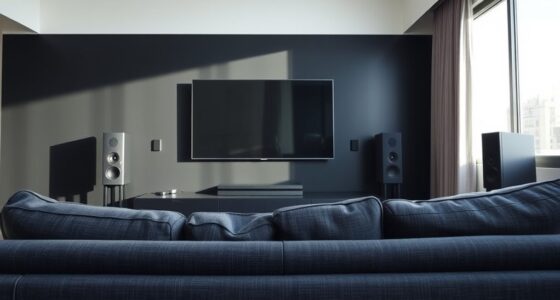
For movie nights, a surround sound system offers deeper immersion with multiple speakers placed around your room, creating a true cinematic experience. Soundbars are simpler to set up, more affordable, and provide impressive virtual surround effects for smaller spaces. Your choice depends on your room size, budget, and desire for audio depth. To discover which setup best fits your home and how to optimize your experience, explore more about their setups and features.

Get the latest gadgets delivered free with Prime
- Fast, free delivery on millions of items
- Prime Video, Amazon Music and more included
- Member-only deals all year
Key Takeaways
- Surround sound systems offer immersive 3D audio with multiple speakers, ideal for true cinematic experiences during movie nights.
- Soundbars provide a simpler, space-saving setup with virtual surround technology that enhances sound without extensive wiring.
- Larger rooms benefit more from surround systems for optimal speaker placement and sound distribution.
- Soundbars are generally more affordable and easier to set up, suitable for casual movie watching.
- For the most immersive and high-quality audio experience, a dedicated surround sound system is preferable.
Understanding the Basics of Surround Sound and Soundbars

While both surround sound systems and soundbars aim to enhance your audio experience, they do so in different ways. Surround sound setups use multiple speakers placed around your room, requiring careful speaker placement to create an immersive environment. Proper sound calibration guarantees each speaker delivers balanced sound, making you feel like you’re inside the action. Conversely, soundbars are a single, sleek device that sits under your TV, simplifying setup without sacrificing much audio clarity. They often include built-in virtual surround technology, reducing the need for precise speaker placement. Understanding these basics helps you decide which option fits your space and preferences. Additionally, selecting the right audio equipment ensures optimal performance and enhances your overall home theater experience. As newer audio technology continues to advance, both options offer improved sound quality and user experience, making it easier than ever to create an immersive home theater. Incorporating sound calibration methods can further optimize your system’s performance and enjoyment.
Audio Quality and Immersion: Which Delivers Better Movie Sound?
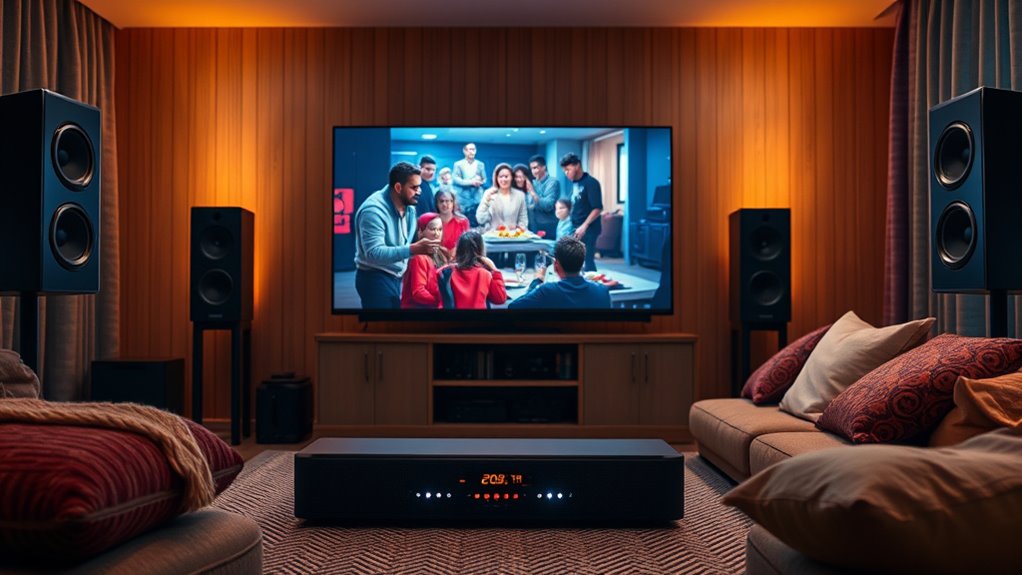
When it comes to delivering immersive movie sound, both surround sound systems and soundbars have their strengths, but their capabilities can differ markedly. Surround sound setups excel in creating a three-dimensional audio experience by carefully maximizing speaker placement and performing precise audio calibration. This ensures sounds come from specific directions, enhancing immersion. Soundbars, however, rely on advanced processing and multiple speakers in a single enclosure to simulate surround effects. While they excel in ease of setup, they may not match the depth of true surround setups. Here’s a comparison: Speaker Placement is a key factor in achieving optimal sound quality in both systems.
Setup and Space Requirements for Optimal Performance
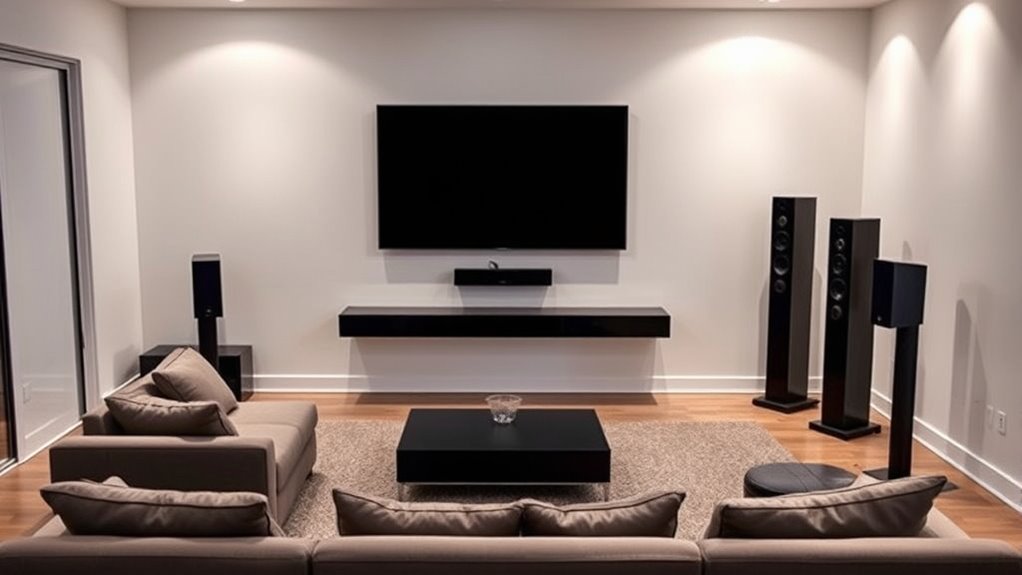
Getting the best sound quality depends on your room size and how you arrange your equipment. Larger spaces may require different setups than smaller rooms to fill the area with sound. Keep these tips in mind to guarantee your system performs at its best without cluttering your space. Additionally, consider room acoustics and how sound reflections can impact your listening experience, ensuring optimal sound distribution throughout your space. Proper soundproofing techniques can also help prevent external noise from interfering with your movie nights. Being aware of speaker placement is crucial because it directly influences sound clarity and immersion in your environment. Understanding auditory perception can further enhance how you optimize your setup for the most immersive experience. Furthermore, using appropriate audio calibration tools can help tailor the sound output to your specific room conditions.
Room Size Compatibility
Room size plays an essential role in determining whether a surround sound system or a soundbar will deliver ideal performance. In larger rooms, surround sound systems excel because they require sufficient space for speaker placement that creates immersive sound. Proper speaker placement is fundamental to maximize room acoustics, ensuring sound distributes evenly and enhances your viewing experience. Additionally, speaker placement is crucial in achieving optimal sound quality, especially in sizable spaces. Conversely, in smaller rooms, a soundbar often fits better, as it’s designed to optimize audio within limited space without cluttering the area. Keep in mind that room acoustics, including furniture and wall materials, influence sound quality. Choosing the right setup depends on your room size and how well you can accommodate speaker placement to achieve perfect sound without overwhelming the space.
Equipment Arrangement Tips
To guarantee your audio setup performs at its best, proper equipment arrangement is key. Start with speaker placement—position your speakers at ear level, forming a balanced triangle with your listening position. For surround sound systems, ensure rear speakers are slightly behind and to the sides, creating an immersive experience. Avoid placing speakers too close to walls or corners, as this can cause unwanted echoes and muddle sound clarity. Acoustic treatments, like bass traps and acoustic panels, help control reflections and reduce echo, further enhancing sound quality. Keep cables organized and out of the way to prevent interference. Regularly adjusting speaker angles and placements can make a significant difference, ensuring you enjoy clear, balanced audio whether you’re using a soundbar or a full surround system.
Cost Considerations and Value for Your Investment
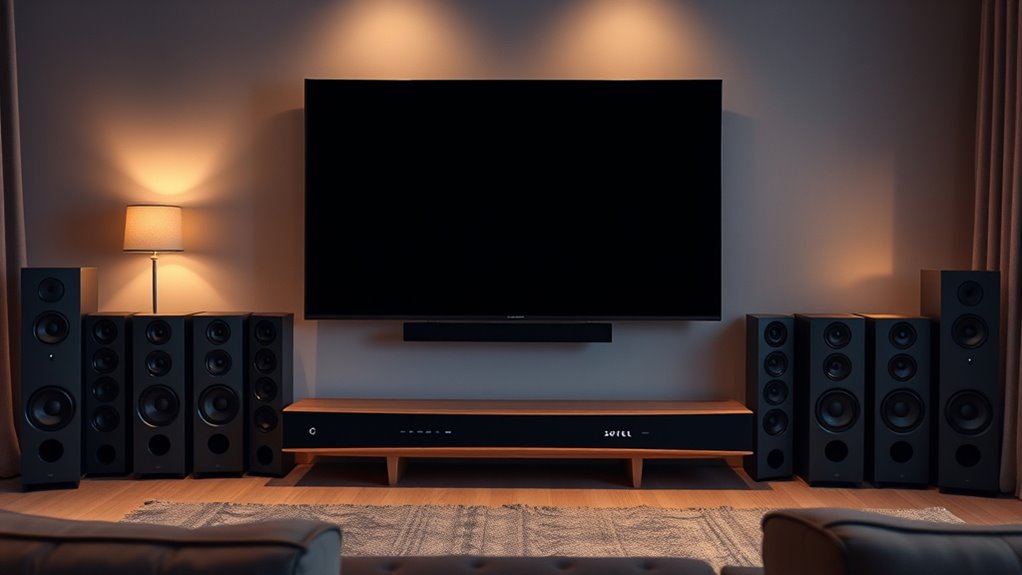
When comparing surround sound systems and soundbars, considering the costs involved is essential to determine which option offers the best value for your budget. Your budget considerations should include initial purchase price, installation costs, and potential upgrades. Remember, investing in a higher-quality system may cost more upfront but can offer better long-term value through durability and performance. To help you decide, consider these points:
- Soundbars often have a lower initial cost and easier setup, making them more budget-friendly.
- Surround sound systems typically require a larger investment but provide richer audio experiences.
- Think about future upgrades or maintenance costs to evaluate the overall long-term value of your choice.
- Additionally, safety considerations such as proper installation and secure connections can impact the longevity and performance of your audio system.
- Proper cost management in your audio investments can prevent costly issues and ensure optimal performance, especially when considering the quality of components involved.
- Filter maintenance practices, like regular cleaning and timely filter replacements, exemplify how proactive management can extend the lifespan of your equipment.
- According to Lifevest Advisors, proper risk management in your audio investments can prevent costly issues and ensure optimal performance. Incorporating quality components can also reduce the need for frequent repairs and replacements.
Balancing these factors will ensure you make a smart, cost-effective investment for your movie nights.
Ease of Use and Connectivity Options

Choosing between a surround sound system and a soundbar often comes down to how easy they are to set up and connect. Soundbars typically offer simpler installation, often requiring just a single cable or wireless connectivity to your TV, making them user-friendly. Many soundbars include Bluetooth or Wi-Fi options, allowing you to stream audio wirelessly from your devices. Surround sound systems can be more complex, needing multiple connections and speaker placements, but they often come with remote control options that simplify operation once set up. Some systems support universal remotes or smartphone apps, giving you easy control over volume and input. Additionally, local automation features in some systems can help simplify operation and integration with other smart home devices. When considering connectivity options, many modern systems support multiple input methods, making it easier to connect various devices seamlessly. Furthermore, ease of use is enhanced when systems provide clear on-screen menus and straightforward setup instructions to assist users of all experience levels. Moreover, the user-friendly design of certain systems with intuitive interfaces and setup guides can greatly reduce the learning curve, especially for first-time users. Additionally, the availability of automatic calibration features can help optimize sound quality without manual adjustments, simplifying setup further.
Choosing the Right System for Your Home Theater Space
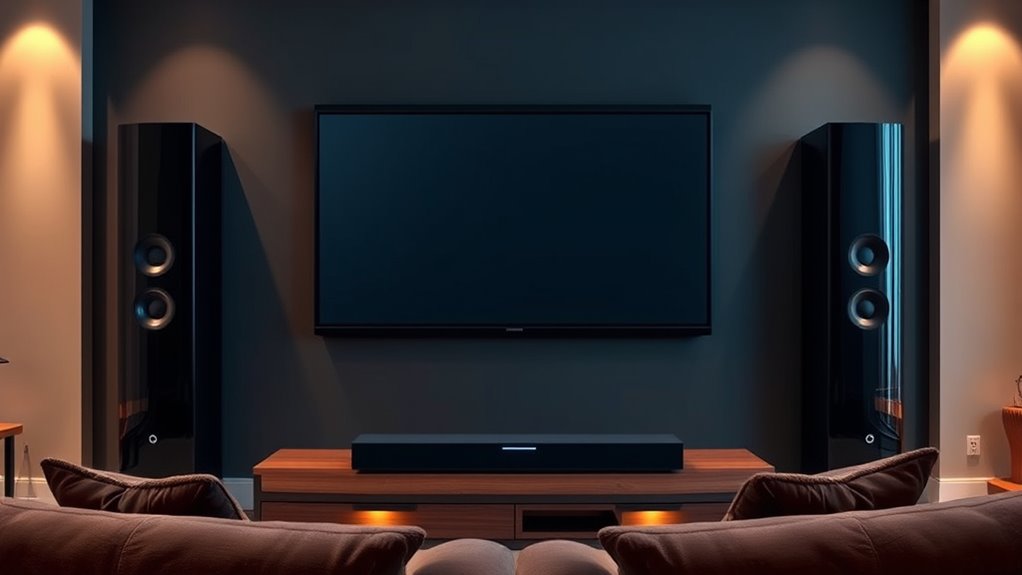
Selecting the right home theater system depends on your space’s size, layout, and your audio preferences. To maximize sound, focus on speaker placement and acoustic treatments. Proper speaker placement ensures balanced sound distribution, so position speakers at ear level and around your seating area. Acoustic treatments, like wall panels or rugs, reduce echo and improve clarity. Consider these steps:
- Measure your space to determine whether a surround sound system or soundbar fits best.
- Plan speaker placement carefully, ensuring they’re positioned for optimal sound immersion.
- Use acoustic treatments to enhance sound quality and minimize sound reflections. Additionally, understanding the sound characteristics of your room can guide you in making the best audio setup choices.
- Incorporate natural room acoustics to further optimize sound performance and create a more immersive experience.
- Paying attention to room acoustics can significantly impact the overall listening experience, helping you choose the most suitable audio system. Exploring how sound reflections influence acoustics can further improve your setup.
Frequently Asked Questions
Can a Soundbar Replace a Full Surround Sound System Effectively?
A soundbar can effectively substitute a full surround sound system for most movie nights, especially if you optimize speaker placement and choose a model with good sound quality. While it might lack the immersive experience of multiple speakers, it requires less space and setup. Keep in mind, though, that higher power requirements can impact performance, so pick a soundbar with adequate wattage to ensure clear, rich audio.
How Does Room Acoustics Impact Sound Quality for Both Setups?
Room acoustics profoundly influence sound quality for both setups. You might think it’s only about speaker placement, but room reflections also play a major role. Proper placement minimizes echo and enhances clarity, making your audio experience richer. Even if your space isn’t perfect, adjusting speaker angles or adding soft furnishings can improve sound. Don’t worry—small tweaks can make a big difference in how immersive your movie nights feel.
Are Wireless Soundbars as Reliable as Wired Surround Sound Systems?
Wireless soundbars can be quite reliable, but their performance depends on your wireless connectivity. If you have a strong, stable connection, you’ll enjoy consistent sound quality without interruptions. However, if your Wi-Fi is spotty, you might experience lag or dropouts. Wired surround sound systems generally offer more dependable sound quality because they don’t rely on wireless signals, making them a better choice if you prioritize consistent performance.
What Maintenance Is Required for Long-Term Performance of Each System?
Think of your system as a well-tended garden; regular upkeep keeps it thriving. For long-term performance, you’ll need to calibrate your speakers to make certain crisp sound, and manage cables neatly to prevent tangles and damage. Wireless soundbars require software updates and occasional cleaning of remote controls, while wired systems benefit from checking connections. Consistent maintenance guarantees your audio experience stays vibrant, like a garden bursting with life.
Do Different Movie Genres Benefit More From Surround Sound or Soundbars?
For immersive experience, surround sound benefits action or sci-fi movies, highlighting dynamic audio formats and strategic speaker placement. You’ll notice more detailed sound effects and directional cues, making you feel like part of the scene. Conversely, soundbars work well for dialogue-heavy dramas or comedies, offering clear audio with minimal setup. Consider your preferred genres and room layout to choose the best system, optimizing speaker placement and audio format for the ultimate movie night.
Conclusion
Remember, the best sound system for your movie nights depends on your space, budget, and preferences. While surround sound offers immersive audio, a soundbar provides simplicity and convenience. Ultimately, it’s about finding what works for you—because as the saying goes, “Sometimes less is more.” Choose wisely, and you’ll enjoy cinematic experiences right in your own home, making every movie night truly memorable.
Halloween Picks
halloween
As an affiliate, we earn on qualifying purchases.