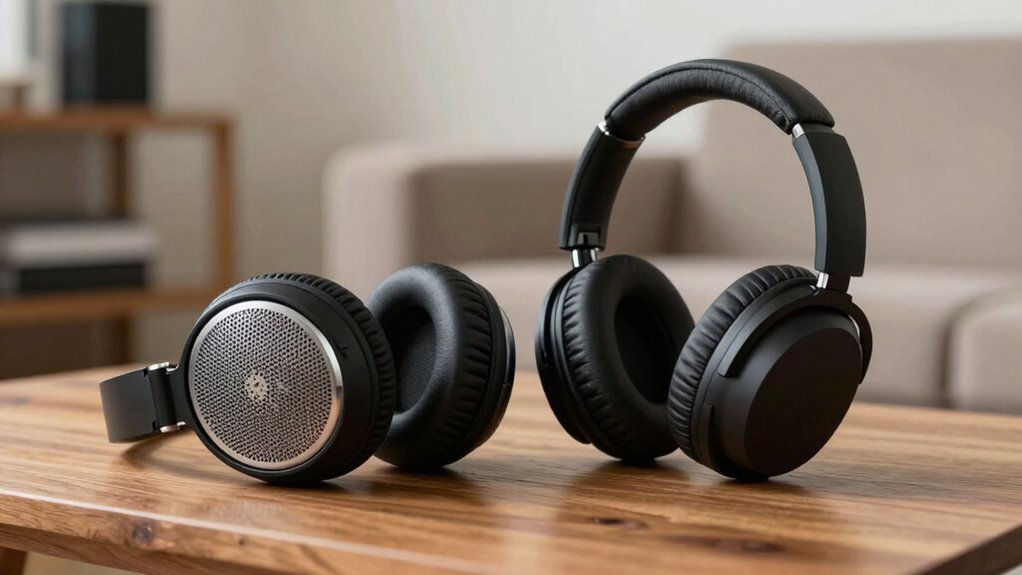

Choosing between open-back and closed-back headphones really shapes your music experience. Open-backs give you a natural, spacious sound that’s ideal for critical listening and mixing, but they leak sound and don’t block out noise well. Closed-backs offer better noise isolation and bass, making them perfect for on-the-go use, but may feel less natural. To understand how each type can enhance your listens, explore more about their differences and best uses.
Key Takeaways
- Open-back headphones provide a natural, spacious soundstage ideal for critical listening and accurate music reproduction.
- Closed-back headphones deliver better noise isolation and sound leakage control, enhancing privacy and external noise blocking.
- Open-backs emphasize clarity and detail, while closed-backs tend to boost bass and offer a more contained listening experience.
- Open-back designs are best suited for quiet environments due to their minimal noise isolation, whereas closed-backs excel in noisy settings.
- The choice impacts comfort, durability, and suitability for different environments, shaping overall listening and production experiences.
Sound Quality and Naturalness
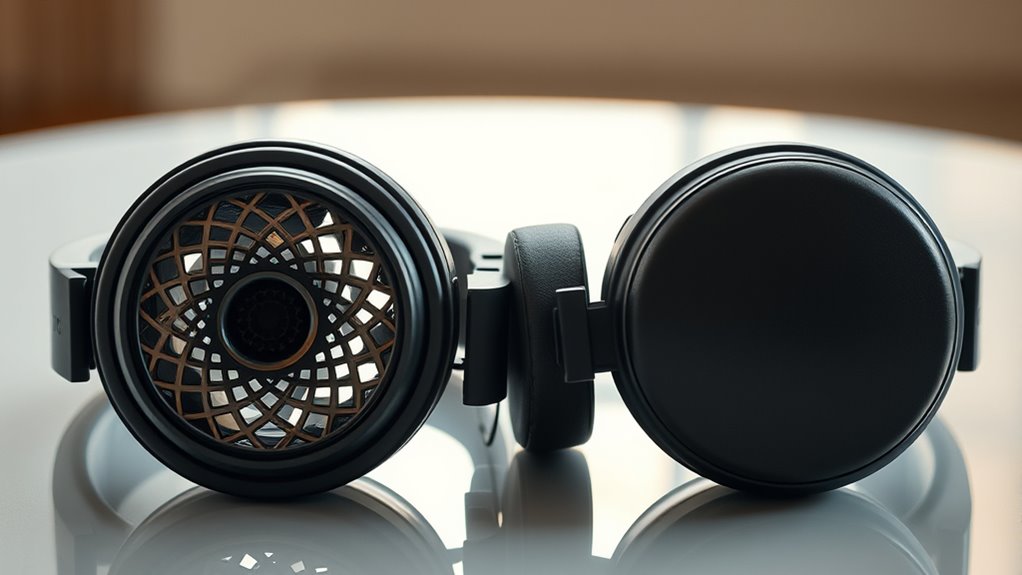
When comparing open-back and closed-back headphones, sound quality and naturalness are key factors that often influence your choice. Open-back headphones typically offer superior sound fidelity, delivering a more spacious and accurate audio experience. They allow sound waves to flow freely, resulting in a natural tone that feels more lifelike and immersive. This makes them ideal for critical listening, mixing, or enjoying detailed music. Closed-back headphones, on the other hand, tend to emphasize bass and provide a more contained sound, which can sometimes compromise the overall naturalness. If your priority is a sound that closely resembles real instruments and vocals, open-back designs generally give you that authentic, natural tone. Ultimately, the choice hinges on whether you prefer clarity and spaciousness or enhanced bass and isolation.
Noise Isolation and External Sound Leakage
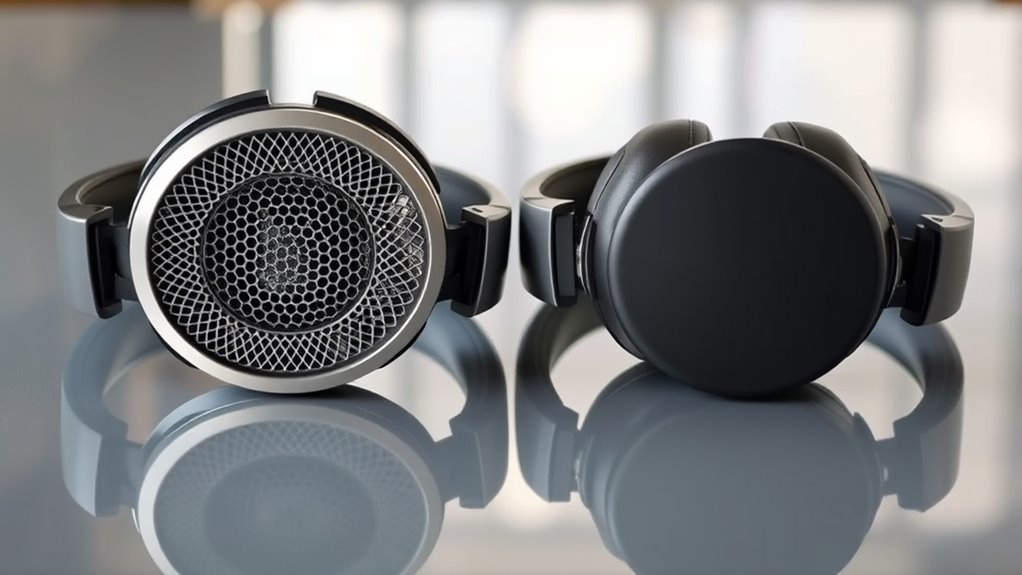
Open-back headphones typically offer minimal noise isolation because their design allows external sounds to pass through, making it easy for your surroundings to be heard and for your audio to leak out. This means you won’t get much soundproofing effectiveness, which can be a drawback in noisy environments. If you’re sensitive to sound leakage control, open-backs might disturb others nearby or let ambient noise interfere with your listening. On the other hand, closed-back headphones excel at blocking external noise and reducing sound leakage, providing better privacy and immersion. Additionally, the soundstage of open-back headphones often feels wider and more natural, enhancing the listening experience for music and audio details. When choosing between open- and closed-back designs, understanding noise isolation can help you select the best option for your environment and needs. Different technology in headphone construction influences their noise control capabilities, allowing for a broad range of options suited to various preferences and environments.
Comfort and Wearability for Extended Use

Comfort and wearability are essential factors when choosing headphones for extended use, and these aspects can vary considerably between open-back and closed-back designs. Open-back headphones often provide better breathability, reducing sweat and heat buildup, but may cause discomfort over long periods due to less noise isolation. Closed-back models typically offer a snug fit with better noise blocking but can cause breathability concerns, leading to warmer ears. Fit customization plays a vital role in comfort; adjustable headbands and padded ear cups help prevent fatigue. Consider this comparison: wicking materials can influence overall comfort by managing moisture and temperature effectively, especially since airflow can significantly impact long-term wearability. Additionally, material breathability is crucial in designing headphone components that promote comfort during extended listening sessions. The choice of materials that facilitate moisture management can help prevent overheating and sweating, enhancing overall comfort. Incorporating ergonomic design principles can further improve the fit and comfort for diverse user needs.
Suitability for Different Listening Environments

Your listening environment greatly influences which headphones work best. Open-back models excel in quiet spaces but let sound escape, while closed-back headphones offer better privacy and noise isolation. Consider portability and how much ambient noise you face to choose the right pair for your needs.
Ambient Noise Levels
Because open-back headphones allow sound to pass freely through their ear cups, they tend to let in and leak out ambient noise more than closed-back models. This affects their suitability depending on your environment. In noisy settings, open-backs struggle with ambient sound filtering, making it challenging to focus. They excel in quiet spaces where soundstage depth enhances listening immersion without background interruptions. You’ll notice a more natural, spacious sound, but outside noise can diminish clarity. Closed-backs, however, provide better noise isolation, ideal for commutes or busy areas. Consider these points:
- Better soundstage depth for immersive listening
- Less ambient sound filtering in noisy environments
- Increased leak for others nearby to hear your music
- Ideal for quiet, controlled settings
- Less suitable for noisy or public environments
Additionally, adaptive noise cancellation can enhance open-back headphones’ performance in variable environments. Understanding the acoustic properties of each design can help you choose the best option for your listening needs.
Privacy and Isolation
Open-back headphones offer less privacy and isolation because they allow sound to escape and ambient noise to enter, making them less suitable for environments where external sounds need to be blocked out. If privacy concerns are important, these headphones might not be ideal, as others can hear your music, and you can hear surrounding noises. Their soundproofing effectiveness is limited, which means you won’t get a quiet listening experience in noisy settings. This can be frustrating if you need to focus or keep your listening discreet. However, open-back designs excel at creating a more natural sound environment, but they’re not built for privacy or isolation. Choose closed-back headphones if you require better soundproofing and want to prevent sound leakage in public or shared spaces.
Portability and Use
When choosing headphones for different environments, portability and ease of use become crucial factors to take into account. Open-back headphones often face portability challenges due to their bulky design and open ear cups, making them less ideal for on-the-go use. Closed-back headphones, on the other hand, are generally more compact and easier to carry, but they may still have use restrictions in noisy settings. Consider these points:
- Open-backs are less portable for commuting or travel
- Closed-backs are more travel-friendly and compact
- Open-backs aren’t suitable for noisy environments
- Closed-backs offer better noise isolation for on-the-go listening
- Both types require careful handling to avoid damage during transit
- The design and construction of headphones can significantly impact their portability and durability during travel.
- Additionally, material quality plays a role in ensuring headphones can withstand frequent handling and transportation without damage.
- When selecting headphones, consider the intended usage to ensure they meet your mobility needs and environment.
- The overall size of the headphones can influence how easily they fit into bags or cases, affecting their practicality for travel.
- Incorporating ergonomic features can further improve comfort and usability during extended wear or travel.
Impact on Audio Mixing and Production

Choosing the right headphones can considerably influence your ability to achieve a clear and balanced mix. Open-back headphones excel in studio monitoring, providing a natural soundstage that helps you accurately judge spatial placement and depth. They allow you to hear subtle details, which is essential for fine-tuning your mix. Closed-back headphones, on the other hand, offer better isolation, making them ideal for tracking vocals where vocal clarity is vital. They prevent sound leakage, ensuring your recordings remain clean. For mixing purposes, open-backs help you perceive how your track will sound on speakers, making your adjustments more precise. Additionally, the sound isolation provided by closed-back headphones can reduce distractions in noisy environments, enhancing focus during critical listening sessions. This accurate perception of sound is crucial for producing professional-quality audio. Ultimately, your choice impacts your workflow and the quality of your final product, so select based on whether natural sound or isolation best suits your production needs.
Maintenance and Durability Considerations
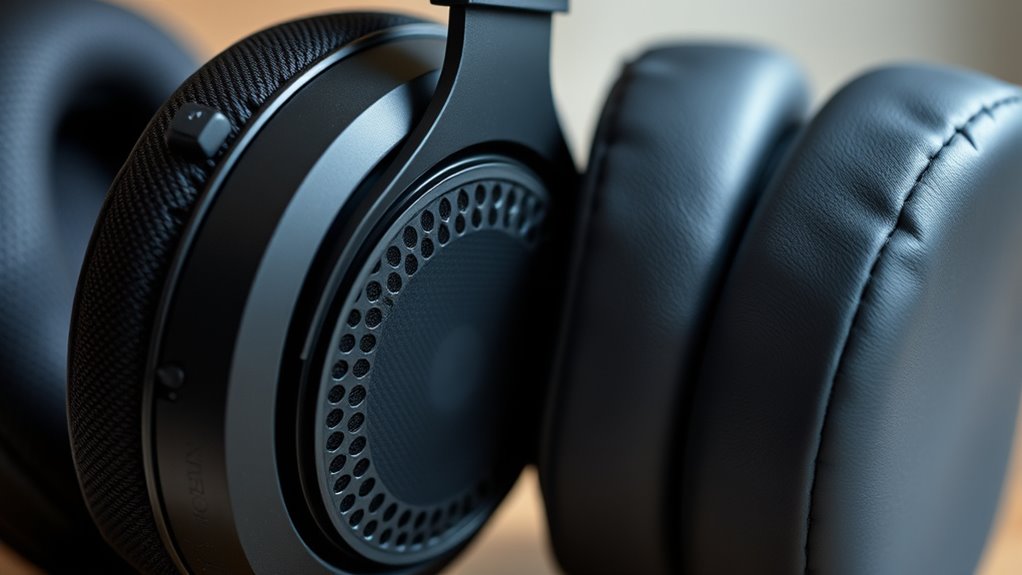
You’ll want to ensure how well your headphones resist wear and tear over time, especially if you use them daily. The durability of cables and replaceable parts can substantially impact your long-term investment. Choosing headphones with sturdy construction helps guarantee they stay reliable and functional longer. Additionally, selecting models with vetted wave and wind resistance features can further enhance their longevity in various environments. Considering the quality of construction materials can also make a significant difference in how well your headphones withstand daily use and environmental stressors. Incorporating robust design elements can provide extra protection against accidental damage and extend the lifespan of your headphones. Moreover, examining material fatigue resistance can help you pick models that maintain their integrity after prolonged use. Evaluating design for environmental stressors can further ensure your headphones are suited for different conditions and usage scenarios.
Wear and Tear Resistance
Open-back headphones generally require less maintenance because their design exposes the drivers and internal components to more airflow, which helps prevent overheating and moisture buildup. This increased ventilation can enhance material robustness, making them less prone to damage over time. However, their open design means they’re more susceptible to dust and debris, so regular cleaning is essential. To maximize wear and tear resistance, consider these points:
- Use high-quality, durable materials for ear cups and headbands
- Avoid exposing headphones to extreme temperatures
- Store them in a protective case when not in use
- Clean ear pads and grills regularly
- Replace worn-out parts promptly to prevent further damage
- Be aware that piercings, especially in sensitive areas, require proper aftercare to prevent infections that could affect your headphones’ longevity. Additionally, choosing high-quality materials for the components can significantly improve durability and reduce the need for repairs over time.
Maintaining proper care reduces the frequency of repairs and extends your headphones’ lifespan.
Cable and Part Longevity
Cable and part durability play a crucial role in the longevity of your headphones, especially since frequent movement and daily use can lead to wear and tear. High cable durability ensures your cord resists fraying and breaking over time, reducing the need for replacements. Investing in headphones with reinforced connectors and sturdy cables can extend the component lifespan, saving you money and hassle. Regularly inspect and handle cables carefully to prevent unnecessary damage. Additionally, quality materials in the ear cups and headbands contribute to overall durability, maintaining performance longer. Proper maintenance, like avoiding excessive pulling or bending, helps preserve the integrity of both the cable and other components. By prioritizing durability, you ensure your headphones stay functional and reliable through extended use.
Frequently Asked Questions
Are Open-Back or Closed-Back Headphones Better for Gaming?
For gaming, closed-back headphones are better because they provide superior noise isolation, helping you focus and block out distractions. They also deliver immersive surround sound, so you can hear enemies or important cues more clearly. Open-back headphones tend to leak sound and don’t isolate noise as well, which can be distracting in a gaming environment. Choose closed-back if you want a more immersive and private gaming experience.
How Do Headphone Materials Affect Sound Quality and Longevity?
You’ll notice that headphone materials impact both sound quality and longevity. Durable materials like reinforced plastics and metal improve material durability, ensuring your headphones last longer. Soft, high-quality fabrics and acoustically optimized plastics enhance acoustic properties, giving you clearer sound and better bass. Choosing well-made materials means your headphones stay comfortable and perform well over time, making your listening experience consistently better while resisting wear and tear.
Can Open-Back Headphones Cause Audio Bleed in Shared Spaces?
Yes, open-back headphones can cause audio bleed in shared spaces, making your music audible to others. If you’re looking for earbud alternatives with better headphone ergonomics, they might be a good choice. They offer a more natural sound and comfort, but keep in mind their open design can be less private and disrupt others nearby. Consider your environment when choosing between open-back headphones and other listening options.
What Are the Best Storage Practices for Maintaining Headphone Quality?
Think of your headphones as delicate treasures. To keep them pristine, you should store them in a dedicated container, like a treasure chest, to protect against dust and damage. Always manage the cable carefully, avoiding tight bends or tangles that can weaken the wire. Proper storage containers and gentle cable management guarantee your headphones stay in top condition, ready to deliver your favorite music with clarity and comfort.
Are There Health Risks Associated With Long-Term Use of Open-Back Headphones?
Long-term use of open-back headphones can pose risks to your ear health, especially if you listen at high volumes for extended periods. You might experience hearing damage or increased ear fatigue over time. To protect your ears, keep the volume moderate, take regular breaks, and avoid prolonged use. Being mindful of these habits helps prevent potential hearing issues and maintains your ear health while enjoying your music.
Conclusion
Choosing between open-back and closed-back headphones is like picking the right lens for your camera—you’ll see the world differently. If you want natural sound and an immersive experience, open-backs are your window to the music. For focused listening and noise isolation, closed-backs are your shield. Both have their strengths, so consider your environment and preferences. Ultimately, selecting the right pair enhances your music journey, making each listening session feel like stepping into a vivid, lifelike world.