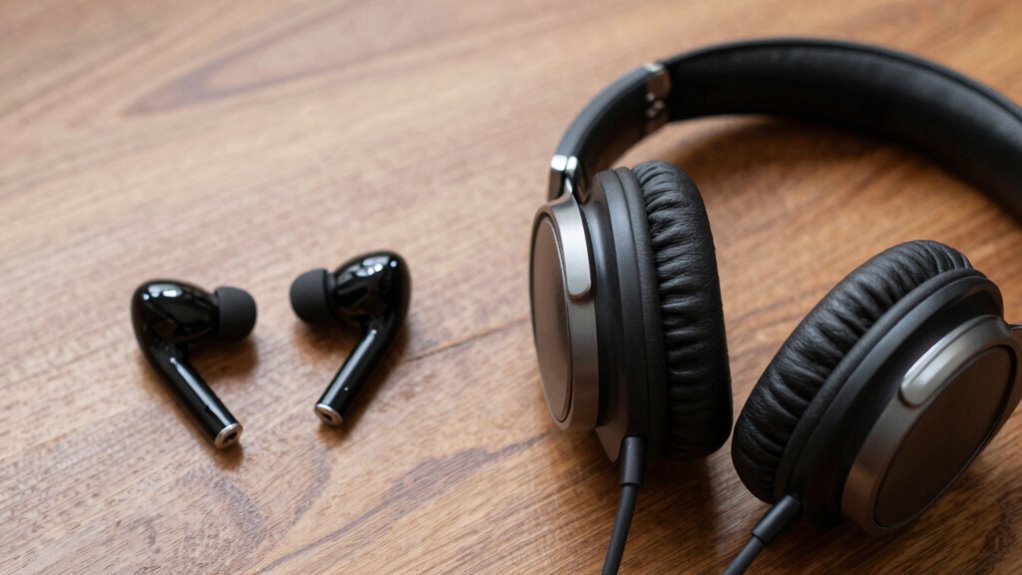

Wireless and wired headphones can differ in sound quality, but advancements have blurred the gap. Wired models typically offer more consistent sound with fewer interruptions, thanks to direct connections. However, modern wireless headphones with high-quality codecs, noise-canceling features, and better hardware now deliver impressive, near-wired performance. Factors like signal stability and driver quality influence how each sounds. To understand which suits your preferences best, exploring the details behind these differences can help you make a confident choice.
Key Takeaways
- Wired headphones generally offer more consistent sound quality due to direct connections and fewer interference issues.
- Wireless headphones have improved with advanced codecs and noise-canceling tech, narrowing the sound quality gap.
- Signal stability and external interference can affect wireless audio clarity more than wired options.
- Driver quality and size impact sound performance; high-quality drivers ensure excellent sound regardless of connection type.
- Personal preferences for comfort and convenience often influence whether users prioritize wired or wireless audio quality.
Top picks for "wireles headphon sound"
Open Amazon search results for this keyword.
As an affiliate, we earn on qualifying purchases.
Understanding the Basics of Wireless and Wired Headphones

Wireless and wired headphones serve the same purpose—delivering audio—but they differ markedly in design and functionality. Wireless models run on batteries, so battery life becomes a key factor in your experience. You’ll want to choose headphones with sufficient battery life for your daily use, especially if you listen for hours. The absence of cords can also improve comfort by reducing tension and movement restrictions. Conversely, some find wireless headphones more comfortable due to their lightweight design and freedom of movement, while others prefer the security of wired models. Understanding these basics helps you decide which type suits your needs best. Additionally, the contrast ratio of a headphone’s sound can influence how well it reproduces dark or nuanced audio details, impacting overall sound quality. The energy efficiency of wireless headphones can also play a role in their overall performance, especially with prolonged use. As technology advances, features like Bluetooth connectivity and improved battery management further enhance wireless listening experiences.
The Impact of Connectivity on Audio Quality

Your connection quality directly affects your listening experience. If the signal isn’t stable or clear, you might notice dropouts or distorted sound. Additionally, latency, sync issues, and interference can further degrade audio, whether wired or wireless. For outdoor settings, Free Floating systems can help maintain consistent audio performance without physical constraints. Ensuring a strong and reliable connection is essential, as connection stability plays a crucial role in preserving sound clarity and fidelity. Moreover, understanding how repair fundamentals influence device durability can help you choose more reliable headphones and maintain their performance over time.
Signal Stability and Clarity
Because signal stability directly affects audio clarity, wired headphones often provide a more consistent listening experience than their wireless counterparts. Wireless headphones rely on Bluetooth, which can be affected by Bluetooth interference and signal congestion, especially in crowded areas or environments with many wireless devices. This interference can cause dropouts, static, or inconsistent sound quality. In contrast, wired headphones deliver a direct connection, ensuring stable transmission without interference issues. You’ll notice fewer disruptions, clearer sound, and more reliable performance. While wireless headphones offer convenience, their susceptibility to Bluetooth interference makes them vulnerable to signal unpredictability. If maintaining pristine sound quality is essential, wired options tend to provide a more stable and consistent experience, especially in environments with many competing wireless signals. Additionally, connected equipment in a smart home gym environment can also influence overall audio performance and reliability. Incorporating wireless signal optimization techniques can help mitigate some of these issues in a smart home setting. Moreover, understanding signal interference and how it impacts audio quality can further help users choose the best headphones for their needs. External factors such as environmental interference and the presence of other wireless devices can also significantly affect overall audio performance. Furthermore, audio codecs used in wireless transmission can influence sound fidelity and quality.
Latency and Sync Issues
While wired headphones deliver consistent sound quality, wireless options can sometimes fall short due to latency and sync issues. When you connect via Bluetooth pairing, a slight delay can occur between the audio source and what you hear. These latency issues become noticeable during activities like gaming or watching videos, where audio needs to stay perfectly synced with the visuals. You might experience a lag that disrupts your experience or causes lip-sync problems. Although some modern wireless headphones include low-latency codecs, they still can’t always match the immediate response of wired connections. If timing and synchronization are critical for your use, wired headphones offer a more reliable solution, ensuring your audio remains perfectly aligned with the on‑screen action. Additionally, understanding audio codecs can help you choose wireless headphones with better performance. In some cases, connectivity stability can influence overall sound quality, making wired connections preferable for critical listening. Furthermore, interference management plays a crucial role in maintaining optimal audio quality in wireless setups, emphasizing the advantages of wired connections for consistent performance. Incorporating signal processing techniques can further enhance wireless audio quality, but they still may not fully eliminate latency issues compared to wired options.
Interference and Noise
Have you ever noticed static, crackling, or sudden drops in audio quality when using wireless headphones? That’s often due to interference noise or background static disrupting the connection. Wireless signals can be affected by other devices, Wi-Fi, or physical obstructions, causing interruptions. This interference can lead to inconsistent sound, making it hard to enjoy your music or calls fully. Wired headphones, on the other hand, are less prone to these issues because they rely on a direct connection. Here’s a quick comparison:
| Aspect | Impact on Sound Quality |
|---|---|
| Wireless interference | Can cause background static and dropouts |
| Wired connection | Minimal interference, stable sound |
| Signal congestion | More common in wireless, affecting clarity |
| Physical obstructions | Less impact on wired headphones |
| External devices | More likely to cause issues for wireless |
Interference noise can really affect your listening experience. Additionally, some wireless headphones incorporate noise-canceling technology to mitigate external disruptions, but they are not immune to interference from other signals.
Audio Codec Support and Its Role in Sound Performance

Audio codec support plays a essential role in determining the sound quality of both wireless and wired headphones. An audio codec transforms digital audio into an analog signal your ears can hear, directly affecting sound performance. Different codecs, such as SBC, AAC, aptX, and LDAC, offer varying levels of compression and data transfer speeds, influencing clarity, detail, and latency. When your headphones support advanced codecs, you’ll notice richer, more accurate audio, especially at higher bitrates. Conversely, limited codec support can lead to compressed sound and reduced fidelity. For wireless headphones, codec compatibility becomes even more critical because it impacts wireless transmission quality. Ensuring your headphones support the right audio codecs guarantees you get the best possible sound performance, whether wired or wireless.
Hardware Components and Their Influence on Sound
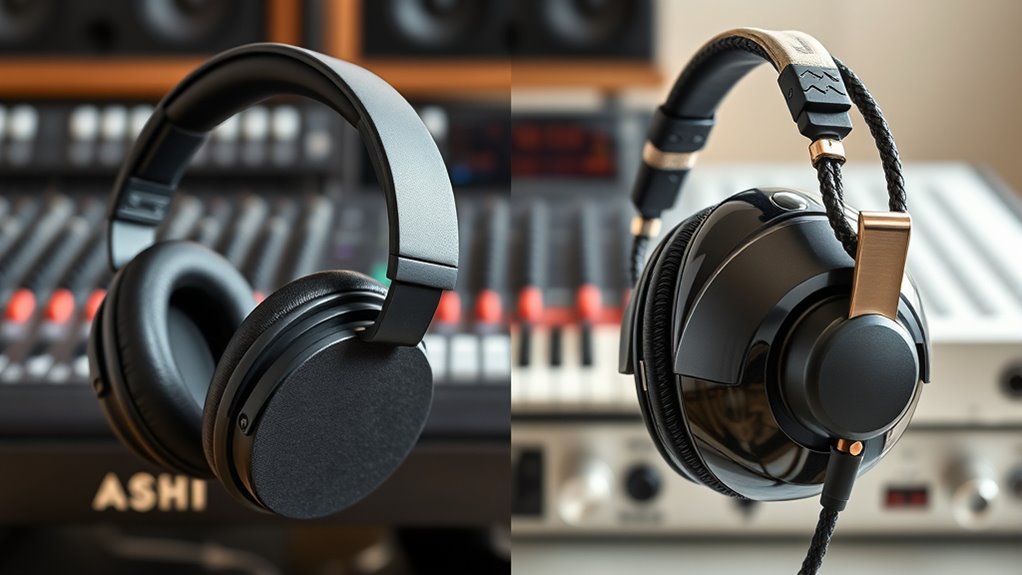
The size and quality of the drivers in your headphones play a vital role in how well they reproduce sound. Larger, high-quality drivers typically deliver richer bass and clearer details. Additionally, wireless codec technologies can affect sound quality by determining how effectively audio data is transmitted without wires. Properly designed drivers and codecs work together to provide a better listening experience, ensuring high fidelity and sound clarity. Understanding the paranormal mysteries behind sound perception can also deepen appreciation for audio technology’s complexities.
Driver Size and Quality
Ever wonder how driver size influences sound quality in headphones? Larger drivers generally produce deeper bass and fuller sound because they move more air, creating richer low frequencies. However, driver quality is equally important; a high-quality driver can deliver clear, detailed sound even if it’s smaller. In wired headphones, you often find bigger drivers, which can enhance overall sound performance. In contrast, wireless models may have smaller drivers due to space constraints, potentially affecting sound depth. But advancements in driver technology mean smaller drivers can still offer impressive clarity and balance. Additionally, driver design and materials play a crucial role in determining the overall sound fidelity. Moreover, the integration of hardware components such as amplifiers and digital signal processors can further influence sound quality. Furthermore, wireless audio transmission can sometimes introduce latency or compression artifacts that impact sound quality. Ultimately, both driver size and quality work together to define your listening experience. Don’t assume bigger is always better—driver quality can make a significant difference regardless of size.
Wireless Codec Technologies
Wireless codec technologies are essential hardware components that determine how efficiently your headphones transmit and process sound. Your device’s wireless codec support influences the quality and latency of audio streaming, impacting your listening experience. Different codecs use various audio compression methods, which balance sound quality and data transfer rates. For example, aptX and AAC support higher-quality audio with less compression, preserving detail and clarity. On the other hand, SBC, often used as a default, provides more compression, which can affect sound fidelity. When choosing wireless headphones, understanding these codecs helps you select devices that maximize sound quality. The right wireless codec support ensures minimal latency and superior audio fidelity, making your listening experience as close to wired quality as possible. Additionally, the hardware components of your device can influence how well these codecs perform, further affecting overall sound quality.
Real-World Listening Tests and User Experiences

When you try out wireless and wired headphones in real-world settings, you’ll notice differences in user comfort, aesthetic appeal, and sound quality that often can’t be captured in lab tests. Wireless models offer greater convenience—you won’t deal with tangled cords—and often feel lighter, enhancing comfort during long wear. However, some users find wired headphones more secure, especially during active use. Aesthetic appeal varies; wireless options tend to look sleeker and modern, while wired headphones may seem bulkier. Sound quality can differ based on build and fit, impacting your listening experience. Additionally, audio fidelity can be influenced by factors like signal stability and interference, which are more prominent in wireless devices. In everyday use, personal preferences for comfort and style often outweigh technical specs. Ultimately, your choice may hinge on how well the headphones fit your lifestyle, not just their measured sound performance. Considering user experience and comfort is essential when selecting headphones that best suit your needs. Moreover, understanding the sound quality differences through real-world testing helps users make more informed decisions aligned with their listening priorities.
Technological Advances Bridging the Gap
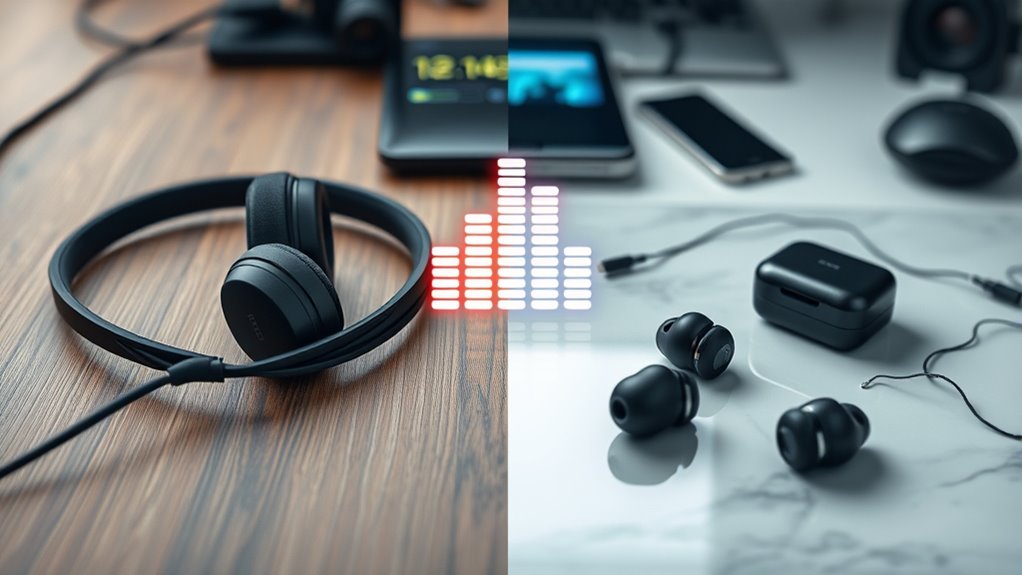
Recent technological innovations are narrowing the performance and convenience gap between wireless and wired headphones. Advances like audiophile certification guarantee wireless models meet high sound quality standards, providing clarity, depth, and accuracy comparable to wired options. Meanwhile, improvements in ergonomic design enhance comfort and fit, making wireless headphones suitable for extended use without sacrificing comfort. These developments mean you can enjoy premium sound without the constraints of cables. Manufacturers are also integrating advanced codecs and noise-canceling features, further bridging the quality divide. As a result, wireless headphones now offer a level of performance once exclusive to wired models, while providing the convenience and freedom you desire. This progress continues to reshape the landscape, making wireless options increasingly appealing for audiophiles and casual listeners alike.
Making the Right Choice for Your Listening Preferences
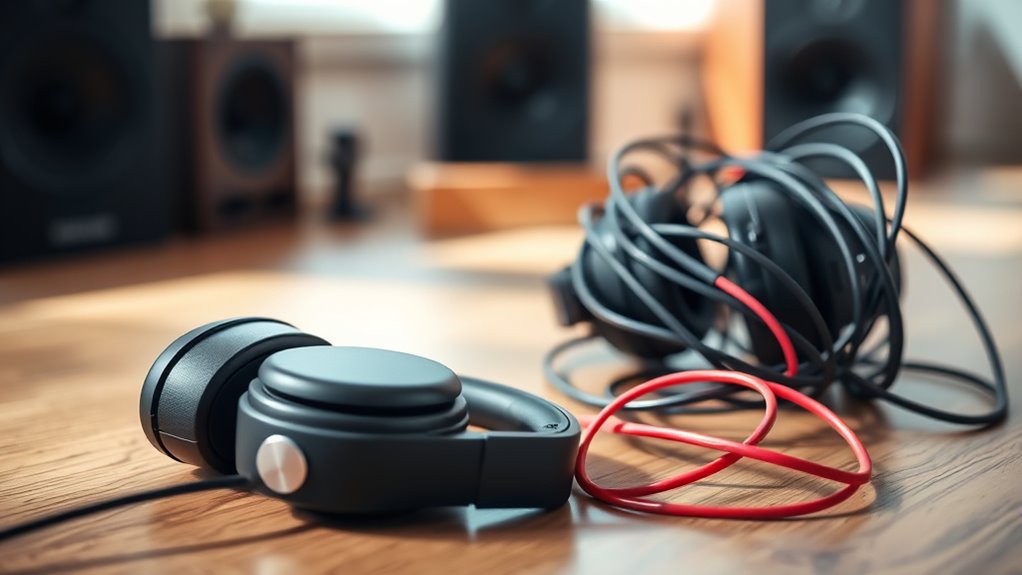
Choosing between wireless and wired headphones ultimately depends on your listening preferences and lifestyle. If you value convenience and freedom of movement, wireless headphones are a great fit, but consider their battery life—longer battery life means fewer interruptions. On the other hand, if you prioritize consistent sound quality and don’t want to worry about charging, wired headphones offer reliable performance without battery concerns. Comfort levels also play a key role; some find wireless models lighter and more comfortable for extended wear, while others prefer the snug fit of wired versions. Think about how you listen—commuting, working out, or relaxing at home—and choose the option that best matches your habits. Making this decision ensures your gear enhances your listening experience without compromise.
Frequently Asked Questions
Do Wireless Headphones Cause More Audio Lag Than Wired Ones?
Wireless headphones often cause more audio lag than wired ones due to higher latency issues, which can affect audio synchronization. You might notice a slight delay, especially during gaming or watching videos, because wireless signals take longer to transmit. Wired headphones generally offer lower latency, ensuring better sync between sound and visuals. If avoiding lag is vital, wired options are your best choice, but modern wireless tech is improving rapidly.
Can Wireless Headphones Have Better Sound Quality Than Wired?
Wireless headphones can sometimes offer better sound quality than wired ones, especially with advances in Bluetooth technology. You get the benefit of wireless convenience without sacrificing audio clarity, while wired headphones still excel in durability. If you choose high-quality wireless options, you might enjoy richer sound and greater freedom of movement. However, for the most reliable sound with lasting durability, wired headphones often remain a top choice.
How Does Battery Life Affect Sound Performance in Wireless Headphones?
Battery life impacts sound performance because as the battery drains, power management systems may reduce audio quality to conserve energy. You might notice slight declines in sound clarity or volume when the battery is low. To avoid this, keep your wireless headphones charged and use features that optimize power management. This guarantees consistent sound quality and longer listening sessions without interruptions caused by low battery.
Are Premium Wireless Headphones Worth the Investment Over Wired Options?
Premium wireless headphones are worth the investment if you value convenience, better features, and longer-lasting battery life, especially since they often have superior headphone durability. However, if you’re on a tight budget, budget options can still offer decent sound quality and durability without the higher price. Consider your needs carefully—wireless offers freedom, but wired options can be more reliable and cost-effective for everyday use.
Does the Frequency Response Range Differ Significantly Between Wired and Wireless Headphones?
The frequency response range doesn’t differ considerably between wired and wireless headphones, so your audio fidelity remains consistent. Modern wireless headphones use advanced codecs to transmit a broad frequency range, matching wired options closely. While some audiophiles argue wired headphones offer slight advantages, for most listeners, the frequency response is sufficient in wireless models, providing clear, balanced sound without sacrificing convenience.
Conclusion
Ultimately, whether you choose wireless or wired headphones depends on your preferences and priorities. While wireless options are catching up fast, wired headphones still hold the high ground in sound quality—like a trusted old friend never letting you down. Think of it as choosing between a smooth ride or a reliable anchor; both have their charm. So, weigh your needs carefully, and let your ears be the judge in this symphony of options.