
TL;DR

Get the latest gadgets delivered free with Prime
- Fast, free delivery on millions of items
- Prime Video, Amazon Music and more included
- Member-only deals all year
Placing your rig in a closet can drastically cut noise and reflections, but only if you control heat and sound leaks. Proper placement and ventilation make a huge difference. You can learn more about acoustic dampening, placement, and the “Rig in the Closet” setup. The key is sealing gaps, adding targeted absorption, and ensuring airflow.
Imagine turning a cramped closet into your secret weapon for quiet, professional audio. You don’t need a fancy studio or expensive soundproof room—just smart placement, some DIY dampening, and a bit of ventilation. It’s the kind of setup that lets your high-power rig run full tilt without disturbing anyone or losing performance. For tips on optimizing your space, check out home theater and audio setup tips.
This guide walks you through making a tiny space work for you. Whether you’re recording vocals, running AI inferences, or just want a quieter workspace, these tips will help you get it right. Let’s cut through the noise—literally—and focus on what truly makes a difference.
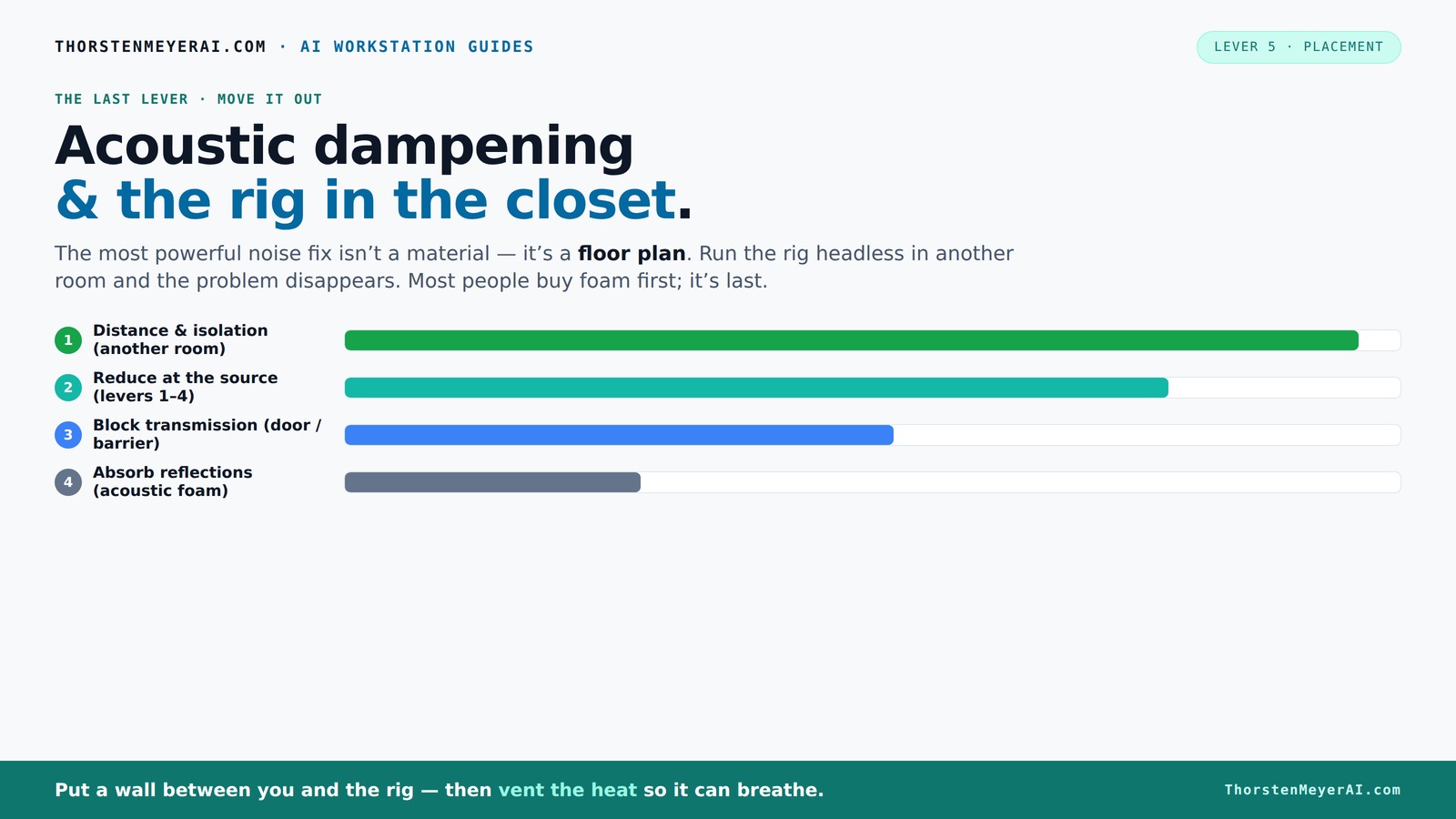
Acoustic dampening
& the rig in the closet.
The most powerful noise fix isn’t a material — it’s a floor plan. A rig you can’t hear because it’s in another room beats any amount of foam. Tap the approaches in Part 1 to see what actually works.
(another room)
(levers 1–4)
(door / barrier)
(acoustic foam)
Contain the noise, not the heat
Key Takeaways
- Moving your rig to another room or closet is the most effective way to reduce noise, often more than acoustic treatment.
- Proper ventilation is critical—sealed closets trap heat, which can throttle performance and cause fans to roar.
- Place acoustic treatment at reflection points—behind the mic, ceiling, and hard surfaces—to dramatically improve sound quality.
- Seal gaps on doors and around windows to block sound leaks, combining soundproofing with dampening for best results.
- Start small: a few well-placed panels, rugs, and bass traps can make a big difference without overcrowding your space.
acoustic soundproofing foam panels
As an affiliate, we earn on qualifying purchases.
As an affiliate, we earn on qualifying purchases.
Why Moving Your Rig Is the Best Noise Solution You Can Do
The simplest way to cut noise? Put your rig somewhere else. Walls, doors, and distance are your best friends. You might also find this resource on acoustic dampening helpful. When you’re working with a server, a GPU tower, or a noisy PC, having it in another room or closet keeps the noise far away from your ears.
Imagine your noisy rig in the basement or a closet, while you work comfortably at your desk. You SSH into it or connect over the network. The noise level becomes irrelevant. Plus, you avoid the hassle of acoustic treatment, which often only softens reflections but doesn’t stop noise from escaping.
As an affiliate, we earn on qualifying purchases.
The 'Rig in the Closet' Setup — Why It Works and Its One Big Catch
Putting a high-performance rig inside a closet is a game-changer for noise. It’s like hiding a roaring lion behind a curtain. The sound stays contained, and your workspace stays silent. But there's a catch: heat.
A sealed, small space traps heat from components like GPUs and CPUs, which can hit 80-100°F during heavy loads. To learn more about managing heat and noise, see this article on acoustic dampening and heat management. Without proper airflow, this heat builds up fast and can throttle your rig, causing fans to roar even more. Not ideal.
To make this work, you need active ventilation—think quiet exhaust fans or ducted airflow—and a way to keep the space cool. Purpose-built soundproof cabinets are perfect because they combine absorption with temperature control. You can find some on Amazon that work well even in small closets.
Understanding this tradeoff is crucial: while sealing the space helps contain noise, neglecting heat management can lead to performance issues or hardware damage. The key is balancing sound isolation with effective cooling solutions to ensure your rig runs optimally without overheating or noise escalation.
ventilation fan for small enclosed spaces
As an affiliate, we earn on qualifying purchases.
As an affiliate, we earn on qualifying purchases.
How to Properly Place Acoustic Treatment in a Tiny Closet
Acoustic dampening in small spaces is all about placement. You want to target the biggest reflection points first—behind the mic, on the ceiling above the source, and on hard surfaces that bounce sound around. These spots cause flutter echo and muddy recordings.
Here’s a simple step-by-step:
- Start with sealing gaps around the door using weatherstripping or acoustic sealant. Cracks let sound leak out and ruin your quiet space.
- Place absorption panels directly behind the microphone at head level to reduce early reflections. This placement is critical because it minimizes the direct bounce of sound waves into your mic, which can color your recordings or cause comb filtering.
- Cover the ceiling above your microphone with foam or a soft material to cut down on ceiling bounce. This prevents sound from bouncing back into your mic from above, which can cause phase issues and muddiness.
- Put rugs or carpets on the floor to minimize reflections from hard surfaces. Soft flooring absorbs sound and prevents it from bouncing upward or sideways, contributing to a more accurate recording environment.
- Add bass traps in the corners if your room sounds boomy or boxy. Low frequencies tend to accumulate in corners, so trapping them prevents muddiness and helps your recordings sound clearer and more natural.
This approach makes your voice sound clearer and reduces echo. For detailed tips on acoustic placement, visit this guide on acoustic treatment placement. Remember: treat the reflection points, not just the corners.
AmazonAs an affiliate, we earn on qualifying purchases.
Soundproofing vs. Dampening: What’s the Difference and Why It Matters
It’s easy to confuse soundproofing and acoustic dampening, but they serve different purposes. Soundproofing blocks noise from escaping or entering—think of thick walls, sealing gaps, and barriers. Dampening reduces echo and reflections inside a space, making sound clearer and less harsh.
In a closet, your goal is often a mix: block sound leaks through gaps (soundproofing) and absorb internal reflections (dampening). Both are necessary to achieve a quiet, natural-sounding environment.
For example, foam panels absorb sound waves bouncing inside your booth, but sealing the door with weatherstripping stops external noise from sneaking in. Combining both techniques helps you maximize noise reduction while maintaining natural sound quality. The tradeoff is that overly sealing can trap heat or cause internal reflections if not complemented with proper dampening—so balancing both is essential for optimal results.
The Best Placement for Treatment Materials in a Tiny Room
In a small closet, treating the most reflective surfaces makes a huge difference. Place foam panels at head height behind the mic, on the ceiling directly above, and on walls opposite your source. Bass traps go in the corners, where low frequencies tend to build up. This strategic placement ensures that the most problematic reflections are absorbed, leading to a clearer and more natural sound.
Imagine the mic’s point of view—treat that spot first. Then look around for any hard surfaces that bounce sound—like the door, the floor, or the back wall—and cover those with absorbing material. Don’t neglect sealing the door and any gaps, as leaks can undermine your efforts by letting external noise in or internal sound escape.
By thoughtfully placing treatments at these key points, you maximize their effectiveness without cluttering the space, keeping your setup practical and efficient.
How Much Treatment Do You Really Need in a Closet?
More isn’t always better. For a tiny closet, a handful of foam panels, some rugs, and bass traps in the corners can do wonders. Over-treating can deaden the space, making your voice sound unnatural and the room feel claustrophobic. The goal is to strike a balance: enough treatment to control reflections and low-frequency buildup without making the space sound overly dead or muffled.
Start with coverage on the primary reflection points—behind the mic, ceiling, and corners—and test your sound after each addition. If your voice sounds natural, clear, and free of excessive echo, you’ve achieved a good balance. Remember, in small spaces, less is often more, and strategic placement beats volume.
In some cases, portable acoustic panels or reflection filters can be moved around, allowing you to adapt your setup without overcrowding the space or spending too much.
Troubleshooting Common Closet Acoustic Problems
If your closet sounds boxy or boomy, it’s probably due to low-frequency buildup and reflective surfaces. Adding bass traps in the corners and softening hard surfaces will help tame this. For harsh highs, more foam on reflective spots can smooth out the sound. Addressing these issues is key to achieving a balanced sound that is neither muffled nor excessively bright.
Door leaks are another culprit. Seal gaps with weatherstripping or acoustic curtains to prevent external noise from entering and internal sound from escaping. For echo or reverb issues, ensure your treatment covers the ceiling and all hard surfaces, creating a more controlled acoustic environment. Small adjustments—like repositioning your mic, adding a soft blanket, or adjusting treatment placement—can significantly improve your sound quality and overall room response.
Budget-Friendly, Rental-Approved Acoustic Solutions
You don’t need to spend a fortune or make permanent changes. Blankets, moving blankets, and DIY panels can be hung with hooks or command strips. Reflection filters are portable and easy to reposition, providing effective sound absorption without damage. Rugs and carpets on the floor cut reflections and reduce room echo, all without permanent installation. These options are ideal for renters or those who frequently change their setup.
For the door, weatherstripping or draft blockers help minimize sound leaks. If airflow is a concern, vented panels or ducting solutions that don’t compromise acoustic sealing are available, allowing ventilation without sacrificing soundproofing. Combining these affordable, non-permanent treatments enables you to create an effective, adaptable workspace that respects rental restrictions while improving sound quality.
Frequently Asked Questions
What is the difference between acoustic dampening and soundproofing?
Acoustic dampening reduces echo and reflections within a space by absorbing sound waves—think foam panels or rugs. Soundproofing, on the other hand, blocks sound from escaping or entering the room, using barriers like thick walls or sealing gaps. Both are important but serve different purposes.
Where should I place foam or panels in a closet booth?
Place panels behind the mic at head level, on the ceiling directly above, and on the most reflective walls opposite your source. Bass traps go in the corners, where low frequencies tend to build up. Seal gaps around the door to prevent sound leaks.
Do I need bass traps in a small vocal closet?
If your room sounds boomy or boxy, yes. Bass traps in the corners help control low-frequency buildup, making your recordings clearer and more natural. In smaller spaces, these traps can be simple foam or thicker panels designed for bass absorption.
How much treatment is enough for a tiny rig-in-the-closet setup?
Start with a few panels on reflection points and the ceiling, plus a rug on the floor. Test your sound and add more if needed. Over-treating can deaden the space, so aim for a balance where your voice sounds natural and echo-free.
Should I treat the door, ceiling, or walls first?
Start with sealing gaps around the door to block leaks. Then treat the reflection points—behind the mic and ceiling—followed by any hard surfaces. Prioritize based on the biggest reflection or leak source for the best results.
Conclusion
Transforming a tiny closet into a quiet, effective workspace isn’t about endless treatment—it's about smart placement, sealing leaks, and managing heat. When you focus on the biggest issues first—distance, ventilation, and reflection—you’ll find the space becomes surprisingly functional.
Remember: the best setup balances sound control with airflow. With a little DIY effort, your closet can be a secret weapon for high-quality recordings or quiet computing. Now, go turn that noisy closet into your new favorite workspace—quiet, cool, and ready for anything.
HALLOWEEN Halloween Picks
halloweenhalloween
As an affiliate, we earn on qualifying purchases.