
If you’re after rugged, easy-to-use footage for active travel like mountain biking or hiking, an action camera is your best bet due to its durability, stable 4K video, and quick sharing options. But for immersive, panoramic shots of waterfalls or underwater scenes, a 360 camera shines, offering versatile angles and creative flexibility. Your choice depends on your adventure style—continue exploring to find out which one suits your journey best.
Key Takeaways
- Action cams excel in ruggedness, durability, and quick handling, making them ideal for active travel and fast-paced activities.
- 360 cameras provide immersive panoramic footage, perfect for capturing full environments and storytelling.
- Choose an action cam for straightforward editing, sharing, and lightweight portability during outdoor adventures.
- Opt for a 360 camera if immersive, full-view content and creative flexibility are your priorities.
- Your choice depends on whether targeted, stable shots or panoramic, immersive experiences better suit your travel style.
best action camera for outdoor adventures
As an affiliate, we earn on qualifying purchases.
As an affiliate, we earn on qualifying purchases.
Design and Build Quality
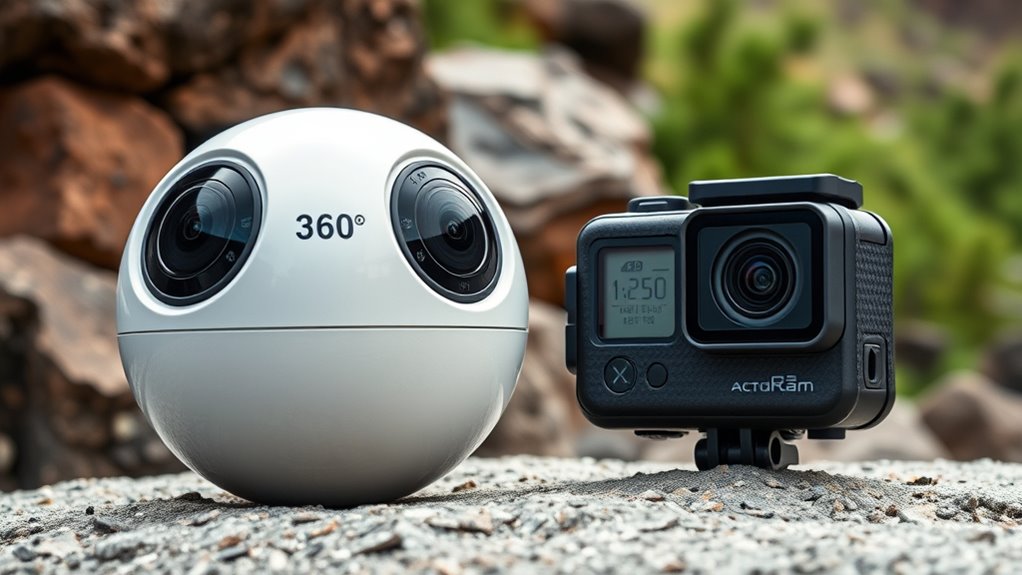
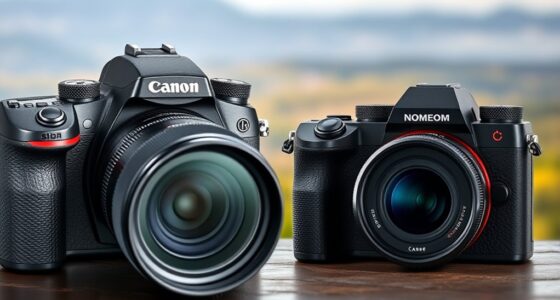
When comparing the design and build quality of action cams and 360 cameras, it’s clear that each has distinct strengths suited to different needs. Action cams are typically rugged, with durable, compact bodies designed for ergonomic handling during intense activities. They often feature textured grips, making them easy to hold steady in challenging conditions. Their aesthetic appeal is sleek and minimal, emphasizing portability and functionality. In contrast, 360 cameras tend to be more versatile but may sacrifice some ruggedness for a more refined look. While they may not be as robust, they often boast a modern, stylish design that appeals visually. Overall, your choice depends on whether you prioritize rugged ergonomics or aesthetic sophistication. Additionally, considering Free Floating capabilities can influence the decision based on your filming style and environment, especially when capturing dynamic or fast-moving scenes that benefit from stability features. Moreover, the durability standards of each device can significantly impact their performance in various outdoor conditions. A comprehensive understanding of construction quality can help determine which camera is better suited for adventurous use and challenging environments. Furthermore, examining material resilience can provide deeper insight into how well each device withstands extreme weather and physical impacts.
360 degree camera for travel
As an affiliate, we earn on qualifying purchases.
As an affiliate, we earn on qualifying purchases.
Video and Image Capabilities
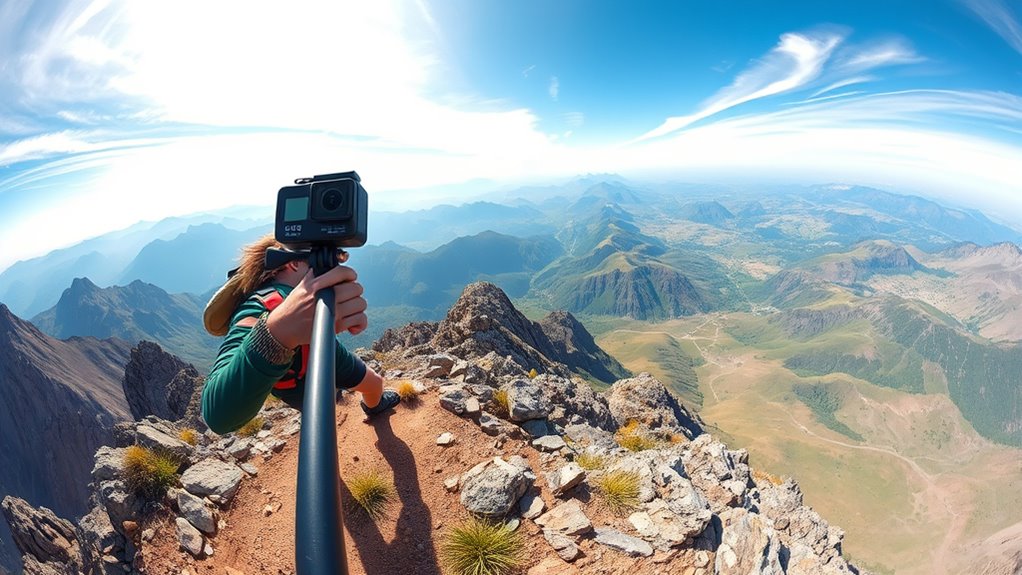
When comparing action cams and 360 cameras, you’ll want to consider their video quality and resolution to ensure sharp, clear footage. Image capture versatility also plays a big role in how well each performs in different scenarios. Understanding these aspects helps you choose the right camera for your needs. Additionally, paying attention to camera specifications can help you determine which device offers the best performance for your travel adventures. For example, sensor quality influences how well each camera performs in various lighting conditions, impacting the overall image clarity, and color accuracy is essential for capturing scenes that look natural and vibrant. Moreover, dynamic range can be crucial when shooting in environments with high contrast, ensuring details are preserved in both shadows and highlights. Considering these performance factors can make a significant difference in capturing memorable travel moments.
Video Quality and Resolution
Video quality and resolution are crucial factors to take into account when choosing between an action cam and a 360 camera, as they directly impact the clarity and detail of your footage. Action cams typically offer high-resolution options, like 4K, with advanced stabilization technology that keeps your videos smooth during fast movements. They usually have longer battery life, allowing for extended recording sessions. Conversely, 360 cameras often provide slightly lower resolutions but excel in capturing immersive, panoramic views. Some models now support 5.7K resolution, balancing quality with the convenience of capturing every angle. While stabilization technology improves footage stability across both devices, battery life remains a key consideration, especially if you plan to record for long periods without recharging. Choose based on your need for detail versus immersive coverage, and consider the video resolution capabilities to ensure your footage meets your expectations. Additionally, understanding the field of view offered by each device can help determine which option best suits your travel style and desired footage style. Moreover, the importance of connected technology is growing, enabling seamless sharing and editing of your travel videos directly from your devices.
Image Capture Versatility
Both action cams and 360 cameras excel in capturing a variety of images and videos, but they do so in different ways that can influence your creative options. Action cams are great for focused shots, offering sharp drone footage and fast-paced action clips. In contrast, 360 cameras provide immersive experiences, allowing you to capture entire scenes in a single shot.
Here are some ways they differ:
- Action cams excel at capturing high-quality drone footage and quick, dynamic images.
- 360 cameras are perfect for time lapse photography, creating stunning panoramic sequences.
- Both devices enable versatile shooting modes, giving you options for traditional framing or immersive content.
- The camera capabilities of each device can be tailored to specific travel scenarios, enhancing your storytelling options.
- Additionally, understanding the navigation and mapping features can help you optimize your recording angles and coverage during travels.
Your choice depends on whether you want targeted, detailed shots or all-encompassing visuals.
rugged action cam 4K
As an affiliate, we earn on qualifying purchases.
As an affiliate, we earn on qualifying purchases.
Ease of Use and Portability
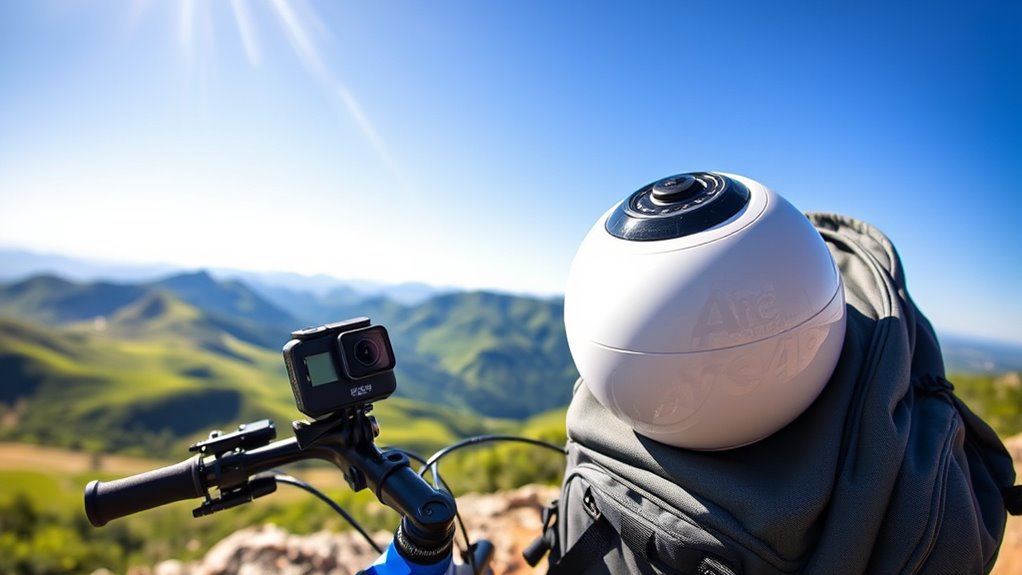
While action cams are generally compact and lightweight, making them easy to carry around, 360 cameras often come with additional accessories or larger bodies that can make them less convenient to handle on the go. Action cams typically offer straightforward mounting options, allowing you to quickly attach them to helmets, bikes, or tripods, which enhances ease of use during travel. They also tend to have longer battery life, so you can record for extended periods without frequent recharging. In contrast, 360 cameras may require you to manage more complex setups or carry extra accessories, impacting portability. Their larger size can make packing and handling less convenient, especially if you’re trying to travel lightly. Additionally, size and weight significantly influence how easily you can incorporate them into your travel gear. Proper camera ergonomics can also enhance comfort and ease of use during active adventures. Overall, action cams excel in ease of use and portability for dynamic travel adventures, especially when considering compact design and user-friendly features.
immersive 360 camera underwater
As an affiliate, we earn on qualifying purchases.
As an affiliate, we earn on qualifying purchases.
Durability and Weather Resistance
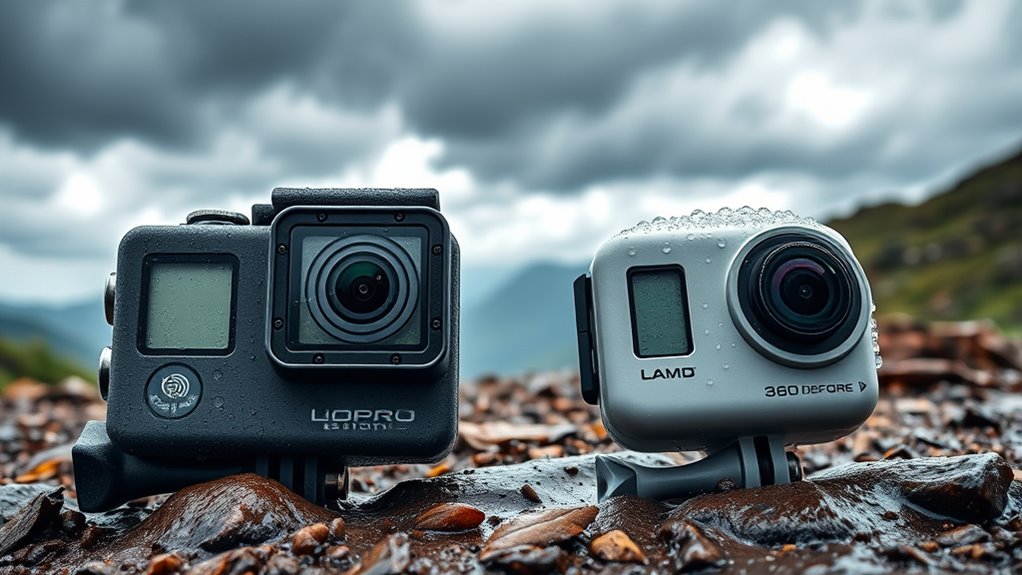
When choosing between action cams and 360 cameras, durability and weather resistance become important factors. You want a device that can handle tough conditions without breaking. Many action cameras come with waterproof casing, making them ideal for water-based adventures. Shock resistance is also key, especially if you plan to capture intense activities like mountain biking or skiing. Here are some points to contemplate:
Durability and weather resistance are key for action and 360 cameras in tough environments.
- Action cams typically feature waterproof casing, allowing you to record underwater or in rain without worry.
- Both types often have shock resistance, but action cams usually offer higher durability for rough handling.
- 360 cameras may be more fragile, so check their weather resistance ratings before exposing them to harsh environments.
- Additionally, weather resistance, such as dust and impact protection, is crucial to ensure your camera withstands various outdoor conditions during your travels.
- It’s also beneficial to consider weather resistance ratings provided by manufacturers, which can give you a clearer idea of how well the camera performs in extreme conditions. Moreover, understanding the durability features of each camera type can help you select a device suited for your specific adventure environment, especially if you prioritize outdoor performance.
- Ensuring your chosen camera has reliable impact resistance can protect your investment during demanding outdoor activities.
Editing and Sharing Options
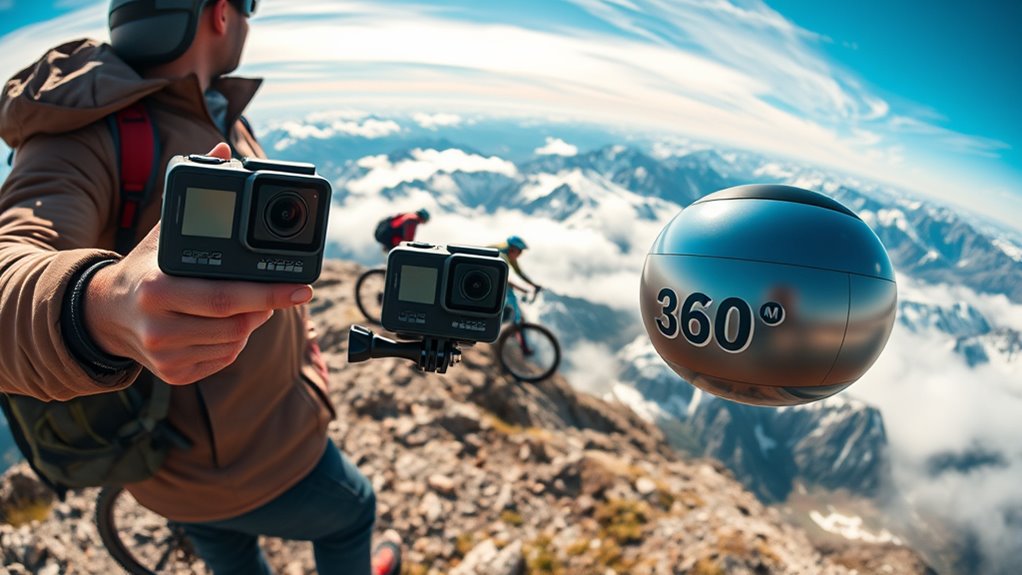
Editing and sharing options can profoundly impact how easily you can turn your footage into polished videos and distribute them. Action cams often come with user-friendly editing software, making it simple to trim clips, add effects, or stabilize footage directly on your device or computer. They also usually support social sharing through quick export options to platforms like Instagram or YouTube. Additionally, many action cameras now feature cloud storage integration, allowing for seamless backup and access from multiple devices. Conversely, 360 cameras often require specialized video editing software to stitch and optimize immersive content, which can be more complex but offers creative flexibility. Many 360 cameras now include easy-to-use apps that streamline editing and facilitate social sharing. To improve your writing, detect and correct passive voice can help make your content more engaging and direct. Your choice depends on how much editing effort you’re comfortable with and how quickly you want to share your travel adventures with others.
Ideal Scenarios and Use Cases
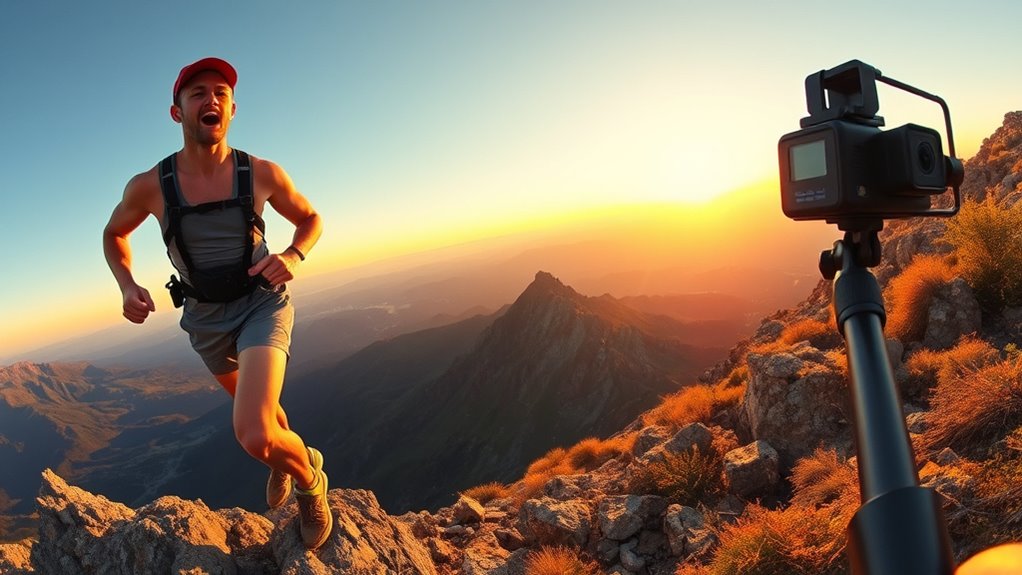
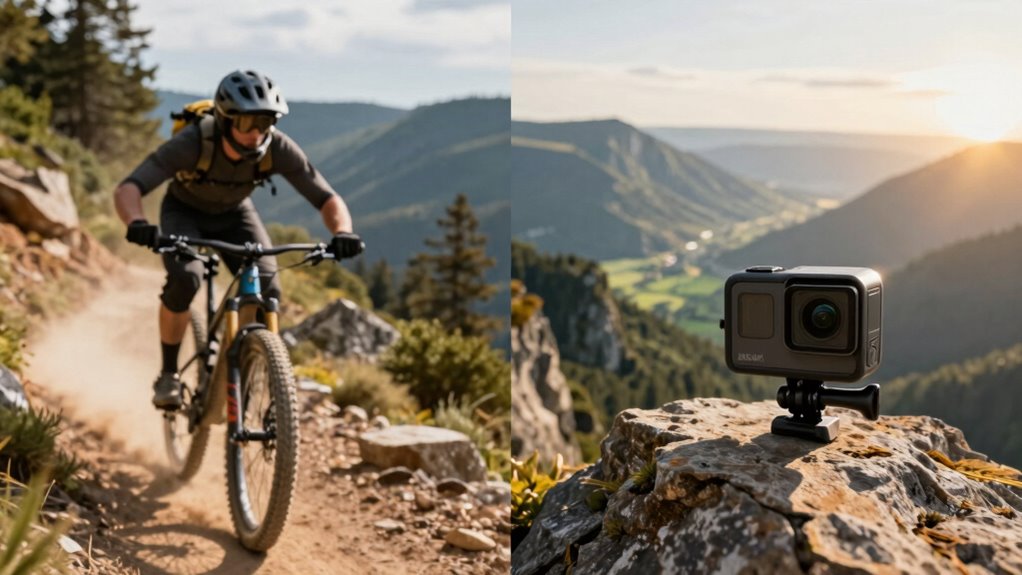
Choosing between an action cam and a 360 camera depends on the specific scenarios you want to capture. If you’re into mountain biking, an action cam is ideal for fast-paced, first-person shots that follow your every move. It’s lightweight and durable, perfect for rough terrains. For underwater filming, a 360 camera offers immersive shots, capturing the environment around you in stunning detail.
Here are some ideal use cases:
- Mountain biking adventures, where quick, stable footage is essential.
- Underwater exploration, providing a full-view experience of marine life.
- Action-packed sports, where capturing every angle enhances the thrill.
Select based on whether you want focused, high-quality footage or a exhaustive, panoramic perspective of your travels.
Frequently Asked Questions
How Do Action Cams and 360 Cameras Compare in Battery Life?
You’ll find that action cams generally have better battery longevity than 360 cameras, allowing for longer recording sessions on a single charge. However, 360 cameras often require more power due to their advanced features and higher processing demands. To optimize power management, you can reduce resolution or frame rate settings on either device. Choosing a camera with a removable battery also helps extend your travel adventures without constantly searching for power sources.
What Accessories Are Recommended for Each Camera Type?
For action cams, you’ll want mounting options like helmets, handlebars, or chest mounts, plus protective cases to guard against drops and water. For 360 cameras, consider tripod mounts and waterproof housings to guarantee stability and durability. Both benefit from accessories like extra batteries and lens protectors. These additions help you capture high-quality footage and safeguard your gear during your adventures, making your travels more seamless and fun.
Can These Cameras Be Used for Professional Filmmaking?
Think of these cameras as versatile tools—yes, you can use them for professional filmmaking! While action cams and 360 cameras offer impressive convenience and immersive perspectives, their professional quality and cinematic potential are somewhat limited compared to high-end gear. If you aim for top-tier production, you’ll need more specialized equipment, but for dynamic shots and creative projects, these cameras can definitely elevate your filmmaking game.
How Do They Perform in Low-Light or Night Conditions?
You’ll find that action cams and 360 cameras generally struggle in low-light or night conditions due to limited night vision and low light sensitivity. They often produce grainy images or videos with poor clarity. To improve performance, consider models with enhanced low-light capabilities or add external lights. Keep in mind, for peak results, specialized night vision gear or cameras designed for low-light filming are your best options.
Are There Significant Cost Differences Between Action and 360 Cameras?
You’ll find that action cameras generally cost less than 360 cameras, making them more affordable for travel enthusiasts. The cost comparison shows action cams are often in the $100-$400 range, while 360 cameras can range from $300 to over $700. An affordability analysis reveals that if you’re on a budget, an action camera offers great value, but if you want immersive footage, investing in a 360 camera might be worth the extra cost.
Conclusion
Choosing between an action cam and a 360 camera is like picking the perfect paintbrush for your adventure masterpiece. Both bring unique colors to your storytelling palette—action cams are sharp strokes of focus, while 360 cameras offer a panoramic view of your journey’s wide canvas. Decide what fits your style, and let your travel stories unfold like a vibrant tapestry, capturing every thrill and quiet moment in a symphony of memories. Your adventure awaits—pick your lens and start capturing magic.