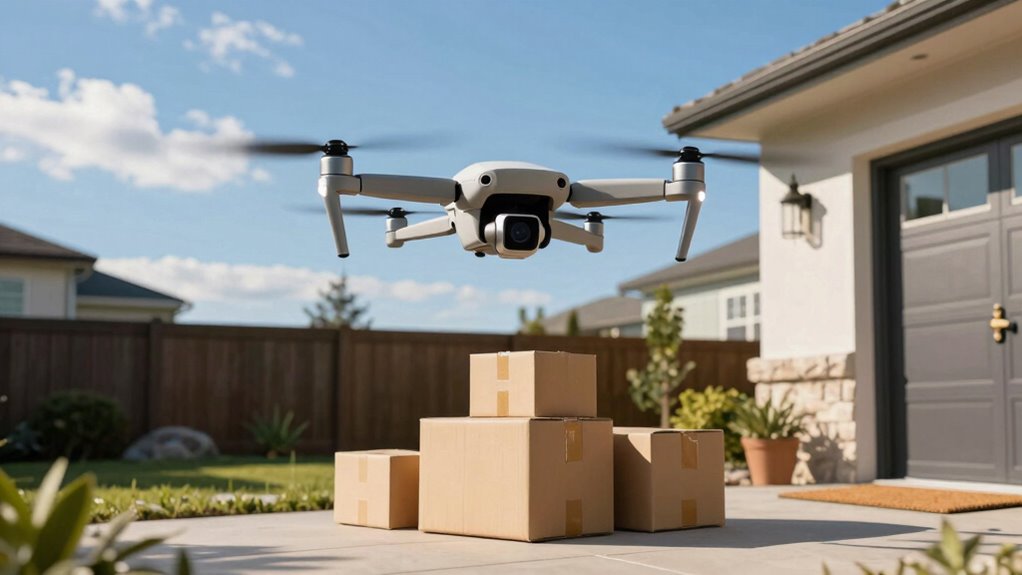

Drones are poised to become a common part of package delivery, thanks to advances in autonomous navigation, AI, and battery tech. Companies like Amazon and UPS are testing drone systems that can deliver safely and precisely, even in complex environments. While challenges like regulation and weather remain, ongoing innovations suggest that in the future, drones will quickly and easily bring your packages. Exploring this further reveals how technology and policies are shaping this exciting shift.

Get the latest gadgets delivered free with Prime
- Fast, free delivery on millions of items
- Prime Video, Amazon Music and more included
- Member-only deals all year
Key Takeaways
- Advances in autonomous navigation and AI enable drones to deliver packages efficiently and safely in complex environments.
- Major companies like Amazon and UPS are investing heavily in drone delivery technology and infrastructure.
- Regulatory frameworks are evolving to address safety, privacy, and airspace management for widespread drone operations.
- Drones can reduce delivery times, lower costs, and reach remote or urban areas inaccessible to traditional vehicles.
- Challenges such as battery limitations, weather sensitivity, and public trust are being addressed to ensure sustainable adoption.
As an affiliate, we earn on qualifying purchases.
The Evolution of Drone Technology in Logistics
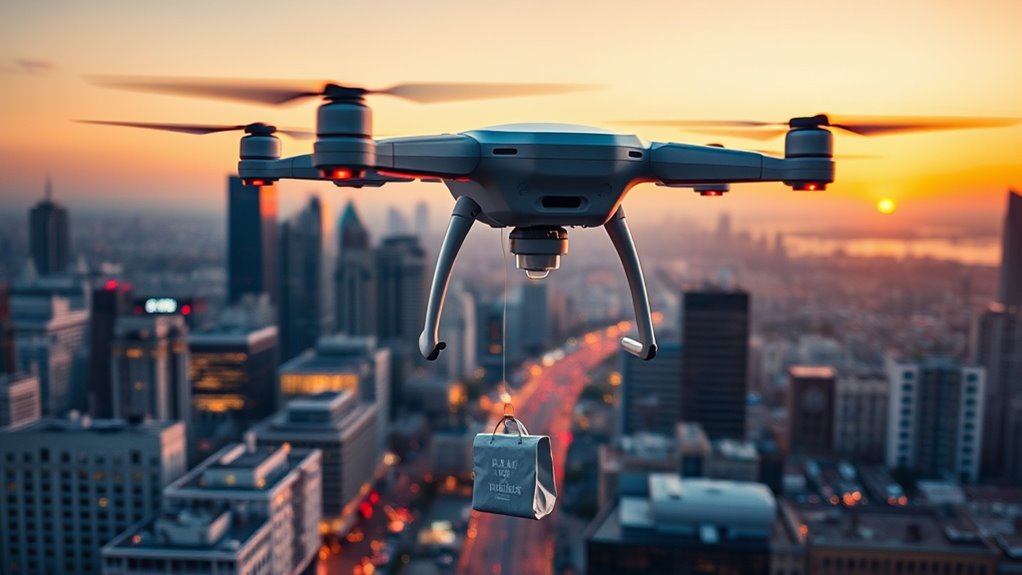
How did drone technology transform logistics? It all began with advances in autonomous wayfinding, allowing drones to fly complex routes without human control. This innovation reduces the need for manual pilot intervention, making deliveries faster and more reliable. Improved battery efficiency has also played a vital role, extending flight times and enabling drones to cover greater distances on a single charge. These technological leaps mean drones can now handle more deliveries per trip, increasing overall efficiency. As drones evolve, they become better suited to navigating urban environments and challenging terrains. The combination of autonomous wayfinding and enhanced battery performance has revolutionized last-mile logistics, making drone delivery a feasible and scalable solution for many industries. Additionally, the development of European cloud servers supports secure and sustainable data management for drone operations. This evolution sets the stage for a future where package delivery is quicker, smarter, and more sustainable. Furthermore, advancements in AI navigation systems continue to enhance drone precision and safety in complex environments. Technological innovations have been fundamental in driving these significant improvements in drone capabilities. Moreover, ongoing research into battery technology promises even longer flight durations and better energy management for future drone fleets.
compact drone for parcel delivery
As an affiliate, we earn on qualifying purchases.
As an affiliate, we earn on qualifying purchases.
Key Players and Innovators in Drone Delivery
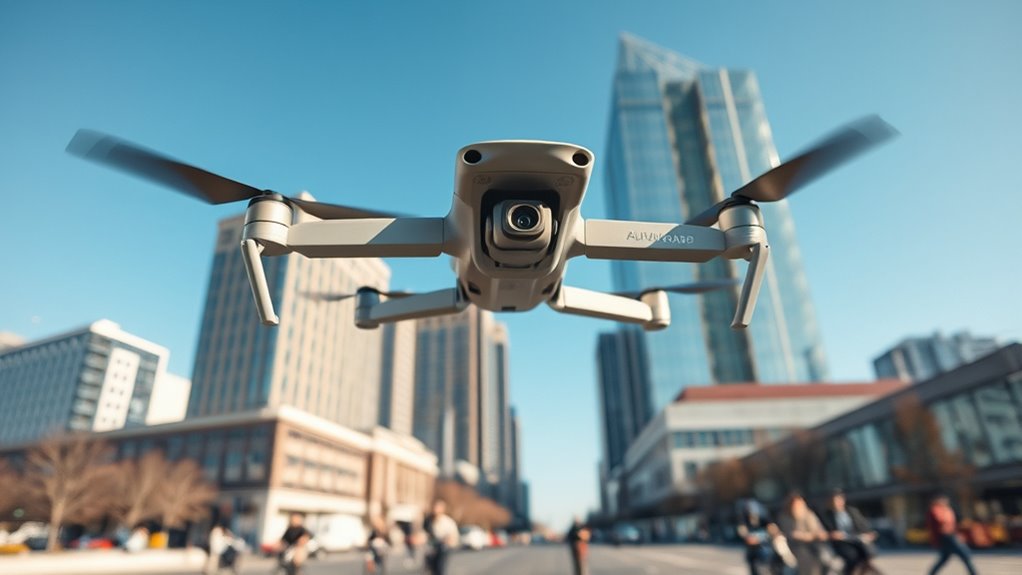
Several key companies and innovators are driving the development of drone delivery technology, transforming the landscape of logistics. Companies like Amazon, Wing, and UPS are leading the charge, investing heavily in drones that can navigate complex environments. As these drones become more common, concerns about drones and privacy arise, prompting innovators to prioritize aerial delivery ethics. You should know that these organizations are working to balance efficiency with responsible practices, ensuring that drone flights respect privacy rights and safety standards. These efforts include implementing privacy protections and developing regulations to manage drone operations responsibly. These key players are not only pushing technological boundaries but also shaping policies around aerial delivery ethics. Their efforts are *vital* in building public trust and establishing a sustainable, ethical framework for widespread drone delivery adoption.
As an affiliate, we earn on qualifying purchases.
How Drone Delivery Works: From Pickup to Drop-off
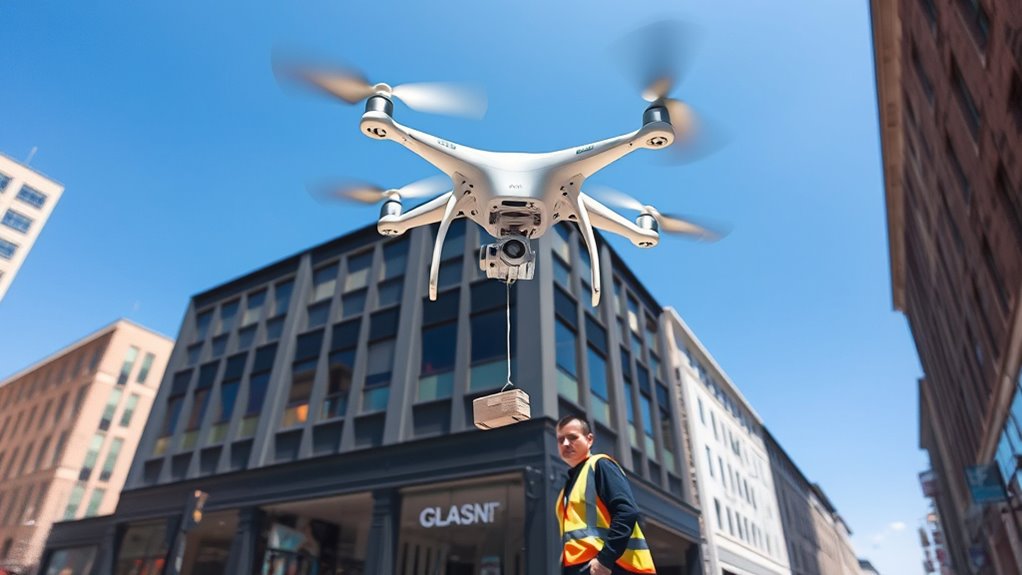
When your package is loaded onto a drone, the payload loading process guarantees it’s secure for the journey. The drone then navigates using GPS and sensors to reach its destination accurately. Once nearby, it drops off your package smoothly, completing the delivery from start to finish. To ensure safe and reliable deliveries, drone operators often utilize specialized equipment designed to protect packages during transit. Additionally, adherence to regulations and safety protocols is essential for maintaining trust and safety in drone delivery services. Proper load calculations and safe installation practices help optimize each delivery for efficiency and security. Incorporating proper maintenance of drone components further enhances reliability throughout the delivery process. Furthermore, implementing navigation and mapping explainers can improve route planning and delivery precision.
Payload Loading Process
The payload loading process begins as the drone arrives at the pickup location, where technicians or automated systems securely attach the package to the drone’s cargo hold. During cargo integration, the package is carefully positioned to ensure proper weight distribution and balance. Payload security is a top priority, so the package is fastened with locking mechanisms or secure straps to prevent shifting during flight. Advanced sensors verify that the payload is properly secured before the drone is cleared for departure. This process minimizes the risk of damage or loss mid-flight. Incorporating connected equipment can further enhance the safety and monitoring of payloads throughout the delivery process. Moreover, quality assessment during loading helps maintain high standards for package safety and integrity. The use of sensor technology ensures real-time feedback on payload conditions, further reducing potential issues. Additionally, implementing real-time monitoring can provide immediate alerts for any anomalies during loading or transit. Furthermore, employing automated verification systems can streamline the loading process and improve accuracy. Once the package is safely integrated, the drone’s cargo hold is sealed, readying it for the next phase of delivery. Efficient payload loading guarantees a smooth progression from pickup to flight, maintaining safety and reliability.
Navigation and Drop-off
Once the drone’s payload is secured and sealed, it activates its navigation system to determine the most favorable route to the delivery destination. Using advanced autonomous navigation, the drone calculates ideal paths, avoiding obstacles and restricted zones. As it approaches the delivery point, it switches to precise drop-off mode, ensuring the package lands exactly where intended. Drop off precision is critical, especially in crowded or hard-to-access areas, so the drone’s sensors and GPS work together to achieve accuracy. You’ll notice the drone slowing down and hovering steadily before releasing the package. This careful navigation and precise drop-off process minimizes errors and ensures your package arrives safely and exactly where you want it, making drone delivery efficient and reliable. Navigation technology plays a vital role in enabling these sophisticated operations.
As an affiliate, we earn on qualifying purchases.
Advantages of Using Drones for Package Delivery
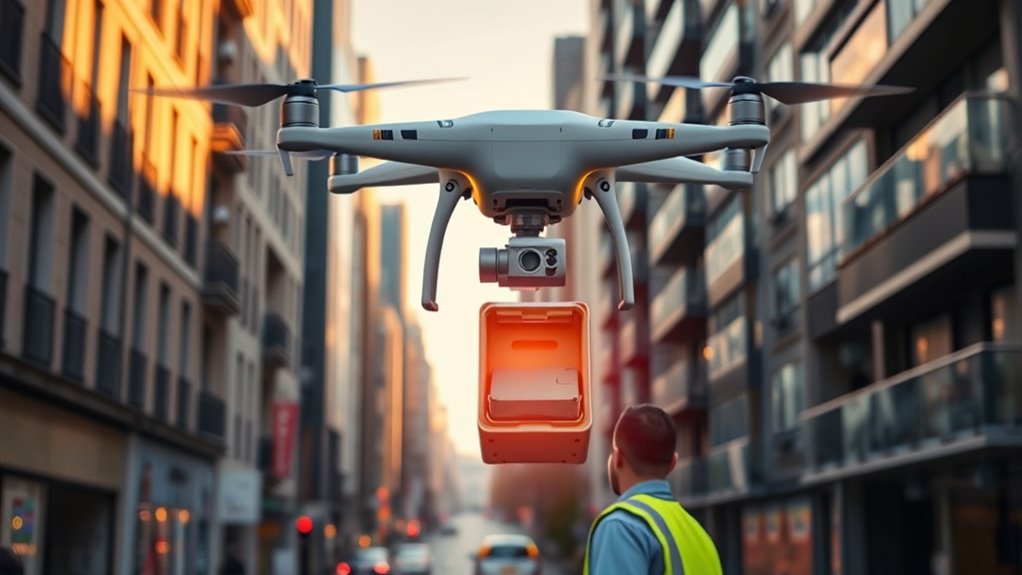
Using drones for package delivery offers several compelling advantages that can substantially improve the logistics industry. One key benefit is increased delivery speed, allowing packages to reach customers faster than traditional methods, especially in congested areas. Drones can bypass traffic and obstacles, ensuring quicker transit times. Additionally, deploying drones can lead to significant cost reduction by minimizing the need for extensive infrastructure like trucks and warehouses. This streamlined approach reduces labor and transportation expenses, making deliveries more affordable. Drones also enable on-demand delivery, providing greater flexibility for both businesses and consumers. Furthermore, the integration of aviation regulations and safety standards ensures the secure operation of drone delivery systems. As drone technology advances, regulatory frameworks are evolving to support widespread adoption, making it a more viable option for the future. Proper safety measures are essential to prevent accidents and protect public safety during drone operations. Incorporating reliable communication systems helps ensure continuous control and safety during flight. Additionally, advancements in autonomous navigation technology are improving the precision and reliability of drone deliveries. Overall, these advantages make drone delivery an innovative solution that can enhance efficiency, lower costs, and meet the growing demand for rapid, reliable service.
Challenges and Limitations Facing Drone Logistics
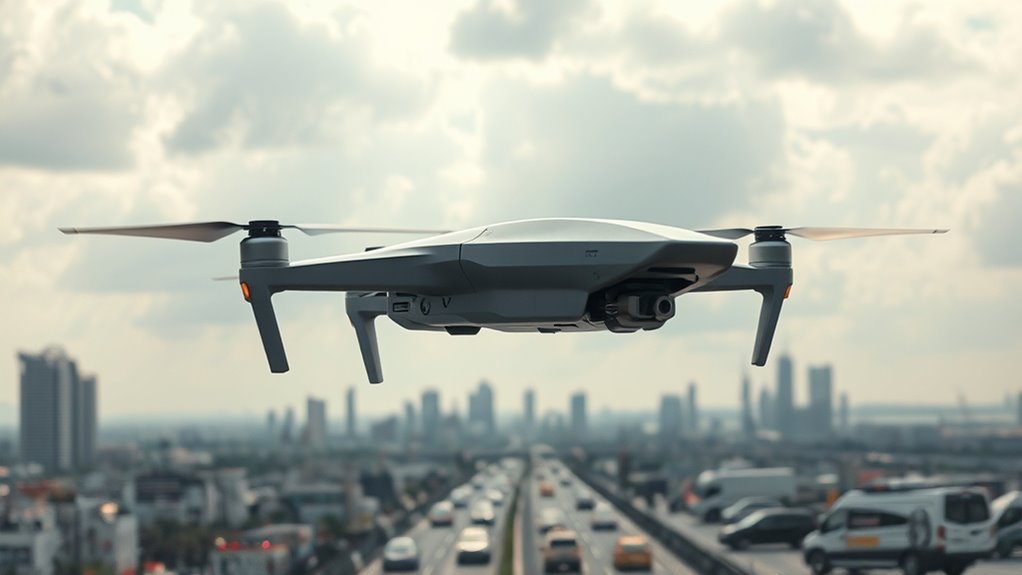
You’ll encounter regulatory hurdles that slow down drone deployment and raise safety concerns. Technical and environmental barriers, like limited battery life and weather sensitivity, also restrict operational reach. Addressing these challenges is essential for making drone logistics reliable and widespread. Vetted standards and clear policies will play a crucial role in establishing trusted drone delivery systems. Additionally, developing robust communication systems is vital to prevent potential failures during flight. Establishing standardized safety protocols will further enhance public trust and operational consistency. Moreover, implementing reliable power management solutions can improve drone endurance and safety during operations, especially considering the body of drones and their power needs.
Regulatory Hurdles Persist
Despite the rapid advancements in drone technology, regulatory hurdles continue to slow down widespread adoption. Air traffic management remains a major challenge, as authorities struggle to develop systems that safely integrate drones into existing skies without risking collisions or chaos. You’ll also face privacy concerns from communities worried about surveillance and data collection. Regulations around drone flight paths, altitude limits, and licensing are still evolving, creating uncertainty for companies enthusiastic to consider expanding. Navigating these laws requires time, resources, and often delays in deployment. Until regulations catch up with technological progress, drone delivery services will encounter obstacles in scaling up operations and gaining public trust. These regulatory challenges are critical barriers you need to consider before expecting drones to become a common sight in your neighborhood.
Technical and Environmental Barriers
Technical and environmental barriers considerably hinder the widespread adoption of drone logistics. One major issue is battery longevity; current batteries limit flight time, reducing delivery range and efficiency. You’ll find that extending battery life remains a key challenge for reliable, large-scale drone operations. Weather resilience is another critical concern—drones struggle with rain, strong winds, and extreme temperatures, risking crashes or delays. Unfavorable weather conditions can ground flights or compromise safety, making consistent deliveries difficult. Additionally, high winds or storms can damage drones or cause navigation errors. These technical limitations create significant hurdles for integrating drones into everyday logistics. Until advances in battery technology and weather-resilient design are achieved, widespread drone delivery will remain a distant goal.
Regulatory Frameworks and Legal Considerations
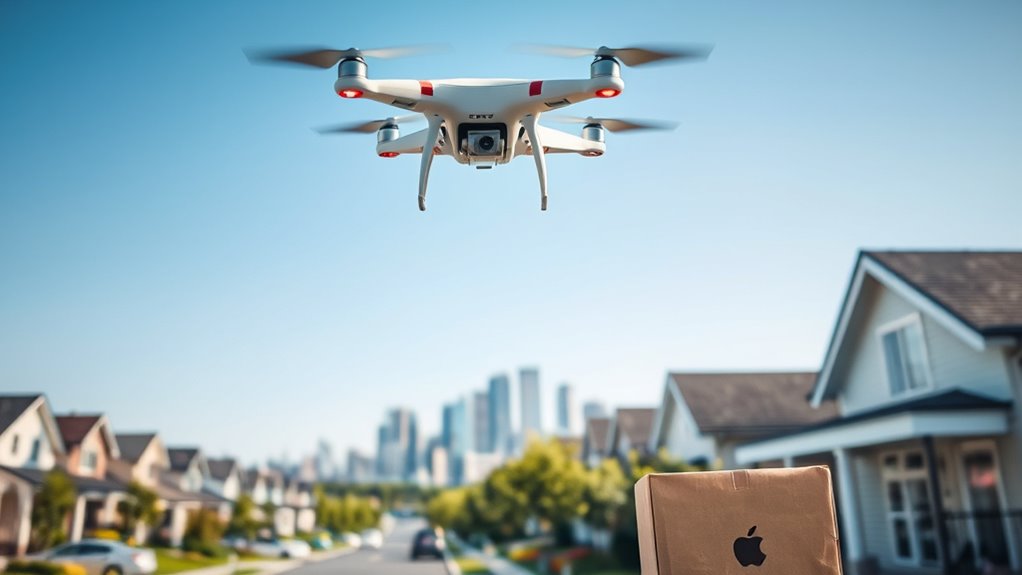
Traversing the regulatory landscape is essential for the successful deployment of drone delivery services. You need to understand privacy concerns, as drones collect data that could infringe on personal privacy. Regulations must address how data is stored, used, and protected to gain public trust. Liability issues also play a critical role; if a drone causes damage or injury, clear legal frameworks are necessary to determine responsibility. Governments are developing rules around flight restrictions, safety standards, and operator certifications to ensure responsible use. Without robust regulations, drone delivery efforts could face delays or bans. As you navigate this evolving legal environment, staying informed about local laws and engaging with policymakers will be key to integrating drones smoothly into everyday delivery systems.
Real-World Examples and Pilot Programs
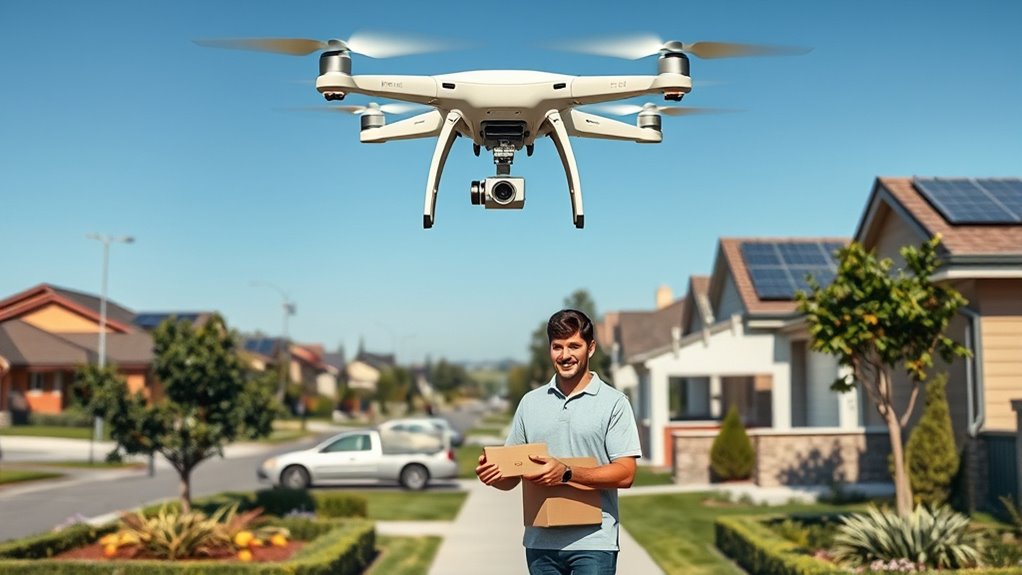
Many cities around the world are actively testing drone delivery through pilot programs to evaluate their practicality and safety. These initiatives aim to reduce urban congestion by replacing traditional delivery trucks with more efficient aerial routes. You can see examples in places like Dubai, where drones deliver medical supplies and food, or in parts of the U.S., where companies are experimenting with last-mile deliveries. These programs focus heavily on ensuring package security, implementing secure containers and precise GPS guidance to prevent theft or loss. By analyzing real-world results, cities gather valuable insights into how drones can complement existing delivery systems. These pilot programs help address challenges, such as navigating crowded airspace and maintaining secure deliveries, bringing us closer to widespread adoption.
The Impact of Drone Delivery on Urban and Rural Areas
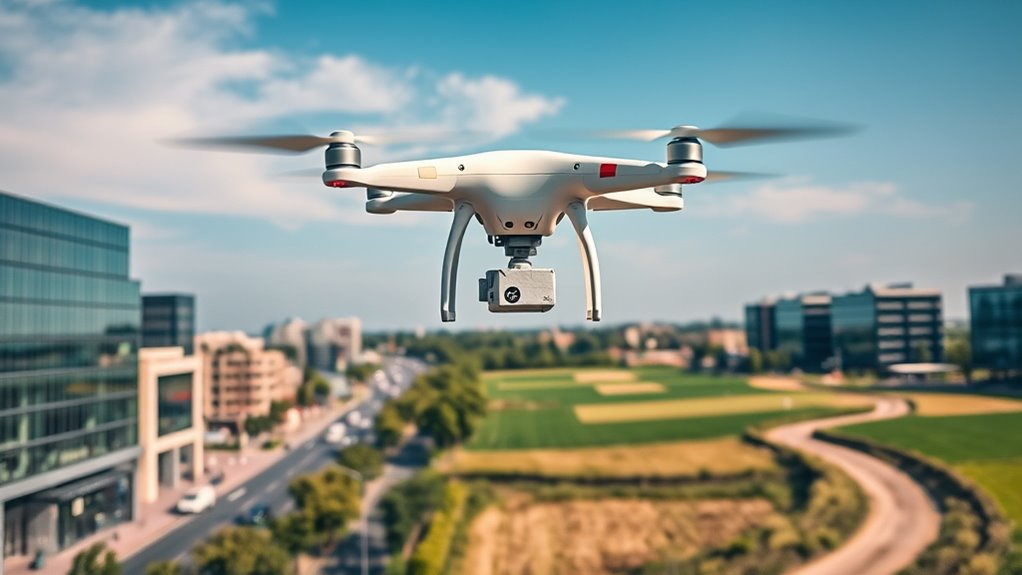
As cities and rural communities test drone delivery through pilot programs, it’s clear these services are starting to reshape how you receive goods. In urban areas, drone delivery can reduce traffic congestion and enhance community infrastructure by providing faster access to essentials. In rural zones, drones bridge gaps where traditional logistics struggle, improving healthcare and food access. However, these impacts depend heavily on maintaining drone safety standards to prevent accidents. Consider these points:
- Urban areas may see decreased delivery vehicle traffic, easing congestion.
- Rural communities could experience improved emergency response times.
- Infrastructure adjustments are necessary to facilitate safe drone landings.
- Strict regulations are crucial to ensure drone safety and protect residents.
Your community’s adaptation will determine how seamlessly drone delivery integrates into daily life.
Predictions and Trends Shaping the Future of Drone Delivery
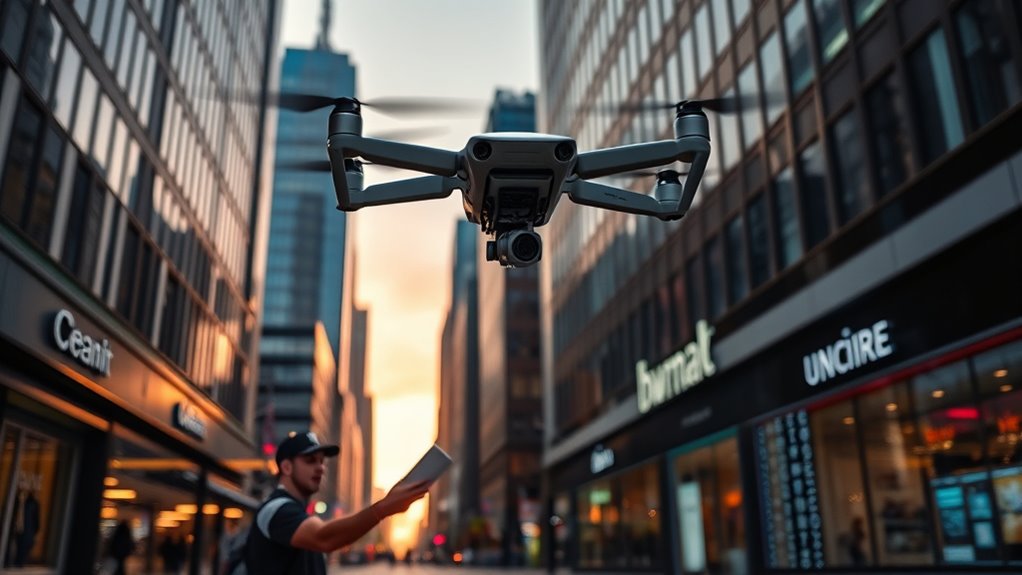
The future of drone delivery is poised for rapid growth, driven by technological advancements and evolving regulations. You can expect drones to alleviate urban congestion by reducing the number of delivery trucks on the roads, making cities more navigable and less polluted. Trends point toward increased use of autonomous navigation systems that improve safety and efficiency. Environmental sustainability will also play a big role, as drones offer a greener alternative to traditional delivery methods by lowering carbon emissions. Companies are investing in battery tech and lightweight materials to enhance energy efficiency. Regulations are gradually adapting to support widespread drone use, ensuring safety and privacy. Overall, these predictions highlight a future where drone delivery becomes integral to smart, eco-friendly urban logistics.
Frequently Asked Questions
How Secure Are Drone Delivery Systems Against Hacking or Theft?
Drone delivery systems have cybersecurity vulnerabilities that could be exploited by hackers, making theft or interference possible. While companies implement encryption and security protocols, there’s still a risk of privacy infringement if sensitive data is accessed or intercepted. You should stay aware of these risks and trust that ongoing improvements aim to secure the systems, but remember, no technology is completely foolproof against cyber threats.
What Costs Are Associated With Implementing Drone Delivery Services?
A penny saved is a penny earned, so understanding costs is vital. Implementing drone delivery services involves a detailed cost analysis, including drone hardware, maintenance, and licensing. You’ll also face operational expenses like pilot training, insurance, and technology upgrades. While initial investments can be high, long-term savings may offset costs. Carefully evaluate these factors to guarantee your drone delivery system remains efficient and financially sustainable.
How Do Weather Conditions Affect Drone Flight and Delivery Reliability?
Weather conditions considerably impact drone flight and delivery reliability. Rain interference can weaken signal signals and damage electronic components, causing delays or cancellations. Wind challenges make controlling drones difficult, increasing the risk of crashes or missed deliveries. You’ll need to take these factors into account when planning drone routes, as adverse weather can disrupt schedules. Proper weather monitoring and adaptive technology help mitigate these issues, ensuring safer, more reliable drone deliveries.
Are There Privacy Concerns Related to Drone Surveillance During Deliveries?
Privacy concerns and surveillance risks are real when it comes to drone delivery. You might worry about drones capturing images or videos without your consent, invading your privacy. While regulations aim to limit unnecessary surveillance, some drones could potentially collect data beyond delivery needs. It is crucial to stay informed about policies and advocate for strict privacy protections to guarantee drone use respects your personal space and security during deliveries.
How Will Drone Delivery Impact Traditional Logistics and Courier Jobs?
You’ll see traditional logistics and courier jobs change considerably as drone delivery takes off. With automation challenges like integrating new tech and maintaining safety, employment shifts are inevitable. Studies project up to 30% of delivery roles could be affected within the next decade. While drones boost efficiency, they may reduce some jobs, urging you to adapt skills for emerging roles in drone operation and logistics management.
Conclusion
Soon, you might find a drone delivering your package just as you step outside, a coincidence that feels almost futuristic. As technology advances and regulations catch up, drone delivery could seamlessly become part of your daily life. Imagine a world where your needs are met quicker, more efficiently, and with a touch of innovation nearby. It’s not just a possibility—it’s shaping up to be your new reality, right around the corner.
Halloween Picks
halloween
As an affiliate, we earn on qualifying purchases.