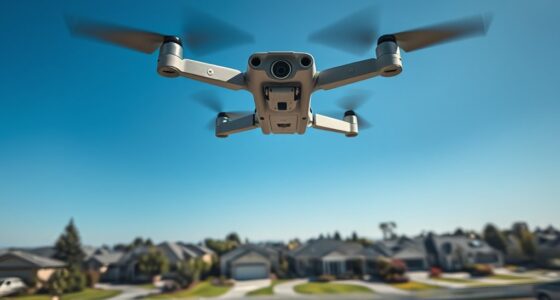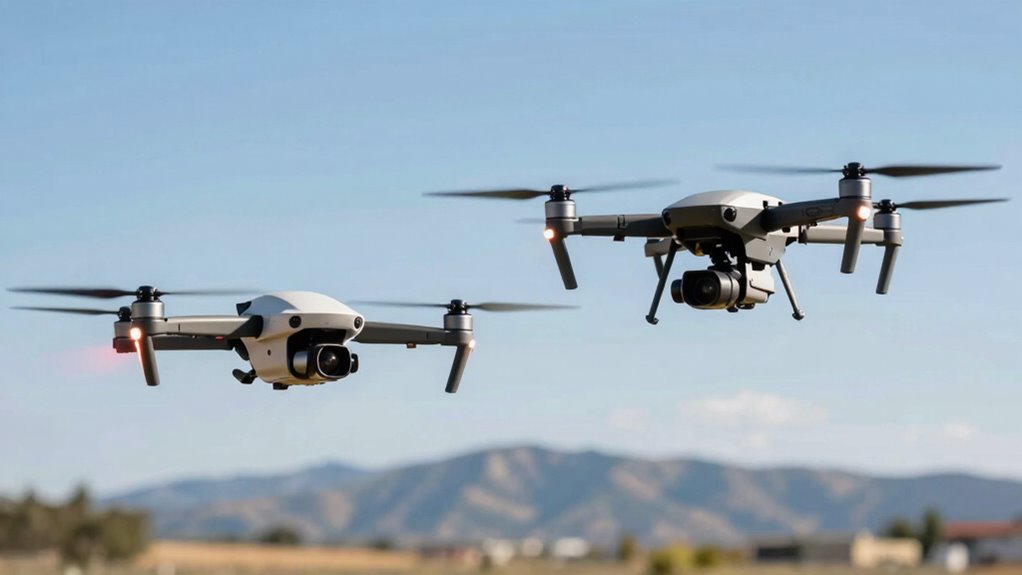

Camera drones are ideal if you want smooth aerial footage and stable flights for photography or videography, while racing drones are built for speed, agility, and quick maneuvers in competitions. Camera drones focus on camera quality, longer flight times, and easy controls, making them suitable for beginners and hobbyists. Racing drones prioritize durability, lightweight design, and responsive control for advanced pilots. To discover which fits your interests best, explore the key differences and what they can do for you.
Key Takeaways
- Camera drones focus on stability, camera quality, and footage, ideal for aerial filming and hobbyist videography.
- Racing drones prioritize speed, agility, and quick maneuverability for competitive high-speed flying.
- Camera drones are larger, heavier, and often include gimbals, while racing drones are compact, lightweight, and built for performance.
- Beginners can easily operate camera drones, whereas racing drones require advanced skills and precise control.
- Choose a camera drone for professional filming or hobbyist projects; opt for a racing drone if you seek speed and agility in racing.
Purpose and Main Uses of Each Type
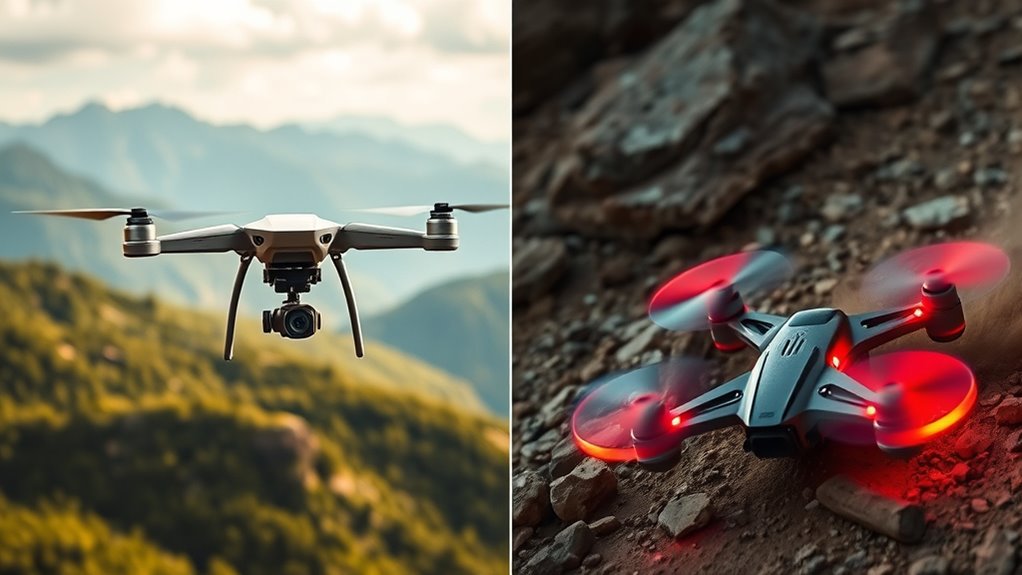
While both camera and racing drones are designed to fly, they serve very different purposes. Camera drones are built for aerial cinematography, allowing you to capture stunning landscapes and smooth footage from unique angles. They’re ideal for hobbyist exploration, giving you the opportunity to create professional-looking videos or photos with ease. These drones prioritize stability, camera quality, and flight time to guarantee your shots are crisp and steady. In contrast, racing drones focus on speed, agility, and quick maneuverability, appealing to enthusiasts who want adrenaline-pumping races and competitive thrills. Their main use isn’t for capturing footage but for pushing the limits of flight performance and mastering rapid, precise movements. Understanding these core differences helps you choose the right drone for your interests. Additionally, projector technology plays a significant role in enhancing the visual experience during your drone footage viewing sessions, especially when combined with advanced imaging techniques for clearer, more detailed visuals.
Design and Build Differences
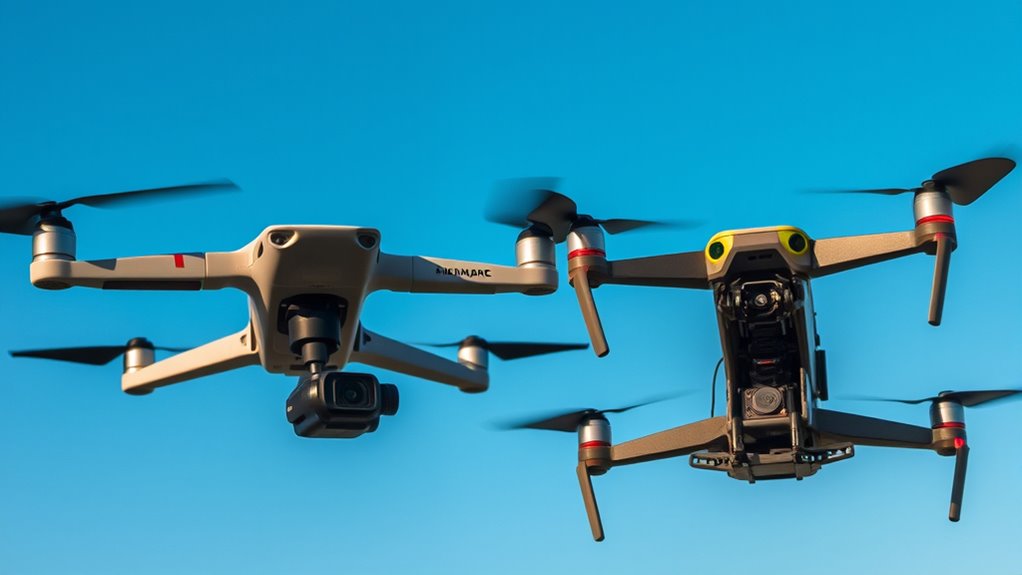
You’ll notice that camera drones often use lightweight, sturdy materials like carbon fiber to keep weight down, while racing drones prioritize durability with more robust frames. Camera mounts are designed for stability and easy adjustments, whereas racing drones focus on minimalism and quick maneuverability. Size and weight vary considerably, with camera drones generally being larger and heavier, and racing drones optimized for speed and agility. Additionally, ventilation considerations can impact drone performance, especially in high-performance racing models. Proper airflow management is essential to prevent overheating during intense flights, ensuring consistent operation and longevity of the components. Good airflow is especially important because thermal regulation helps maintain optimal performance in high-stress situations, which can be affected by the drone’s design and build choices.
Frame Materials and Structure
The choice of frame materials and structure considerably influences a drone’s performance, durability, and weight. Camera drones often use lightweight foam structures for their affordability and ease of customization, which helps keep weight down for better flight times. Racing drones, on the other hand, typically feature frames made from carbon fiber, known for its high strength-to-weight ratio and durability under intense impacts. Carbon fiber frames provide rigidity and stability necessary for high-speed maneuvers, while foam structures prioritize affordability and simplicity. The structural design also varies, with racing drones favoring streamlined, aerodynamic shapes to minimize drag, and camera drones opting for more protective frames that safeguard delicate equipment. Your choice depends on whether you prioritize speed, durability, or ease of repair. Additionally, material selection plays a crucial role in balancing weight and resilience according to your specific flying needs.
Camera Mounting Mechanisms
Camera mounting mechanisms differ substantially between drone types, reflecting their specific needs for stability, accessibility, and protection. For aerial photography, especially on hobbyist drones, mounts are designed to keep cameras steady and minimize vibrations, ensuring clear shots. These mounts often use gimbals or shock absorbers to stabilize the camera during flight. In contrast, racing drones prioritize speed and agility, so their camera mounts are lightweight and simple, often with quick-release features for easy adjustments or repairs. Camera positioning is critical for both types but varies in complexity. Hobbyist drones focus on flexible, secure mounts that accommodate different camera sizes, while racing drones favor minimalistic designs that reduce weight without sacrificing camera safety. Your choice depends on your drone’s primary purpose and desired camera stability.
Size and Weight Variations
Different drone types prioritize different design considerations when it comes to size and weight, especially for their camera mounts. For aerial photography, lightweight frames help improve stability and flight time, allowing smooth footage. In contrast, racing drones focus on being compact and nimble, minimizing weight to maximize speed and agility. Heavier drones, whether for high-quality cameras or rapid maneuvering, may struggle with battery life or responsiveness. Here’s a quick comparison:
| Drone Type | Size & Weight Focus | Best For |
|---|---|---|
| Camera Drones | Larger, stable, lightweight for footage | Aerial photography |
| Racing Drones | Small, lightweight for speed | Drone racing |
| Hybrid Drones | Balance of size and weight | Versatile applications |
Camera Capabilities and Video Quality
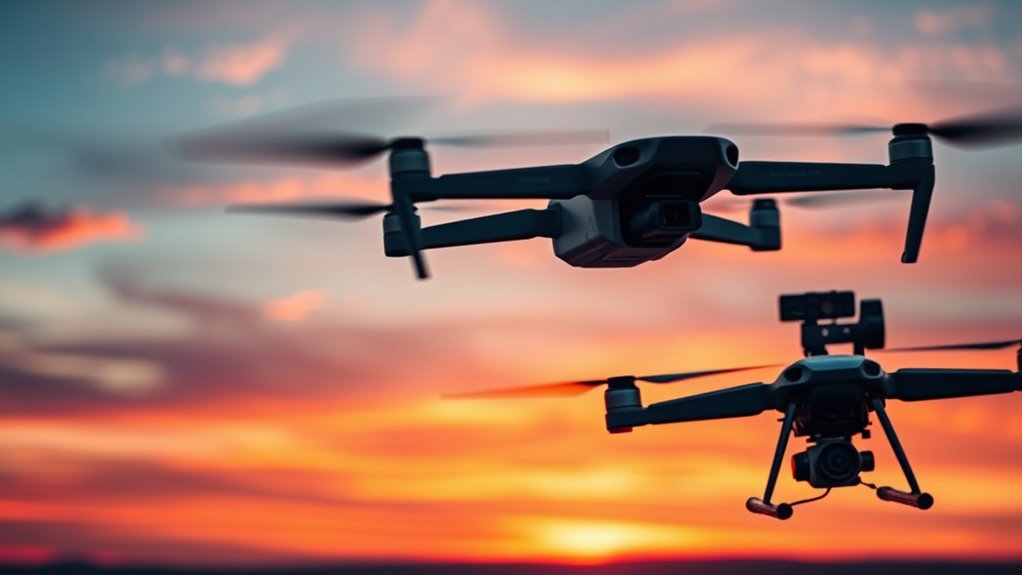
Your drone’s camera quality can make or break your footage, so pay attention to resolution and clarity. Good stabilization and a quality gimbal guarantee smooth, professional-looking videos even in shaky conditions. Understanding these features helps you choose the right drone for capturing stunning visuals. Additionally, consider the Free Floating capabilities of the drone’s camera system to ensure optimal performance in various outdoor environments.
Video Resolution and Clarity
When it comes to capturing clear, detailed footage, the resolution capabilities of drones play a crucial role. Higher resolution cameras deliver sharper images, making them ideal for aerial photography and producing cinematic footage that impresses viewers. Camera drones typically feature 4K or even 6K video resolution, allowing you to record intricate details and vibrant colors. This clarity enhances the overall quality of your footage, whether you’re capturing sweeping landscapes or close-up shots. Racing drones, on the other hand, prioritize speed and agility over video quality, often recording in lower resolutions. If your goal is to create professional-looking videos with crisp detail and stunning clarity, a camera drone with high-resolution capabilities is your best choice.
Stabilization and Gimbal Quality
Stabilization and gimbal quality are critical factors that directly influence the smoothness and professionalism of your drone footage. A well-designed gimbal ensures steady shots even in turbulent conditions, thanks to advanced gimbal stabilization. Camera mounting options impact how securely your camera is held and how effectively it can absorb vibrations. Higher-quality gimbals provide better control, reducing jitters and shake, which is essential for capturing cinematic videos. Here’s a quick comparison:
| Feature | Camera Drones | Racing Drones | Ideal For |
|---|---|---|---|
| Gimbal Stabilization | Usually optional, basic stabilizers | Rarely included, minimal stabilization | Casual filming, photography |
| Camera Mounting | Secure, adjustable mounts | Basic or no mounts | Professional footage |
| Video Quality | 4K and higher options | Limited, lower quality | Cinematic productions |
| Vibration Control | Advanced in camera drones | Minimal in racing drones | Smooth footage |
| Purpose | Filming, photography | Racing, agility | Action capturing |
Speed and Agility Performance
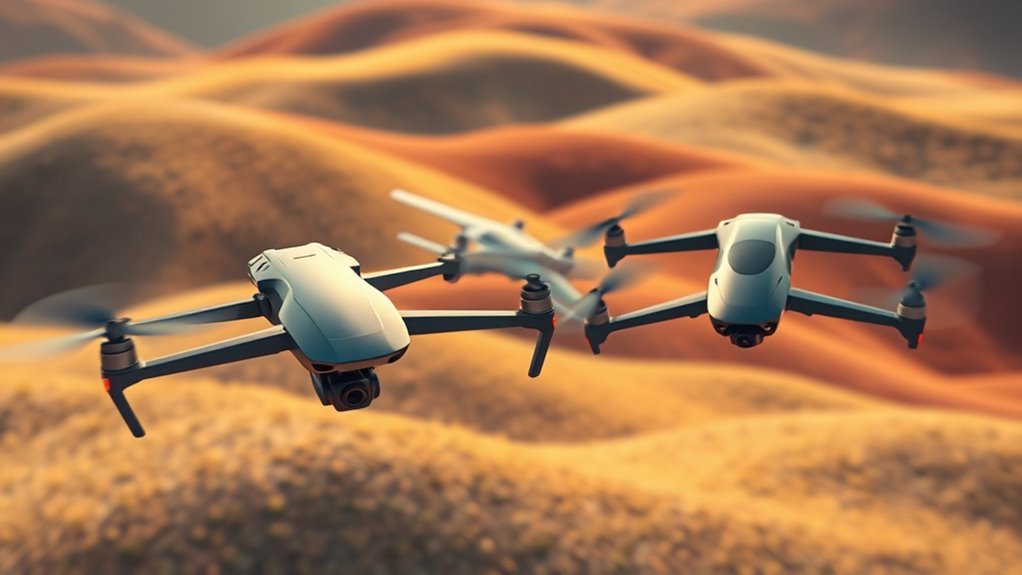
While both camera drones and racing drones are designed for speed, their agility capabilities differ markedly. Camera drones prioritize stable flight and smooth footage, which limits their quick maneuvers. In contrast, racing drones excel in rapid turns, sharp climbs, and agile movements, making them perfect for drone racing and quick aerial photography adjustments. Their lightweight build and powerful motors allow for rapid acceleration and precise control during high-speed chases or tight turns. If you want adrenaline-fueled drone racing or dynamic aerial photography with quick repositioning, racing drones deliver unmatched agility. Camera drones, however, focus more on steady flight paths and smooth footage. Understanding these differences helps you choose the right drone for your needs, whether for fast-paced racing or steady aerial captures.
Control Systems and User Interface

The control systems and user interfaces of drones directly influence how easily you can harness their speed and agility. Camera drones often feature user-friendly interfaces with touchscreen controls and simple autopilot features, making them accessible for beginners. In contrast, racing drones rely heavily on manual controls, giving you precise, real-time input for sharp maneuvers. Autopilot features in camera drones help with stable flight, allowing you to focus on capturing shots without constant adjustments. Racing drones, however, require you to develop quick reflexes and tight control over throttle, pitch, and yaw. The interface differences reflect each drone’s purpose: ease of use for photography and agility for racing. Your choice depends on whether you prefer intuitive controls or full manual command.
Skill Level and Learning Curve
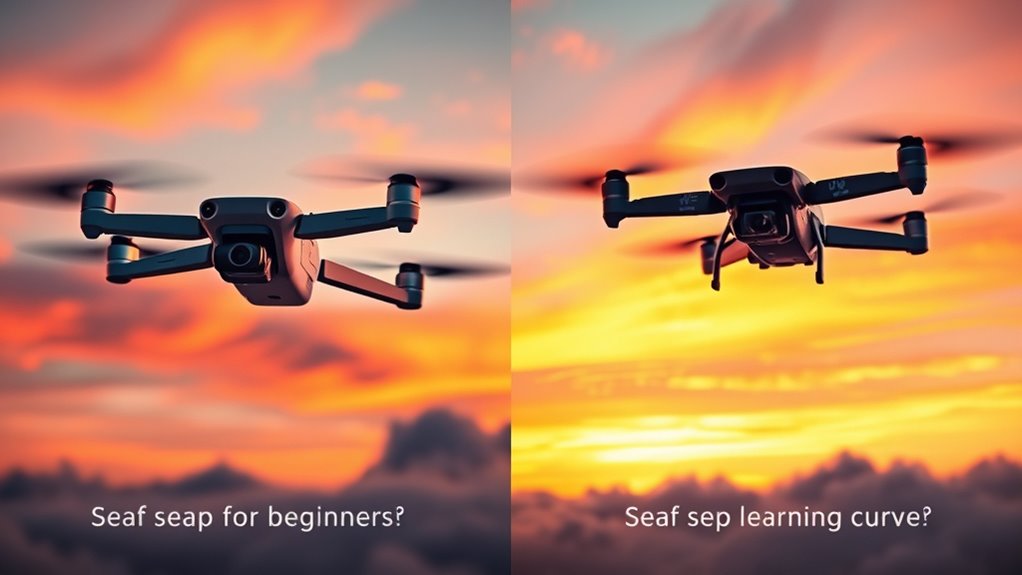
Choosing between camera and racing drones depends heavily on your skill level and how quickly you’re willing to learn. Camera drones generally have lower experience requirements, making them ideal for beginners, while racing drones demand more advanced skills and quicker reflexes. Your skill development will vary based on the drone type you choose.
Choose the right drone type to match your skill level and learning pace for optimal flying experience.
Consider these points:
- Racing drones have a steeper learning curve, requiring rapid reflexes and precise control.
- Camera drones allow for steady flight, helping beginners build foundational skills.
- Experience requirements for racing drones include understanding aerodynamics and flight physics.
- Progression in skill level with racing drones accelerates as you master complex maneuvers.
Choose wisely to match your current abilities and desired learning pace.
Cost and Maintenance Expenses

Cost and maintenance expenses vary considerably between camera and racing drones, influencing your overall investment. Camera drones tend to have higher initial costs, but their components, like batteries, often last longer, reducing frequent replacements. Their longer battery life means fewer charges and less wear over time, which can lower maintenance costs. In addition, durability of components in camera drones generally results in fewer repairs over the drone’s lifespan. Furthermore, component quality significantly impacts longevity and repair frequency, making it an important factor to consider. In contrast, racing drones usually have shorter battery life, demanding more frequent replacements, which adds to ongoing expenses. Racing drones also face more intense wear and tear due to high-speed crashes, increasing replacement costs for parts like propellers and motors. While racing drones might seem cheaper upfront, their maintenance can add up quickly. Additionally, market volatility can impact the availability and pricing of replacement parts, further affecting ongoing costs. Being aware of part availability can help you better plan for long-term maintenance needs. Your choice depends on balancing initial investment with ongoing expenses, considering how often you’ll need to replace batteries and repair or replace damaged parts. Moreover, understanding component durability can help you better plan for long-term maintenance needs.
Legal Regulations and Flying Restrictions

Understanding legal regulations and flying restrictions is essential for drone enthusiasts, as these rules vary widely depending on your location and drone type. Familiarize yourself with airspace regulations to avoid penalties or safety issues. Always check for specific flying permissions before taking off, especially near airports or restricted zones. Here are key points to contemplate:
Understanding drone laws and restrictions helps ensure safe, legal flying experiences.
- Know the local altitude limits for your drone type.
- Obtain necessary permits for commercial or filming purposes.
- Respect no-fly zones, such as military areas or crowded events.
- Keep your drone within visual line of sight at all times.
Which Drone Suits Your Interests and Goals

Selecting the right drone depends on your specific interests and what you want to achieve with it. If you’re into capturing stunning aerial photography, a camera drone offers stability, high-quality images, and easy controls. On the other hand, if adrenaline and speed excite you, drone racing provides agility, quick reflexes, and competitive fun. Consider these aspects:
| Purpose | Features | Ideal For |
|---|---|---|
| Aerial Photography | High-resolution camera, stabilization | Landscape, videography |
| Drone Racing | Fast speed, maneuverability | Competitive racing |
| Both | Versatility, customizable options | Hobbyists exploring both |
Decide based on your goals—whether capturing breathtaking shots or pushing the limits in racing—to choose the drone that best fits your passion.
Frequently Asked Questions
Can Both Drone Types Be Used Indoors Safely?
Yes, both drone types can be used indoors safely if you prioritize indoor stability and safety precautions. You should choose smaller, lightweight drones with propeller guards to prevent accidents. Keep the space clear of obstacles, avoid high speeds, and monitor the drone constantly. Following these precautions guarantees safe indoor flying, whether you’re using camera or racing drones, and helps you enjoy flying without risking damage or injury.
What Are the Best Accessories for Each Drone Type?
Think of accessories like tools in your drone’s toolbox. For camera drones, get camera stabilizers to guarantee steady shots and extra batteries for longer flights. Racing drones benefit from propeller guards, which protect them during high-speed crashes. Both types thrive with spare propellers for quick replacements. These accessories help you maximize performance and safety, turning your drone experience into a smoother, more confident flight every time.
How Long Does Battery Life Typically Last for Each?
You’ll find that camera drones typically offer a flight duration of around 20 to 30 minutes, thanks to their larger batteries designed for longer shoots. Racing drones usually have shorter battery longevity, around 5 to 10 minutes, because of their high-speed motors and lightweight build. To maximize your flying time, always carry extra batteries and monitor your drone’s power levels before each flight.
Are There Specific Weather Conditions That Affect Performance?
Weather conditions definitely impact drone performance, especially with weather sensitivity and wind resilience. You’ll notice that rain and strong winds can cause crashes or reduce stability, making flying tricky. Camera drones tend to be more affected by weather changes because they prioritize stable footage, while racing drones are built for resilience against wind. Always check the weather forecast before flying to guarantee safety and peak performance.
How Do Maintenance Needs Differ Between Drone Types?
You’ll find that camera drones typically need less frequent maintenance, focusing mainly on battery care and camera lens cleaning. Racing drones, however, demand more attention to repair requirements, especially around motor and propeller wear due to high-speed use. Both types require proper battery maintenance like regular charging and storage, but racing drones often need quicker repairs after crashes, making their upkeep more intensive.
Conclusion
Whether you’re capturing stunning footage with a camera drone or racing through obstacles with a racing drone, each offers a unique thrill. While camera drones let you explore creativity and scenery, racing drones satisfy your need for speed and adrenaline. Choose based on your passion—do you want to record breathtaking views or conquer challenging courses? Whichever you pick, embrace the challenge and enjoy every moment, because both types discover exciting adventures in the skies.