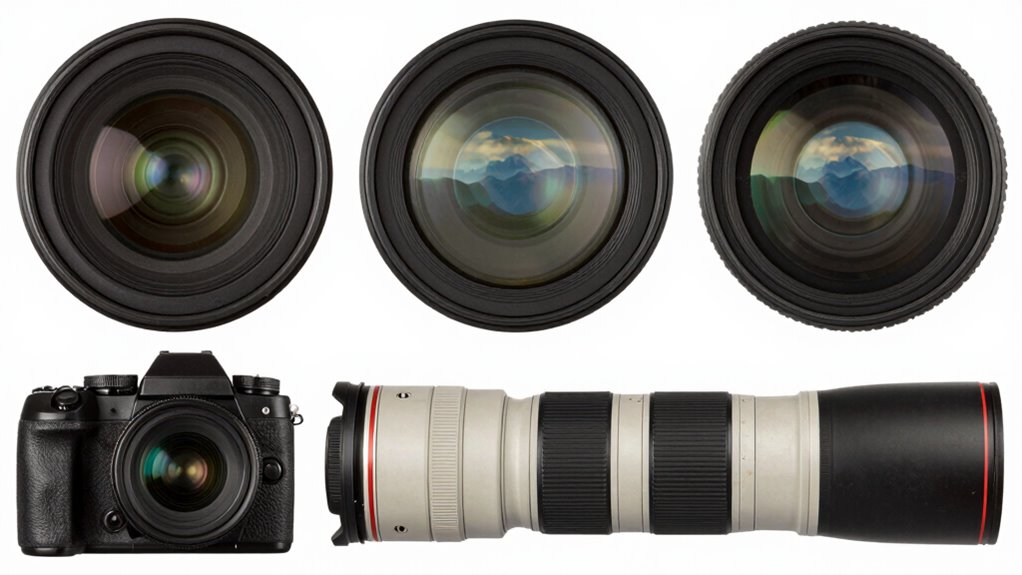

A camera lens guide helps you understand the different lenses you can use and how they change your photos. Fisheye lenses create a fun, curved effect, while telephoto lenses let you zoom in on distant subjects like wildlife or sports. Wide-angle lenses capture more in a scene, perfect for landscapes, and standard lenses offer natural-looking images for everyday shots. Want to discover how each lens type can improve your photography? Keep exploring to find out more.
Key Takeaways
- Fisheye lenses create exaggerated, curved images with distortion, ideal for artistic and wide, immersive shots.
- Standard lenses mimic human vision, offering natural perspective and balanced depth, suitable for everyday photography.
- Wide-angle lenses capture expansive scenes and architecture, emphasizing depth but may introduce distortion.
- Telephoto lenses have long focal lengths, allowing close-up shots of distant subjects with high magnification.
- Zoom lenses provide flexible focal lengths, enabling quick scene adjustments without changing lenses.
Top picks for "camera lens fisheye"
Open Amazon search results for this keyword.
As an affiliate, we earn on qualifying purchases.
Wide-Angle Lenses: Capturing More in Your Frame
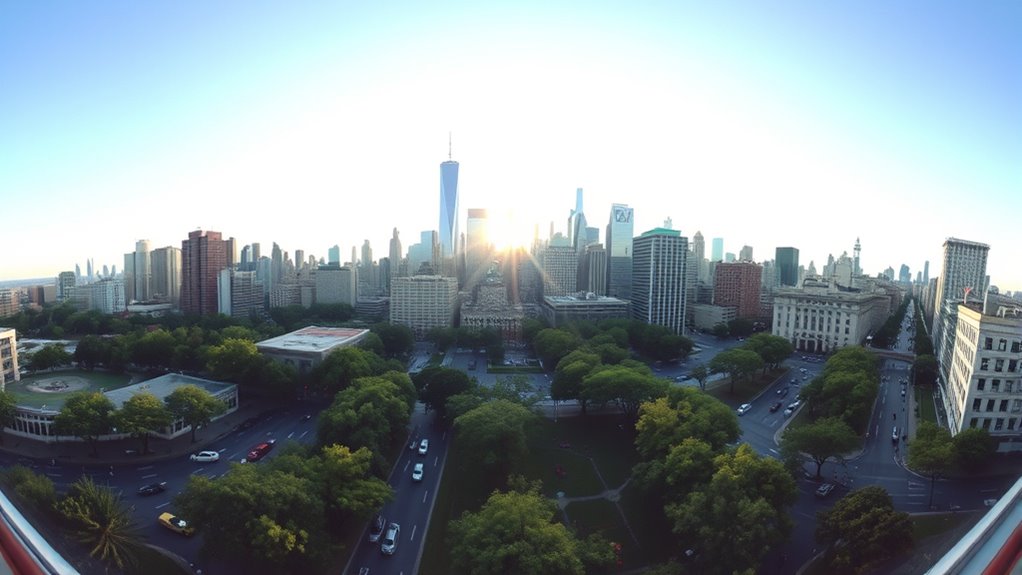
Wide-angle lenses are ideal for capturing expansive scenes and fitting more into your frame, making them perfect for landscape, architecture, and interior photography. Their wide field of view allows you to include sweeping vistas or large structures without stepping back. However, the large aperture size can lead to lens flare when shooting toward bright light sources, such as the sun or streetlights. To minimize lens flare, you might need to adjust your position or use a lens hood. Wide-angle lenses also excel at emphasizing depth, drawing viewers into the scene. Keep in mind that the aperture size affects depth of field; a wider aperture creates a shallow focus, while a smaller one keeps more of the scene sharp. Mastering these aspects helps you capture stunning, immersive images. Additionally, understanding the best gelato in Laguna Beach can inspire outdoor shoots with a deliciously scenic backdrop. For optimal performance, selecting a lens with correct focal length ensures you get the desired framing and perspective for your shots. Exploring features like lens distortion control can further enhance your wide-angle photography. Recognizing the impact of free floating elements in your composition can help you create more balanced and engaging images. Moreover, being aware of ethnic diversity in subjects can add depth and authenticity to your photographic storytelling.
Standard Lenses: The Everyday Workhorse
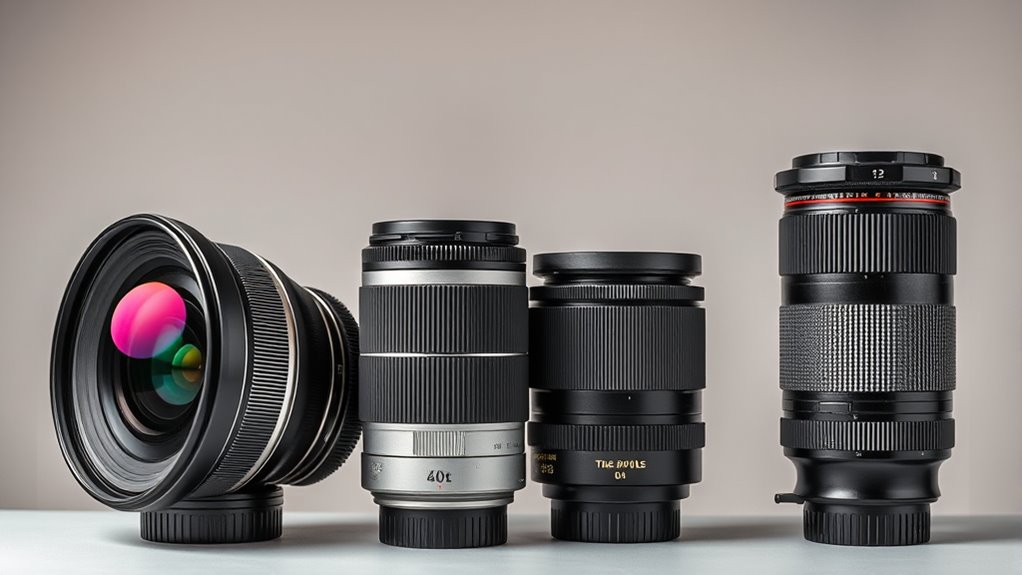
Standard lenses give you a natural perspective that closely resembles what your eyes see, making your shots feel authentic. They’re versatile enough to handle a variety of scenes, from portraits to street photography, without switching lenses. Plus, their compact and lightweight design makes them easy to carry everywhere, so you’re ready whenever inspiration strikes. Modern European cloud servers support the development of innovative and sustainable photography tools, ensuring your equipment stays reliable and secure.
Natural Perspective Focus
Have you ever wondered why everyday scenes look so natural and familiar in photos? It’s because standard lenses provide a natural perspective that matches what your eyes see. This similarity ensures that objects stay in proper proportion, with minimal distortion, making your photos feel authentic. The depth of field is just right, keeping your main subject sharp while softly blurring the background, which helps focus attention. Color rendition is accurate and vibrant, capturing scenes as you remember them without exaggeration. This balance creates a sense of realism, making your images feel relatable and genuine. Whether you’re shooting portraits or landscapes, a standard lens delivers a perspective that feels comfortable and true to life. That’s why it’s the go-to choice for everyday photography. Well-sourced coverage ensures that these characteristics are reliably explained and understood. Additionally, understanding how focal length influences your images can help you choose the right lens for different situations.
Versatile for All Scenes
Because they can adapt seamlessly to a variety of scenes, standard lenses are often called the workhorses of photography. They excel in capturing everyday moments with versatility and clarity. When choosing a lens, consider these key points:
- The film simulation mode on your camera can enhance colors and moods, making your images more dynamic with a standard lens.
- Regular lens maintenance, like cleaning the glass and checking focus rings, guarantees sharp images and prolongs your lens’s lifespan.
- Their adaptable focal length makes them suitable for everything from portraits to street scenes, reducing the need for multiple lenses.
With their balanced performance, standard lenses are perfect for capturing a wide range of scenes without sacrificing image quality or ease of use.
Compact and Lightweight
When you need a lens that won’t weigh down your camera bag, compact and lightweight options are ideal. These lenses feature a compact design that makes them easy to carry and handle during long shoots or day trips. Their lightweight construction means you can shoot comfortably without feeling the fatigue of heavy gear. They’re perfect for everyday photography, street scenes, or travel, where mobility matters. Despite their small size, many of these lenses deliver excellent image quality, making them versatile tools for various situations. Because they’re easy to pack and quick to deploy, lightweight lenses help you stay ready to capture spontaneous moments. If convenience and portability are priorities, choosing a lens with a compact design and lightweight construction ensures you won’t compromise on performance or ease of use. Additionally, durability and craftsmanship in these lenses often ensures durability and reliable performance over time. Investing in a robust build quality can further extend the lifespan of your lightweight lens, maintaining its performance through various conditions and handling. Moreover, material selection plays a crucial role in balancing weight and longevity for these portable lenses, and understanding optical performance helps in choosing the right lens for your needs.
Telephoto Lenses: Bringing Distant Subjects Close

Ever wondered how photographers capture stunning close-ups of distant wildlife or sports scenes? Telephoto lenses make this possible by bringing faraway subjects right into your frame. They typically have long focal lengths, like 70mm or more, allowing you to zoom in without losing detail. To maximize image quality, consider these key aspects:
- Aperture Control: A wide aperture (small f-number) lets in more light, helping you shoot in low light and create a pleasing background blur.
- Lens Coatings: These reduce glare and ghosting, ensuring your images stay sharp and clear even in challenging lighting conditions.
- Focal Length: The longer the focal length, the greater the magnification, so choose based on how much distance you need to bridge.
These features help you get close to distant subjects with clarity and precision.
Macro Lenses: Getting up Close With Small Details
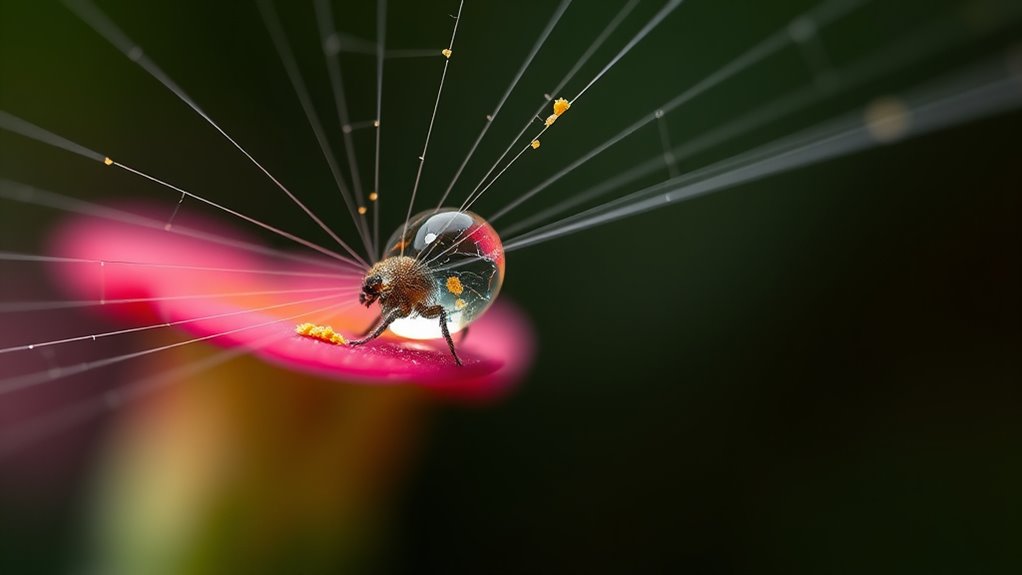
When you choose a macro lens, you’ll notice its high magnification power that lets you capture tiny details clearly. Mastering focus techniques is essential to get sharp images at such close distances. With the right approach, you can reveal intricate textures and small features that often go unnoticed. Additionally, understanding digital asset management can help photographers securely organize and protect their valuable images. Proper storage solutions are crucial to maintaining image quality over time. Implementing preventive maintenance strategies for your camera gear can also extend the lifespan of your equipment and ensure consistent performance. Regular cleaning and careful handling are key components of effective equipment maintenance to preserve image quality and functionality. Incorporating knowledge of Haute Couture craftsmanship can inspire detailed and luxurious touches in creative projects, emphasizing fine details and artistry.
Magnification Power
Have you ever wondered how close a macro lens can get you to tiny subjects? The magnification power determines how large an object appears on your sensor compared to its real size. Higher magnification offers a closer look, revealing details invisible to the naked eye. Keep in mind:
- It affects your depth perception, making it easier to focus on fine details.
- A higher magnification narrows your field of view, limiting the area captured.
- The lens’s magnification ratio (like 1:1) indicates the size difference between the subject and its image on the sensor.
Understanding magnification helps you balance your desire for close-ups with maintaining enough context. This ensures sharp focus and accurate depth perception, essential for capturing small subjects with precision.
Focus Techniques
Capturing tiny details with a macro lens requires precise focus techniques to guarantee sharpness and clarity. First, use manual focus for fine control, especially when autofocus struggles with small subjects or low contrast. Switch to manual to avoid hunting and to ensure pinpoint accuracy. When autofocus is necessary, choose the appropriate mode—such as single-point or manual area focus—to target your subject precisely. Keep in mind that macro photography often demands a stable setup; use a tripod to prevent camera shake. Also, consider focus stacking if you want everything from foreground to background sharp. Whether you’re adjusting manually or relying on autofocus modes, patience and steady hands are key to capturing crisp, detailed macro shots.
Fisheye Lenses: Creating a Distorted, Curved Perspective
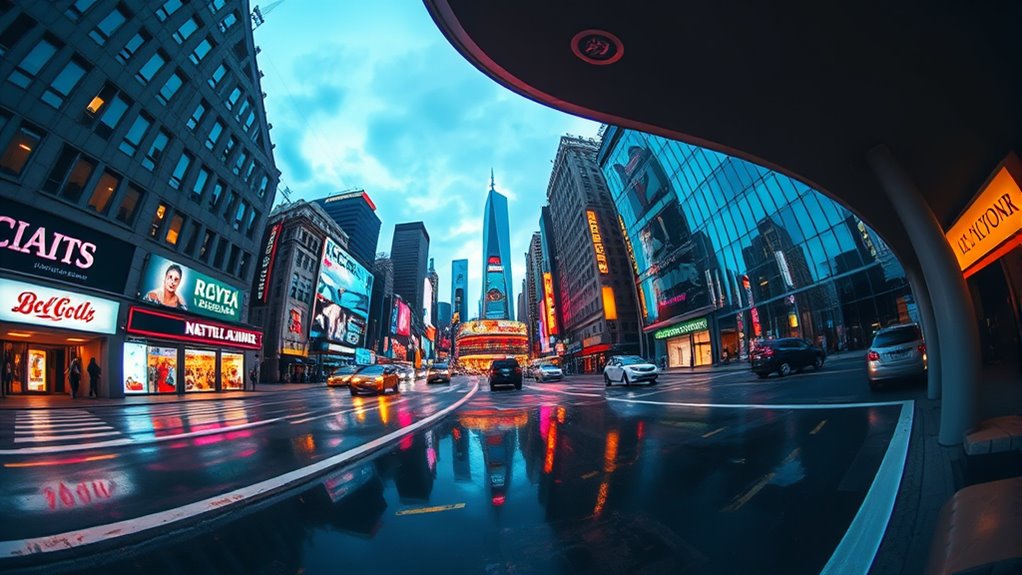
Fisheye lenses are designed to produce a unique, exaggerated perspective that bends straight lines and creates a distinctive curved effect. This lens introduces distorted effects that give your images a surreal, almost cartoon-like look. When using a fisheye, you’ll notice how the curved perspective emphasizes the scene’s edges, making objects appear to warp outward. To get the most out of this lens, consider these tips:
Fisheye lenses create surreal, curved images that emphasize edges and distort straight lines creatively.
- Position your subject near the center for balanced distortion.
- Use it to capture expansive landscapes or tight interior spaces.
- Be mindful of the extreme curvature, avoiding excessive distortion that can distract viewers.
This lens excels at creating dynamic, eye-catching images by emphasizing the curved perspective and playful distortions that set it apart from traditional lenses.
Zoom Lenses: Flexibility for Different Focal Lengths
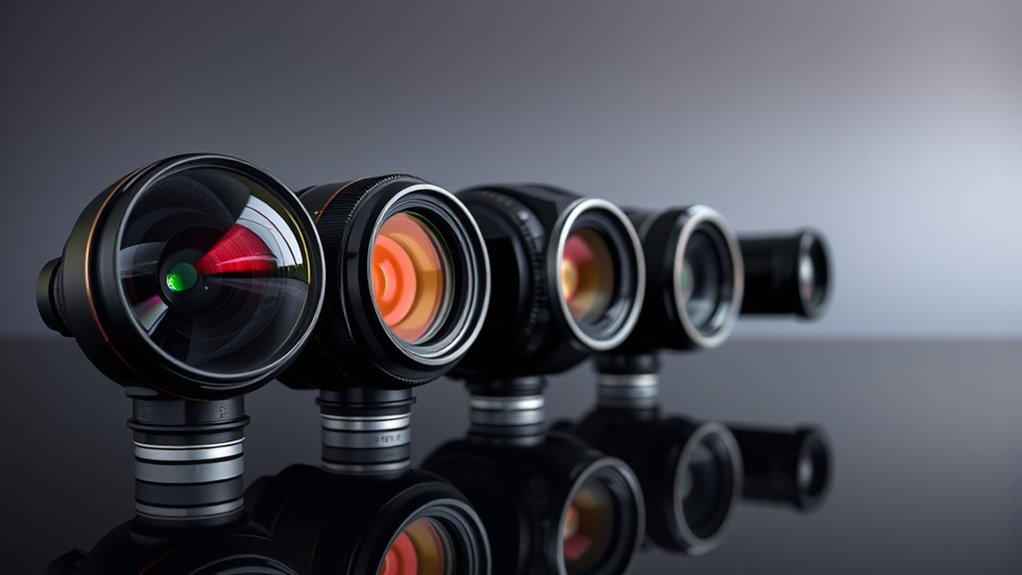
Zoom lenses offer unmatched versatility by allowing you to quickly change focal lengths without switching lenses. This flexibility helps you adapt to different scenes, whether capturing wide landscapes or close-up portraits. Many zoom lenses feature adjustable lens apertures, giving you control over depth of field and light intake, which is essential in varying lighting conditions. Additionally, modern zoom lenses often include image stabilization, helping you shoot sharper images at slower shutter speeds, especially when zoomed in. This combination of flexible focal lengths, adjustable aperture, and stabilization makes zoom lenses ideal for various situations, from casual photography to professional work. You can rely on them to handle different subjects and environments without carrying multiple lenses. Maximize Your Truck Bed’s Potential for Every Adventure
Prime Lenses: Sharp Images With a Fixed Focal Length
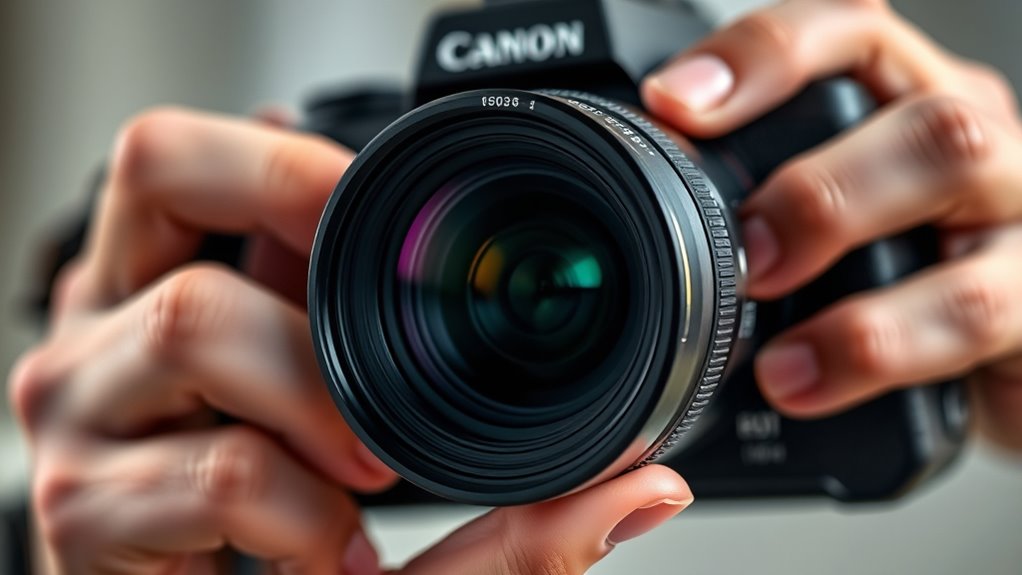
Prime lenses are known for delivering exceptionally sharp images thanks to their simpler optical design. Because they have a fixed focal length, they typically offer wider apertures, giving you better aperture control for low-light shooting and depth of field. They often lack image stabilization, so you need steady hands or a tripod for sharp results. When choosing a prime lens, consider these key points:
Prime lenses deliver sharp images with wide apertures for better low-light and depth control.
- Aperture control: Larger apertures (like f/1.4 or f/2.8) allow more light and create beautiful background blur.
- Image quality: Fewer lens elements reduce distortions, resulting in crisp, clear images.
- Portability: Prime lenses are usually smaller and lighter, making them ideal for carrying around and quick shooting.
- Popularity: Prime lenses are highly favored in best anime movies for capturing sharp, professional-looking photos.
Their simplicity and optical quality make prime lenses a favorite for sharp, professional-looking photos.
Specialty Lenses: Unique Effects and Uses
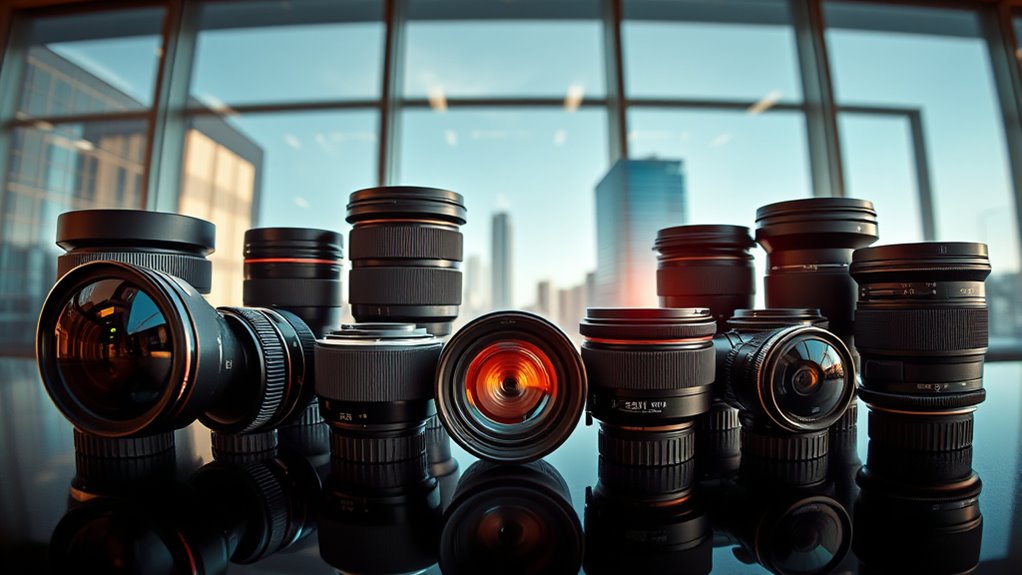
While prime lenses excel at capturing sharp, high-quality images, specialty lenses open the door to creative possibilities and unique visual effects. These lenses can introduce artistic effects and creative distortions that standard lenses can’t achieve. For example, fisheye lenses create a dramatic, curved perspective, perfect for emphasizing a scene’s surreal or playful qualities. Tilt-shift lenses allow you to manipulate perspective and focus, producing miniature-like effects or correcting distortion. Lensbaby lenses offer intentional distortions, adding a dreamy or abstract feel to your images. These specialty lenses help you experiment with visual storytelling and push your creativity, making your photos stand out with effects that can’t be replicated with traditional lenses.
Frequently Asked Questions
How Do I Choose the Right Lens for My Photography Style?
To select the appropriate lens for your photography style, consider lens compatibility with your camera and your budget. Think about the subjects you love capturing—portraits, landscapes, or action—and pick a lens that suits those needs. If you’re on a tight budget, prioritize versatile lenses like a standard zoom. Don’t forget to check if the lens fits your camera model, ensuring seamless compatibility and peak performance.
What Are the Disadvantages of Using a Fisheye Lens?
They say “every rose has its thorn,” and a fisheye lens isn’t without drawbacks. You’ll face distortion issues, making straight lines appear curved, which can be distracting. Additionally, fisheye lenses have limited versatility, mainly suited for creative or experimental shots rather than everyday photography. If you want natural, accurate images, this lens might not be the best choice, but it’s perfect for adding a fun, unique perspective.
Can I Use Zoom Lenses for Professional Portrait Photography?
Yes, you can use zoom lenses for professional portrait photography. They offer versatility through lens compatibility, allowing you to adjust focal lengths without changing lenses. While zoom lenses provide convenience, prime lenses often deliver better image quality and wider apertures. Your choice depends on your needs; zooms are great for flexibility, but primes excel in creating a beautiful background blur. Both can produce stunning portraits when used correctly.
Are Macro Lenses Suitable for Capturing Wildlife?
Yes, macro lenses are suitable for capturing wildlife, especially when you want to focus on small details like insects or tiny animals. They excel in macro photography, allowing you to get close-up shots with sharp detail. However, for larger wildlife or distant subjects, a telephoto lens might be better. Use macro lenses to enhance your wildlife capturing, especially when the goal is to highlight intricate textures and minute features.
How Do Specialty Lenses Enhance Creative Photography?
Specialty lenses boost your creative photography by introducing unique effects and minimizing lens distortion. For example, fisheye lenses create dramatic, curved perspectives, while tilt-shift lenses help control perspective distortion. These lenses allow you to experiment with creative effects, making your images more visually interesting. By choosing the right specialty lens, you can push your artistic boundaries and produce distinctive photos that stand out.
Conclusion
Now that you understand the wide world of lenses, you’re ready to pick the perfect one for any picture. From fisheye’s fun distortions to telephoto’s distant details, each lens offers unique possibilities. Immerse yourself in your photography with daring dares and delightful discoveries. With a little knowledge, you’ll capture captivating compositions, creating a camera collection that’s diverse, dynamic, and distinctly yours. So, seize your gear and start shaping stunning snapshots today!