Home security has shifted from basic CCTV systems, which relied on wired connections and manual monitoring, to sleek smart cameras with AI features and wireless connectivity. Today, you can access live footage remotely, get instant alerts, and enjoy smarter threat detection with automated responses. These advancements make your security more reliable and user-friendly. If you’re curious about how these innovations can protect your home better, there’s more to discover below.
Key Takeaways
- CCTV systems have evolved from analog to digital, offering higher resolution and remote access capabilities.
- Smart cameras incorporate AI, advanced analytics, and wireless connectivity for enhanced threat detection and automation.
- CCTV relies on wired setups with fixed placement; smart cameras provide flexible installation and integration with smart home systems.
- Modern security tech emphasizes real-time alerts, remote monitoring, and automated responses, improving overall home safety.
- Innovations like AI, nanotechnology, and cloud storage have significantly enhanced the reliability and functionality of current home security solutions.
Top picks for "cctv smart camera"
Open Amazon search results for this keyword.
As an affiliate, we earn on qualifying purchases.
The Origins and Evolution of CCTV Systems
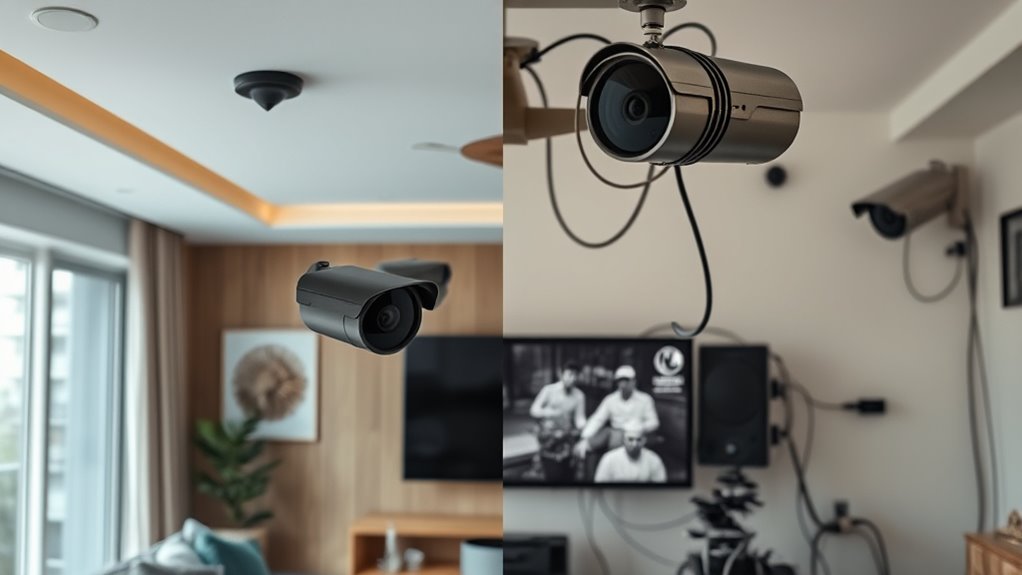
CCTV systems have come a long way since their inception, transforming security from manual patrols to automated surveillance. Historical milestones marked this evolution, starting with the introduction of closed-circuit television in the late 1940s for military and industrial use. The 1960s saw the first public surveillance systems, while the 1970s brought the first video recorders, enabling footage review. Technological breakthroughs, like the advent of CCTV cameras with improved resolution and remote monitoring capabilities, pushed the technology forward. The shift from analog to digital systems in the late 20th century revolutionized security, making it more efficient and accessible. These milestones laid the foundation for today’s advanced surveillance solutions, setting the stage for innovations like smart cameras that integrate artificial intelligence and internet connectivity. Additionally, the development of European cloud solutions has enhanced data storage and management, ensuring more secure and sustainable surveillance infrastructures. The integration of digital and internet-enabled systems has further advanced surveillance capabilities, providing real-time analytics and remote access, which are now standard features in modern security setups. Moreover, the increasing adoption of energy-efficient and smart technology has contributed to reducing the environmental impact of surveillance systems while enhancing their functionality.
Key Features of Traditional CCTV Surveillance
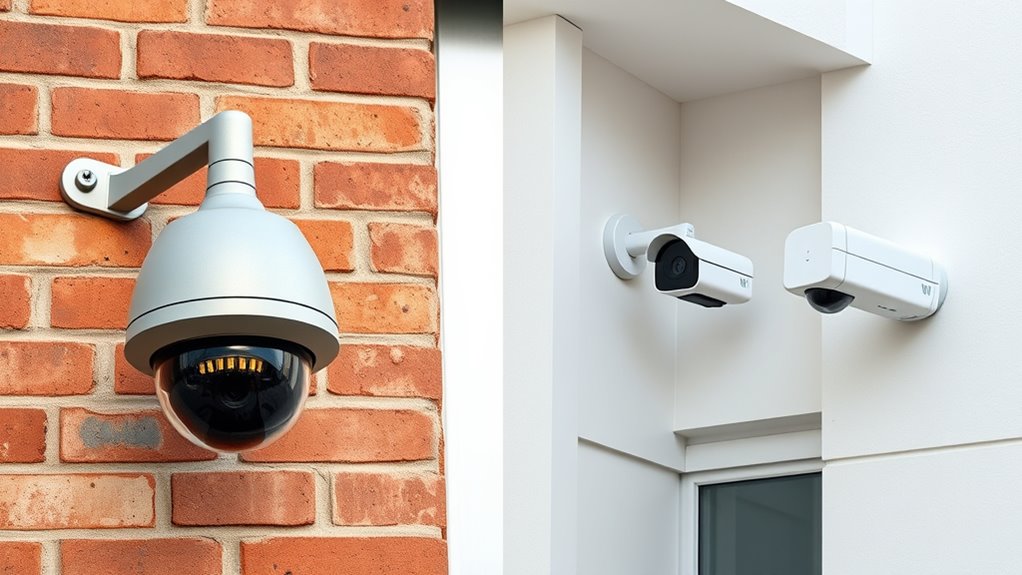
Traditional CCTV surveillance systems rely on fixed cameras connected to a central recording unit, providing continuous monitoring of designated areas. These cameras are typically mounted in prominent locations, offering a broad view but limited flexibility. One key feature is their ability to record and store footage for later review, which can help with security investigations. Additionally, CCTV systems are often regarded as reliable security measures due to their consistent performance. However, privacy concerns often arise since footage is constantly recorded and stored, raising questions about data access and misuse. Installation costs can be significant because of the need for wiring, mounting equipment, and a dedicated space for the recording device. As technology advances, some CCTV systems now incorporate AI-powered features such as motion detection and analytics, enhancing their effectiveness and responsiveness. These innovations contribute to more efficient security management, making traditional CCTV systems more adaptable to modern needs. Furthermore, the integration of wireless technology has made these systems more flexible and easier to update or expand over time. Despite these costs, CCTV systems remain popular for their reliability and straightforward monitoring, making them a staple in many security setups. Moreover, the development of wireless and cloud storage options has begun to reduce installation complexity and improve access to footage from remote locations.
The Rise of Smart Camera Technology
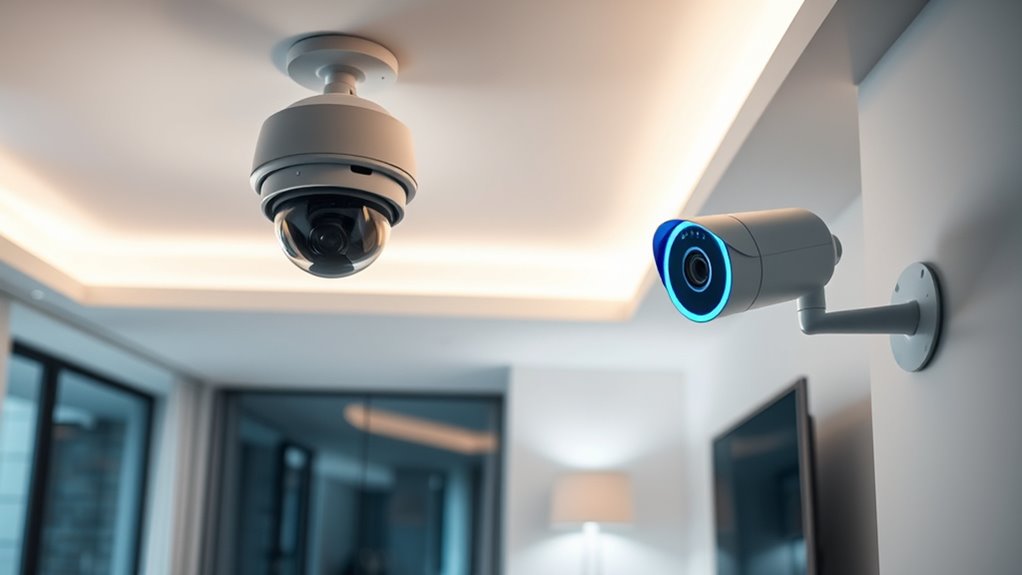
Smart camera technology is transforming surveillance with sharper video quality that makes details clearer. You also gain more options to connect and control your cameras, whether through Wi-Fi, cellular networks, or cloud services. These improvements make smart cameras more versatile and easier to integrate into your security setup. Incorporating load‑planning tools can help ensure your system is properly sized and reliable. Additionally, advancements in network security help protect your footage from unauthorized access, enhancing overall safety and privacy. Implementing power management solutions can further improve system stability and prevent outages during critical moments. Proper system design is essential to maximize reliability and security in your surveillance setup, especially when considering device placement for optimal coverage and minimal blind spots.
Enhanced Video Quality
As technology advances, smart cameras now deliver markedly sharper and clearer video footage than their traditional counterparts. You’ll notice enhanced resolution, making details easier to identify. Features like night vision let you see clearly in low light, while weatherproof design ensures durability outdoors. This combination improves overall security by providing crisp images regardless of conditions. Additionally, video quality has significantly improved, making it easier to distinguish important details during surveillance. The integration of advanced imaging techniques also enhances the ability to capture precise visuals in various environments, driven by technology innovations that continue to push the boundaries of security camera capabilities. The ongoing development of image processing algorithms further refines footage clarity and detail, contributing to more reliable security solutions. Moreover, ongoing sensor technology improvements help detect motion more accurately and reduce false alarms, further enhancing security effectiveness.
Increased Connectivity Options
The rise of smart camera technology has immensely expanded connectivity options, allowing you to integrate your security system seamlessly with other devices and platforms. Thanks to wireless networking, your smart cameras can connect easily without cumbersome wiring, giving you flexibility in placement. Modern internet protocols ensure secure data transmission, protecting your footage from unauthorized access. You can sync your cameras with smart home hubs, smartphones, or voice assistants, enabling real-time alerts and remote monitoring. This increased connectivity means your security system adapts to your lifestyle, providing greater convenience and control. With more options to connect and communicate, smart cameras make it easier than ever to keep an eye on your home, whether you’re across town or across the world. Enhanced security features further allow for remote updates and system management, ensuring your setup remains current and protected.
Comparing Connectivity and User Accessibility
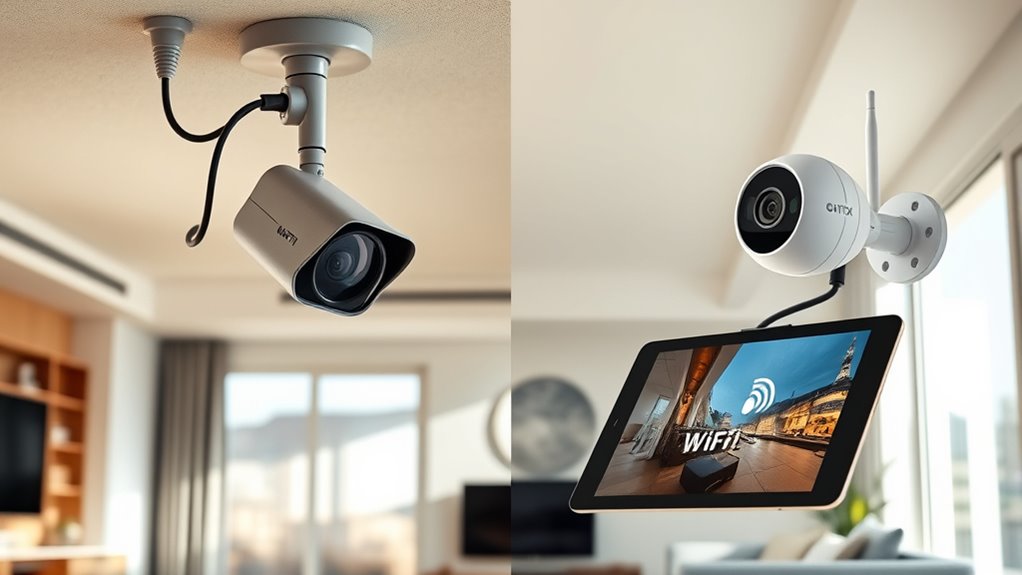
While both CCTV and smart cameras offer remote access, their connectivity options and user interfaces differ markedly. CCTV systems typically rely on wired connections, such as Ethernet or coaxial cables, which can limit flexibility but provide stable, high-quality video streams. In contrast, smart cameras connect via wireless networks, allowing you to place them anywhere within Wi-Fi range and access footage from your smartphone or tablet. User interfaces also vary: CCTV systems often feature dedicated monitors or desktop software, which can be less intuitive. Smart cameras usually come with user-friendly apps that make live viewing, playback, and notifications simple to navigate. This ease of access means you can monitor your home effortlessly, whether you’re at work or on vacation.
Advanced Analytics and Artificial Intelligence Integration
With advanced analytics and AI, your security system can spot threats in real time, allowing for quicker responses. Automated event responses mean you don’t have to be there to take action—alarms can sound or doors lock automatically. This integration enhances safety and efficiency, keeping your property protected around the clock. Additionally, implementing energyLast techniques can help optimize the performance of your reconditioned batteries used in security devices, ensuring reliable operation. Regular maintenance and visual cues can further improve system reliability and early detection capabilities, especially when combined with preventive measures informed by ongoing system analytics. Exploring Free Floating technology can also provide more adaptable and unobtrusive security solutions for modern homes. Proper ventilation considerations are essential to maintain system longevity and prevent overheating of high-tech components.
Real-Time Threat Detection
Advanced analytics and artificial intelligence (AI) are revolutionizing real-time threat detection in surveillance systems. With AI-driven motion detection, your cameras can instantly identify unusual activity, reducing false alarms and improving response times. These systems analyze patterns and behaviors in real time, alerting you immediately when a threat is detected. Integration with cloud storage ensures that footage is securely stored and accessible from anywhere, making remote monitoring seamless. AI algorithms continuously learn and adapt, enhancing accuracy and reducing unnecessary alerts. This combination of advanced analytics, motion detection, and cloud storage creates a smart, efficient security setup that proactively protects your home. You gain faster threat identification, better data management, and peace of mind knowing your system is always vigilant. Incorporating machine learning techniques allows the system to improve detection capabilities over time based on new data. By applying simple, room-by-room solutions, you can further streamline your security setup and make maintenance easier. Additionally, leveraging nanotechnology can improve sensor sensitivity and durability, ensuring your security system remains effective over time.
Automated Event Responses
Integrating AI-driven analytics into your surveillance system enables cameras to automatically respond to detected events, enhancing security efficiency. With advanced motion detection, your cameras can distinguish between human movement, animals, or environmental changes, reducing false alarms. This allows your system to trigger specific responses, like turning on lights, sounding alarms, or notifying you instantly. User customization lets you set specific rules for different scenarios, such as only alerting you during certain hours or when motion occurs in specific zones. This automation minimizes your need for constant monitoring, making your home more secure and responsive. By leveraging AI and analytics, your surveillance system becomes smarter, more adaptable, and tailored to your unique security needs.
Future Trends in Home Security Solutions
As technology continues to evolve, future home security solutions are poised to become smarter and more interconnected. You’ll see innovations like wireless power, eliminating the need for cumbersome wiring and making devices easier to install and maintain. Biometric access will also become more common, offering you secure, hands-free entry with fingerprint or facial recognition. These advancements will enable your security system to adapt seamlessly to your lifestyle, providing real-time alerts and remote management through your smartphone. Integration with smart home ecosystems will ensure your cameras, locks, and sensors work together effortlessly. Expect AI-driven analytics to detect unusual activity more accurately, reducing false alarms. Ultimately, these trends aim to make your home safer, more convenient, and more intuitive to manage.
Frequently Asked Questions
How Do Smart Cameras Impact Privacy Compared to CCTV?
Smart cameras raise more privacy concerns than CCTV because they connect to the internet, making data security vital. You might worry about unauthorized access or data breaches, risking your personal information. Unlike traditional CCTV, smart cameras often offer advanced features like remote monitoring and AI, but you need to guarantee proper encryption and privacy settings. Staying vigilant about privacy concerns helps protect your personal space and sensitive data effectively.
What Are the Cost Differences Between Traditional CCTV and Smart Cameras?
You’ll find that traditional CCTV systems usually cost less upfront, but smart cameras tend to be more expensive initially due to advanced features. Installation complexity varies—CCTV often needs professional setup, increasing costs, while smart cameras are usually easier to install yourself. Maintenance costs for CCTV are generally lower, but smart cameras might require subscriptions for cloud storage. Overall, consider your budget and tech needs to choose the most cost-effective option.
Can Smart Cameras Replace All Traditional CCTV Functions?
Smart cameras can’t fully replace all traditional CCTV functions yet. While they excel in video storage, remote access, and advanced surveillance coverage, they may lack the extensive wiring and continuous recording capabilities of traditional CCTV. You might find smart cameras ideal for specific areas, but for all-encompassing security, combining both ensures you get the best of video storage, surveillance coverage, and reliable monitoring across your entire property.
How Reliable Are Ai-Powered Security Features in Smart Cameras?
You’ll love how AI-powered security features like facial recognition and motion detection keep your home safer—most of the time. While they’re pretty reliable, don’t expect them to be perfect; sometimes they get it hilariously wrong, like mistaking your cat for an intruder. Still, with regular updates, you can trust these smart cameras to alert you quickly, making your home smarter—and a little more amusing.
Do Smart Cameras Require Professional Installation or Can They Be DIY?
Smart cameras are designed to be user-friendly, so you can typically do the installation yourself without professional help. The installation complexity is usually low, with straightforward setup instructions and minimal tools required. Most models come with clear guides or app-based setups, making it easy for you to connect and configure your camera. This DIY approach saves you time and money while ensuring your home security is up and running quickly.
Conclusion
So, after all this, it’s amusing how we started with bulky, wired CCTV cameras and now carry sleek smart cameras in our pockets. You’d think we’d be safer, but with AI and constant connectivity, maybe we’re just giving more opportunities for things to go wrong. Ironically, the very tech meant to protect us now leaves us more vulnerable—proof that sometimes, progress isn’t as straightforward as it seems. Stay alert, and don’t let your smart home outsmart you.