
To select your initial camera, begin by clarifying your photography objectives—whether you prefer landscapes, portraits, or casual shots—and contemplate sensor size for enhanced image quality. Establish a practical budget that encompasses lenses and accessories, then emphasize ease of use with intuitive controls and lightweight design. Decide between a compact camera or an interchangeable lens system based on flexibility and portability. Finally, verify compatibility and future expansion options to guarantee your gear evolves with your skills; learn more to make a confident choice.
Key Takeaways
- Define your photography goals and preferred subjects to choose a camera that suits your needs.
- Set a realistic budget considering sensor size, brand reputation, and additional accessories.
- Select an easy-to-use camera with intuitive controls and ergonomic design for a smoother learning curve.
- Decide between compact cameras for portability and interchangeable lens systems for flexibility and growth.
- Ensure compatibility with lenses, accessories, and future expansion options to maximize long-term value.
Understanding Your Photography Goals
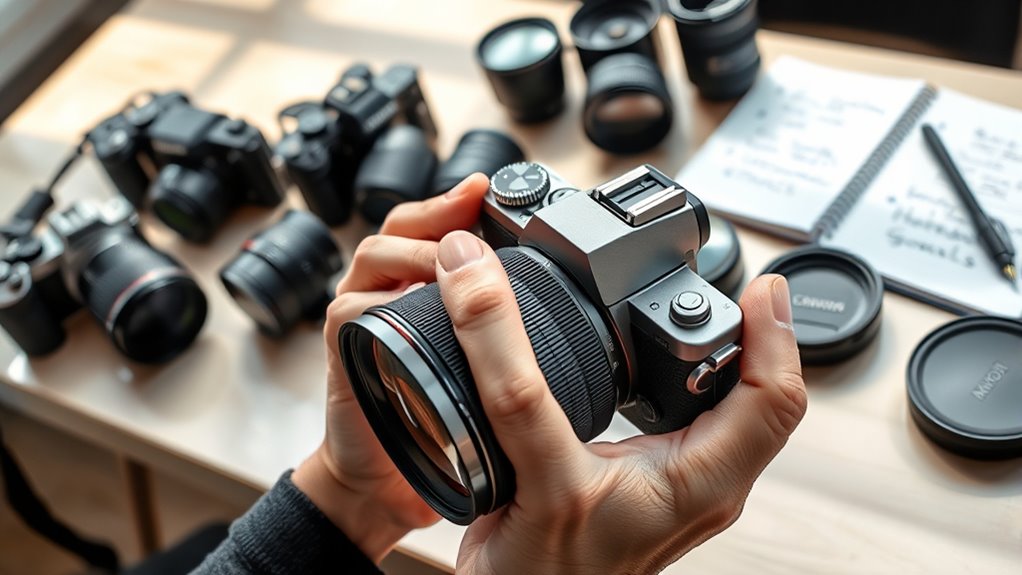
Before choosing your first camera, it’s essential to understand what you want to achieve with photography. Your goals will influence the right equipment, especially lens types and sensor sizes. If you aim to capture detailed landscapes or architecture, look for cameras with larger sensor sizes, like full-frame sensors, which provide better image quality and low-light performance. For versatile shooting, consider options with a variety of lens types—wide-angle, macro, or telephoto—depending on your interests. Knowing whether you want to take casual photos or pursue professional work helps determine the camera’s features. Clarifying your goals ensures you select a camera that aligns with your aspirations, making the learning process more enjoyable and setting a solid foundation for your photography journey. Additionally, understanding concepts like Color Accuracy can help you better grasp how different camera systems process and produce images, aiding in your decision-making process. Exploring sensor technologies can also give insight into how various cameras perform under different conditions, helping you make a more informed choice. Familiarizing yourself with camera ergonomics can improve your comfort and handling during extended shooting sessions. Gaining knowledge about water resistance and durability can be important if you plan to shoot in outdoor or challenging environments.
Considering Your Budget and Affordability
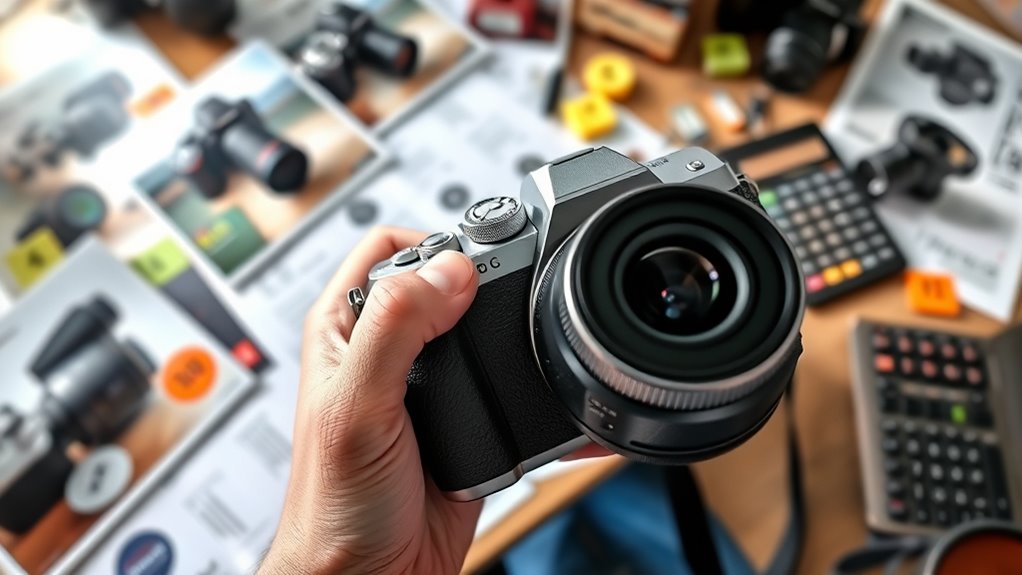
Your budget plays a essential role in choosing the right camera, so it’s important to set a realistic price range based on what you can afford. Consider how sensor size impacts image quality; larger sensors typically deliver better results but come at a higher cost. Brand reputation also matters, as trusted brands often offer durability and good customer support. To help you decide, review the table below:
| Price Range | Sensor Size | Brand Reputation |
|---|---|---|
| Under $500 | Compact or small sensor | Emerging brands |
| $500 – $1000 | APS-C sensor | Well-known brands |
| $1000 – $2000 | Full-frame sensor | Top-tier brands |
| Over $2000 | Medium/large sensors | Premium brands |
Stick to your budget, prioritize sensor size, and choose reputable brands for better value. Additionally, understanding the horsepower of electric dirt bikes can help you appreciate the performance levels available within different price ranges. Knowing how sensor size impacts image quality can guide you to select a camera that balances cost and performance effectively. Considering the energy efficiency of modern cameras can also help ensure your investment aligns with sustainable practices. A better understanding of durability can assist in selecting a camera that withstands various environmental conditions, reducing long-term replacement costs. Furthermore, being aware of the long-term maintenance costs can help you make a more informed purchase decision that fits your budget over time.
Evaluating Ease of Use and Learning Curve
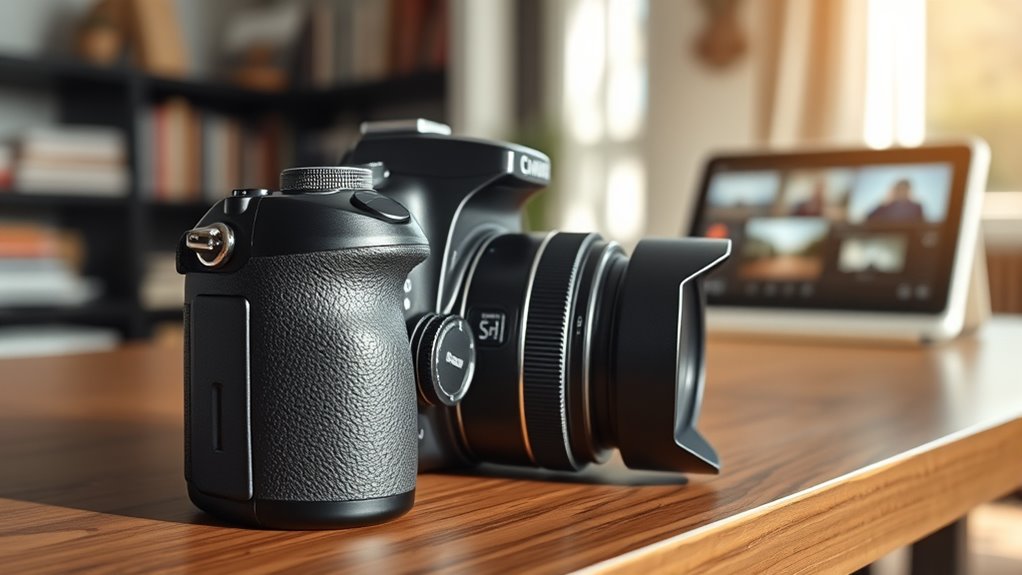
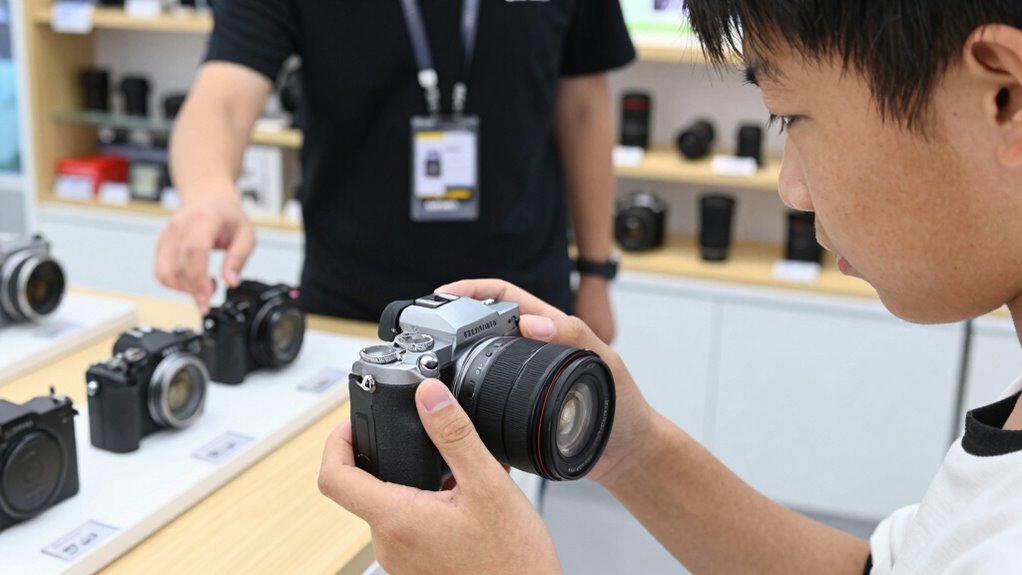
When selecting a camera, understanding how easy it is to operate can save you frustration and help you learn faster. Ease of use depends on factors like menu options, camera weight, and overall interface. A camera with simple, intuitive menus helps you navigate settings without confusion. Lighter cameras are easier to handle, especially if you’re new to photography. Consider trying out models in stores to see how comfortable they feel. Features like customizable buttons can streamline your workflow. Keep in mind that a steep learning curve might discourage you from practicing regularly. Choosing a camera that feels manageable will boost your confidence and accelerate your learning process. Remember, an easy-to-use camera encourages experimentation and growth, making your photography journey more enjoyable. Additionally, selecting a model with clearer controls can significantly reduce the time spent figuring out how to operate your camera effectively. Being aware of industry trends can also help you choose a model that stays relevant and offers useful features for beginners. Incorporating user-friendly interfaces designed with beginners in mind can further ease your transition into photography. Paying attention to ergonomic design can improve comfort during extended shooting sessions, making the learning process more enjoyable. Moreover, understanding camera features that suit beginners can help you focus on developing your skills without being overwhelmed.
Deciding Between Compact and Interchangeable Lens Systems
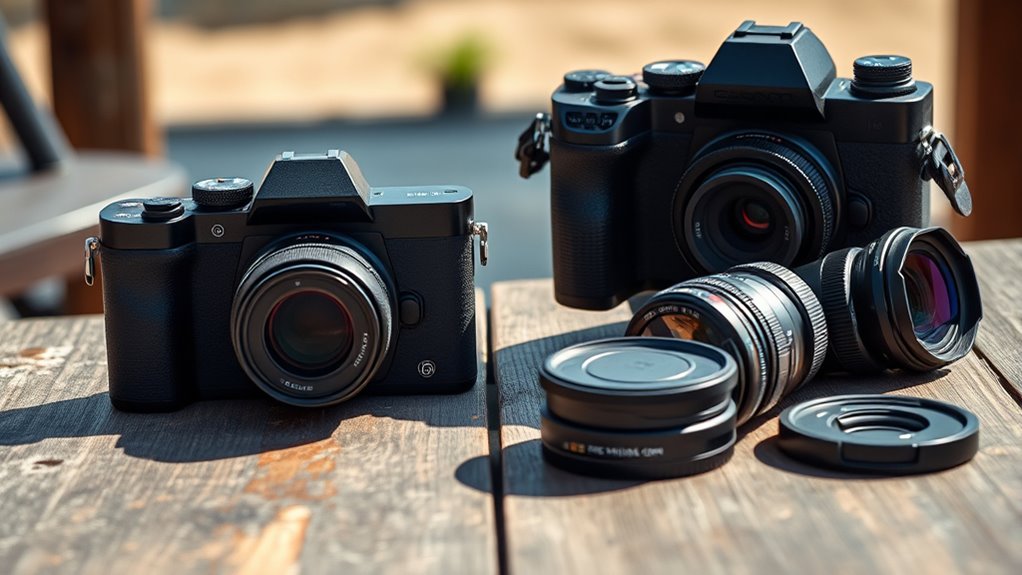
Choosing between a compact camera and an interchangeable lens system depends on how you plan to use your camera and your level of commitment to learning photography. Compact cameras are portable and easy to carry, making them ideal for casual shooting. They typically have smaller sensor sizes, which can limit image quality in low light but simplify operation. Interchangeable lens systems, on the other hand, offer larger sensors and greater lens compatibility, giving you more control over your images and creative options. If you’re interested in expanding your skills and experimenting with different photography styles, an interchangeable system is a better investment. However, keep in mind that larger sensors and multiple lenses require more space, cost, and effort to learn and manage. Additionally, understanding sensor sizes can help you make more informed decisions when choosing your camera system. Recognizing the differences in sensor size can also influence your choice of lenses and accessories to optimize your photography experience. Being aware of system compatibility and how different components work together can further enhance your ability to build a versatile kit. Moreover, considering your budget constraints will ensure you select a system that aligns with your financial situation and long-term goals. Furthermore, learning about sensor quality can assist you in choosing a camera that meets your desired image standards.
Checking Compatibility and Future Expansion Options
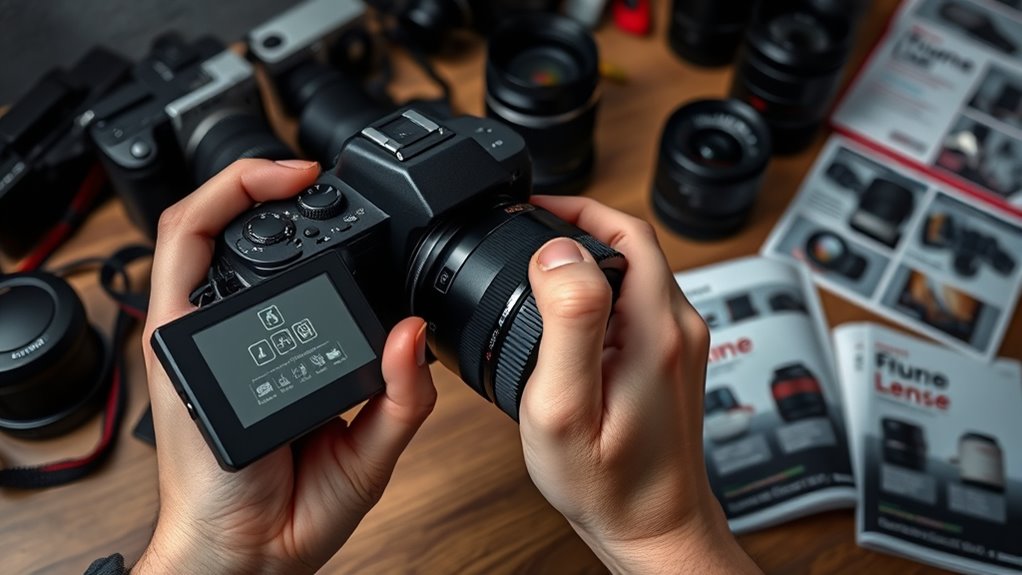
Ensuring your camera is compatible with your existing gear and future accessories is essential for a smooth photography journey. You should check lens compatibility to avoid investing in lenses that won’t work with your camera body. Consider the accessory options available, like external flashes, filters, or microphones, which can enhance your shooting experience. Compatibility issues can limit your creative growth and increase costs down the line. To make a wise choice, keep these points in mind:
- Confirm lens mount compatibility with your chosen camera
- Check if the camera supports your preferred accessories
- Research future expansion options like additional lenses or flashes
- Evaluate if the camera’s firmware updates improve compatibility
- Ensure accessory availability in your region
- Understand bank swiftifs codes to ensure secure and accurate transactions when purchasing your gear online. Additionally, reviewing camera system compatibility can help you identify potential limitations with your existing equipment and accessories. Being aware of power supply requirements is also helpful to ensure your gear functions reliably during extended shoots. Moreover, understanding standardized connection interfaces can streamline your accessory choices and prevent compatibility problems. It’s also beneficial to explore compatibility with third-party accessories, which can provide more affordable options for expanding your setup.
Frequently Asked Questions
What Are the Essential Camera Features for Beginners?
You should look for a camera with a good camera sensor that captures clear, detailed images, which is essential for beginners. Camera ergonomics matter too; choose a model that’s comfortable to hold and easy to operate. Features like adjustable settings, intuitive controls, and a lightweight design make learning easier. Prioritize these essential camera features, and you’ll build confidence while exploring photography.
How Do I Choose the Right Camera Size and Weight?
Think of choosing your camera size like picking a backpack—lighter ones are easier to carry, but may lack space for extra gear. Opt for a manageable weight that feels comfortable, considering lens options and battery life. A compact camera with a good grip helps you shoot longer without fatigue. Test different sizes in stores to find what feels right, ensuring you enjoy capturing moments without feeling weighed down.
Should I Prioritize Image Quality Over Portability?
You should prioritize image resolution over camera weight if capturing detailed photos matters most to you. A lighter camera is easier to carry around, but it might compromise image quality. Consider a balance: choose a camera with good image resolution that isn’t too heavy, so you can enjoy sharp photos without feeling weighed down. Ultimately, find a camera that offers the right mix of portability and image quality for your needs.
What Accessories Are Necessary for New Photographers?
Imagine capturing a sunset with stunning clarity—you’ll need essential accessories like a good lens selection. For new photographers, a sturdy camera bag, extra batteries, and a cleaning kit are must-haves. Choose reputable camera brands like Canon or Nikon for reliability. These accessories guarantee your gear stays protected and ready, helping you focus on improving your skills and creating memorable shots without hassle.
How Can I Test a Camera Before Buying It?
To test a camera before buying, hold it comfortably and check the sensor quality by taking sample shots in different lighting conditions. Pay attention to the image clarity, autofocus speed, and overall responsiveness. Also, test the battery life by taking multiple photos and reviewing how quickly it drains. Make sure the camera feels intuitive to you, so you can confidently operate it once you start capturing moments.
Conclusion
Choosing your first camera might seem overwhelming, but remember, it’s about finding what fits your goals and lifestyle. By considering your budget, ease of use, and future plans, you’ll set yourself up for success. Don’t you want a device that grows with your skills and sparks your passion? Trust your instincts, do your research, and take that first step—your photographic journey awaits.