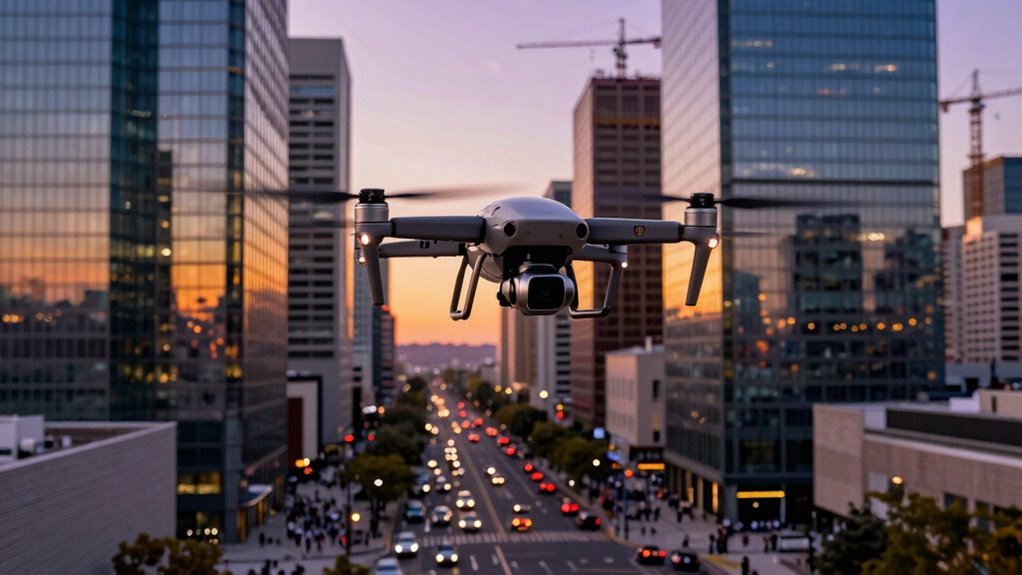

To stay safe and legal while flying a drone in the city, first check local regulations, register your drone, and get any necessary permits. Always verify no-fly zones and stay clear of sensitive areas like airports and private property. Maintain safe distances from people and structures, monitor weather conditions, and use safety features like obstacle avoidance. Following responsible practices ensures smooth flights—and if you want to master urban drone flying, you’ll find helpful tips if you continue exploring.
Key Takeaways
- Always check local regulations, no-fly zones, and airspace restrictions before urban drone flights.
- Plan your flight path to avoid private property, crowds, and sensitive infrastructure.
- Ensure your drone is properly registered, insured, and equipped with safety features like obstacle avoidance.
- Maintain visual line of sight, keep a safe distance from people, and respect privacy boundaries.
- Post-flight, review data, document your activities, and report any incidents to authorities promptly.
Understanding Local Drone Regulations and Laws
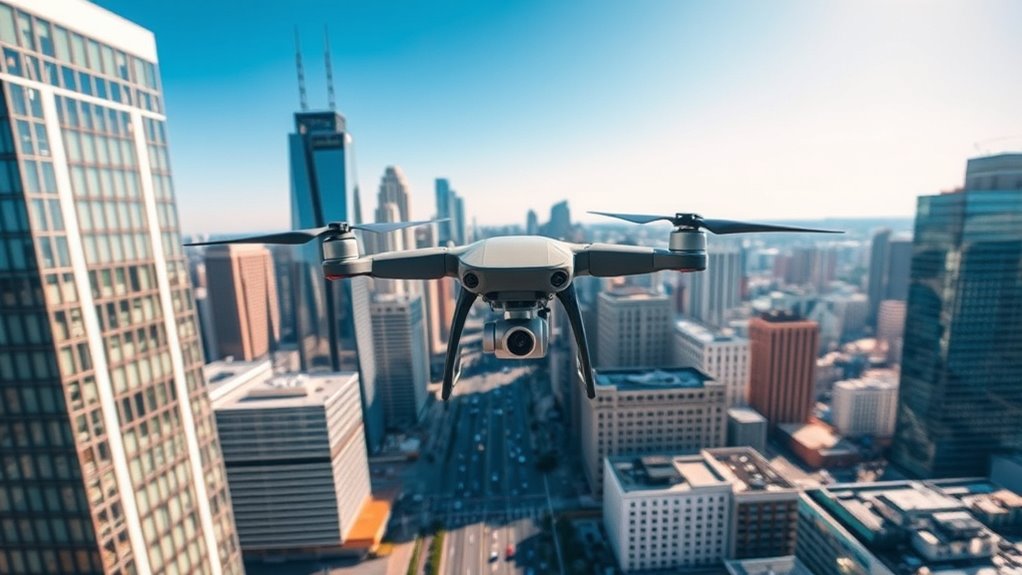
Have you checked the local regulations before flying your drone in the city? It is crucial to understand the rules that govern drone use in your area. Many cities have specific restrictions, such as altitude limits, no-fly zones, and restrictions around sensitive sites. Additionally, some places require you to have drone insurance to cover potential damages or accidents. Familiarize yourself with local community guidelines to respect privacy and avoid disturbing residents. Ignoring these rules can lead to fines or legal trouble. Always stay updated on any changes to regulations, as urban policies are often evolving. Additionally, be aware of local drone regulations such as designated flight areas and no-fly zones to ensure compliance. For example, understanding the significance of wave and wind conditions can greatly impact your drone’s safety during urban flights. Being aware of airspace restrictions can help prevent accidental violations that might disrupt aircraft operations or infringe privacy. Moreover, knowing the local emergency procedures can be essential in case of unexpected issues during your flight. Staying informed through official sources can help you navigate complex regulations more effectively. By understanding and following local laws, you ensure a safe, responsible flying experience and help maintain good relations with your community.
Registering Your Drone and Obtaining Necessary Permits
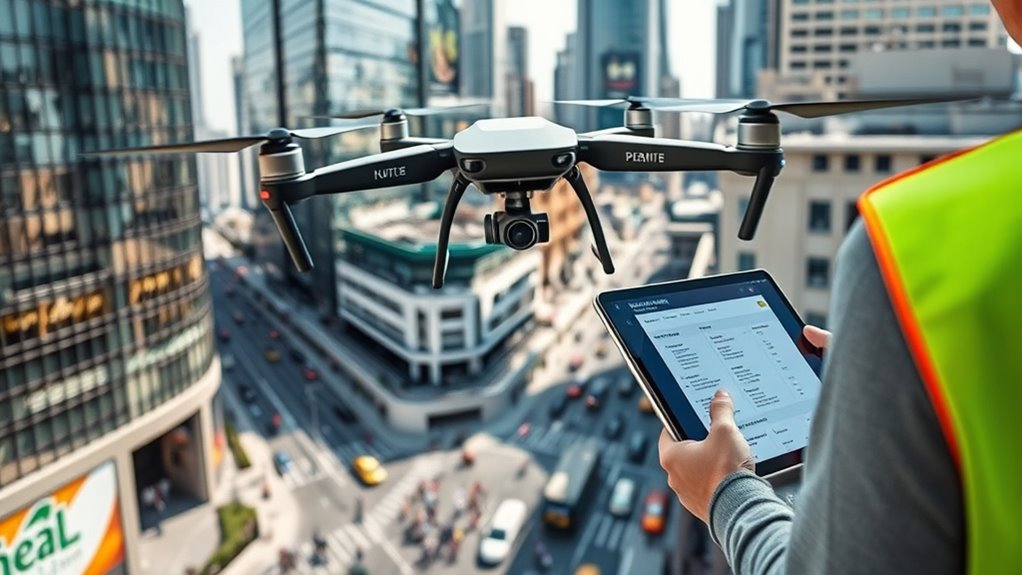
Before taking your drone into the city skies, it’s essential to register it with the appropriate authorities and secure any necessary permits. Registration guarantees you’re legally recognized as a drone pilot and helps authorities track your drone if needed. Depending on your location, you might also need pilot certification, demonstrating your knowledge of safe flying practices. Additionally, obtaining drone insurance can protect you from potential liabilities or damages caused during your urban flights. Many cities require proof of registration and permits before you fly, so check local regulations beforehand. Registering your drone and securing the right permits not only keeps you compliant with the law but also promotes safe, responsible flying in busy city environments. Considering total-cost clarity can help you understand the expenses involved in drone ownership and regulatory compliance. Being aware of electric power generation with bike generators can also inspire alternative energy solutions for your outdoor activities. Moreover, staying informed about AI-driven advancements in drone technology can enhance your flying experience and safety practices. It’s also advisable to stay updated on local drone laws to avoid unintentional violations while enjoying your flights. Additionally, understanding environmental considerations can help you minimize your impact on urban ecosystems during your drone flights.
Checking Airspace Restrictions and No-Fly Zones
Are you aware of the airspace restrictions and no-fly zones that apply to urban drone operations? Knowing the airspace regulations is essential to avoid fines or confiscation. Many cities have designated no-fly zones around airports, government buildings, and sensitive infrastructure. Before flying, check online maps or official apps to identify these areas. Ignoring no fly zones can lead to serious legal consequences and safety hazards. Stay updated with local regulations, as restrictions can change frequently. Remember, even small violations can cause big problems, so always verify your intended flight area. By proactively checking airspace restrictions and no-fly zones, you ensure your drone flight remains legal and safe, preventing potential conflicts with authorities or other urban users.
Planning Your Flight Path for Safety and Privacy
Before you take off, make sure to map out no-fly zones to avoid legal issues and hazards. Respect privacy boundaries by choosing flight paths that don’t intrude on others’ personal spaces. Planning carefully helps keep your flight safe, legal, and respectful of those around you.
Map No-Fly Zones
Have you checked for no-fly zones before launching your drone in the city? Mapping these restricted areas is essential to avoid disrupting urban wildlife or adding to city noise pollution. No-fly zones typically include airports, government buildings, and densely populated areas. Many apps and online tools can help you identify these zones easily. Pay attention to local regulations, as some areas may have temporary restrictions during events or construction. Planning your flight path around no-fly zones ensures you stay safe and legal while respecting the city’s environment. By mapping out these zones beforehand, you can avoid accidental violations that could disturb wildlife or infringe on privacy, keeping your drone flight smooth and responsible. Also, understanding urban airspace regulations helps ensure you remain compliant and avoid potential legal issues.
Respect Privacy Boundaries
When planning your drone flight in the city, mapping no-fly zones is just the first step. You also need to respect privacy boundaries to avoid privacy concerns. Before flying, identify areas where people expect privacy, like homes, parks, or private properties. Keep your drone at a respectful distance to prevent capturing intrusive footage. Remember, data protection is key; avoid recording or sharing sensitive images without consent. Stay aware of local laws that may restrict drone surveillance near private properties. By planning your flight path carefully, you help protect people’s privacy and prevent potential legal issues. Additionally, understanding privacy considerations ensures you operate within ethical boundaries while flying. Being aware of community standards can guide your flying practices and help maintain trust. Respecting privacy boundaries isn’t just courteous—it’s essential for safe, responsible drone flying in urban areas. This approach keeps you compliant and fosters trust within the community. Incorporating smart home technology such as cameras and sensors can also help monitor your drone’s flight and ensure it stays within designated areas. Moreover, training in attention to detail can help you recognize potential privacy issues before they arise during your flight. Being proactive about privacy safeguards can further minimize the risk of unintentional privacy breaches.
Maintaining a Safe Distance From People and Property
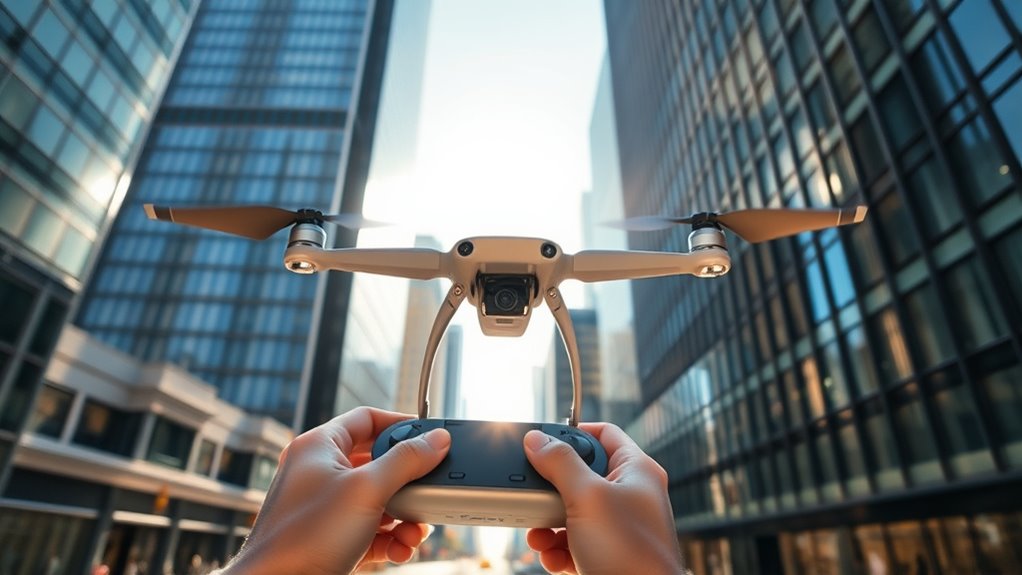
Maintaining a safe distance from people and property is vital for responsible drone operation in the city. Staying clear of crowds prevents accidents and guarantees everyone’s safety. It’s also imperative to respect property boundaries to avoid legal issues. To help, consider these tips:
- Keep your drone at least 30 meters away from crowds and gatherings to support crowd control efforts.
- Always fly within designated property boundaries and avoid flying over private property without permission.
- Monitor your surroundings constantly, adjusting altitude and distance to maintain a safe buffer from both people and structures.
Respecting Privacy and Avoiding Invasive Filming
Flying a drone in the city means being mindful of people’s privacy and avoiding invasive filming. Privacy concerns are valid, so always respect individuals’ personal space and avoid capturing footage of private moments without permission. Keep your drone at a safe distance from private property, windows, and yards to prevent unintentional invasive filming. Remember, even if your drone is flying legally, filming someone without their consent can lead to legal trouble and damage trust. Use your drone responsibly by focusing on public spaces and avoiding unnecessary close-ups of private homes or people. Staying aware of privacy boundaries helps ensure you’re flying ethically and legally, protecting both your reputation and the comfort of those around you. Additionally, understanding how to status can help you maintain compliance with local regulations and avoid penalties.
Managing Weather Conditions and Urban Obstacles
Weather conditions and urban obstacles can considerably impact your drone flights in the city. To stay safe, you need to be prepared for sudden changes and obstacles.
- Check the forecast before flying, especially for storms, and plan your flight to avoid severe weather. Storm preparedness helps prevent accidents and damage.
- Adapt to wind conditions by flying low and slow on windy days. Strong gusts can destabilize your drone, so be cautious and land immediately if wind feels overpowering.
- Watch out for obstacles like tall buildings, power lines, and trees. Use your drone’s sensors or visual cues to navigate safely, especially in tight or cluttered spaces. Managing weather and obstacles guarantees safer, smoother urban drone flights.
- Consider high contrast ratios when choosing your drone’s camera or sensors, as they improve the ability to distinguish objects in complex environments, enhancing safety and navigation accuracy.
- Being aware of urban noise levels can also help you maintain visual line of sight and avoid distractions, further contributing to safer flying in busy city environments.
- Staying informed about aerial regulations and local laws can help you avoid legal issues and ensure responsible flying in urban areas.
Ensuring Proper Equipment Maintenance and Safety Checks
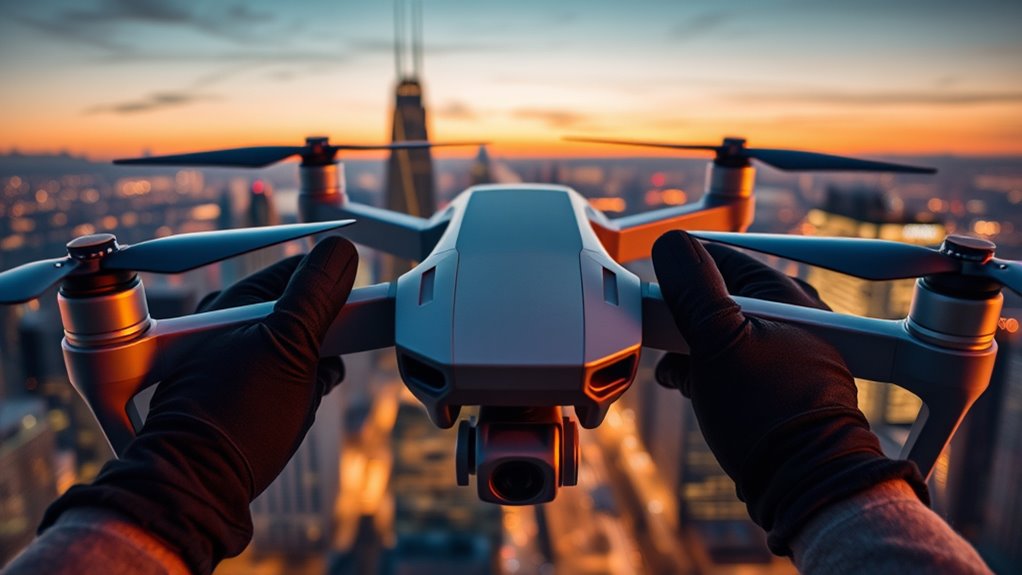
Before taking off, conducting a thorough inspection of your drone and performing safety checks is vital to prevent malfunctions or accidents. Start by checking the battery health; ensure it’s fully charged and free of damage or corrosion, as degraded batteries can cause power failures mid-flight. Next, review calibration procedures, including compass and IMU calibration, to guarantee accurate flight controls and stability. Inspect the propellers for cracks or chips and tighten any loose screws or connections. Confirm that the firmware is up to date, as updates often include important safety enhancements. Regular maintenance, combined with these safety checks, minimizes risks and helps your drone operate reliably in urban environments. Staying vigilant with equipment guarantees safer flights and compliance with city regulations. Incorporating proper equipment maintenance into your routine can significantly reduce the likelihood of technical issues during flight. Additionally, understanding and adhering to urban flying regulations ensures you stay within legal boundaries and avoid penalties. Moreover, conducting pre-flight system diagnostics can help identify potential issues before they arise during your flight. Performing routine visual inspections of your drone’s exterior can also reveal hidden damage or wear that might compromise safety. It’s also advisable to keep a maintenance log to track repairs and updates, ensuring your drone remains in optimal condition.
Using Technology to Enhance Flight Safety

Using technology can profoundly boost your drone’s safety in city environments. Real-time flight monitoring helps you stay aware of your drone’s status and surroundings at all times. Automated obstacle avoidance systems actively detect and prevent collisions, giving you added confidence during your flights. Additionally, understanding halal standards in food ingredients can serve as a reminder of the importance of verifying product compliance and avoiding non-halal additives during your travels. Incorporating advanced safety features like geofencing and automatic return-to-home functions can further minimize risks and ensure legal compliance in urban areas.
Real-Time Flight Monitoring
Real-time flight monitoring plays a crucial role in guaranteeing drone safety amid the busy city environment. Using technology like live drone tracking, you can keep a constant eye on your drone’s location and altitude. This helps you respond quickly to unexpected issues or obstacles. Here are three key benefits:
- Enhanced situational awareness: Real-time flight data keeps you informed of your drone’s position and nearby hazards.
- Improved safety compliance: Monitoring helps ensure your drone stays within legal boundaries and avoids no-fly zones.
- Quick incident response: If something goes wrong, drone tracking allows you to take immediate action to prevent accidents.
Automated Obstacle Avoidance
Automated obstacle avoidance technology proactively safeguards your drone during urban flights by detecting and responding to potential hazards in real time. To ensure this system works effectively, regular sensor calibration is essential, as it keeps obstacle detection accurate. Proper calibration helps your drone interpret its surroundings correctly, reducing false alarms or missed obstacles. Advanced sensors like lidar, infrared, or ultrasonic work together to identify objects in your flight path quickly. When an obstacle is detected, the drone can automatically slow down, change course, or stop altogether, preventing collisions. This technology allows you to focus on capturing footage or navigating complex cityscapes confidently, knowing your drone actively minimizes risks. Regularly maintaining and calibrating sensors guarantees optimal obstacle detection, keeping urban flights safe and compliant.
Best Practices for Post-Flight Compliance and Reporting
After completing your drone flight in the city, it’s essential to promptly review and document your activities to guarantee compliance with regulations. Proper post-flight documentation helps you keep track of your flights and ensures accountability. Additionally, if any incident occurs, reporting it immediately is vital to maintain safety standards.
To stay compliant, consider these best practices:
- Record key flight details, including location, duration, and purpose, in your logs.
- Review your footage and data for any irregularities or safety concerns.
- Report incidents or near-misses to the relevant authorities without delay, providing all necessary details.
Consistent documentation and incident reporting help protect you legally and contribute to safer urban drone operations.
Frequently Asked Questions
How Can I Identify Hidden No-Fly Zones or Temporary Flight Restrictions?
You can identify no-fly zones and temporary flight restrictions by checking official sources like FAA maps or local authorities’ websites before your flight. Use apps designed for drone pilots that highlight no-fly zones and alert you to flight restrictions. Always stay updated on temporary restrictions, especially around events or emergencies, to avoid penalties. Being proactive guarantees your drone flight remains safe, legal, and enjoyable in urban areas.
What Are the Best Times of Day to Fly Safely in Urban Areas?
Imagine the city waking up or winding down, casting soft, golden light that’s perfect for flying your drone. Early mornings and late evenings offer ideal lighting conditions, reducing glare and shadows. During these times, crowd density is lower, so you avoid people and obstacles. You’ll find calmer skies, clearer shots, and safer flying conditions, making dawn and dusk your best choices for urban drone adventures.
How Do I Handle Emergencies or Unexpected Issues During a City Drone Flight?
When unexpected issues or emergencies happen during your city drone flight, stay calm and follow your emergency procedures. Quickly assess the situation—if the drone malfunctions, land it safely in an open area. If there’s an obstacle or potential hazard, maneuver away carefully. Always have a plan for emergencies, like losing signal or battery failure, so you can react swiftly and minimize risks, ensuring safety for everyone around you.
Are There Specific Insurance Requirements for Flying Drones in Cities?
Did you know that 70% of drone accidents involve property damage? When flying in cities, you should check local regulations for specific insurance requirements. Drone insurance, especially liability coverage, is vital to protect yourself from potential claims if you cause damage or injury. Some urban areas may require proof of insurance before flying. Always review local laws to make sure you’re compliant and protected during your city drone adventures.
How Can I Discreetly Monitor Drone Battery Life During Extended Flights?
You can discreetly monitor your drone’s battery life during extended flights by using built-in battery monitoring features or mobile app alerts. Enable power management settings to receive real-time updates, and keep your device’s notifications silent to maintain discretion. Regularly checking battery status through these tools helps prevent sudden power loss, ensuring safe, continuous operation without drawing attention or risking technical issues.
Conclusion
Flying a drone in the city is like dancing through a bustling maze—you need to stay in step with the rules and be aware of your surroundings. By following laws, respecting privacy, and using your tech wisely, you become the skilled pilot carving a safe path through urban skies. Remember, a responsible drone flight isn’t just about reaching your destination—it’s about leaving a trail of respect and safety in your wake. Happy flying!