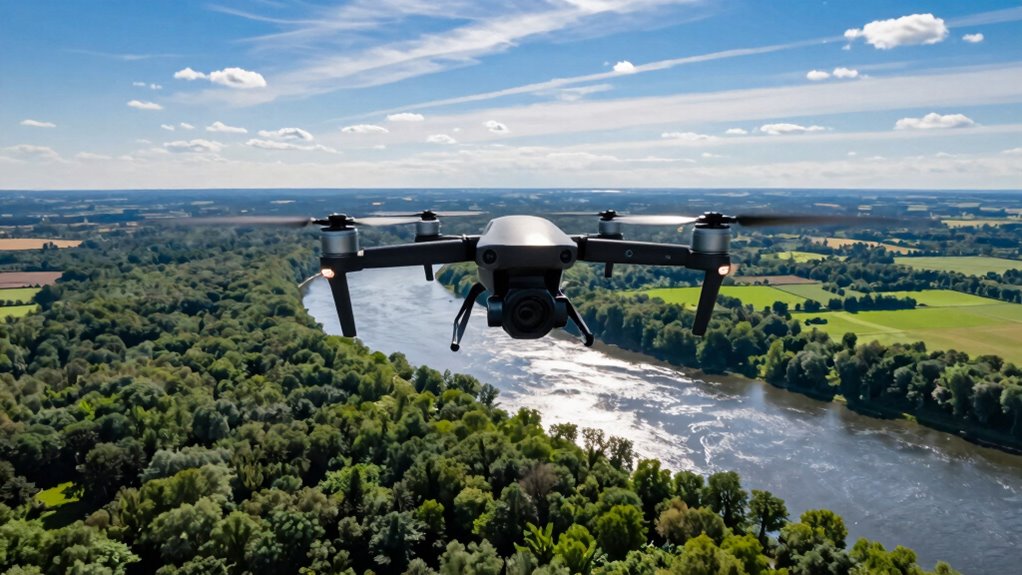

To capture stunning aerial shots safely, start by understanding your local regulations and airspace rules to avoid legal issues. Always perform pre-flight checks on your drone’s batteries, propellers, and firmware. Plan your routes carefully, choosing ideal locations and lighting conditions. Practice smooth control and maintain line of sight during flight. Respect privacy and ethical considerations to stay responsible. Keep learning to improve your skills and guarantee safe, breathtaking shots every time.
Key Takeaways
- Always check local airspace regulations and obtain necessary permits before flying to ensure safety and legality.
- Conduct thorough pre-flight safety checks on batteries, propellers, and firmware to prevent malfunctions.
- Plan your shots around optimal lighting conditions, weather, and location to achieve stunning visuals safely.
- Maintain visual line of sight and use GPS navigation to control your drone accurately and avoid obstacles.
- Regularly review and organize footage post-flight, and perform drone maintenance to ensure long-term safety and performance.
Top picks for "drone photography tips"
Open Amazon search results for this keyword.
As an affiliate, we earn on qualifying purchases.
Understanding Local Regulations and Airspace Rules

Before launching your drone, it’s essential to understand the local regulations and airspace rules that apply in your area. These guidelines are designed to keep everyone safe and ensure you don’t encounter legal issues. Check with local authorities or aviation agencies to learn about restrictions on drone altitude, flight zones, and no-fly areas. Some regions require registration or permits before flying, while others have specific rules for commercial use. Ignoring these regulations can lead to hefty fines or confiscation of your drone. Familiarizing yourself with the airspace rules also helps you avoid conflicts with manned aircraft and stay out of restricted zones. Additionally, European cloud innovation emphasizes the importance of responsible technology use, including drone operations. Staying informed and compliant allows you to enjoy your aerial photography safely and responsibly. Being aware of vetted wave and wind conditions can also help you plan safer flights, reducing the risk of accidents caused by unexpected weather changes. Consulting local aviation authorities can provide up-to-date information on temporary restrictions and special events that might impact your flight plans. Moreover, understanding weather patterns related to wind and weather conditions can significantly improve your flight safety and photo quality. Incorporating weather forecasting tools into your planning can further enhance your safety and success during drone flights.
Conducting Pre-Flight Checks for Safety
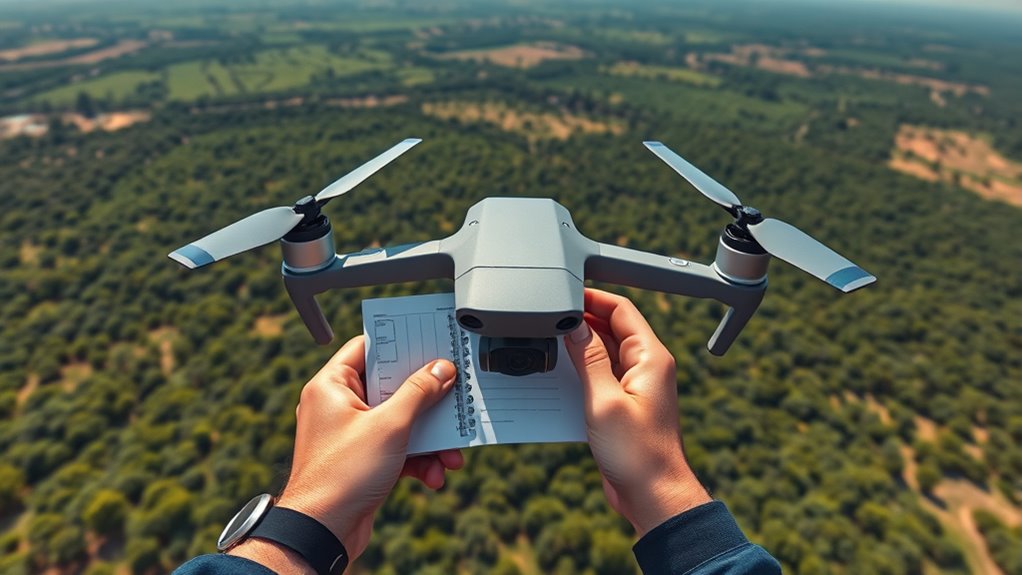
Before flying, you need to run through essential safety checks. Make sure to inspect all drone components, review weather conditions, and verify that the battery and signal are robust. These steps help ensure your flight is both safe and successful. Additionally, consider local regulations to ensure compliance with community rules and privacy guidelines. Staying informed about drone technology advancements can also help you operate more safely and efficiently. Incorporating safe flying practices into your routine can further reduce risks and improve the quality of your aerial shots. Regularly updating your knowledge about drone safety standards can also enhance your overall flying safety. Being aware of navigation and mapping features can help you avoid obstacles and plan better flight paths.
Inspect Drone Components Thoroughly
Conducting a thorough pre-flight check is essential to guarantee your drone operates safely and reliably. Start with a battery inspection to ensure it’s fully charged and free of damage or corrosion. A malfunctioning battery can cause power loss mid-flight, so handle it carefully. Next, perform a propeller check—inspect each blade for cracks, chips, or warping. Make sure the propellers are securely attached and spin freely without wobbling. Tighten any loose screws or fittings. Also, verify that all moving parts and joints move smoothly. Regularly updating your drone firmware ensures optimal performance and safety features. Pre-flight safety is crucial in preventing accidents and ensuring your drone functions properly. Checking these components before each flight minimizes risks of failure or crashes. By thoroughly inspecting your drone’s battery and propellers, you ensure safe, successful flights and protect your equipment from avoidable damage.
Review Weather Conditions Carefully
Review weather conditions carefully to guarantee safe drone flights. Check the wind speed before launching—strong gusts can destabilize your drone and cause crashes. Even moderate wind can affect control, so avoid flying in breezy conditions. Visibility conditions are equally important; low visibility due to fog, rain, or haze reduces your ability to see obstacles and maintain line of sight. Poor visibility also increases the risk of collisions with trees, power lines, or other hazards. Always consult local weather reports or apps for real-time updates. If weather conditions are unfavorable, postpone your flight. Prioritizing safety ensures not only your drone’s well-being but also your safety and the safety of others nearby. Clear weather creates ideal conditions for capturing stunning aerial shots. Additionally, understanding environmental impact can help you choose times and locations that minimize disturbance to wildlife and local habitats. Being aware of airspace regulations ensures your flight remains compliant and avoids potential legal issues. Staying informed about weather patterns can help you plan flights more effectively and avoid unexpected conditions. Monitoring local regulations and restrictions is also crucial to ensure your drone activities are legal and respectful of public spaces. Considering seasonal weather changes can further improve the safety and success of your drone flights.
Confirm Battery and Signal Status
Ensuring your drone is ready for flight involves more than just checking the weather; verifying the battery and signal status is equally important. You want to avoid mid-air surprises or losing control. Before takeoff, check that your battery status shows a full charge and that your signal strength is strong. Weak signals can lead to disconnections, risking crashes or lost footage. Keep these in mind:
| Battery Status | Signal Strength | Flight Confidence |
|---|---|---|
| Fully charged | Strong | Confident & in control |
| Half-full | Moderate | Cautiously optimistic |
| Low | Weak | Risk of losing connection |
| Depleted | No signal | Emergency landing needed |
| Charging | Fluctuating | Wait until stable |
Stay vigilant—your safety depends on it. Additionally, understanding flight safety protocols can further enhance your preparedness and ensure a secure flying experience. Moreover, regularly updating your drone’s firmware can help prevent software glitches that might compromise your flight. Being aware of battery health management practices can extend your drone’s operational lifespan and ensure reliable performance.
Choosing the Right Equipment for Your Needs

Choosing the right equipment is vital to capturing stunning drone photos that meet your goals. Focus on camera stabilization to guarantee sharp, clear images, especially in windy conditions or during quick movements. Look for drones with built-in gimbals or stabilization features that keep your camera steady. Lens selection also plays an important role; wide-angle lenses are great for sweeping landscapes, while zoom lenses can help capture distant details. Consider your typical shooting environment and subject matter when choosing your drone and camera accessories. Make certain the drone’s camera quality matches your desired resolution and color accuracy. Additionally, understanding power consumption insights can help ensure your drone operates efficiently during extended shoots. Being aware of at-home technology can also influence your choice of equipment, especially if you want to incorporate innovative features for improved image quality. Furthermore, selecting ergonomic controls can enhance your flying experience and reduce fatigue during long sessions. Researching best rated vacuum cleaners can also provide insight into reliable, high-quality equipment that might inspire your choice of drone accessories or maintenance tools. Finally, considering battery life is essential for longer flight durations and uninterrupted shooting sessions. Ultimately, selecting equipment tailored to your needs will make it easier to achieve the stunning, professional-looking aerial shots you envision.
Planning Your Shots and Scouting Locations
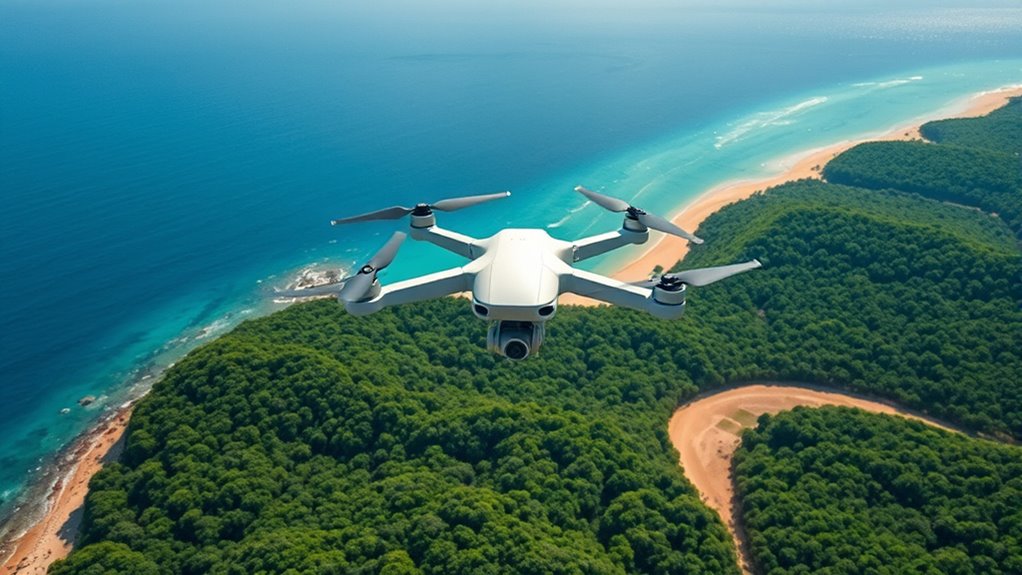
Planning your shots and scouting locations before flying your drone can make all the difference in capturing striking images. Timing considerations are vital—you want to shoot during the golden hour or when lighting enhances your subject, enhancing visual storytelling. Research your location in advance to identify the best vantage points and unique features that add depth to your photos. Consider weather conditions, crowd levels, and legal restrictions to guarantee a safe, smooth shoot. Visiting your location beforehand helps you visualize compositions and understand potential obstacles. Additionally, understanding aerial photography techniques can improve your shot composition and overall quality. Knowing the local regulations ensures you stay compliant and avoid legal issues. By preparing thoroughly, you’ll save time during your flight and increase your chances of capturing breathtaking aerial shots that tell compelling stories. Proper planning transforms a good shot into an extraordinary one.
Mastering Flight Controls and Navigation
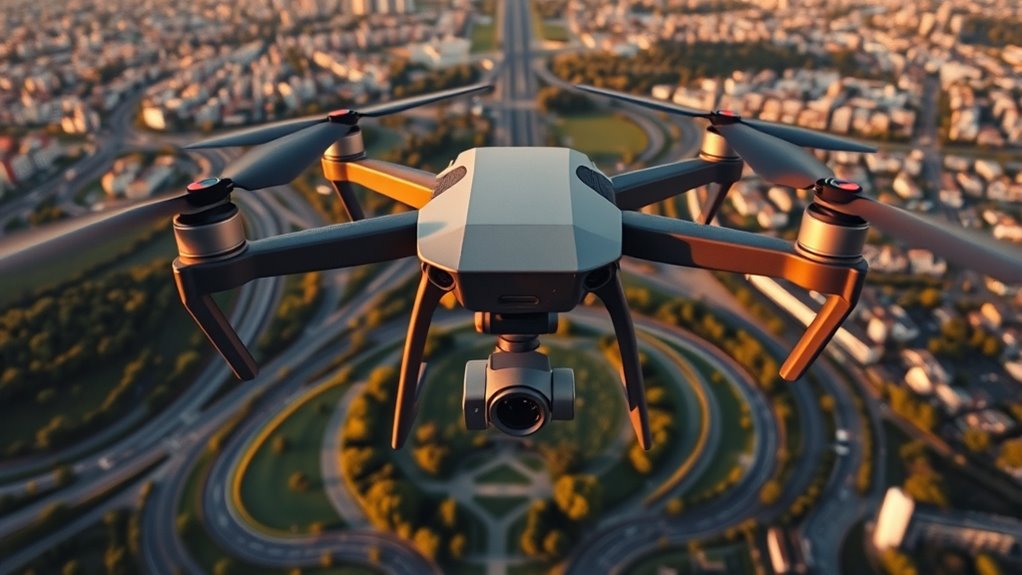
Mastering flight controls and navigation is essential for capturing smooth, well-composed aerial shots. You need to confidently adjust altitude control to frame your shots perfectly and maintain steady positioning. Familiarize yourself with your drone’s controls so you can respond quickly to changing conditions. Using GPS navigation helps you plan precise routes and keep your drone on course, even in complex environments. It also assists in returning the drone safely if connection drops or battery runs low. Practice smooth control movements to avoid shaky footage and ensure clean, professional-looking images. With solid command over altitude adjustments and GPS features, you’ll navigate more confidently, focus on composition, and capture stunning aerial shots with ease and safety.
Practicing Safe Flying Techniques
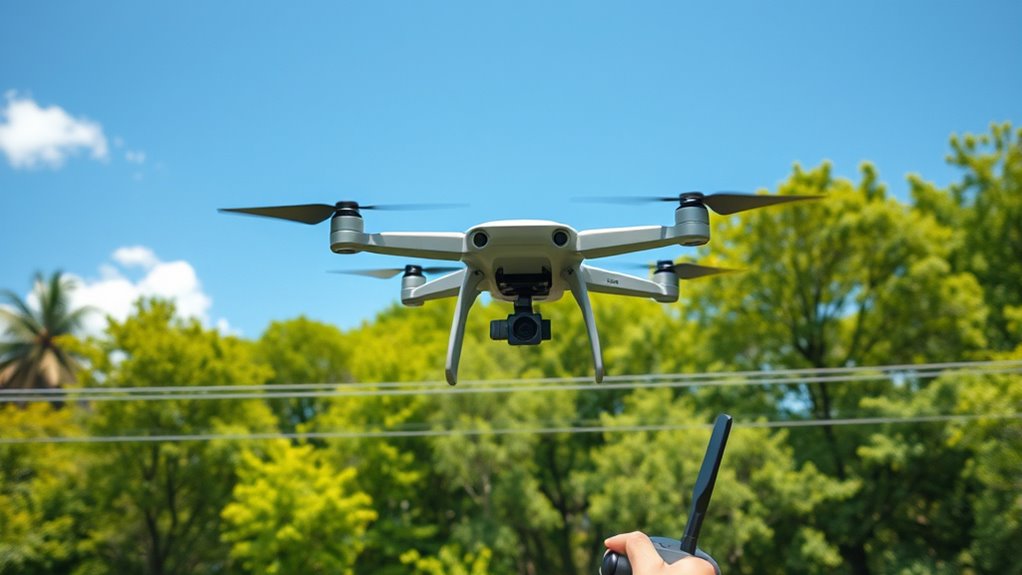
Before flying, you should always do pre-flight safety checks to guarantee your drone is ready. Keep your drone in sight at all times and respect no-fly zones to avoid accidents or legal issues. Practicing these safe flying techniques helps protect both your equipment and others around you.
Pre-flight Safety Checks
Ensuring your drone is safe to fly starts with a thorough pre-flight safety check. First, inspect the battery for proper charge and secure connections, as battery maintenance impacts flight safety and duration. Make sure the battery is clean, free of corrosion, and properly seated in the drone. Next, focus on propeller safety: examine each propeller for cracks, chips, or damage, and ensure they’re securely attached. Damaged propellers can cause instability or crashes, so replace any that are compromised. Check that all screws and fasteners are tight. Confirm the drone’s firmware is up-to-date, and verify that the control links are functioning correctly. These steps help prevent malfunctions and ensure a safe, smooth flight from the start.
Maintain Line of Sight
Maintaining a clear line of sight with your drone is fundamental to safe flying. By keeping your drone within your visual line of sight, you ensure you can quickly respond to any unexpected obstacles or changes in the environment. This practice enhances obstacle awareness, helping you avoid trees, power lines, or other hazards that could cause crashes. Always stay alert and position yourself so you can see your drone at all times, especially when flying in complex or crowded areas. Using a spotter can also help uphold your visual line of sight, providing an extra set of eyes. Remember, staying focused and aware reduces risks, making your aerial photography safer and more enjoyable.
Respect No-Fly Zones
Have you checked for no-fly zones before launching your drone? It is crucial to be aware of restricted airspace and no-fly zones in your area. These areas are designated to keep people safe and protect sensitive locations like airports, government buildings, and military sites. Ignoring these restrictions can result in hefty fines or even legal trouble. Before flying, consult local regulations, official maps, or apps that highlight no-fly zones. Respect these boundaries to avoid accidents and ensure responsible drone operation. Remember, safety and legality go hand in hand. By practicing safe flying techniques and adhering to no-fly zone restrictions, you help foster a positive environment for drone enthusiasts everywhere. Staying informed keeps your flights smooth and accident-free.
Respecting Privacy and Ethical Considerations
While capturing stunning aerial shots with your drone, maintaining privacy and ethical considerations is vital. Respecting privacy concerns means avoiding intrusive flights over private property or individuals without permission. Ethical boundaries help you prevent discomfort or legal issues. To guide your actions, consider the following:
| Privacy Concern | Ethical Boundary | Best Practice |
|---|---|---|
| Invasion of privacy | Respecting personal space | Obtain consent before shooting |
| Recording private moments | Avoiding misuse of footage | Use footage responsibly |
| Surveillance issues | Minimizing intrusive behavior | Stay within legal limits |
| Public vs. private property | Respect property rights | Know local laws |
Post-Flight Tips for Data Management and Maintenance
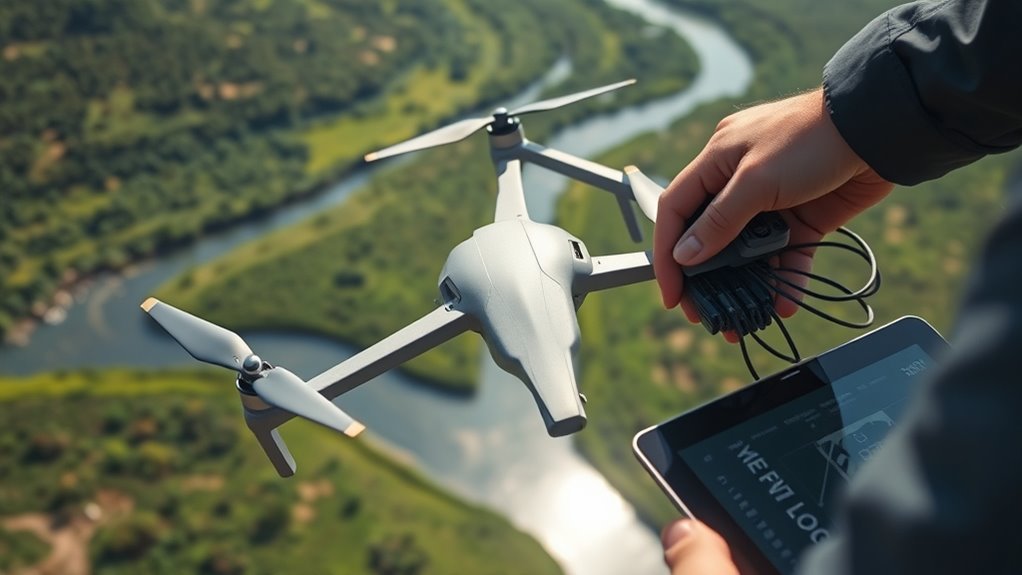
After your flight, it is vital to organize and secure your data promptly. Transfer your photos and videos to a reliable data storage system, such as an external drive or cloud service, to prevent loss. Review your footage for quality and delete any unusable files to free up space. Next, check for firmware updates for your drone and remote controller; keeping software current guarantees optimal performance and safety features. Regular firmware updates fix bugs, improve stability, and add new capabilities. Also, inspect your drone for any physical damage or wear, and perform necessary maintenance like cleaning sensors and tightening screws. By managing your data efficiently and maintaining your drone, you’ll ensure its longevity and reliability for your next aerial shot.
Frequently Asked Questions
How Can I Improve My Drone’s Camera Stability for Clear Shots?
To improve your drone’s camera stability for clear shots, start by regularly calibrating the gimbal to guarantee smooth movement. Also, check and balance your propellers, as unbalanced ones cause vibrations that blur images. Keep your drone’s firmware updated and fly in calm conditions to minimize turbulence. These steps help maintain steady footage, giving you crisp, professional-looking aerial photos every time.
What Are Common Troubleshooting Steps for Drone Flight Issues?
Think of your drone’s flight like a delicate dance, where balance is key. First, calibrate the battery to guarantee ideal power, preventing unexpected drops. Check for signal interference—like static in a radio—to keep communication clear. If issues persist, restart your drone and controller, update firmware, and inspect for loose connections. These steps help maintain smooth flight, letting you focus on capturing stunning shots without interruption.
How Do Weather Conditions Affect Drone Safety and Image Quality?
Weather conditions directly affect your drone’s safety and image quality. Wind impact can cause instability, making it hard to control your drone and risking crashes or blurred shots. Rain risks damage to your drone’s electronics and reduces visibility, leading to poor image quality. Always check the forecast before flying, avoid strong winds, and steer clear of rain to ensure safe flights and sharp, clear aerial photos.
Can I Fly My Drone at Night or in Low-Light Conditions Legally?
You can fly your drone at night or in low-light conditions if you follow night flying regulations, which often require having proper lighting and sometimes special permits. Use low light photography techniques like adjusting ISO, using faster lenses, and stabilizing your drone to capture clear shots. Always check local laws before night flying, and guarantee your drone is equipped with the necessary lights to stay visible and compliant.
What Emergency Procedures Should I Know During a Drone Flight?
Imagine losing control mid-flight—what’s your emergency protocol? Always start with a thorough pre-flight checklist, guaranteeing your drone’s firmware, GPS, and batteries are ideal. If an emergency arises, immediately activate your return-to-home feature or land manually if safe. Stay calm, assess the situation quickly, and follow your emergency protocols to prevent damage or accidents. Preparedness keeps you safe and ensures a smooth rescue mission.
Conclusion
Just like Icarus once soared too close to the sun, your drone adventures require respect and caution. By understanding regulations, practicing safety, and honoring privacy, you’ll elevate your aerial photography to new heights without risking a fall. Remember, mastering the skies isn’t just about capturing stunning shots—it’s about flying responsibly. So go ahead, explore the horizon, but keep your feet on the ground and your eyes on safety. Happy flying!