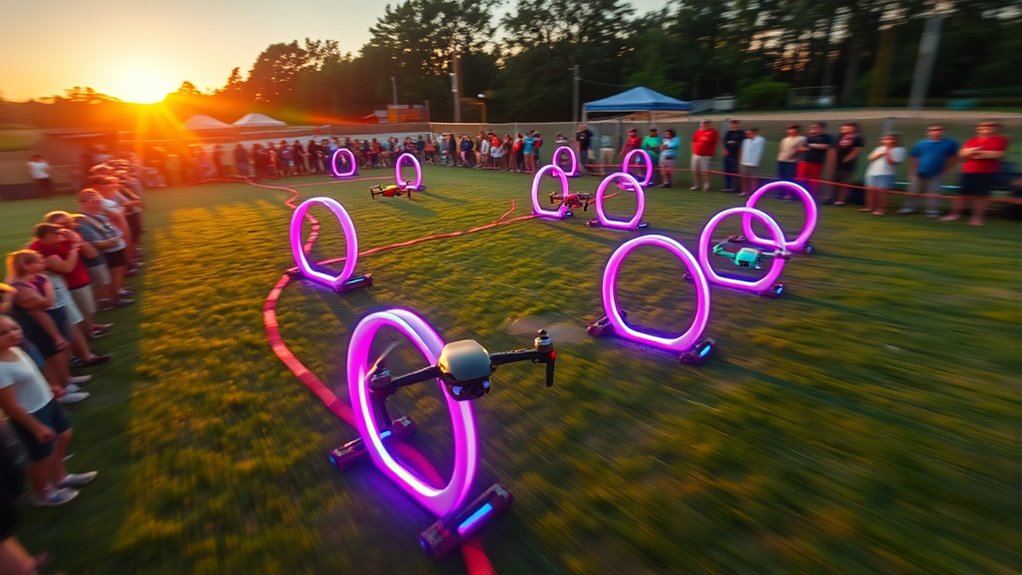
Getting started with FPV drone racing involves understanding essential equipment like cameras, motors, batteries, and controllers, along with safety gear. Practice in open areas to build flying skills and learn how to set up and calibrate your drone for stable flights. Maneuvering course obstacles and improving reflexes is crucial. As you progress, you’ll benefit from tips on gear, safety, and techniques—continue exploring to master this exciting sport and fly with confidence.
Key Takeaways
- Learn essential drone components like motors, frames, batteries, and FPV goggles to build and upgrade your racing drone.
- Master basic flying skills such as hovering, turning, and smooth throttle control for stable, precise navigation.
- Practice navigating race courses, anticipating obstacles, and executing quick reactions for competitive performance.
- Understand safety protocols, proper battery handling, and protective gear to ensure safe flying and repairs.
- Familiarize yourself with controller features and calibration techniques to improve control responsiveness and overall racing skills.
Top picks for "drone beginner"
Open Amazon search results for this keyword.
As an affiliate, we earn on qualifying purchases.
Getting Started With FPV Drone Racing
Getting started with FPV drone racing might seem overwhelming at first, but breaking it down makes the process manageable. First, focus on understanding the basics of drone maintenance to keep your equipment in top shape. Regularly check your drone’s motors, propellers, and batteries to avoid crashes and extend flight time. While FPV racing is fast-paced, it also offers opportunities for aerial photography, so consider how your drone can capture stunning footage once you’re comfortable flying. Practice in safe, open areas to build your skills and confidence. Learning to maintain your drone properly will save you time and money and ensure smooth, reliable flights. Additionally, exploring Midwest and seasonal promotions can make your downtime more enjoyable as you progress. As you progress, you’ll find that a well-maintained drone is key to becoming a skilled FPV racer.
Essential Equipment for Beginners

To start racing, you’ll need some basic drone components like motors, frames, and batteries. Don’t forget essential safety gear such as goggles and gloves to protect yourself. For control, beginner-friendly controllers make it easier to learn and enjoy the sport right away. Additionally, understanding body jewelry measurements and materials can help you select comfortable and safe gear to prevent irritation during long sessions. Being aware of backup power options can also ensure your equipment stays operational during extended sessions or unexpected outages.
Basic Drone Components
A basic drone setup includes several essential components that every beginner needs to understand. First, the propeller types are crucial because they affect flight performance and handling. Options vary from lightweight plastic propellers for durability to carbon fiber ones for speed and efficiency. Next, the battery specifications are vital; most FPV drones use lithium-polymer (LiPo) batteries, with voltage and capacity directly impacting flight time and power. Higher voltage batteries deliver more thrust, but also require compatible electronic speed controllers (ESC). You’ll also need a flight controller to manage stability, motors to provide movement, and a frame that holds everything together. Understanding these core components helps you choose the right equipment, ensuring smoother flights and a better racing experience as you progress. Additionally, considering free floating design elements can enhance your drone’s agility and handling during races. It’s also beneficial to familiarize yourself with battery safety practices to prevent accidents and prolong your equipment’s lifespan. Being aware of component compatibility can help you avoid mismatched parts that could lead to performance issues or damage. Moreover, selecting components with energy efficiency in mind can extend your flight times and improve overall performance. Incorporating proper maintenance routines can also significantly boost your drone’s longevity and reliability during races.
Essential Safety Gear
When setting up your drone for racing, prioritizing safety gear is key to protecting yourself and your equipment. A properly fitting helmet ensures your head stays protected during crashes or falls. Make sure the helmet fits snugly without discomfort, so it stays secure while you race. Battery safety is also critical; always handle batteries carefully, avoid overcharging, and store them in fireproof containers. Wearing gloves can help prevent accidental cuts or burns when handling batteries or repairing your drone. Additionally, safety glasses shield your eyes from debris and potential propeller strikes. By investing in quality safety gear and paying attention to Battery safety, you reduce risks and create a safer racing environment for yourself. Proper personal protective equipment enhances overall safety during practice and competitions. Maintaining awareness of environmental hazards can further prevent accidents and injuries. Being familiar with drone safety protocols ensures you follow best practices to protect yourself and others. Safety gear keeps you protected so you can focus on improving your skills and understanding the importance of safe handling practices in drone racing.
Beginner-Friendly Controllers
Choosing a beginner-friendly controller can make all the difference as you start your drone racing journey. Look for controllers with intuitive features that are easy to learn, such as simple switches and accessible buttons. Good controller features include adjustable sticks, ergonomic design, and reliable connectivity. Pay attention to drone control layouts—some controllers have traditional layouts, while others may be more customized to fit your hand. A controller with a comfortable grip and responsive controls will boost your confidence and improve your flying skills. Avoid overly complex controllers meant for advanced pilots. Instead, opt for a model specifically designed for beginners, which will make your learning curve smoother and more enjoyable. The right controller sets a solid foundation for your FPV drone racing experience. Incorporating spacious and ergonomic designs can help reduce fatigue during extended flying sessions. Additionally, choosing a controller with easy-to-access controls can streamline your learning process and enhance your overall experience. When selecting a controller, consider its user-friendly interface to ensure you can quickly master essential functions. For beginners, selecting a controller with intuitive controls can significantly accelerate your comfort and proficiency. Being aware of control layout familiarity can also help you adapt more quickly as you progress.
Choosing Your First FPV Drone
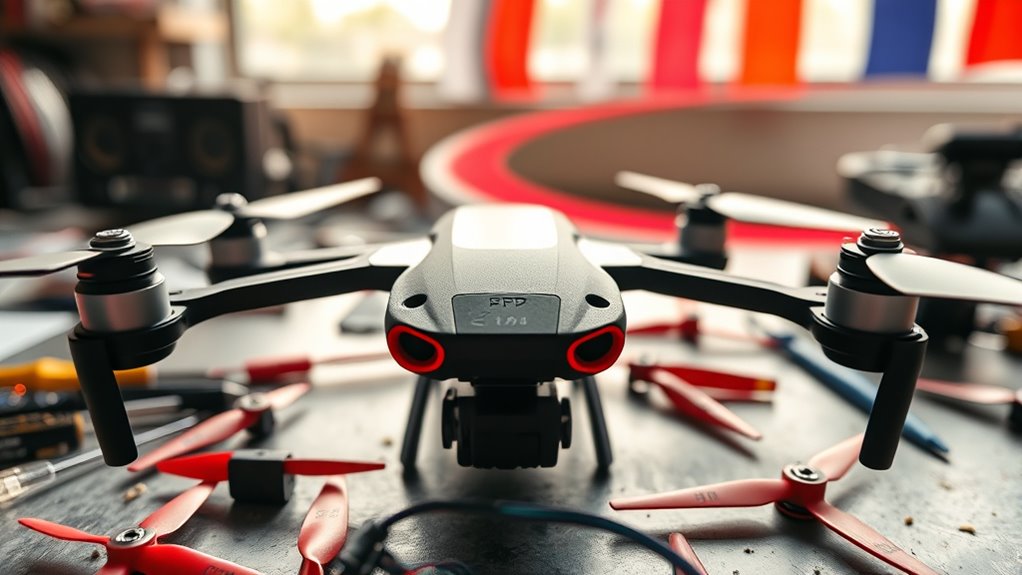
Starting your FPV drone journey can feel overwhelming, but selecting the right beginner model sets the foundation for future skills and enjoyment. Focus on drones that offer easy battery management, so you avoid crashes caused by power issues. Look for a stable camera with good stabilization; this helps you learn to fly smoothly and improves footage quality. When choosing your first FPV drone, consider:
- Durability and ease of repair, so you can learn without fear of breaking parts.
- Flight time and battery life, to maximize flying sessions without frequent recharges.
- Camera quality with stabilization features, to get clear visuals during practice.
- Understanding the importance of local automation and their role in building foundational knowledge for FPV racing. Additionally, selecting a drone with user-friendly controls can make your initial flights more successful and enjoyable.
Picking a drone with these features guarantees you build confidence, develop skills, and enjoy the thrill of FPV racing.
Understanding FPV Gear and Components

Understanding FPV gear and components is essential for building a solid foundation in drone racing. Your FPV goggles are your window to the race, providing real-time video feed from your drone’s camera, so choosing comfortable, high-quality goggles improves your experience. The clarity, latency, and field of view matter, as they directly impact your control and immersion. Drone motors are the heart of your craft, determining speed, agility, and overall performance. Powerful, efficient motors enable quick acceleration and sharp turns, essential for competitive racing. Alongside these, you’ll need a reliable flight controller and a sturdy frame. Knowing how each component works and fits together helps you troubleshoot, upgrade, and optimize your drone for faster, more precise racing.
Setting Up and Calibrating Your Drone

Before hitting the track, your drone needs to be properly set up and calibrated to perform at its best. This ensures maximum flight stability and responsiveness. Start with these steps:
- Perform calibration procedures on your accelerometer and gyroscope to ensure smooth, precise control.
- Check for firmware updates to improve performance, fix bugs, and add new features.
- Recalibrate your radio transmitter and receiver to confirm accurate control inputs.
Calibrating your drone involves following specific procedures, typically found in your flight controller’s manual, to align sensors correctly. Firmware updates keep your drone running smoothly and prevent issues during races. Taking the time to set up and calibrate properly boosts your confidence and improves your flying experience.
Basic Flying Skills and Maneuvers
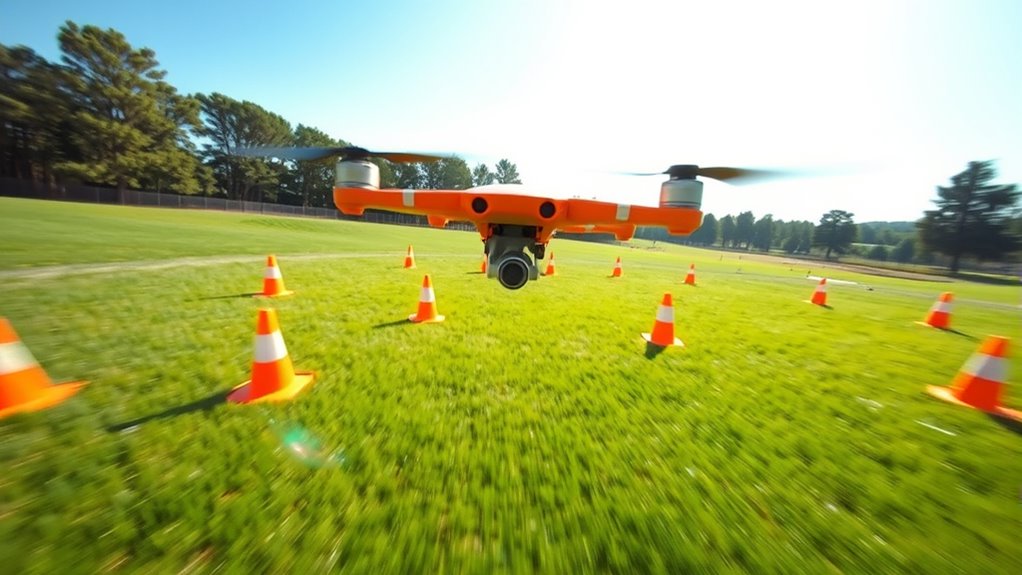
Mastering basic flying skills and maneuvers is essential for building confidence and control in your drone. Focus on developing smooth throttle control to maintain stable flight and accurate altitude adjustments. Practice simple maneuvers such as hovering, turns, and straight-line flying to build a solid foundation. Once comfortable, try basic aerial acrobatics like flips and rolls to improve your coordination and reaction time. These skills help you stay precise and responsive, which is *vital* during races. Remember, consistency is key—practice regularly to reinforce muscle memory. As you progress, you’ll gain better control over your drone’s movements, making advanced flying techniques easier to master. Building these core skills will prepare you for more complex maneuvers and confident navigation during competitive flying.
Navigating Race Courses and Obstacles
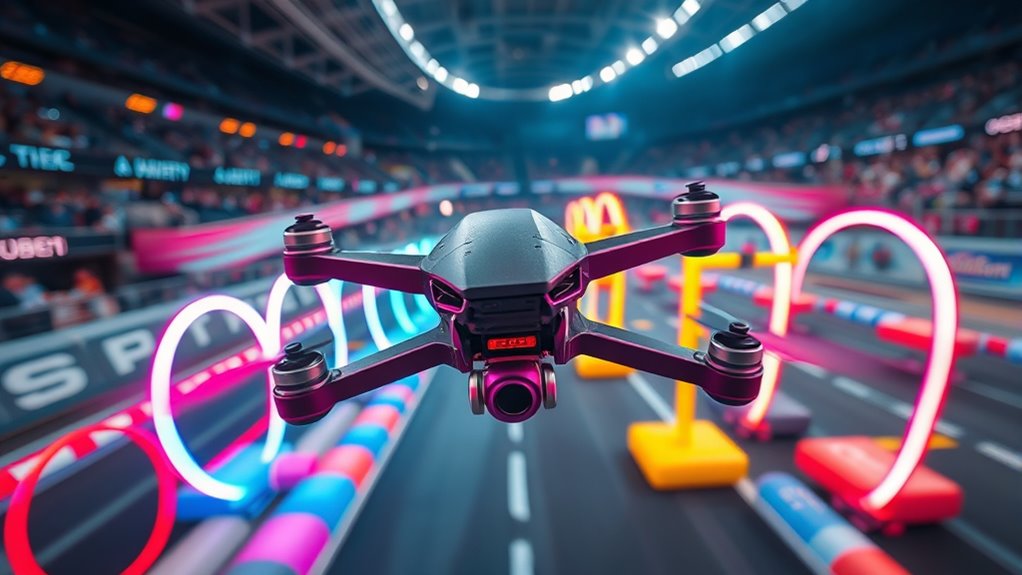
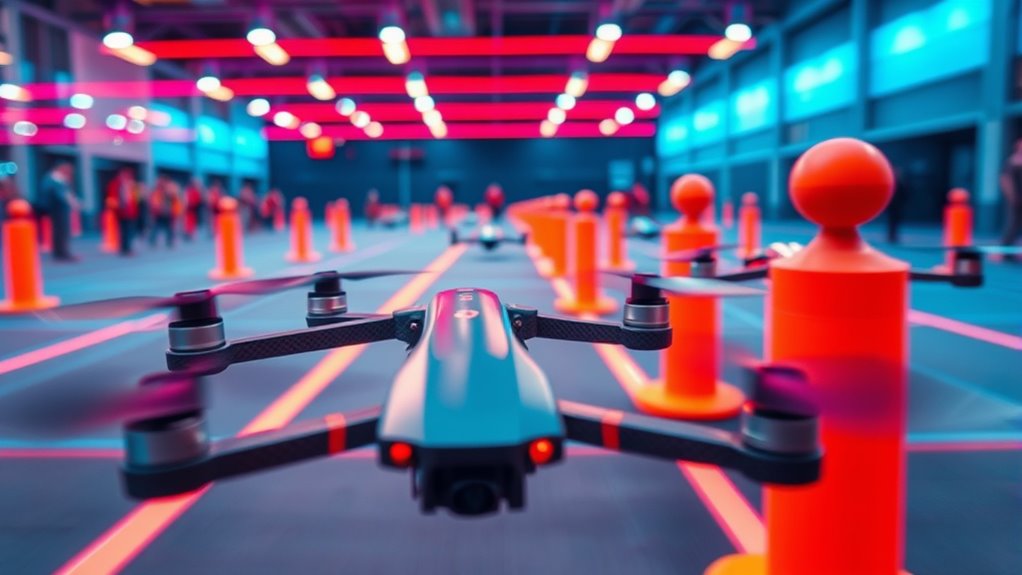
Navigating race courses and obstacles requires sharp focus and quick decision-making. You need to read the course design carefully, anticipate obstacle positions, and react swiftly to maintain speed. To succeed, keep these in mind:
Master course awareness and quick reactions to stay ahead and avoid crashes.
- Scan the course before your run, noting tight turns, gaps, and high-risk obstacles.
- Use precise throttle and pitch control for obstacle avoidance, especially around narrow sections.
- Practice memorizing the course layout to improve your response time and reduce hesitation.
Staying alert allows you to adapt to unexpected obstacles or changes in course design. Efficient maneuvering depends on your ability to combine quick reflexes with strategic planning, helping you maintain momentum and avoid costly crashes.
Safety Tips and Best Practices
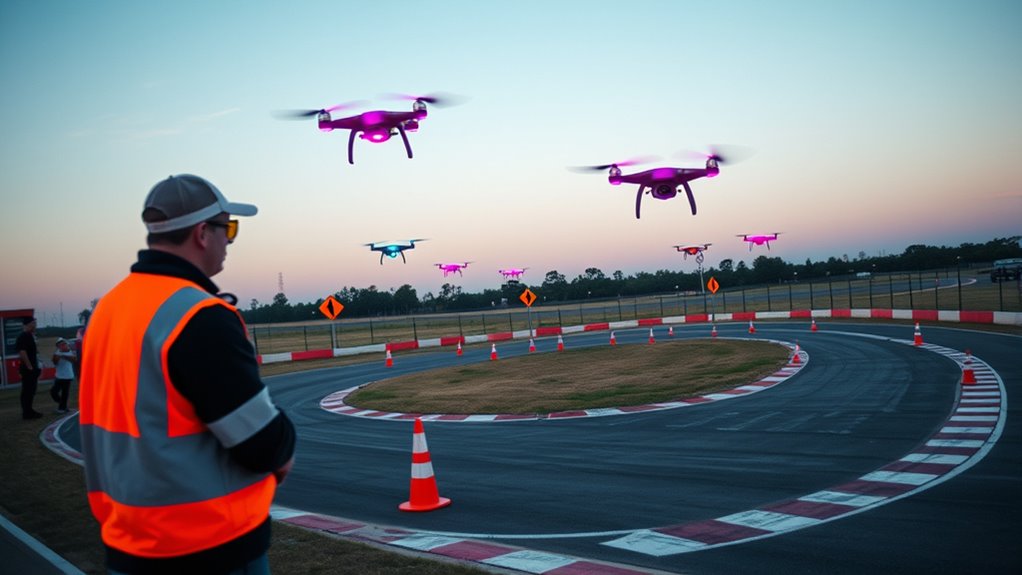
Ensuring safety during drone racing is essential to prevent accidents and protect both your equipment and others around you. Always prioritize propeller safety by keeping your propellers secure and handling them carefully when attaching or replacing. Remember that spinning propellers can cause injuries, so avoid touching them while the drone is powered on. Proper battery handling is equally important; never puncture or expose batteries to extreme heat, and always use a fireproof container for charging. Inspect batteries regularly for damage and store them in a cool, dry place. Wearing protective gear, like goggles, can also safeguard your eyes during crashes or propeller malfunctions. Following these safety tips helps create a secure environment, allowing you to enjoy drone racing with confidence.
Tips for Improving Your Racing Skills
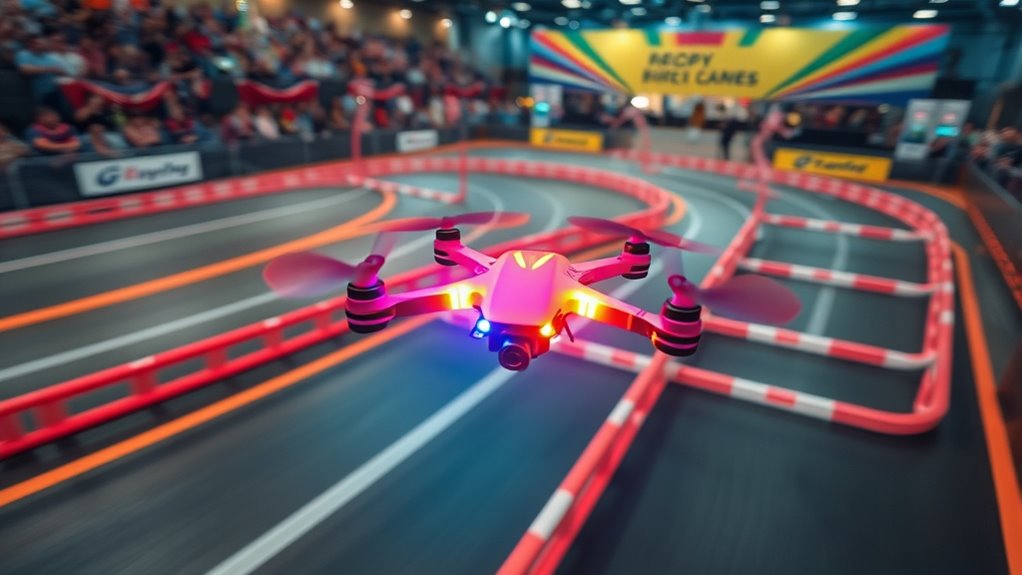
To improve your racing skills, practice consistently and focus on refining your control and reaction time. Enhancing aerial agility allows you to navigate tight turns and complex courses smoothly. Speed optimization involves balancing speed without sacrificing control, helping you stay competitive. Here are three tips to boost your skills:
Consistent practice and control refinement boost racing skills and aerial agility for smoother courses.
- Practice drills that emphasize precise maneuvers, like tight turns and quick stops.
- Record your flights to analyze your reaction times and identify areas for improvement.
- Gradually increase your drone’s speed during practice sessions, focusing on maintaining control at higher velocities.
Joining the FPV Racing Community
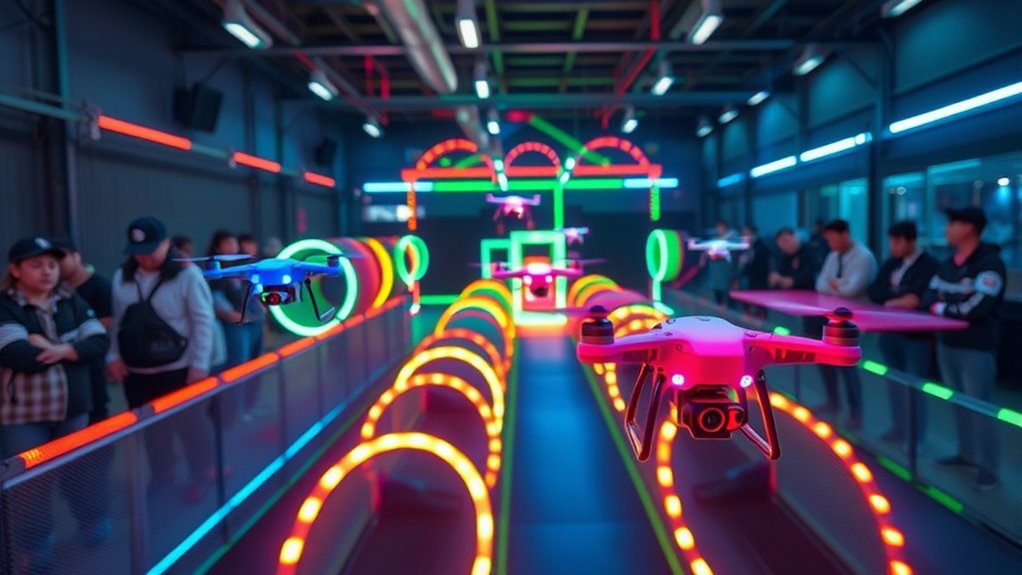
Joining the FPV racing community can markedly accelerate your skills and enjoyment of the sport. Connecting with a local pilot gives you valuable tips, feedback, and motivation to improve. Attending local meetups or informal sessions helps you practice in real race conditions and build confidence. Consider joining racing leagues in your area; they offer structured competitions and a sense of camaraderie. Being part of a league exposes you to different flying styles and advanced techniques, pushing you to grow as a pilot. Plus, racing leagues often organize events that keep the sport exciting and engaging. By immersing yourself in the community, you’ll learn faster, stay motivated, and make lasting connections with fellow enthusiasts who share your passion for drone racing.
Frequently Asked Questions
What Are the Common Penalties in FPV Drone Racing?
In FPV drone racing, you face common race penalties like crashing, cutting the course, or flying outside designated boundaries. These penalties can lead to time penalties or disqualification. To avoid them, focus on precise flying and follow race rules closely. If you do incur penalties, penalty mitigation strategies like quick recovery and maintaining control can minimize their impact on your overall time and performance.
How Do Weather Conditions Affect Drone Racing Performance?
Weather impact can profoundly influence your drone racing performance. Wind effects, especially gusts, make controlling your drone more challenging and can cause you to lose precision or crash. Rain or moisture can damage electronics and reduce visibility, while bright sunlight might cause glare, affecting your view through goggles. Always check weather conditions beforehand, and adapt your flying style to stay safe and competitive, especially in windy or unpredictable weather.
Can I Race With a DIY FPV Drone?
Sure, you can race with a DIY FPV drone, but don’t expect to beat the pros with a cobbled-together contraption. DIY drones often lack the refined racing modifications and aerodynamic finesse of factory models. If you’re serious, building a custom drone is a great way to learn, but remember, it’s also a ticket to frustration. So, gear up and prepare for some trial, error, and maybe a few crashes!
How Do I Troubleshoot Signal Interference Issues?
To troubleshoot signal interference, start by checking your antenna placement; make sure antennas are upright and pointed correctly for ideal signal. Switch to a different frequency if interference persists, avoiding crowded channels. Keep your transmitter and receiver away from other electronic devices, and consider using filters if needed. Regularly update firmware to fix bugs and improve signal stability. By adjusting antenna placement and selecting the right frequency, you can greatly reduce interference issues during your races.
What Are the Legal Regulations for Drone Racing in My Area?
Think of local drone laws as the rules of the road for your flying adventures. You need to check your area’s regulations, including registration requirements, before racing. Some places require registering your drone if it exceeds a certain weight or flying within specific zones. Always stay informed by visiting local government websites or contacting authorities. Following these regulations keeps your flights smooth and your racing fun, without any legal hiccups.
Conclusion
Think of FPV drone racing as entering a thrilling adventure, with each flight guiding you through a new chapter. As you learn and practice, you’ll navigate the skies like a skilled pilot steering through a complex maze. Embrace the journey, stay curious, and keep honing your skills. Before you know it, you’ll be soaring confidently, mastering the course with the ease of a seasoned explorer charting uncharted territory.