
To be respectful with your drone, always be mindful of privacy boundaries by avoiding private property without permission. Follow safety rules like checking weather conditions, maintaining visual line-of-sight, and inspecting your drone regularly. Stay within legal limits, register your drone, and avoid no-fly zones such as airports or military bases. Communicate openly with neighbors, introduce your plans, and respect their concerns. If you want to learn how to blend safety, legality, and courtesy seamlessly, keep exploring these key tips.
Key Takeaways
- Always obtain permission before flying over or near private properties to respect neighbors’ privacy.
- Maintain visual line-of-sight and avoid flying above people or crowded areas to ensure safety.
- Check and adhere to local airspace regulations and no-fly zones to prevent legal issues.
- Communicate openly with neighbors about your drone activities to build trust and prevent misunderstandings.
- Regularly inspect your drone and monitor battery levels to prevent accidents and ensure safe operation.
Understanding and Respecting Privacy Boundaries

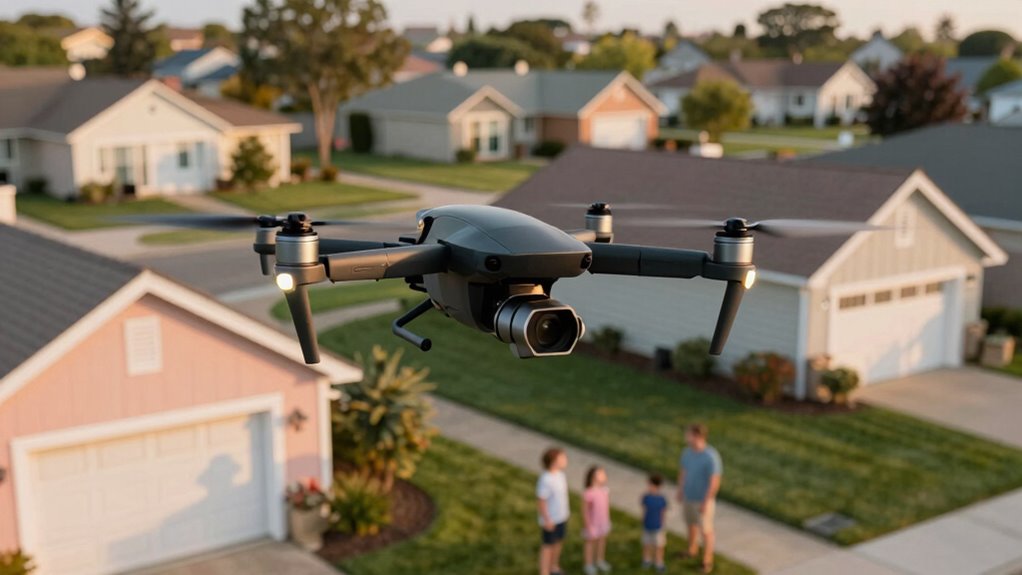
When flying a drone, it’s essential to respect others’ privacy boundaries to prevent intrusions and misunderstandings. You should always be aware of where your drone is flying and avoid capturing images or videos of private property without permission. Recognizing privacy boundaries means understanding that not everyone is comfortable with aerial footage of their home or yard. Before flying near private properties, consider consent considerations—ask for permission if possible, or stay at a safe distance. Respecting these boundaries shows your awareness of personal space and helps maintain good neighborly relations. Remember, even if your drone is legal to fly in a certain area, it doesn’t mean it’s appropriate to invade someone’s privacy. Being cautious and considerate minimizes conflicts and promotes responsible drone use. Additionally, understanding the importance of projector contrast ratio can help you better appreciate visual clarity and image depth in your home theater setup. Developing an understanding of reliable equipment setup can also improve your overall drone experience by ensuring safe and effective flights. Practicing respectful flying practices demonstrates your commitment to responsible drone operation and community respect. Incorporating auditory processing awareness into your flying habits can help you recognize and respond to environmental sounds that may signal nearby people or animals, further enhancing your outdoor environment awareness. Being mindful of outdoor environment awareness can further help you avoid accidental intrusions or disturbances during your flights.
Mastering Safe Flying Practices

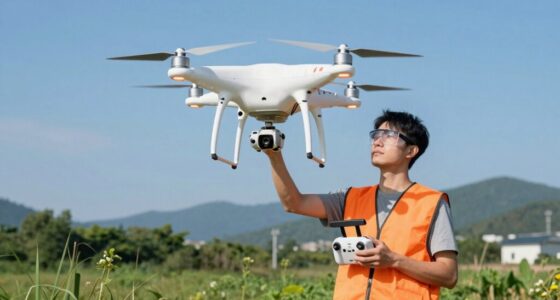
Practicing safe flying habits guarantees you can enjoy your drone while minimizing risks. Start by managing your battery carefully; always monitor charge levels and avoid flying on low power to prevent sudden power loss. Before each flight, check weather conditions—avoid strong winds, rain, or fog that could impair control or damage your drone. Keep your drone within visual line-of-sight and fly at appropriate altitudes to stay clear of manned aircraft. Be mindful of your surroundings, avoiding crowded areas and obstacles. Regularly inspect your drone for damage or loose parts. Stick to manufacturer guidelines for safe operation, and avoid pushing your drone beyond safe limits. Understanding drone safety protocols is essential for responsible flying. Being aware of simple safety strategies can help you prevent common issues and ensure a smoother flying experience. Additionally, staying informed about regulations and restrictions helps you comply with local laws and avoid penalties. Incorporating safety best practices from reputable sources can further enhance your flying experience and protect both your drone and others. Moreover, familiarizing yourself with best anime movies can provide a helpful mental break and inspire creative storytelling during downtime. By following these practices, you ensure a safe, enjoyable flying experience that respects safety protocols and minimizes accidents.
Navigating Legal Regulations and Permits

Are you aware of the legal requirements that come with flying a drone? You need to understand drone registration and insurance requirements to stay compliant. Register your drone with the FAA if it weighs over 0.55 pounds, and keep proof of registration onboard. Many areas also require liability insurance to cover potential damages. Failing to meet these regulations can lead to fines or confiscation. Here’s a quick overview:
| Requirement | Details | Important Notes |
|---|---|---|
| Drone Registration | Register with FAA for drones over 0.55 lbs | Keep registration number visible |
| Insurance Requirements | Obtain liability insurance for damages | Check local laws for specifics |
| No-Fly Zones | Avoid restricted airspace | Use apps to verify zones |
| Permits | Get permits for commercial use | Apply ahead of time |
| Flight Restrictions | Follow altitude and distance limits | Stay within legal boundaries |
Additionally, always stay informed about airspace regulations that may change based on your location or intended flight area. It’s also important to be aware of local drone laws that can vary significantly between regions and municipalities. Understanding airspace classifications can help you navigate these rules more effectively.
Respecting Local Airspace and No-Fly Zones

Understanding and respecting local airspace and no-fly zones is essential to flying your drone responsibly. Airspace restrictions are put in place to keep people and property safe, and ignoring them can lead to fines or confiscation. No-fly zones often include airports, government buildings, and crowded events. To stay compliant:
- Always check for updated maps showing restricted airspace before flying.
- Avoid flying near airports or military bases unless authorized.
- Respect temporary no-fly zones during emergencies or special events.
Communicating With Neighbors and Building Trust
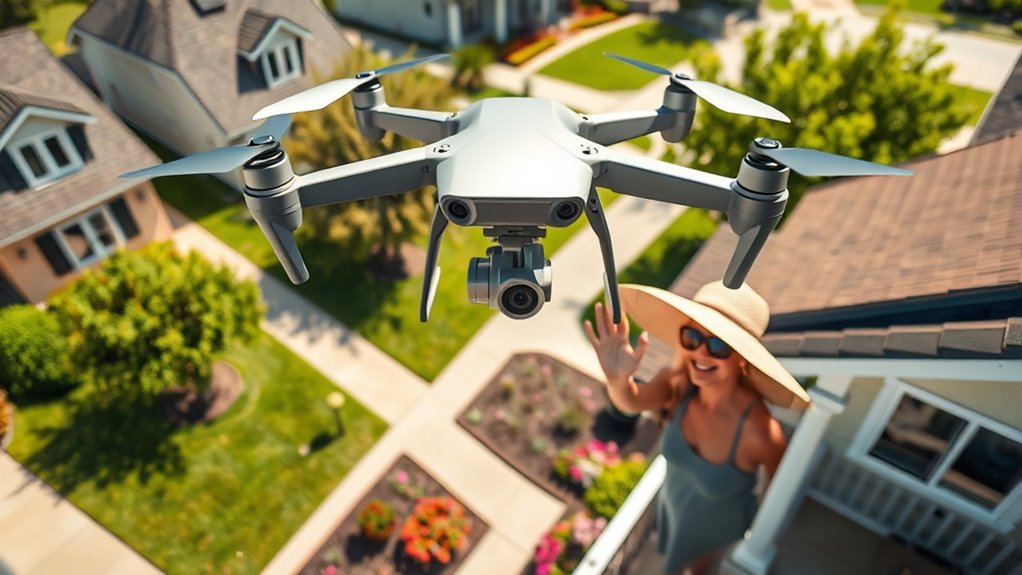
When flying your drone near neighbors, clear communication helps prevent misunderstandings and fosters trust. Engaging with your community through open dialogue shows you respect their privacy and concerns. Before flying, introduce yourself and explain your plans, which builds a foundation for positive community engagement. If issues arise, approach conflict resolution calmly and listen to your neighbors’ perspectives. Being transparent about your drone activities reassures them you’re responsible and considerate. Sharing flight schedules or obtaining their input can further strengthen trust. Remember, maintaining good drone etiquette** not only prevents disputes but also encourages mutual respect. By being proactive and approachable, you demonstrate good drone etiquette, making your flying experience enjoyable for everyone involved and maintaining harmony within your neighborhood. Additionally, understanding drone safety guidelines helps ensure you fly responsibly and avoid potential hazards or legal issues. Practicing attention to detail during your flights further minimizes risks and demonstrates your commitment to safe operation. Being aware of your surroundings and the local regulations can also prevent unintended disturbances or legal complications. Moreover, using proper filtration and pump protection** techniques can help maintain your equipment’s performance and reduce the risk of malfunctions.
Frequently Asked Questions
How Can I Tell if My Drone Is Disturbing Wildlife?
You can tell if your drone is disturbing wildlife by observing their behavior during your flights. If animals seem agitated, flee, or stop their activity, you’re likely causing habitat disturbance. During wildlife observation, keep a respectful distance and monitor their reactions. If you notice increased movement or noise, consider lowering your altitude or pausing your drone use to avoid stressing the animals and preserve their natural habitat.
What Are the Best Times of Day to Fly Drones Responsibly?
Flying your drone is like catching the first gentle rays of dawn or the last warm glow of sunset. The best flying hours are during early morning and late afternoon, when the light is soft and the air is calmer. These times are ideal daylight, helping you avoid busy crowds and minimize wildlife disturbance. Stick to these periods to fly responsibly and keep everyone, including nature, happy.
How Do I Handle Drone Emergencies or Malfunctions Safely?
In a drone emergency or malfunction, stay calm and prioritize safety. Quickly initiate emergency response procedures, such as landing your drone immediately if it’s malfunctioning or out of control. Maintain visual contact and avoid obstacles. If needed, disconnect power or reset controls. Always review your drone’s manual beforehand, so you know how to handle malfunctioning situations efficiently. Remember, swift and safe malfunction handling minimizes risks to others and your equipment.
Are There Specific Noise Level Limits for Drone Operation?
Imagine your drone’s noise as a whisper in a library—quiet enough to not disturb. Yes, there are noise restrictions, and you should stay within decibel limits set by local regulations. Typically, these limits range from 60 to 70 decibels at a certain distance, often 50 feet. Always check your area’s rules before flying, to guarantee your drone stays within acceptable noise levels and keeps everyone happy.
How Can I Ensure My Drone’s Privacy Features Are Effective?
To guarantee your drone’s privacy features are effective, start by reviewing and adjusting the privacy settings on your drone’s app. Disable or limit camera permissions where unnecessary, and only enable camera functions when needed. Regularly update your drone’s firmware to keep security features current. Additionally, monitor and control who can access your footage, and avoid flying over private property without permission to respect others’ privacy.
Conclusion
By following these drone etiquette and safety tips, you’re already taking important steps to avoid trouble. But remember, as drone technology evolves and regulations shift, the line between responsible flying and potential issues can become blurry. Are you prepared for surprises that might test your knowledge and patience? Stay vigilant, stay respectful, and keep learning—because the next unexpected challenge could be just a flight away. Will you be ready when it comes?