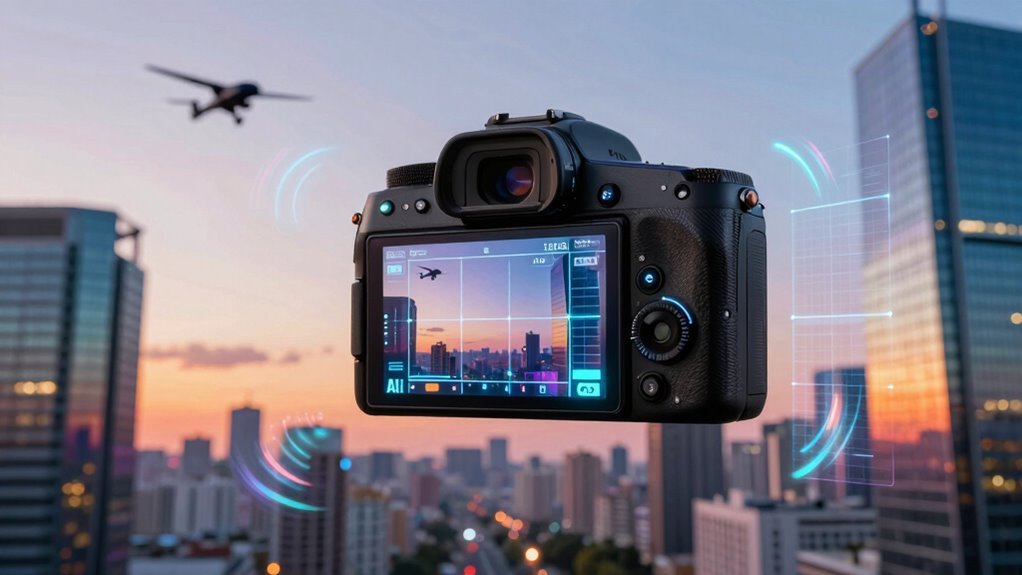

By 2030, camera technology will become smarter, enabling you to capture perfect shots automatically with AI-driven scene recognition and adjustments. You’ll experience richer, clearer images thanks to advanced computational imaging even in low light. Immersive 3D captures and holographic displays will let you explore photos in lifelike detail. Augmented reality will seamlessly blend digital elements into your photos, while compact and wearable devices will make high-quality photography effortless on the go. Discover more on how these innovations shape your visual world.
Key Takeaways
- AI-powered cameras will automatically optimize settings and suggest compositions for professional-quality photos with minimal user input.
- Computational imaging will enable ultra-clear, detailed images even in low-light or challenging environments.
- 3D depth sensing and holographic displays will create immersive, lifelike visual experiences and interactive content.
- Seamless integration with augmented reality will blend digital elements into real-world scenes for enhanced creativity.
- Compact, wearable devices will deliver stabilized, high-quality images and videos in everyday activities.
Top picks for "future photography ways"
Open Amazon search results for this keyword.
As an affiliate, we earn on qualifying purchases.
AI-Driven Photography and Smart Cameras

As AI technology continues to advance, it’s transforming how you capture and process images. Smart cameras now feature AI-driven functions that automatically optimize settings for perfect shots, reducing the need for manual adjustments. These cameras can recognize scenes, adjust exposure, and even suggest composition tweaks on the fly. AI also enhances photo editing, allowing you to effortlessly improve images with minimal effort. Plus, improvements in camera ergonomics mean these devices are more comfortable and intuitive to hold and operate, making photography easier and more enjoyable. As a result, the user experience can be significantly improved, allowing for more intuitive operation and faster results. Moreover, the integration of European cloud infrastructure ensures these AI-powered systems operate with sustainable and secure solutions, safeguarding user data and reducing environmental impact. This integration of AI and ergonomic design is shaping a future where capturing stunning images becomes seamless, efficient, and accessible to everyone. Additionally, user-friendly interfaces are making advanced photography features more accessible to beginners, encouraging more people to explore their creative potential. As technology continues to evolve, the development of automated image recognition systems will further enhance the ease and quality of capturing moments. New advancements in smart sensor technology are also expected to improve low-light performance and dynamic range, making photography more versatile in various conditions.
Enhanced Computational Imaging Techniques
Building on the advancements in AI-driven smart cameras, enhanced computational imaging techniques are revolutionizing how you capture and create images. Sensor innovation allows cameras to gather more detailed data, even in low-light or challenging conditions. This data is then processed through advanced image processing algorithms, enabling you to produce clearer, sharper images with richer color and depth. These techniques help reduce noise, correct focus, and reconstruct high-resolution images from multiple shots or incomplete data. As a result, your photos will look more professional without extensive editing. This evolution empowers you to push creative boundaries, capturing moments with unprecedented clarity and detail. Sensor technology and other innovations in image capturing are crucial for identifying high-growth sectors and tailoring imaging technology innovations to meet consumer demand. Computational imaging is shaping a future where your camera’s intelligence and processing power turn simple snapshots into stunning visual stories. Additionally, improvements in image processing algorithms are making it easier for users to achieve professional-quality results effortlessly. Furthermore, ongoing technological advancements continue to expand the potential applications of computational imaging across various fields.
Immersive and 3D Visual Capture
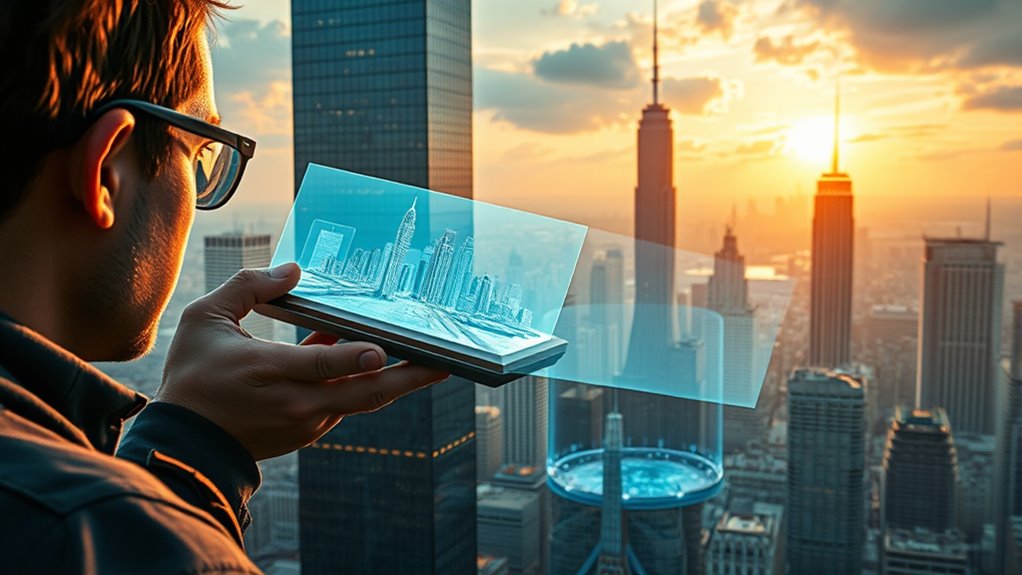
Have you ever wondered how your photos can become immersive experiences? With advances in depth sensing technology, cameras will soon capture scenes in three dimensions, offering richer detail and a sense of depth. These sensors will allow you to record not just a flat image, but a full spatial representation of the environment. Coupled with holographic displays, your photos could be experienced as three-dimensional projections, creating lifelike visuals that you can view from different angles. This leap in immersive and 3D visual capture means you won’t just see a picture—you’ll step into it. As camera tech evolves, expect your images to transcend traditional flatness, transforming into dynamic, interactive experiences that bring your memories to life in vivid detail. Additionally, understanding networking hardware will be essential for sharing these high-resolution, immersive images seamlessly across devices.
Seamless Integration With Augmented Reality
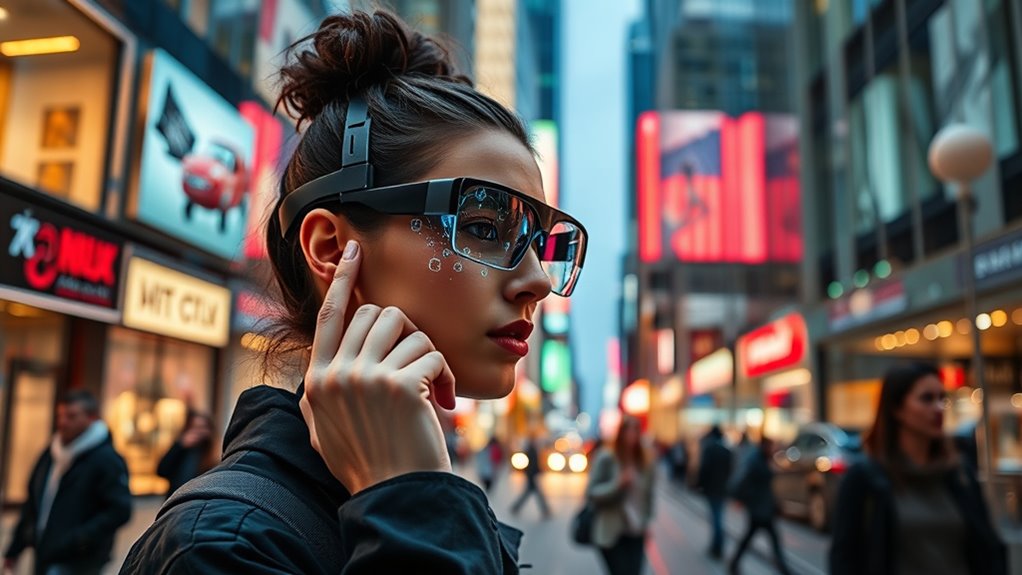
Augmented reality (AR) is becoming increasingly seamless with advancements in camera and software integration, allowing your photos to blend effortlessly into real-world environments. With improved AR capabilities, your camera can now create dynamic overlays that enhance your images with real-time information or virtual objects. A sophisticated camera overlay system ensures that digital elements align perfectly with physical surroundings, making AR experiences feel natural and intuitive. This integration enables you to view virtual objects within your environment through your camera lens, enhancing creativity and interaction. As AR becomes more refined, your photos will not only capture moments but also embed digital enhancements, transforming how you document and experience the world around you. The future of photography will blur the line between digital and reality like never before. Additionally, advancements in color accuracy will ensure that digital overlays and real-world visuals are indistinguishable, providing a more immersive experience. As these technologies evolve, the importance of sensor precision will grow, ensuring that digital and physical elements are perfectly aligned for more realistic augmented experiences.
Advancements in Compact and Wearable Devices
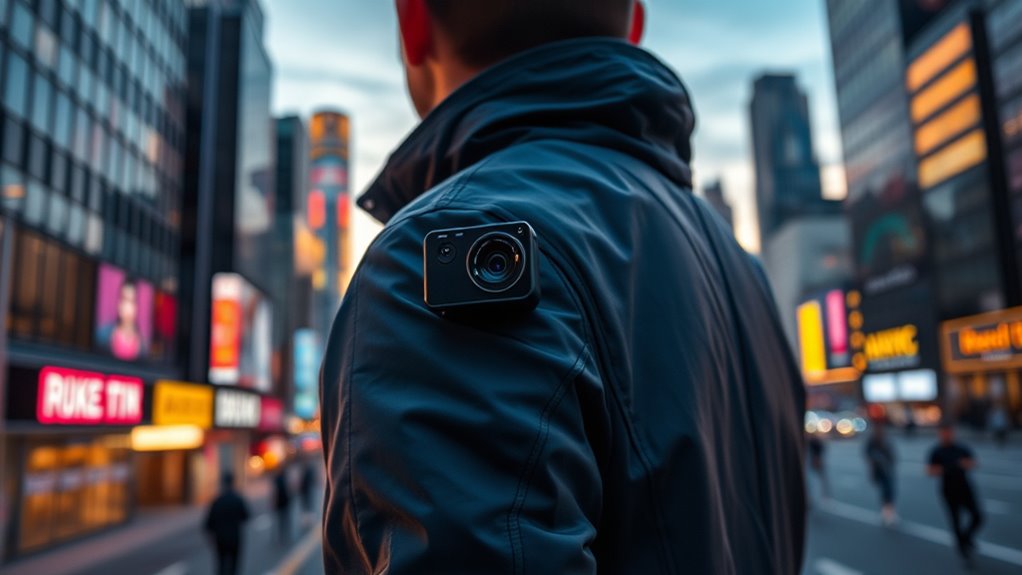
As technology advances, compact and wearable devices are becoming more powerful and versatile, transforming how you capture and share moments on the go. Handheld stabilization is now miniaturized, allowing you to shoot steady videos and sharp photos without bulky equipment. Wearable cameras, like smart glasses, are integrating stabilization technology, so your hands-free shots remain smooth. Lens customization is also evolving; you can now swap out lenses on small devices to achieve different perspectives, from wide-angle to macro, without carrying multiple cameras. These innovations make capturing high-quality images effortless in everyday situations. Additionally, miniaturization of stabilization technology is enabling even more seamless and portable solutions for active lifestyles, giving you more creative freedom, capturing spontaneous moments with professional-grade stability and tailored optics, all in compact, wearable forms that seamlessly fit into your active lifestyle. Furthermore, advanced sensor technology is improving low-light performance and color accuracy, enhancing image quality across various environments.
Frequently Asked Questions
How Will AI Personalize Photography Experiences for Individual Users by 2030?
By 2030, AI will personalize your photography experience through tailored filters and AI editing that match your unique style and preferences. As you capture moments, smart cameras will analyze your habits and suggest filters or edits in real-time, making every shot uniquely yours. This seamless integration guarantees your photos reflect your personality, creating a more engaging and customized photography journey without any extra effort on your part.
Will Future Cameras Eliminate the Need for Manual Settings Entirely?
Future cameras likely won’t eliminate manual settings entirely, but they’ll handle most adjustments automatically. You’ll still have control over focus, thanks to advanced auto focus systems, and image stabilization will ensure sharp shots without effort. You might choose manual mode for creative shots, but for everyday photography, smart auto features will do the work, giving you perfect images effortlessly. So, manual settings will remain useful but less necessary.
How Will Advancements Impact the Privacy and Security of Visual Data?
Advancements in camera tech will raise privacy and security concerns as facial recognition becomes more accurate and widespread. You might worry about unauthorized access to your visual data, but robust data encryption can safeguard your images and videos. By staying aware of these risks and supporting strong privacy measures, you can help ensure your personal information remains secure even as technology evolves.
Can Wearable Cameras Fully Replace Traditional Photography Equipment?
You might think wearable cameras will fully replace traditional photography equipment, but they can’t capture the same artistic depth and control. Wearable cameras are a part of the photography evolution, offering convenience and spontaneous moments. However, for professional quality and creative flexibility, traditional gear still holds value. Embrace both, knowing wearable tech enhances your experience, while classic tools remain essential for true artistic expression.
What Ethical Considerations ARise With Immersive 3D and AR Capturing Technologies?
You should consider that immersive 3D and AR capturing technologies raise significant ethical concerns, such as privacy concerns and consent dilemmas. As you use these tools, you’re responsible for respecting others’ privacy rights and obtaining proper consent before recording or sharing their images. Failure to do so could lead to legal issues or harm relationships. Always prioritize transparency and ethical practices when deploying advanced immersive technologies.
Conclusion
By 2030, camera technology will revolutionize your photography experience, turning it into an endless playground of innovation. These advancements are like a symphony of progress, harmonizing AI, immersive visuals, and seamless AR integration. As you embrace these changes, you’ll find yourself wielding tools that make capturing moments feel effortless yet extraordinary. The future of photography isn’t just coming; it’s arriving like a tidal wave, reshaping how you see and share your world.