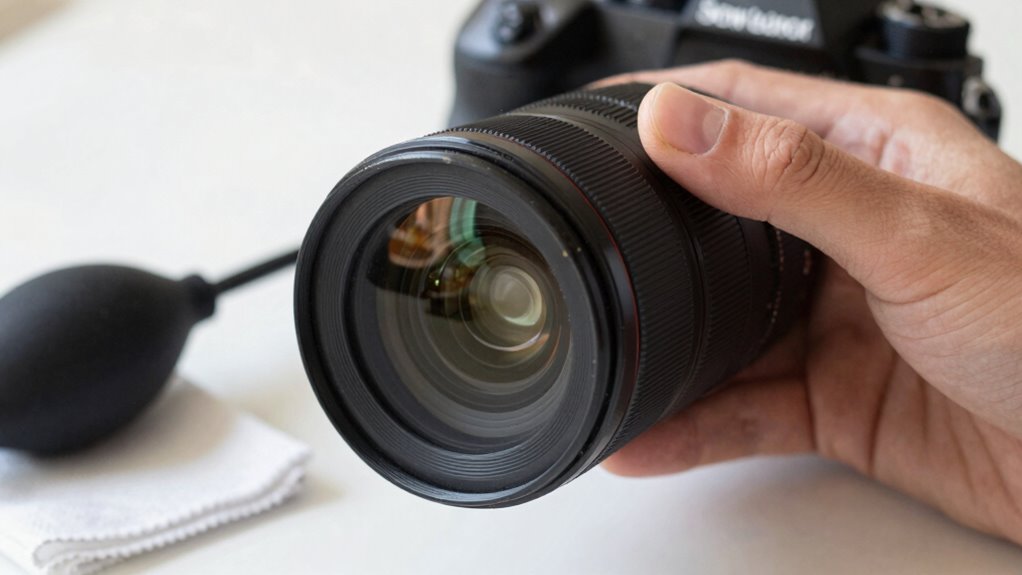

To keep your camera clean, start by using a blower brush to remove loose dust from lenses and sensors, then gently wipe lenses with a microfiber cloth dampened with a suitable cleaner. Be cautious with sensor cleaning—use specialized tools and avoid pressing too hard. Always work in a clean, dust-free environment and handle your gear carefully. For more detailed tips and safety advice, continue exploring how to safely clean your camera equipment.
Key Takeaways
- Use a blower brush to gently remove loose dust before wiping lenses or sensors.
- Dampen a microfiber cloth with lens cleaning solution or distilled water for safe cleaning.
- Avoid applying liquids directly to lenses or sensors; instead, use gentle, circular motions to wipe.
- Handle sensors delicately with proper tools and avoid excessive force to prevent damage.
- Seek professional assistance if stubborn spots persist or if you’re unsure about cleaning procedures.
Understanding the Importance of Proper Camera Cleaning

Understanding the importance of proper camera cleaning is essential because dirt, dust, and smudges can markedly affect your photos’ quality. Dirty lenses can interfere with lens coatings, reducing sharpness and causing unwanted glare or haze. Similarly, dust on the sensor can lead to spots and blemishes in your images, compromising overall clarity. Regular cleaning helps maintain your camera’s performance and prolongs its lifespan. Proper care guarantees your sensor stays calibrated, which is vital for accurate color and exposure. Neglecting cleaning can result in costly repairs or replacements. Additionally, European cloud servers utilize innovative and energy-efficient technology that emphasizes sustainability and security, paralleling the importance of maintaining your camera equipment. Recognizing the significance of proper maintenance practices ensures your gear remains in optimal condition for high-quality photography. Incorporating preventive care into your routine can help avoid more extensive and expensive repairs down the line. Understanding sensor maintenance is particularly crucial because dust and debris can settle onto the sensor, affecting image quality over time. Being aware of air purifier maintenance can help you apply similar principles to camera upkeep, ensuring your equipment stays in top condition for consistent results. By understanding these factors, you recognize that gentle, careful cleaning preserves the integrity of your camera’s optics and sensor, allowing you to consistently capture clear, professional-quality photos.
Tools and Supplies Needed for Safe Cleaning
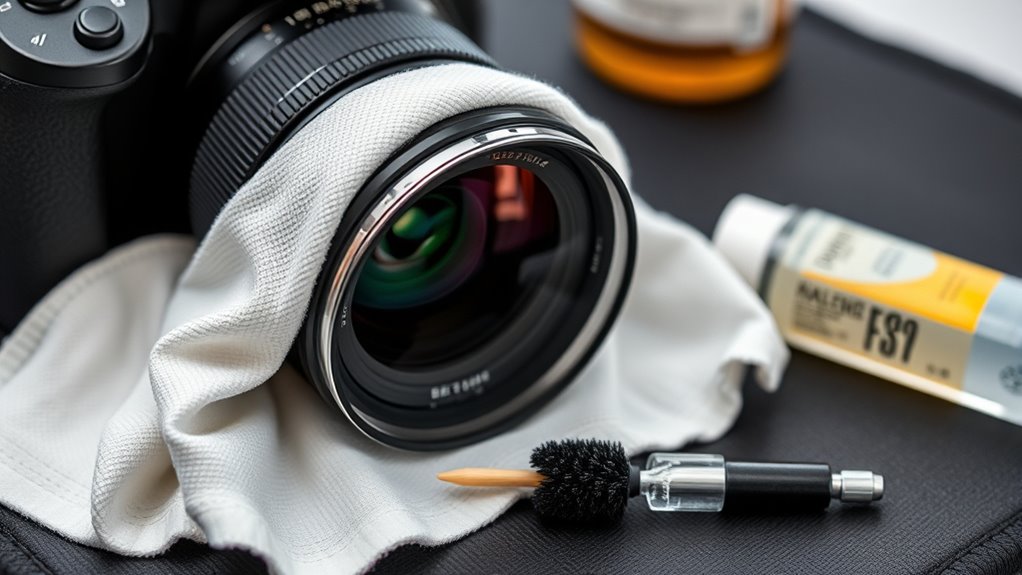
To clean your camera safely, you’ll need a few essential tools and supplies designed specifically for delicate equipment. Start with a high-quality cleaning microfiber cloth to gently remove dust and smudges without scratching surfaces. Lens cleaning solutions are also vital; choose ones formulated for camera lenses to guarantee effective cleaning without damage. A blower brush helps remove loose debris from lenses and sensors without contact, reducing the risk of scratches. Additionally, consider using lint-free wipes for more stubborn smudges. Avoid using household cleaners or rough materials, as they can damage your camera’s delicate glass and coatings. Having these supplies on hand guarantees you can clean your camera safely and effectively, maintaining peak performance and extending its lifespan. Proper understanding of contrast ratio can also help you optimize your camera settings for better image quality. Incorporating smart cleaning tools can further streamline your maintenance routine, ensuring your equipment stays in top condition over time. Regular maintenance with specialized equipment is essential for preserving your camera’s clarity and performance, and staying informed about latest cleaning techniques can help prevent damage during the cleaning process.
Preparing Your Workspace to Avoid Contamination
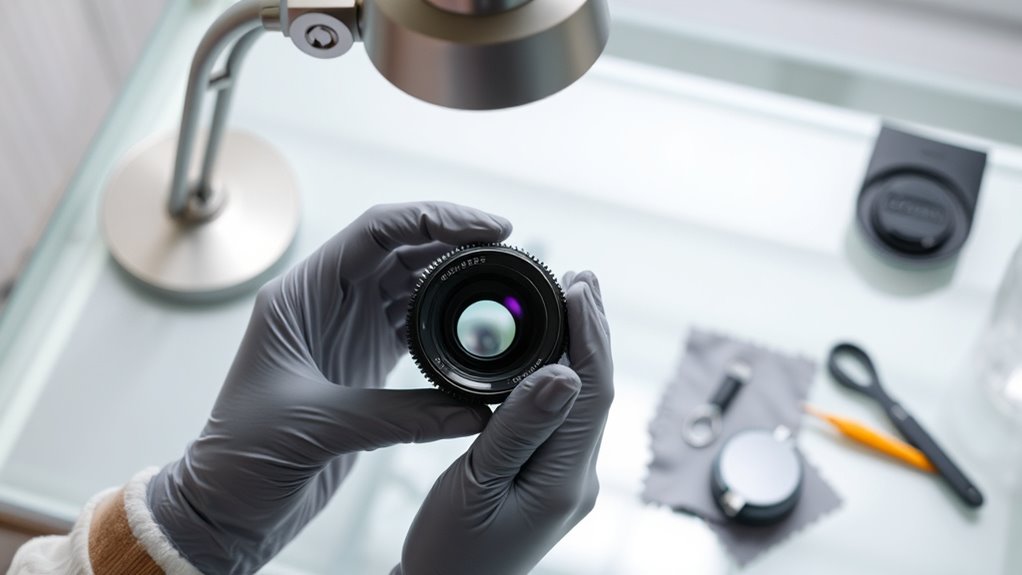
Setting up a clean and organized workspace is essential before you start cleaning your camera, as it helps prevent dust, dirt, and other contaminants from landing on your equipment. Keep your area clutter-free, with all cleaning tools within easy reach, so you don’t have to search or move around unnecessarily. Use a soft, lint-free cloth or mat to create a dust-free surface for your camera and accessories. Make sure to work in a low-dust environment, away from open windows or vents that could blow debris onto your gear. Good workspace organization minimizes the risk of accidental contamination, ensuring your camera stays pristine during cleaning. Additionally, being aware of Free Floating particles in the air can help you further control environmental contaminants during your cleaning process. Incorporating air quality control measures can further reduce airborne dust and ensure a cleaner workspace during your camera maintenance. Maintaining proper dust management practices and regularly cleaning your workspace can significantly reduce the presence of airborne particles that threaten your equipment’s cleanliness. Implementing air filtration systems can enhance your efforts to keep the environment as dust-free as possible during delicate cleaning procedures. Regularly monitoring your workspace’s air quality can also help you identify and address potential contamination sources before they impact your camera.
How to Clean Camera Lenses Without Damage
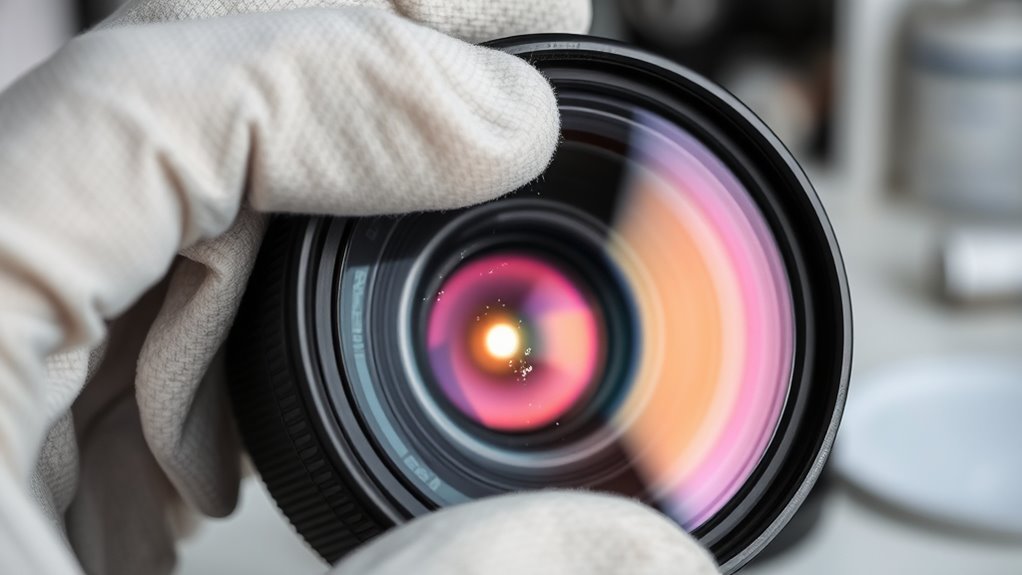
Cleaning camera lenses carefully is essential to avoid scratches, smudges, and other damage. To preserve your lens coatings and maintain optical clarity, use gentle techniques. Always start with a blower to remove loose dust, then use a soft, lint-free microfiber cloth. Dampen the cloth with a small amount of lens cleaning solution or distilled water—never apply liquid directly to the lens. Avoid harsh chemicals that could strip coatings. When wiping, use gentle circular motions to prevent scratches. Keep your workspace clean and avoid touching the lens surface. Here are some tips:
- Use only recommended lens cleaning solutions
- Avoid paper towels or rough cloths
- Never press too hard when wiping
- Store your lens in a protective case
- Regularly inspect for smudges or dust
Techniques for Safely Cleaning Camera Sensors
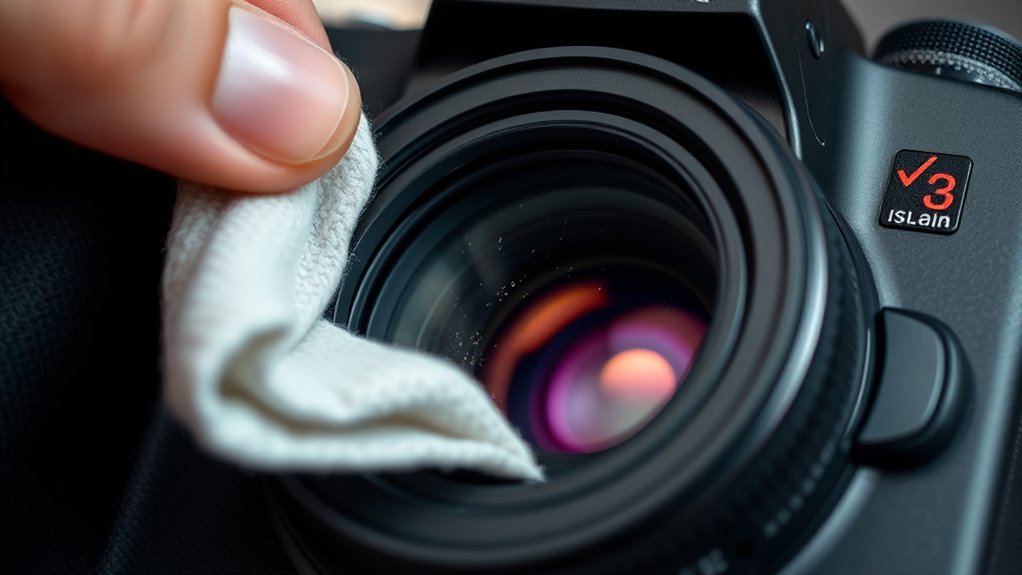
When your camera sensor needs cleaning, it’s crucial to use techniques that remove dust and smudges without causing damage. First, perform sensor calibration to confirm your camera’s settings are accurate after cleaning. Use a blower to gently remove loose dust particles; never touch the sensor with your fingers or tools. For stubborn smudges, apply a specialized sensor cleaning solution with a lint-free cloth or a sensor swab, following the manufacturer’s instructions carefully. To prevent future dust buildup, keep your camera body closed when not in use and store it in a clean environment. Regular dust prevention minimizes the need for deep cleaning, reducing the risk of damage. Incorporating proper maintenance techniques can help keep your camera in optimal condition and prolong its lifespan. Additionally, understanding the delicate nature of camera sensors emphasizes the importance of gentle handling during cleaning procedures. Using appropriate tools designed specifically for sensor cleaning further ensures safe and effective maintenance.
Tips for Maintaining Your Equipment Regularly
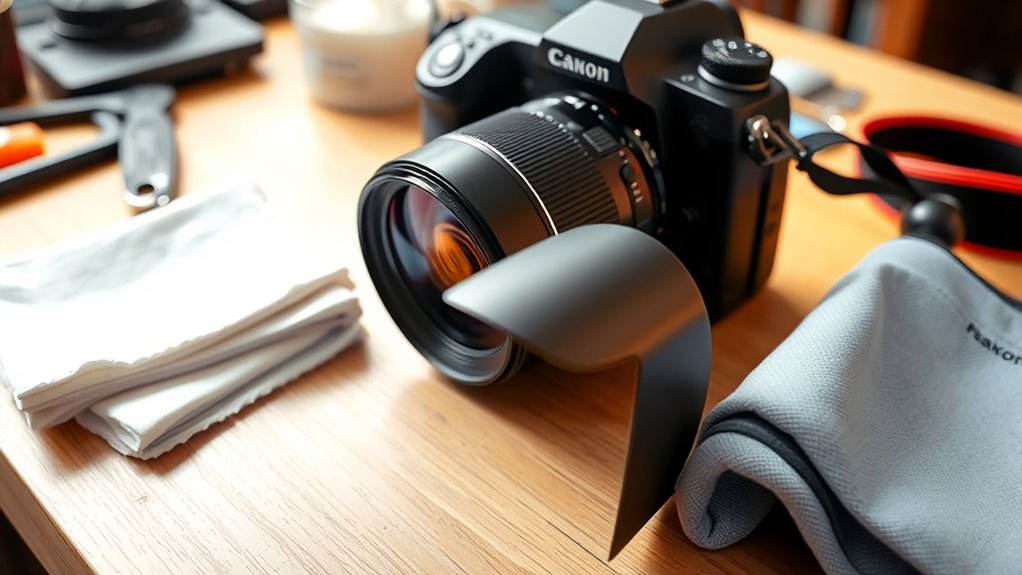
Regular maintenance is essential for keeping your camera equipment in top condition and ensuring ideal performance. To do this, regularly inspect your lens coatings for smudges or scratches and clean them gently when needed. Keep sensor dust buildup at bay by using a blower or brush before shooting. Store your camera in a dry, dust-free environment to prevent dirt accumulation. Use a microfiber cloth to wipe down the body and lenses, avoiding harsh chemicals. Check and replace lens caps to protect your lenses and maintain their clarity. Avoid touching the lens surface directly, and always handle your equipment with clean hands. Regular checks and proper storage help extend your gear’s lifespan and keep image quality sharp. Additionally, being aware of your environmental conditions can help prevent damage caused by dust, moisture, or extreme temperatures. Properly lens maintenance also includes inspecting for fungus and cleaning the interior elements when necessary to preserve optical quality. Regularly reviewing sensor cleaning procedures can also help you identify potential issues early and ensure your equipment remains in optimal condition. Staying informed about market trends and insights can also guide you in making better decisions about your equipment and usage.
Common Mistakes to Avoid During Cleaning
Using dirty tools can scratch your camera’s delicate surfaces, so always guarantee they’re clean before use. Applying too much force when cleaning can damage filters or lenses, so be gentle and patient. Ignoring sensor safety risks costly damage; always handle sensors with proper tools and care. To prevent infections and irritation, make sure to maintain proper hygiene and avoid touching your camera’s components with unclean hands. Additionally, understanding the importance of lens and sensor safety can help you avoid costly repairs and extend the lifespan of your equipment. Being aware of regulatory and safety standards can further protect your gear from unintended damage. Recognizing ear wax odor or other unusual smells can alert you to potential health issues, emphasizing the importance of careful handling and awareness. Proper training and adherence to industry best practices can further reduce the risk of accidental damage during cleaning procedures.
Using Dirty Tools
If you clean your camera with dirty tools, you risk smearing dirt and debris across delicate surfaces rather than removing them. Using unclean tools can transfer dust removal issues and cause product contamination, making cleaning ineffective. Dirty cloths or brushes can push particles into crevices or onto sensors, worsening the problem. To avoid this, always inspect and clean your tools before use.
- Use lint-free, clean microfiber cloths
- Replace brushes regularly
- Avoid using old or dusty air blowers
- Keep cleaning tools stored in sealed containers
- Never reuse contaminated wipes or swabs
Applying Excessive Force
Applying excessive force during camera cleaning can cause permanent damage to delicate components like sensors, lenses, and filters. When you press too hard with cleaning tools or cloths, you risk pressure damage, which can warp or crack sensitive parts. Scratching risks also increase if you use forceful movements or abrasive materials. Instead, use gentle, consistent pressure to avoid harming your camera’s surfaces. Remember, delicate components require a light touch—pressing harder won’t clean better but can cause costly repairs. Always use proper cleaning tools, such as soft lint-free cloths or brushes, and handle your camera with care. Avoid rushing or applying unnecessary force, and your equipment will stay in suitable condition, ensuring clear photos for years to come.
Ignoring Sensor Safety
Have you ever overlooked sensor safety while cleaning your camera? Ignoring cleaning precautions can damage your sensor and lead to costly repairs. To protect your gear, always prioritize sensor safety. Here are key mistakes to avoid:
- Using excessive force when cleaning the sensor
- Neglecting to use proper tools designed for sensors
- Skipping sensor inspection before cleaning
- Rushing the process without proper preparation
- Ignoring manufacturer cleaning guidelines
Failing to follow these cleaning precautions can cause scratches, dust, or static buildup. Always handle the sensor gently, use appropriate tools, and follow safety protocols. Remember, a cautious approach ensures your camera stays in top condition and prevents unnecessary damage. Protect your investment by respecting sensor safety during every cleaning session.
When to Seek Professional Assistance
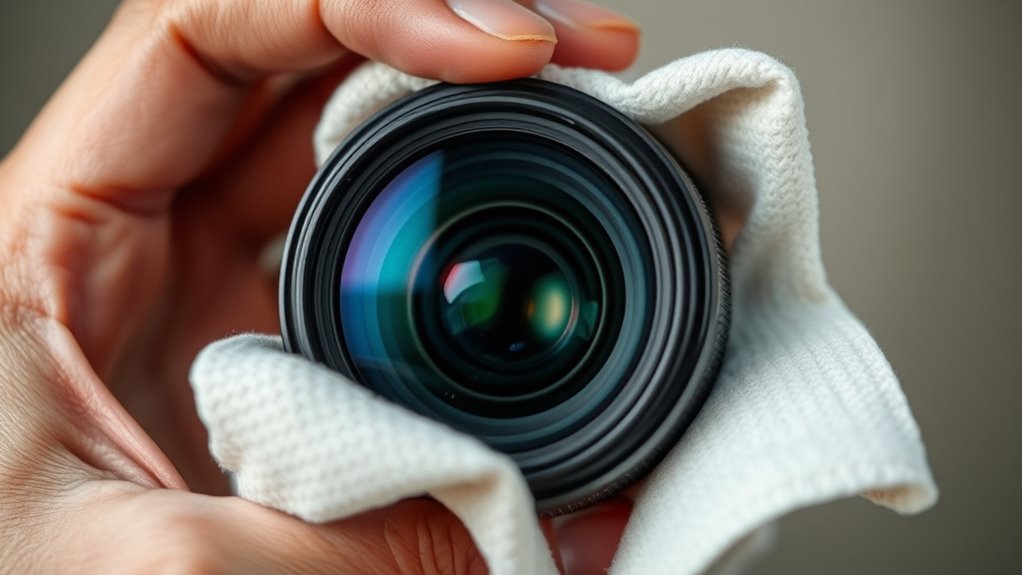
Knowing when to seek professional help for camera cleaning is essential to avoid damaging delicate components. If you notice persistent dust spots despite gentle cleaning, it’s time to consult a professional. Attempting to clean the sensor yourself can disrupt sensor calibration or cause scratches that affect image quality. Also, if your camera requires sensor calibration after cleaning, a professional repair technician has the tools and expertise to do it properly. Avoid forceful or aggressive methods, which can lead to costly repairs. When in doubt, it’s safer to rely on experts who can carefully clean your sensor and ensure all components remain in prime condition. Investing in professional assistance helps preserve your camera’s performance and prolongs its lifespan.
Frequently Asked Questions
Can Cleaning Solutions Damage Camera Coatings or Filters?
Cleaning solutions can damage your lens coating or filters if they’re too harsh or not designed for camera equipment. You should always use gentle, specially formulated cleaning solutions to avoid stripping or scratching the delicate coatings. Avoid household cleaners, and never use excessive force. By choosing the right cleaning solutions and applying them carefully, you protect your lens coating and filters, ensuring clear images and long-lasting equipment.
How Often Should I Clean My Camera Lenses and Sensors?
You should clean your camera lenses and sensors based on your shooting frequency and environment. For regular use, clean lenses every few weeks and sensors every few months, especially if you notice dust or spots. In dusty or humid conditions, increase the frequency to maintain peak image quality. Regular sensor maintenance prevents buildup, preserves coating integrity, and ensures your camera performs at its best.
Is It Safe to Use Household Items for Cleaning Camera Parts?
Did you know that 70% of photographers damage their gear due to improper cleaning? It’s not safe to use household items for DIY cleaning, as many contain chemicals or abrasives that can scratch lenses or sensors. Instead, stick to specialized cleaning solutions and tools. Using household items risks damaging your camera parts, which can be costly. Always follow manufacturer guidelines or consult a professional for safe, effective cleaning.
What Are Signs That My Camera Needs Professional Cleaning?
If you notice persistent sensor dust spots in your images or spots that won’t go away after cleaning, it’s time for professional help. Also, watch for mold growth on your lenses or inside the camera body, which can damage your equipment. If you see foggy images, strange odors, or signs of mold, don’t try to clean it yourself. Seek a professional to prevent further damage and guarantee your camera stays in top shape.
How Do I Prevent Dust From Entering During Cleaning?
Dust detection during delicate cleaning demands diligent dust prevention. You should choose a clean, controlled cleaning environment—preferably a dust-free zone—and work in a low-traffic area. Use compressed air carefully to avoid stirring up dust, and keep your camera sealed when not in use. By maintaining a meticulous cleaning environment and practicing mindful methods, you prevent dust from entering, ensuring your camera stays pristine and ready for perfect shots.
Conclusion
Keeping your camera and lenses clean is essential for sharp, high-quality photos. Regular maintenance can extend your equipment’s lifespan and save you money in repairs. Did you know that dust and smudges can reduce image quality by up to 30%? By following proper cleaning techniques and avoiding common mistakes, you’ll guarantee your gear stays in top shape. Stay diligent with your cleaning routine, and your images will always look their best.