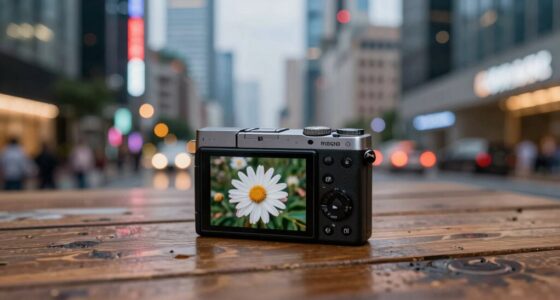
In everyday life, the most important lens terms are focus, perspective, and perception. Focus helps you narrow or broaden your attention, making sure you concentrate on what’s most important. Perspective shapes how you interpret situations, influencing your understanding of events. Perception acts like a mental lens that colors how you see the world around you. By intentionally adjusting these lenses, you can improve your clarity and decision-making—learning more about these tools can truly transform how you navigate daily challenges.

Get the latest gadgets delivered free with Prime
- Fast, free delivery on millions of items
- Prime Video, Amazon Music and more included
- Member-only deals all year
Key Takeaways
- Perception shape shifts influence focus, clarity, and understanding in daily decision-making.
- Adjusting mental “lens” helps zoom in on details or broaden perspective for better problem-solving.
- Depth of field concepts clarify how attention moves between specific elements and the bigger picture.
- Recognizing mental focus and perception shifts enhances awareness and intentionality in actions.
- Perspective and focal length metaphorically guide how we interpret and navigate life’s situations.
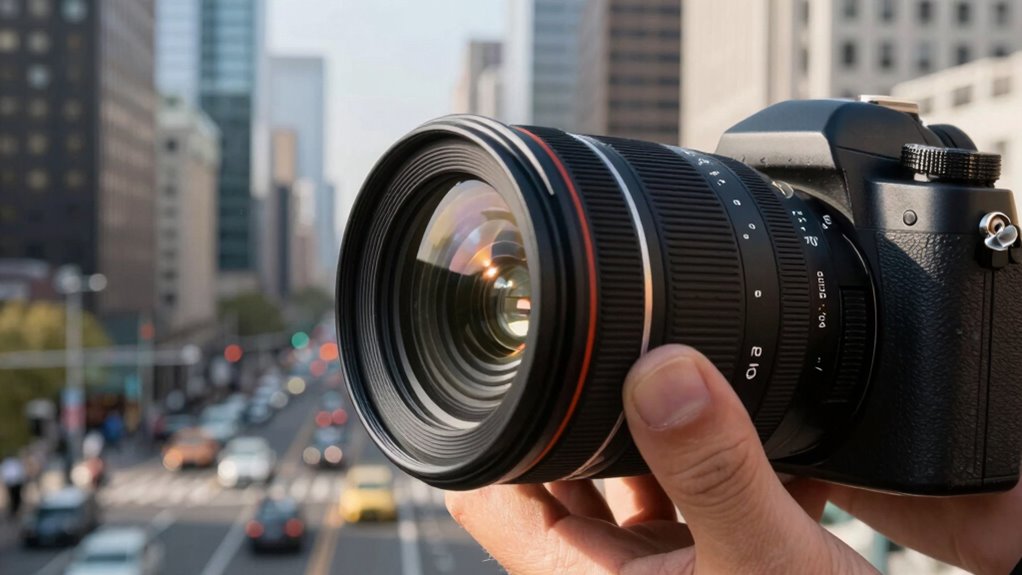
Have you ever wondered how the terminology used in lenses applies to everyday life? It’s more relevant than you might think. Take depth of field, for example. In photography, it refers to the range of sharpness in an image—what’s in focus versus what’s blurred. But in daily life, you can think of it as the scope of your focus at any moment. When you’re concentrating on a task, your depth of field is narrow—you’re focusing intently on one thing, like cooking a new recipe or fixing a leaky faucet. Meanwhile, when you’re multitasking or trying to get a broad view of a situation, your depth of field widens, and you’re aware of multiple elements simultaneously. This concept helps you understand how your attention works and how you prioritize what’s sharp or blurry in your mental landscape. Recognizing how your mental perception shifts can help you manage your focus more intentionally.
Focal length, another key lens term, influences how you perceive distances and sizes. In cameras, focal length determines whether you get a wide-angle view or a zoomed-in shot. In real life, think of focal length as your perspective—how close or far away things seem based on your position and mindset. For example, when you stand close to a small object, it appears larger and more detailed, similar to a photo taken with a short focal length lens. Step back, and the same object shrinks in your view, just like a telephoto lens compresses distances. Your focal length perspective affects how you interpret situations, whether you’re zooming in on a problem or stepping back to see the bigger picture. It’s about your mental “lens” that shapes how you perceive the world around you.
Understanding these lens terms helps you realize that your focus and perspective are adaptable tools. In everyday life, you choose what to bring into focus, how much detail to see, and how far away or close something feels. When you narrow your focus, you can solve specific problems more effectively. When you broaden it, you gain a better understanding of the overall context. Recognizing these concepts in your daily routines empowers you to shift your mental lens intentionally, improving your clarity and decision-making. Whether you’re managing relationships, tackling work projects, or simply appreciating your surroundings, thinking of your attention and perspective as a lens makes it easier to adjust and see what matters most.
focus and concentration improvement tools
As an affiliate, we earn on qualifying purchases.
As an affiliate, we earn on qualifying purchases.
Frequently Asked Questions
How Do Lens Terms Affect Everyday Photography Choices?
Lens terms like depth of field and focal length directly influence your everyday photography choices. For instance, a shallow depth of field blurs backgrounds, helping your subject stand out, while a longer focal length compresses distances, perfect for portraits. You select your lens based on these terms to achieve the desired effect, making your photos more compelling. Understanding these concepts helps you make intentional decisions, enhancing your overall photographic style.
Can Understanding Lens Terms Improve My Smartphone Camera Skills?
Yes, understanding lens terms can boost your smartphone photography skills. Did you know that adjusting aperture settings can change depth of field, making your photos sharper or more blurred? By learning these terms, you can better control how much of your scene is in focus, allowing you to create more professional-looking shots. This knowledge helps you make smarter choices, even with your phone’s built-in camera features.
What Lens Terms Are Most Relevant for Landscape Photography?
For landscape photography, understanding depth of field and focal length is vital. Depth of field determines how much of your scene appears sharp, so you often want a deep depth to keep everything in focus. Focal length affects your composition; a wide-angle lens captures expansive scenes, making landscapes seem more dramatic. Knowing these terms helps you choose the right settings and lenses, ensuring your landscape photos are sharp, immersive, and visually compelling.
Are Lens Terms Different for Video Versus Still Photography?
Lens terms do differ somewhat for video versus still photography. In video, you focus more on maintaining consistent depth of field and aperture control to keep shots smooth and cohesive. While both formats use terms like aperture and depth of field, video often emphasizes how these settings affect motion and exposure across scenes. You need to think about how aperture control impacts the depth of field during continuous recording, making your shots look seamless.
How Do Lens Terms Influence Choosing the Right Camera Gear?
Did you know that 80% of photographers choose lenses based on aperture flexibility and focal length variation? These lens terms directly influence your gear choices. Aperture flexibility affects your ability to shoot in low light and control depth of field, while focal length variation determines your framing and perspective. Understanding these terms helps you select the right lens for your style, ensuring your camera gear matches your creative needs.
mindfulness and perception training books
As an affiliate, we earn on qualifying purchases.
As an affiliate, we earn on qualifying purchases.
Conclusion
So, next time you’re adjusting your camera or squinting through a lens, remember—these terms aren’t just fancy jargon; they’re your secret weapons in capturing life’s moments. Ironically, the more you understand them, the less you might actually need to use them, as your eye becomes the best lens of all. Who knew that the real magic happens when you forget about the terms and just see the world clearly? Happy shooting!
As an affiliate, we earn on qualifying purchases.
As an affiliate, we earn on qualifying purchases.
Fall Picks
fall essentials
As an affiliate, we earn on qualifying purchases.