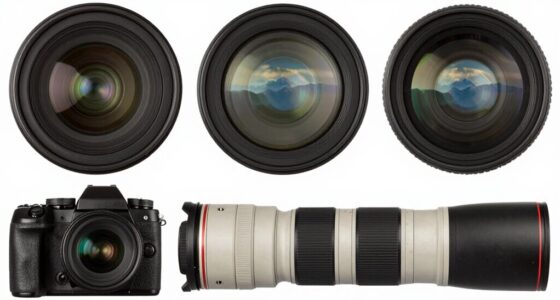
Telephoto zoom lenses open up new types of photography by allowing you to capture distant subjects with incredible detail and clarity. They let you zoom in without physically moving closer, making it easier to photograph wildlife, sports, or landscapes from afar. These lenses also help create stunning background compression for professional portraits. By mastering their use, you can explore innovative shots and creative compositions. Keep exploring to discover even more ways telephoto zooms can transform your photography.

Get the latest gadgets delivered free with Prime
- Fast, free delivery on millions of items
- Prime Video, Amazon Music and more included
- Member-only deals all year
Key Takeaways
- Enable capturing distant subjects with detail, expanding opportunities in wildlife, sports, and nature photography.
- Facilitate creative background compression and shallow depth of field for stunning portrait effects.
- Allow photographers to explore new perspectives without physically moving closer or further away.
- Support artistic and documentary styles by capturing hard-to-reach or inaccessible scenes.
- Enhance versatility in various environments, encouraging experimentation with different photographic genres.
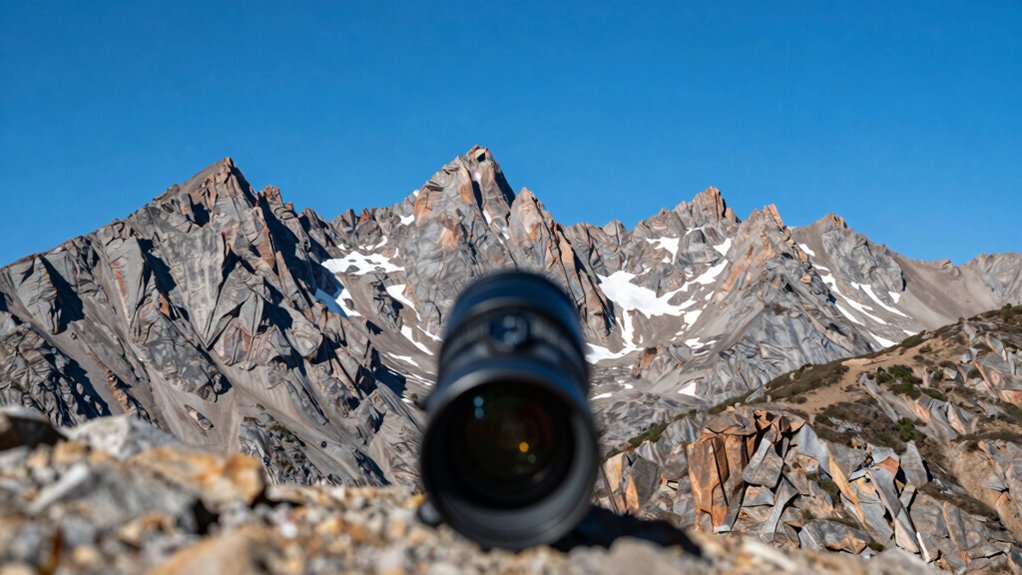
Telephoto zoom lenses are powerful tools that allow photographers to capture distant subjects with remarkable detail and clarity. Their ability to zoom in on far-off scenes means you can explore new creative possibilities without physically moving closer. This flexibility opens up a world of photographic opportunities, especially in areas like portrait versatility and wildlife conservation. When it comes to portraits, a telephoto zoom helps you achieve beautiful background compression, resulting in stunning, professional-looking images. You can maintain a comfortable distance from your subject, which often helps your subject feel more at ease, leading to more natural expressions. The shallow depth of field that telephoto lenses offer allows you to blur out distracting backgrounds, making your subject stand out sharply. This makes telephoto zooms ideal for capturing intimate, expressive portraits in various settings, whether indoors or outdoors. Additionally, the focal length range of telephoto zoom lenses provides the flexibility to adapt to different scenarios, enhancing their utility in dynamic shooting environments. Understanding the lens characteristics can help you make the most of their creative potential, especially when considering factors like aperture size and image stabilization. For example, the supportive support networks for photographers can be invaluable in mastering new techniques and overcoming challenges associated with telephoto photography. Developing a good understanding of techniques and best practices is key to maximizing the benefits of telephoto zoom lenses.
telephoto zoom lens for wildlife photography
As an affiliate, we earn on qualifying purchases.
As an affiliate, we earn on qualifying purchases.
Frequently Asked Questions
How Do Telephoto Zooms Affect Image Stabilization Requirements?
Telephoto zooms increase your need for image stabilization because they amplify motion blur, especially at longer focal lengths. To counteract this, you should use image stabilization features or a tripod. Additionally, employing focusing techniques like focus peaking or manual focus helps guarantee sharp images, as telephoto lenses can be more sensitive to slight movements. Proper stabilization and focusing are essential for capturing clear, professional shots with telephoto zooms.
What Are the Best Settings for Shooting With a Telephoto Zoom?
Think of your telephoto zoom as a painter’s brush, capturing distant stories with vivid detail. To get the best shots, set your camera to a steady aperture like f/8 for sharpness and use a fast shutter speed to freeze motion. Switch to manual focus for precision, and enable image stabilization. Keep your lens clean and well-maintained, and experiment with creative composition to turn distant scenes into mesmerizing masterpieces.
How Do Telephoto Zooms Impact Shutter Speed Choices?
With a telephoto zoom, your focal length increases, so you’ll need faster shutter speeds to prevent motion blur, especially when capturing moving subjects. Longer focal lengths amplify camera shake, making it essential to choose higher shutter speeds—often 1/500s or faster—to freeze motion effectively. Adjust your shutter speed based on your focal length, and consider using image stabilization to keep shots sharp when zoomed in.
Can Telephoto Zooms Be Used Effectively for Astrophotography?
Yes, telephoto zooms can be effective for astrophotography, especially for capturing planetary detail and star trails. You can zoom in to highlight planets or distant celestial objects, revealing intricate details. When shooting star trails, a telephoto lens helps you focus on specific areas, creating dramatic, detailed images. Just make certain your camera is stable, and use longer exposures to maximize detail and minimize blurring.
How Do Telephoto Zooms Influence Depth of Field Control?
Telephoto zooms give you precise control over depth of field, allowing you to create stunning bokeh quality and background compression. As you zoom in, the background appears closer and more blurred, isolating your subject effectively. This compression enhances the sense of depth, making your photos more dynamic. You can manipulate aperture settings to further refine the depth of field, achieving either a sharp focus or beautifully blurred backgrounds.
professional portrait telephoto lens
As an affiliate, we earn on qualifying purchases.
As an affiliate, we earn on qualifying purchases.
Conclusion
As you explore the world through telephoto zooms, you’ll notice how their versatility unexpectedly aligns with your creative passions. It’s almost a coincidence—these lenses open up new perspectives just when you need them most, revealing hidden details or capturing distant moments with ease. Embrace these serendipitous connections; they remind you that sometimes, the right tool appears precisely when your vision calls for it, transforming ordinary scenes into extraordinary stories.
image stabilization telephoto lens
As an affiliate, we earn on qualifying purchases.
As an affiliate, we earn on qualifying purchases.
telephoto zoom lens for sports photography
As an affiliate, we earn on qualifying purchases.
As an affiliate, we earn on qualifying purchases.
Fall Picks
fall essentials
As an affiliate, we earn on qualifying purchases.