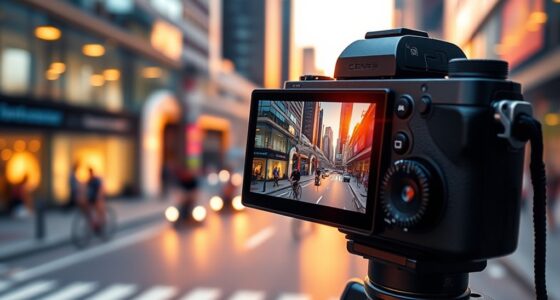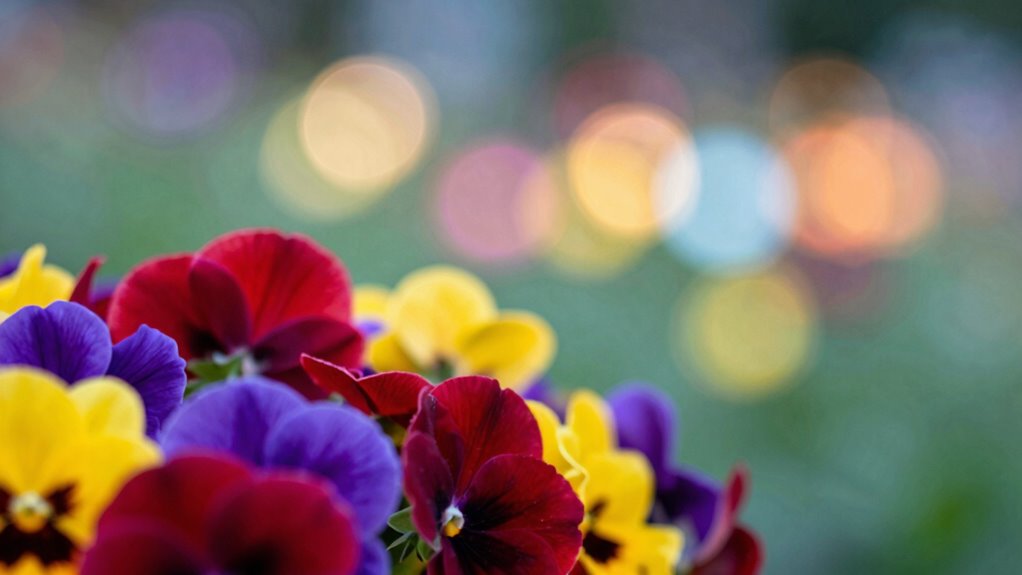

Bokeh is the soft, blurry background effect that helps your main subject stand out and adds depth to your photos. To get that beautiful background, use a wide aperture (like f/1.4 or f/2.8) and stay close to your subject while keeping some distance between them and the background. Using a telephoto lens also boosts the effect. Keep exploring, and you’ll discover more tips to perfect your bokeh shots.
Key Takeaways
- Bokeh is the aesthetic, out-of-focus area in a photo that emphasizes the main subject.
- Achieve blurry backgrounds by using wide apertures like f/1.4 or f/2.8.
- Increasing the distance between your subject and background enhances bokeh effect.
- Using longer focal length lenses (telephoto) helps create smoother, more pronounced bokeh.
- Proper focus, lighting, and composition are essential for capturing attractive, blurry backgrounds.
Top picks for "bokeh blurry background"
Open Amazon search results for this keyword.
As an affiliate, we earn on qualifying purchases.
Understanding the Concept of Bokeh

Have you ever noticed the soft, out-of-focus areas in a photograph that make the main subject stand out? That’s what we call bokeh. It’s created by using specific lighting techniques and composition strategies to blur the background. When you adjust your camera’s aperture—using a wide aperture like f/1.8—you allow more light to enter, which enhances the bokeh effect. Good composition also helps; placing your subject off-center and ensuring a distant background can make the blurry areas more pronounced. Bokeh isn’t just about aesthetics—it guides the viewer’s eye directly to your subject. By understanding how lighting techniques and composition strategies work together, you can achieve beautiful, professional-looking blurry backgrounds that add depth and mood to your photos. Additionally, understanding the optical properties of your camera lens can help you better control the bokeh quality and style, especially since lens design influences the bokeh characteristics such as shape and smoothness.
The Science Behind Blurry Backgrounds
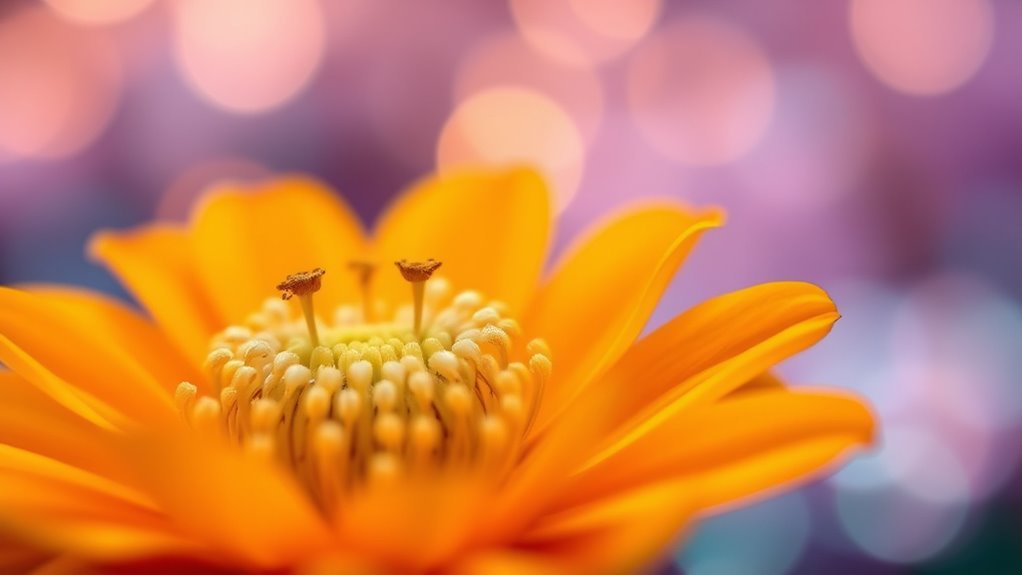
The soft, blurry backgrounds you see in photos are the result of specific optical and technical principles at work within your camera. Light diffraction occurs when light waves bend around the edges of the lens aperture, spreading out and creating a smooth progression between focused and out-of-focus areas. Optical aberrations, such as spherical aberration or coma, also influence how background blur appears, often adding a pleasing quality to the bokeh. These aberrations cause light to scatter in unique ways, enhancing the aesthetic of the blur. The combination of light diffraction and optical aberrations shapes the distinctive, soft backgrounds that make your subject stand out. Understanding these principles helps you appreciate why certain lenses and settings produce more appealing, artistic bokeh effects.
Key Camera Settings for Achieving Bokeh
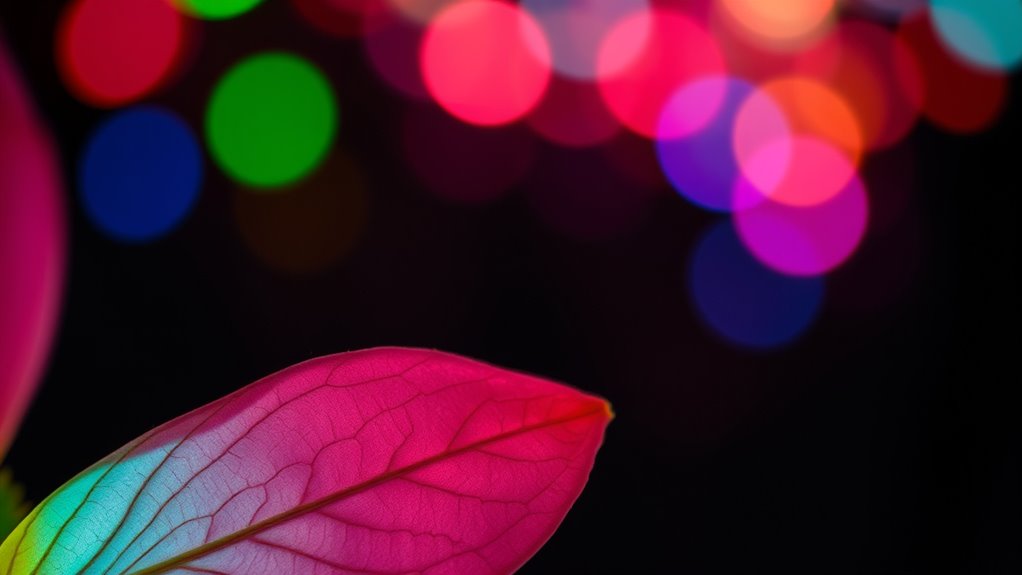
To create beautiful bokeh, you need to pay attention to your camera settings. Using a wide aperture makes the background more blurred, while getting closer to your subject enhances the effect. Additionally, choosing the right focal length can intensify the softness of the background, helping you achieve the desired look. To ensure your photos are sharp and well-exposed, understanding your camera’s settings can make a significant difference. Mastering camera science & materials, such as understanding how different lenses and apertures work, can further improve your ability to create stunning bokeh effects. Exploring lens characteristics like focal length and optical quality can also help you refine the aesthetic of your images.
Aperture Size Importance
Aperture size plays a crucial role in creating the beautiful background blur known as bokeh. A wider aperture (smaller f-number) results in a shallow depth of field, making your subject stand out sharply against a soft, blurry background. This helps emphasize the subject and enhances the bokeh effect. Additionally, a larger aperture can influence lens flare, especially when shooting toward bright light sources, adding artistic circles or streaks to your image. Conversely, a smaller aperture increases the depth of field, reducing the bokeh effect and making more of the scene in focus. Understanding how aperture size impacts both depth of field and lens flare allows you to control the level of background blur, giving your photos a professional, dreamy quality.
Distance to Subject
Ever wonder how distance to your subject affects the bokeh in your photos? The closer you get to your subject, the more pronounced the background blur, thanks to the focusing distance. When you decrease the focusing distance, you enhance the separation between your subject and background, creating a stronger bokeh effect. Conversely, increasing the distance reduces the blur, making the background sharper. Adjusting your distance to the subject is a simple yet effective way to control how much of the background is out of focus. Keep in mind, a shorter focusing distance not only intensifies bokeh but also requires precise focusing to keep your subject sharp. Experimenting with different distances helps you master the balance between subject sharpness and background blur for stunning bokeh. Free Floating elements in the scene can also influence the perception of depth and background blur, further enhancing your bokeh effects.
Focal Length Effects
Focal length plays a significant role in shaping the bokeh effect in your photos. Longer focal lengths, especially with telephoto lens effects, amplify the background blur, making subjects stand out sharply. Focal length variations influence how creamy or pronounced the bokeh appears. To maximize this:
- Use a telephoto lens for more pronounced background compression.
- Shoot at longer focal lengths to intensify the blurry background.
- Combine telephoto effects with wide apertures for smoother bokeh.
- Keep your subject close and background far away to enhance focal length impact.
Choosing the Right Lens for Bokeh Effects

Choosing the right lens is key to creating beautiful bokeh effects. Your choice of lens type and aperture size directly influences the softness and quality of the background blur. Focal length also plays a role, with longer lenses often producing more pronounced bokeh.
Lens Types and Bokeh
Have you ever noticed how some photos have beautifully blurred backgrounds that make the main subject stand out? Different lens types influence bokeh quality profoundly. To achieve the best effects, consider these points:
- Prime lenses generally offer smoother, creamier bokeh because of their wider maximum apertures.
- Telephoto lenses help compress backgrounds, enhancing bokeh and isolating subjects.
- Fast lenses with wide apertures (f/1.2 to f/2.8) produce more pronounced bokeh effects.
- Specialized lenses, like those with rounded aperture blades, create softer, more pleasing bokeh.
Choosing the right lens type impacts bokeh quality directly, helping you craft more compelling, visually striking images.
Aperture Size Impact
Ever wondered how the size of your lens’s aperture influences the beauty of your background blur? Larger apertures create a shallower depth of field, allowing your subject to stand out sharply while the background becomes beautifully blurry. This enhanced background separation emphasizes your subject and adds a professional, artistic touch to your photos. Conversely, smaller apertures increase the depth of field, making more of the scene in focus and reducing background blur. By choosing the right aperture size, you control how much of your image is sharp versus blurry, directly impacting the overall bokeh quality. So, for dreamy, creamy backgrounds, opt for wide apertures, and for more context in your scene, narrow apertures work better. The right aperture is key to mastering bokeh effects.
Focal Length Choices
Focal length plays a significant role in creating striking bokeh effects, influencing how the background appears behind your subject. Longer focal lengths, like 85mm or 135mm, produce more pronounced bokeh by effectively compressing the background, making it appear closer to your subject. This lens compression enhances the sense of depth and isolates your subject better. To choose the right lens for bokeh effects, consider these points:
- Use telephoto lenses for strong background blur and lens compression.
- Opt for wider apertures to maximize bokeh quality.
- Longer focal lengths help in isolating your subject from busy backgrounds.
- Be mindful that increased focal length reduces depth of field, intensifying the blurry background effect.
Selecting the appropriate focal length can make your bokeh more beautiful and impactful.
Techniques to Enhance Your Bokeh Photography

To enhance your bokeh photography, start by choosing a lens with a wide maximum aperture, such as f/1.4 or f/2.8. Use lighting techniques like backlighting or side lighting to create sparkling highlights that emphasize the bokeh effect. Composition tips, such as placing your subject off-center and incorporating foreground elements, make your background blur more striking. Experiment with distance; increasing the distance between the subject and background enhances the blur.
| Lighting Techniques | Composition Tips |
|---|---|
| Backlighting | Off-center placement |
| Side lighting | Foreground elements |
| Golden hour glow | Using leading lines |
| Reflectors for fill | Framing your subject |
| Natural light sources | Balancing elements |
Common Mistakes to Avoid When Creating Bokeh

While experimenting with different techniques can improve your bokeh photography, being aware of common mistakes helps you achieve more polished results. First, avoid neglecting lighting techniques; poor lighting can diminish the quality of bokeh. Second, pay attention to subject positioning—placing your subject too close or too far from the background can reduce blur quality. Third, don’t overlook background clutter; busy backgrounds distract from the bokeh effect. Fourth, be cautious with your aperture choice; using too small an opening won’t produce the desired blurry background. By focusing on proper lighting techniques, carefully positioning your subject, simplifying backgrounds, and selecting the right aperture, you’ll create more appealing, professional-looking bokeh that enhances your photos.
Creative Ways to Use Bokeh in Your Photos

Bokeh isn’t just a background effect; it can be a powerful creative tool to add mood, focus, and visual interest to your photos. Use creative bokeh backgrounds to highlight your subject or create a dreamy atmosphere. Experiment with different shapes, colors, and sizes of bokeh to craft artistic bokeh effects that enhance your composition. For instance, incorporating bokeh lights into cityscapes or nature shots can add depth and vibrancy. You can also use bokeh intentionally to frame your subject or create a sense of movement. Play with foreground objects, such as fairy lights or reflective surfaces, to produce unique bokeh patterns. These artistic bokeh effects give your photos a distinctive style and help convey emotion or storytelling. Proper file management can help you organize and preserve your original images and edits for future use. Additionally, understanding bokeh shape can help you customize the aesthetic of your blurry backgrounds to better suit your creative vision. Exploring different lighting conditions can also influence the appearance of your bokeh and open up new artistic possibilities. Being aware of bokeh quality can further refine the overall look and feel of your images, ensuring the background complements your main subject.
Frequently Asked Questions
Can Smartphones Produce Effective Bokeh Effects?
Yes, smartphone lenses can produce effective bokeh effects, especially with the right aperture settings. Modern phones often include portrait modes that simulate depth of field, allowing you to blur backgrounds easily. To enhance this effect, use lenses with larger apertures or switch to manual mode if available. Getting close to your subject and keeping the background distant also helps create that beautiful, blurry bokeh, making your photos stand out.
How Does Bokeh Vary With Different Light Sources?
Did you know that different light sources can create varied bokeh effects? When you photograph with point light sources, like fairy lights, they often produce circular or polygonal shapes depending on the lens’s aperture influence. The shape of the light source shapes plays a key role in bokeh appearance, and a wider aperture enhances this effect, making lights more diffuse and dreamy. So, your choice of light source and aperture directly impacts your bokeh’s unique look.
Is Bokeh More Prominent in Certain Genres of Photography?
Yes, bokeh is more prominent in genres like portrait enhancement and macro photography. In portraits, it helps make your subject stand out by blurring distracting backgrounds, adding a professional touch. For macro photography, bokeh emphasizes fine details while softening the surroundings, creating a dreamy effect. You should use wide apertures and focus carefully to maximize bokeh’s impact, making your images more enthralling and visually appealing.
How Do Post-Processing Edits Affect Bokeh Quality?
Post-processing edits can enhance bokeh quality, but they can’t fully replicate the natural blur created by your lens aperture and sensor size. When you edit photos, adjusting sharpness or applying blur effects might improve backgrounds but can also introduce artifacts. To achieve the best bokeh, use a wide lens aperture and a larger sensor size, which naturally creates smoother, more pleasing background blur before you even start editing.
Can Bokeh Be Achieved in Video Footage?
Yes, you can achieve bokeh in video footage by controlling depth of field with your lens aperture. Use a wide aperture setting to create a shallow depth of field, which blurs the background and produces that pleasing bokeh effect. Additionally, choosing a lens with a good aperture range helps enhance background blur, making your subject stand out beautifully against a soft, defocused background in your videos.
Conclusion
Now that you know how to create stunning bokeh, you’ll be able to add a professional touch to your photos. Did you know that portraits with a blurred background are 30% more engaging to viewers? Keep experimenting with your camera settings and lenses, and don’t be afraid to try new techniques. With practice, you’ll master the art of beautiful, dreamy backgrounds that make your subjects pop and truly stand out.