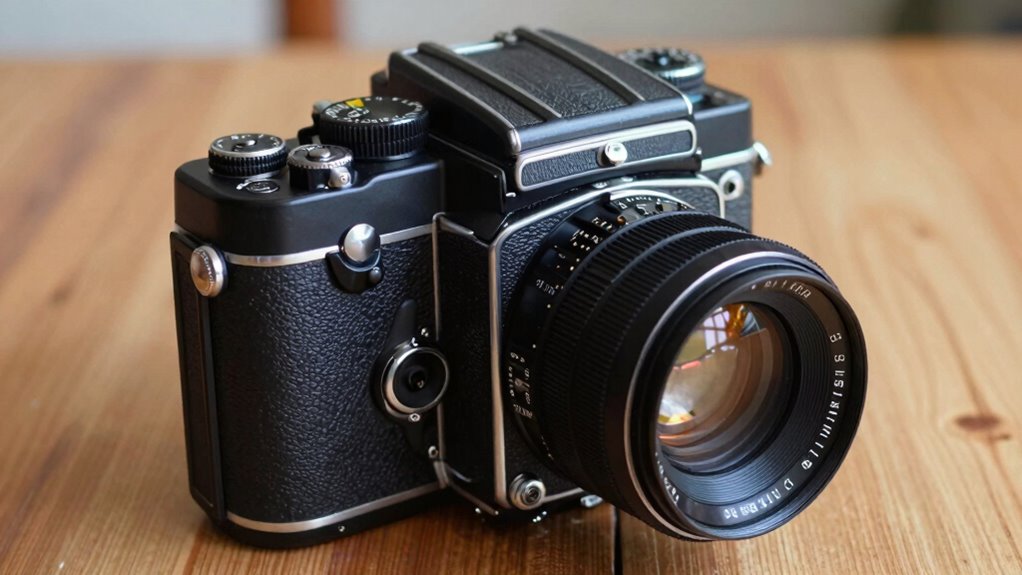

A medium format camera is special because it has a larger sensor than most cameras, which means it captures more light and details. This results in sharper images with richer tones, better depth, and a more lifelike look. The larger sensor also produces vibrant colors and subtle tonal gradations that are difficult to achieve with smaller cameras. These qualities make medium format cameras perfect for high-end photography, and if you want to explore more, you’ll find plenty of fascinating details ahead.

Get the latest gadgets delivered free with Prime
- Fast, free delivery on millions of items
- Prime Video, Amazon Music and more included
- Member-only deals all year
Key Takeaways
- Larger sensors in medium format cameras capture more light, resulting in superior image quality and better low-light performance.
- They produce images with greater detail, richer colors, and enhanced depth, offering a more lifelike and three-dimensional look.
- Medium format cameras generate larger file sizes, enabling high-resolution prints and detailed cropping options.
- They support specialized lenses designed for optimal sharpness, minimal distortion, and excellent optical performance.
- The combination of sensor size and high-quality lenses delivers unmatched clarity, depth, and color richness for professional photography.

Medium format cameras are prized for their exceptional image quality and ability to capture fine details, making them a top choice for professional photographers. One of the key factors that set these cameras apart is their sensor size. Unlike full-frame or crop-sensor cameras, medium format sensors are considerably larger, often measuring 44mm or more diagonally. This increased size allows for a greater amount of light to reach the sensor, resulting in images with richer tones, better dynamic range, and improved low-light performance. The larger sensor also means you get finer detail and sharper images, especially when you’re enlarging prints or cropping tightly. This is why many commercial, fashion, and landscape photographers prefer medium format—they can produce images that are incredibly detailed and have a depth that smaller sensors simply can’t match. Additionally, sensor size plays a crucial role in achieving a natural and three-dimensional look in photographs, which is highly valued in high-end imaging. Larger sensors also contribute to a more aesthetic quality, providing images with a distinctive depth and realism that are difficult to replicate with smaller sensors. Moreover, a larger sensor can influence the file size of your images, which might require more storage space and processing power but results in higher resolution images. A larger sensor also enhances color accuracy and tonal gradation, making images appear more lifelike and vibrant. Another vital aspect that influences the performance of a medium format camera is lens compatibility. Since these cameras often come from various manufacturers, each with their own lens mount systems, compatibility becomes a key consideration. You need to confirm that the lenses you choose are specifically designed for your camera’s mount to get the best image quality and autofocus performance. Many medium format systems offer a wide range of high-quality lenses that are optimized for their sensor size, which helps maximize the camera’s potential. Good lens compatibility also means you can select from different focal lengths and apertures, giving you flexibility for various shooting scenarios. Whether you’re capturing sweeping landscapes, detailed product shots, or portraits with beautiful background blur, having compatible lenses tailored to your camera’s sensor size ensures sharpness, color accuracy, and minimal distortion. The synergy between a large sensor size and appropriate lens compatibility is what truly makes a medium format camera special. You’re able to leverage the larger sensor to capture more light and detail, while the compatible lenses help you fully utilize the sensor’s capabilities. This combination results in images that are not only stunning in resolution but also rich in color and tonal gradation. You’ll notice the difference when you see images printed large or scrutinize fine textures—the details remain crisp and vivid. Plus, the tailored lens options mean you can adapt to different styles and environments, making the medium format camera a versatile tool for professional work. Overall, the sensor size and lens compatibility are fundamental elements that elevate medium format cameras above other types, allowing you to produce images with unmatched clarity and depth. Understanding the sensor size advantages can help photographers appreciate why these cameras deliver such unique image quality.
As an affiliate, we earn on qualifying purchases.
Frequently Asked Questions
How Much Does a Typical Medium Format Camera Cost?
A typical medium format camera costs between $3,000 and $10,000, depending on the model and features. You’ll find that these cameras excel in film versatility and color accuracy, making them popular among professional photographers. With their larger sensors, you get stunning detail and rich tones, perfect for high-quality prints. While pricey, their ability to produce exceptional images truly justifies the investment for serious photography enthusiasts.
Can Medium Format Cameras Shoot Video?
Imagine capturing a scene where every detail feels tangible—medium format cameras can shoot video, though not as seamlessly as dedicated video gear. Their larger sensors produce stunning cinematic quality with rich colors and depth, elevating your footage. While their primary strength lies in still photography, advanced models offer impressive video capabilities, making them ideal for filmmakers seeking exceptional image quality, even if their video features aren’t as flexible as those from cinema cameras.
What Are the Best Lenses for Medium Format Cameras?
The best lenses for your medium format camera depend on your photography style, but generally, look for those designed for larger sensor sizes to maximize image resolution and clarity. Prime lenses often offer sharper images, while zooms provide versatility. Choose lenses with wide apertures for better low-light performance and depth of field control. High-quality optics guarantee your large sensor captures stunning detail, making your images stand out with exceptional resolution.
How Does Medium Format Compare to Full-Frame Digital Cameras?
You’ll find that medium format cameras excel in sensor size and image resolution, providing richer detail and superior image quality compared to full-frame digital cameras. While full-frame offers versatility and faster processing, medium format delivers larger sensors for stunningly sharp, high-resolution images ideal for professional studio work or large prints. The choice depends on your needs: bigger sensors for detail or versatility for speed and convenience.
Are Medium Format Cameras Suitable for Wildlife Photography?
Yes, medium format cameras are suitable for wildlife photography. Their larger sensor size delivers exceptional image quality, capturing fine details and vibrant colors, even in challenging lighting. While they might be bulkier and slower to operate than smaller cameras, their superior resolution and dynamic range make them ideal for capturing distant, fast-moving wildlife with stunning clarity. If you prioritize ultimate image quality, a medium format camera is a great choice.
high resolution medium format camera
As an affiliate, we earn on qualifying purchases.
As an affiliate, we earn on qualifying purchases.
Conclusion
In the end, a medium format camera isn’t just about larger negatives; it’s about capturing breathtaking detail that can turn a photo into a work of art. Did you know that images shot on medium format film or digital sensors often boast resolutions over 100 megapixels? That’s like fitting a small billboard onto your print. With such incredible detail, you can see every nuance, making your images truly unforgettable. It’s no wonder photographers choose medium format for their masterpieces.
professional medium format camera
As an affiliate, we earn on qualifying purchases.
As an affiliate, we earn on qualifying purchases.
medium format camera accessories
As an affiliate, we earn on qualifying purchases.
As an affiliate, we earn on qualifying purchases.
Halloween Picks
halloween
As an affiliate, we earn on qualifying purchases.