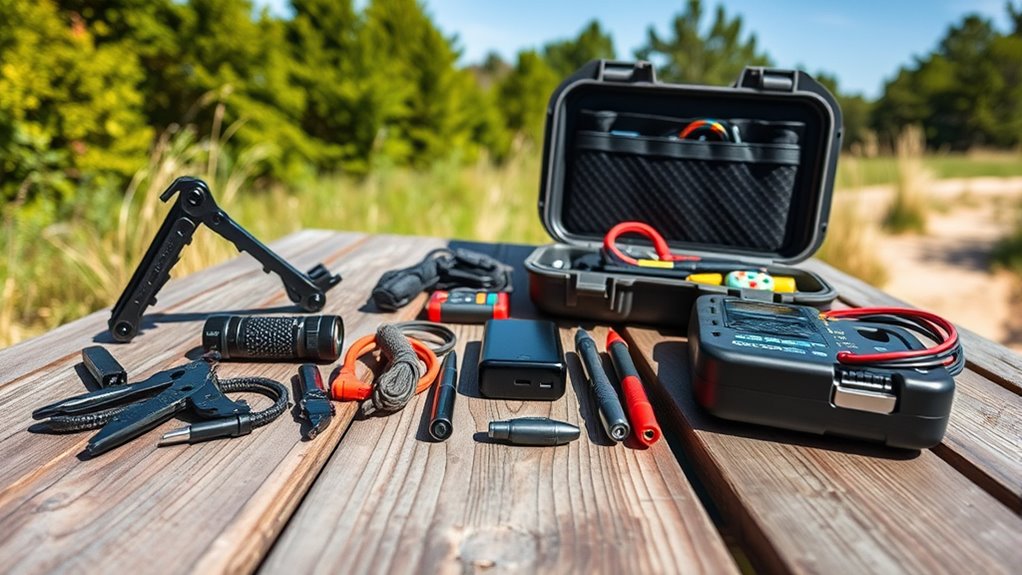

To build a roadside tech kit, start with essential items like a reflective triangle, portable jump starter, flashlight, and multi-tool for quick fixes. Include maintenance tools such as screwdrivers, pliers, tire repair kit, and tire pressure gauge. Add safety and signaling devices like warning lights or flares, plus a tow strap for recovery. Keep everything organized and check it regularly. Staying prepared with these essentials helps you handle most breakdowns independently—discover more tips to stay safe on the road.
Key Takeaways
- Include essential gadgets like a portable jump starter, flashlight, and reflective warning triangle for visibility and power emergencies.
- Add maintenance tools such as screwdrivers, pliers, tire repair kit, and air compressor for quick repairs.
- Incorporate safety and signaling devices like flares, hazard lights, and reflective vests to alert others and improve visibility.
- Organize your kit for easy access, regularly check items for damage or expiration, and tailor contents to your vehicle’s specific needs.
- Maintain a compact, well-stocked kit to handle various roadside issues independently, reducing stress and ensuring safety.
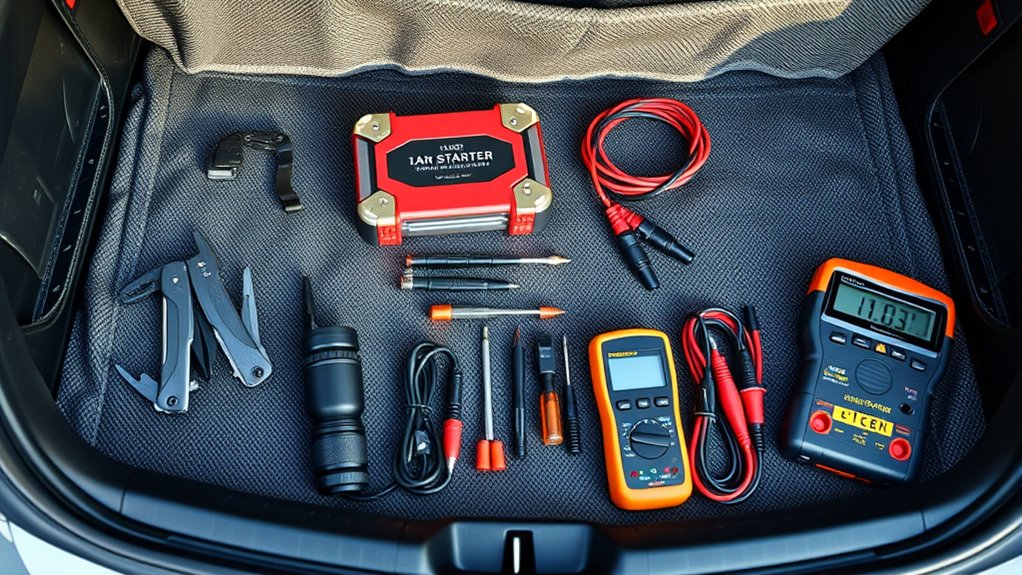
Having a well-stocked roadside tech kit can be a lifesaver when your vehicle encounters unexpected issues. When you’re out on the road, things can go wrong at any moment—flat tires, dead batteries, or even more complex mechanical problems. Being prepared with the right emergency gadgets and maintenance tools means you can handle many situations without waiting for roadside assistance. Your kit should be compact yet thorough enough to cover basic repairs and emergencies, giving you peace of mind and saving you time and money.
Start by focusing on essential emergency gadgets. These are the items that will help you signal for help, stay safe, or get your vehicle moving again. Include a reflective warning triangle or flare to alert other drivers if you’re stranded, especially at night or in low visibility conditions. A portable jump starter is a must-have, especially if you don’t carry jumper cables—these gadgets can quickly revive a dead battery without needing another vehicle. A flashlight with extra batteries ensures you can see what you’re doing when it’s dark, and a multi-tool or Swiss Army knife provides versatility for small fixes or adjustments. Consider adding a tire pressure gauge to monitor your tire health and a small air compressor for quick inflation if needed.
Your maintenance tools should complement these emergency gadgets. Pack a basic set of screwdrivers, pliers, and a wrench, which can help you tighten loose components or remove damaged parts. A tire repair kit, including sealant and a compact air compressor, allows you to patch minor punctures temporarily and get back on the road. Don’t forget a pair of work gloves to protect your hands while handling dirty or sharp parts, and a clean rag or cloth for wiping grease or dirt. A tow strap or rope can be vital if you need to pull your vehicle out of a tricky spot or assist another motorist. These tools are simple but effective for various roadside repairs and maintenance tasks.
Having these emergency gadgets and maintenance tools within reach ensures you’re ready to face common roadside issues head-on. With a little planning and the right gear, you can reduce stress, avoid costly repairs, and stay safe until professional help arrives. Building a roadside tech kit might seem straightforward, but it’s the small, thoughtful additions that make all the difference during an emergency. Keep your kit organized, check it regularly for expired items, and tailor it to your vehicle’s specific needs. Being prepared isn’t just about convenience; it’s about taking control of the situation and guaranteeing your safety no matter where your journey takes you.
Top picks for "build roadside tech"
Open Amazon search results for this keyword.
As an affiliate, we earn on qualifying purchases.
Frequently Asked Questions
What Are the Essential Tools for a Roadside Tech Kit?
You should include essential tools like diagnostic tools to identify vehicle issues quickly, ensuring you can troubleshoot effectively. Portable chargers are vital for keeping your devices powered, especially if you’re stranded without power. Also, pack a multi-tool, jumper cables, and a flashlight. These items help you handle common roadside emergencies, keeping you prepared for almost anything. With these tools, you’ll stay ready and can address problems efficiently.
How Often Should I Update My Roadside Tech Kit?
You should update your roadside tech kit at least twice a year, aligning with your maintenance schedule and seasonal changes. Studies show that most breakdowns occur during specific seasons, so regular updates guarantee you’re prepared. Check for expired batteries, outdated cables, or missing items. Seasonal updates help you adapt to weather conditions, making sure your kit stays effective and reliable whenever you need it.
Can I Customize My Tech Kit for Specific Vehicle Models?
Yes, you can customize your tech kit for specific vehicle models. Focus on adding vehicle-specific accessories, like compatible chargers or diagnostic tools, to guarantee perfect fit and functionality. Use customization tips such as researching your vehicle’s unique needs and keeping manuals handy. This way, your kit becomes more effective, tailored for your car’s requirements, and ready to handle any roadside tech emergency you might encounter.
Are There Safety Precautions When Handling Electronic Components?
When handling electronic components, you should always prioritize safety to prevent damage and injury. For example, imagine you’re replacing a circuit board; electrostatic discharge can fry sensitive parts. To guarantee component safety, always wear an anti-static wrist strap and work on an grounded surface. This minimizes electrostatic buildup, protecting both you and your tech. Remember, safety precautions are essential when working with delicate electronic components.
What’s the Best Way to Organize My Roadside Tech Kit?
You should organize your roadside tech kit using smart storage solutions like small, clearly labeled containers or compartments. Label each container with easy-to-read techniques, such as color-coding or permanent markers, to quickly find what you need. Keep frequently used items accessible and store fragile components carefully. Regularly check and update your organization system to make sure everything stays in place and ready for any roadside emergency.
Conclusion
With your roadside tech kit ready, you’re like the modern-day hero prepared for any challenge that comes your way—think of it as your own version of Merlin’s magic pouch. Whether it’s a dead battery or a lost signal, you’ll have the tools to conquer the unexpected. Stay prepared, stay confident, and remember: fortune favors the well-equipped. Now, go ahead and turn that kit into your trusty sidekick on every journey ahead.