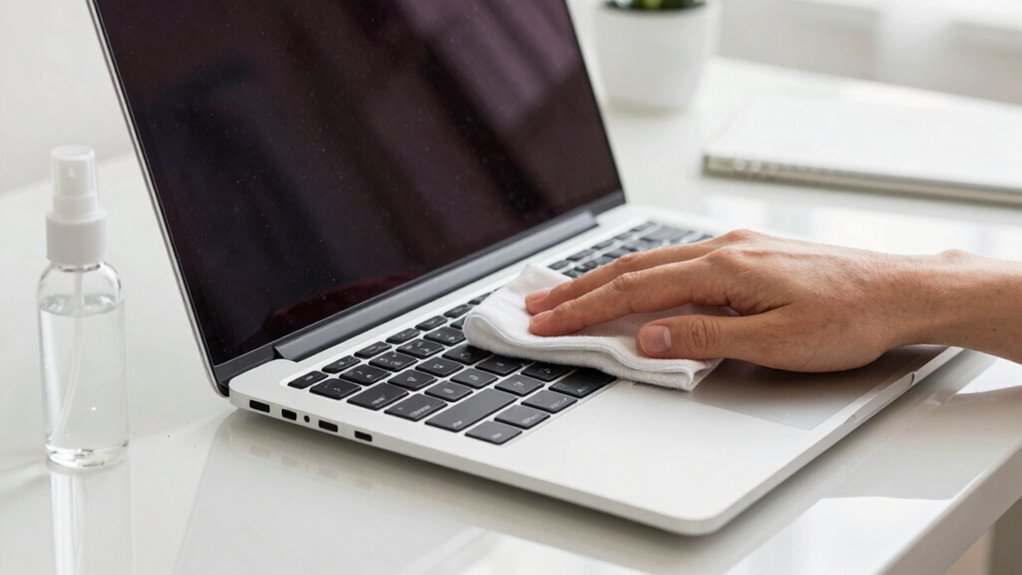

To clean your laptop safely, power it down and unplug all cables before starting. Use a soft microfiber cloth with a gentle, electronics-safe cleaner to wipe the exterior and screen carefully. Blow dust from vents and ports with compressed air, and use a soft brush or cotton swab for stubborn dirt inside. Clean the keyboard with a damp cloth and disinfect regularly. For detailed steps, follow these tips to keep your device pristine and running smoothly.
Key Takeaways
- Always power off, unplug, and remove the battery before cleaning internally or externally.
- Use compressed air and soft brushes to remove dust from vents, ports, and internal components carefully.
- Clean the exterior surfaces and keyboard with microfiber cloths dampened with water or isopropyl alcohol.
- Wipe the screen gently with a microfiber cloth and screen-safe cleaner, avoiding sprays directly on the surface.
- Reassemble securely, check all connections, and power on to ensure proper functionality after cleaning.
Top picks for "clean laptop safely"
Open Amazon search results for this keyword.
As an affiliate, we earn on qualifying purchases.
Gathering the Right Cleaning Supplies

Before you start cleaning your laptop, it’s essential to gather the right supplies. You’ll need gentle cleaning solutions specifically designed for electronics, like a microfiber cloth for screen cleaning. Avoid harsh chemicals that can damage your screen or keyboard. Have some isopropyl alcohol (at least 70%) for disinfecting your keyboard effectively. You might also want compressed air to blow out dust from your keyboard and vents. Keep a small spray bottle handy for lightly dampening your cloth—never spray directly onto your laptop. Remember, proper tools help prevent damage and ensure thorough cleaning. Using a projector screen surface can help improve your viewing experience and protect your screen surface. With these supplies, you’re set to safely clean your laptop’s screen and disinfect the keyboard, maintaining both its appearance and hygiene.
Powering Down and Disconnecting Your Laptop

To guarantee your safety and prevent damage, always power down your laptop and disconnect it from any power sources before cleaning. Turning off your device minimizes the risk of electrical shorts and protects sensitive components. This step also helps with battery maintenance, as it prevents unnecessary power drain during cleaning. Before unplugging, ensure you’ve closed all programs and completed any ongoing software updates, which can improve system performance and security. Disconnecting the charger and removing the battery (if possible) further reduces electrical risks. Taking these precautions ensures your laptop is safe to handle and reduces the chance of accidental damage. Additionally, understanding Free Floating concepts can help you better appreciate the importance of careful handling during cleaning. Being aware of electrical safety can guide you in handling your device more cautiously. Recognizing the electrical landscape of your device can help you identify potential hazards and handle components more cautiously. Being familiar with grounding techniques can further protect your device from static discharge and electrical damage. Once powered down and disconnected, you’re ready to clean both the exterior and interior safely.
Cleaning the Exterior Surfaces
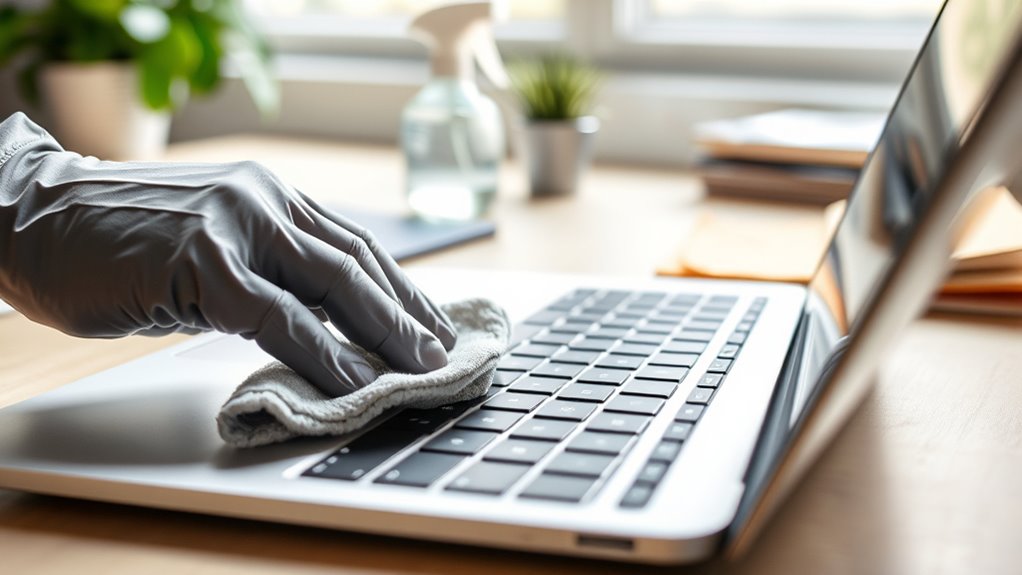
Before you start cleaning, make sure your laptop is powered off. Use gentle cleaning solutions and a soft cloth to avoid scratching or damaging the surfaces. This approach helps keep your laptop looking fresh and functioning properly. To maintain a healthy environment, consider how air quality can impact your overall well-being, even during routine tasks. Ensuring proper ventilation in your workspace can help reduce dust and contaminants that might settle on your device. Additionally, avoiding harsh chemicals will help preserve any coatings on your laptop’s surface. Regular cleaning and good maintenance can extend the lifespan of your device and keep it performing at its best.
Power Off Before Cleaning
Turning off your laptop is a crucial first step before cleaning its exterior surfaces. You should power off completely to prevent accidental damage or short circuits. Once powered down, unplug the laptop from any power source to eliminate the risk of electrical shock. Removing any attached accessories, like a mouse or keyboard, ensures a thorough and safe cleaning process. Turning off and unplugging also helps protect internal components from static electricity or moisture that might be introduced during cleaning. Additionally, Proper shutdown procedures are essential for safeguarding internal hardware during cleaning. Ensuring that your device is fully powered down and unplugged minimizes the risk of damage to internal components during cleaning. Incorporating anti-static measures can further reduce the risk of static-related issues. Using safe cleaning techniques helps prevent accidental damage to your laptop’s delicate surfaces and parts.
Gentle Cleaning Solutions
After powering off and unplugging your laptop, it’s time to focus on cleaning its exterior surfaces with gentle solutions. For screen cleaning, lightly dampen a soft cloth with a mixture of water and a small amount of isopropyl alcohol, then gently wipe the display to remove smudges and dust. Avoid spraying liquids directly on the screen. When disinfecting your keyboard, use a slightly damp cloth or alcohol-based wipes to clean the keys and surrounding areas, ensuring you remove dirt and germs without causing damage. Always opt for mild cleaning solutions to prevent scratches or liquid intrusion. Incorporating proper cleaning techniques can help extend the lifespan of your laptop and maintain its optimal performance. Regular maintenance, including dust removal, also plays a crucial role in preventing debris buildup that can affect your device’s operation. Using gentle cleaning methods is essential to avoid damaging delicate components while maintaining cleanliness. Employing safe cleaning practices can further protect your device from potential harm during cleaning. Take your time and be gentle, ensuring all exterior surfaces are clean and sanitized without risking harm to your device. Additionally, using appropriate cleaning tools can improve the effectiveness and safety of your cleaning routine.
Use Soft Cloths
Using soft cloths is essential for safely cleaning your laptop’s exterior surfaces. They prevent scratches and damage, especially around delicate areas like the screen and keyboard. When cleaning, gently wipe the device to avoid disturbing screen protection or dislodging keyboard covers. Soft cloths are gentle enough to remove fingerprints, dust, and smudges without leaving streaks. Remember to avoid abrasive materials that could scratch the surface. Keep a microfiber cloth handy for quick cleanups and a slightly damp one for stubborn spots. Proper use of soft cloths helps maintain your laptop’s appearance and longevity, ensuring it stays pristine and protected over time. Regularly cleaning with soft cloths keeps your device looking new and functioning smoothly. Incorporating proper cleaning techniques can further enhance your device maintenance routine. Additionally, using gentle cleaning tools helps prevent the buildup of dirt that could potentially harm internal components over time. In addition, utilizing laptop-specific cleaning products can provide a more thorough and safe cleaning process. Using the right cleaning methods can also extend the lifespan of your device’s exterior.
Removing Dust From Vents and Ports
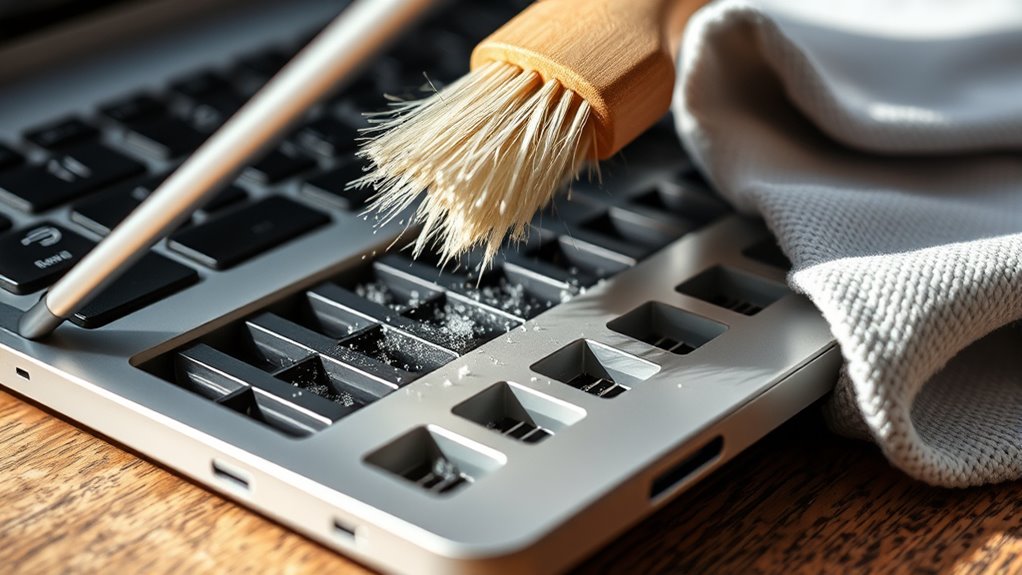
Have you ever noticed your laptop overheating or slowing down unexpectedly? This often happens when dust builds up in the air vents and ports. To keep your device running smoothly, focus on air vent maintenance and port dust removal. Turn off your laptop and unplug it before cleaning. Use compressed air to blow dust out of the vents, holding the can upright to avoid moisture. For ports, gently insert a soft brush or a toothpick to dislodge stubborn dust. Avoid poking too hard or using liquids, which can damage internal components. Regular cleaning prevents overheating and prolongs your laptop’s lifespan. Incorporating proper cleaning techniques can help maintain optimal airflow and prevent dust buildup. Using quality cleaning tools and following manufacturer guidelines can further ensure safe maintenance of your device. Additionally, scheduling routine device inspections can help identify and address potential issues early. Make this part of your routine to ensure ideal airflow and keep your device functioning at its best.
Cleaning the Keyboard and Touchpad

Dust and debris can settle on your keyboard and touchpad just like in the vents, leading to sticky keys and unresponsive areas. To maintain good keyboard hygiene and touchpad maintenance, start by turning off your laptop. Use a soft, lint-free cloth slightly dampened with water or isopropyl alcohol to wipe the surface gently. For stubborn dirt, a cotton swab can help reach tight spaces.
Keep your keyboard and touchpad clean by gently wiping with a damp cloth and using a cotton swab for tight spots.
Consider these tips:
- Use compressed air to blow out debris from between keys.
- Lightly disinfect with a keyboard-safe wipe.
- Avoid excessive moisture that could seep into the device.
Regular cleaning keeps your keyboard and touchpad responsive and hygienic, preventing buildup that can impair function or spread germs. Proper care guarantees a smooth and clean user experience.
Caring for the Screen Carefully
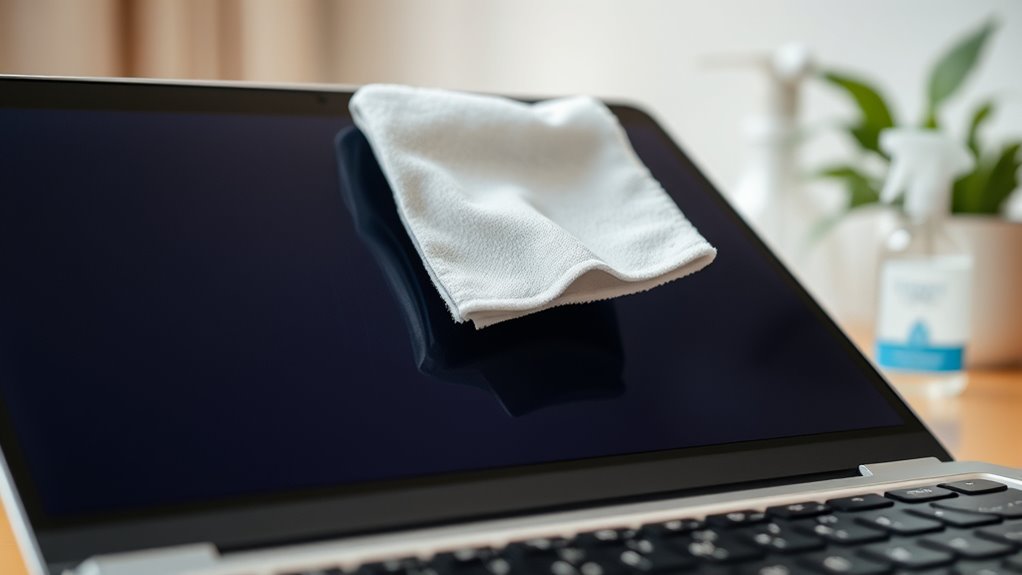
To keep your laptop screen looking its best, it’s essential to clean it carefully and regularly. Use a soft, microfiber cloth to remove screen smudges without damaging the delicate surface. Avoid harsh chemicals that can strip anti reflective coatings, which protect your display and reduce glare. Instead, lightly dampen the cloth with distilled water or a screen-safe cleaner. Gently wipe the screen in circular motions, focusing on smudges and fingerprints.
| Tip | Do’s | Don’ts |
|---|---|---|
| Use microfiber cloth | Use gentle pressure | Use abrasive materials |
| Lightly dampen cloth | Avoid ammonia-based cleaners | Spray directly on screen |
| Wipe in circular motions | Clean regularly | Use excessive liquid |
Cleaning Inside the Laptop

Wondering how to keep your laptop running smoothly? Cleaning inside the laptop is essential for peak performance and thermal management. Carefully open your device, avoiding force that might damage internal components. Use compressed air to blow out dust from vents, fans, and heatsinks—this prevents overheating. Focus on these key areas:
- Fans and airflow pathways
- Heat sinks and vents
- Internal dust buildup
Removing dust from internal components improves thermal management, helping your laptop stay cool and run efficiently. Be gentle, and avoid touching delicate parts or using liquid cleaners inside. Regular cleaning prevents dust accumulation, which can cause overheating and hardware issues. Remember, keeping the internal components clean is vital for smooth operation and longevity.
Reassembling and Final Checks

Once you’ve finished cleaning the internal components, it’s time to carefully reassemble your laptop. Follow the reassembling procedures in reverse order, making sure each component fits securely and correctly. Take your time with connectors and screws, avoiding forced placements that could cause damage. Once everything is back in place, perform a final inspection to verify all parts are properly seated and no tools or debris are left inside. Check that cables are connected correctly, and screws are tightened without over-tightening. This step is vital to prevent future issues. After reassembling, reconnect your laptop and power it on to ensure everything functions as expected. Proper reassembling and a thorough final check will give you confidence that your laptop is safe to use again.
Tips for Ongoing Maintenance and Prevention

Regular maintenance is key to keeping your laptop running smoothly and preventing future issues. To do this, make sure you keep your software up to date and run reliable antivirus software regularly. These steps help protect your device from malware and security threats. Additionally, consider these ongoing habits:
- Enable automatic software updates to ensure you always have the latest security patches.
- Use antivirus software to scan your system weekly and remove any threats.
- Regularly back up important files to cloud storage or an external drive for added safety.
Frequently Asked Questions
Can I Use Household Cleaning Products on My Laptop?
You shouldn’t use household cleaners on your laptop because they can damage sensitive parts. Instead, opt for electronic-safe products designed specifically for cleaning electronics. These products are gentle and won’t harm your device’s screens or components. Always turn off your laptop and unplug it before cleaning. Use a soft, lint-free cloth dampened with the recommended cleaner to safely remove dirt and smudges without risking damage.
How Often Should I Clean My Laptop Internally?
An ounce of prevention is worth a pound of cure. You should perform internal maintenance and follow a regular cleaning schedule every 3 to 6 months. This keeps dust and debris from accumulating, preventing overheating and hardware issues. If you notice performance slowdowns or unusual noises, consider cleaning sooner. Staying consistent with your cleaning routine guarantees your laptop runs smoothly and prolongs its lifespan, saving you time and money in the long run.
Is It Safe to Use Compressed Air on Delicate Components?
Using compressed air on delicate components can be safe if you follow proper air compressor safety guidelines, like holding the can upright and avoiding excessive force. However, you should also consider compressed air alternatives, such as a soft brush or a gentle vacuum. These options reduce the risk of damaging sensitive parts and are often safer for internal cleaning. Always be cautious and use gentle techniques to protect your laptop’s delicate components.
What Are Signs My Laptop Needs Cleaning?
If you notice your laptop slowing down, overheating, or making strange noises, it’s time to clean it. Dust accumulation inside can cause overheating issues and affect performance. Look for visible dust on vents or keyboard, increased fan noise, or sudden shutdowns. These signs mean your laptop needs a thorough cleaning to keep it running smoothly. Regular maintenance prevents overheating issues and keeps your device in top shape.
How Can I Prevent Dust Buildup in the Future?
To prevent dust buildup, regularly maintain your air purifier and keep its filters clean, ensuring ideal airflow. Organize your workspace by reducing clutter and keeping surfaces dust-free, which minimizes particles settling on your laptop. Additionally, position your device away from sources of dust like open windows or vents. These habits help maintain a cleaner environment, reducing the need for frequent internal cleaning and extending your laptop’s lifespan.
Conclusion
Now that you’ve mastered the art of cleaning your laptop, think of it as nurturing a delicate garden—you tend to it regularly, and it rewards you with smooth performance and a longer life. With gentle hands and the right tools, you’re not just cleaning a device; you’re safeguarding your digital world. Keep up the routine, stay vigilant, and watch your laptop flourish, shining bright like a well-tended oasis in your busy tech landscape.