

If your computer has a virus, act quickly by recognizing common symptoms like slow performance or unusual pop-ups, then disconnect it from the internet to stop the spread. Boot into Safe Mode with networking, run a trusted antivirus scan, and carefully remove any threats found. Clear temporary files and ensure your system is fully cleaned. For lasting protection, implement security measures like updates and strong passwords. Keep going to discover more tips to safeguard your device effectively.
Key Takeaways
- Isolate the infected computer by disconnecting from the internet to prevent malware spread.
- Boot into Safe Mode and run a trusted antivirus or anti-malware scan to detect threats.
- Review scan results, quarantine or delete malicious files, and clear temporary files for thorough cleanup.
- Update your system and security software regularly to protect against future infections.
- Strengthen security by configuring firewalls, using strong passwords, and enabling multi-factor authentication.

McAfee Total Protection 5-Device | AntiVirus Software 2026 for Windows PC & Mac, AI Scam Detection, VPN, Password Manager, Identity Monitoring | 1-Year Subscription with Auto-Renewal | Download
DEVICE SECURITY – Award-winning McAfee antivirus, real-time threat protection, protects your data, phones, laptops, and tablets
As an affiliate, we earn on qualifying purchases.
As an affiliate, we earn on qualifying purchases.
Identify Symptoms and Isolate Your Computer

When your computer starts acting strangely—such as running slowly, crashing frequently, or showing unexpected pop-ups—it’s a strong sign something might be wrong. Pay close attention to your system behavior; unusual sluggishness or errors can indicate malware activity. To confirm, run hardware diagnostics to check for underlying issues with your hardware components, as these can sometimes mimic virus symptoms. Isolating your computer from the internet helps prevent the spread of infection and stops malicious processes from communicating with external servers. This step is vital to protecting your data. Keep your system unplugged or disconnect from Wi-Fi until you’ve identified the problem. Recognizing these early signs and isolating your device is the first move toward effective virus removal and restoring your computer’s health. Additionally, understanding system behavior can help you identify potential infections more quickly, especially when combined with knowledge of home theatre projectors, which also require careful troubleshooting. Being aware of how malware interacts with your system can further aid in diagnosing issues early, and understanding connected appliances can sometimes provide insight into unexpected system conflicts. For example, monitoring system logs can reveal unusual activity that points to infection.

FixMeStick Gold Computer Virus Removal Stick for Windows PCs – Unlimited Use on Up to 5 Laptops or Desktops for 2 Years – Works with Your Antivirus
WHAT YOU GET: FixMeStick Virus Removal Tool for Windows PCs (Windows XP, Vista, 7, 8, 8.1, 10, and…
As an affiliate, we earn on qualifying purchases.
As an affiliate, we earn on qualifying purchases.
Enter Safe Mode and Disconnect From the Internet
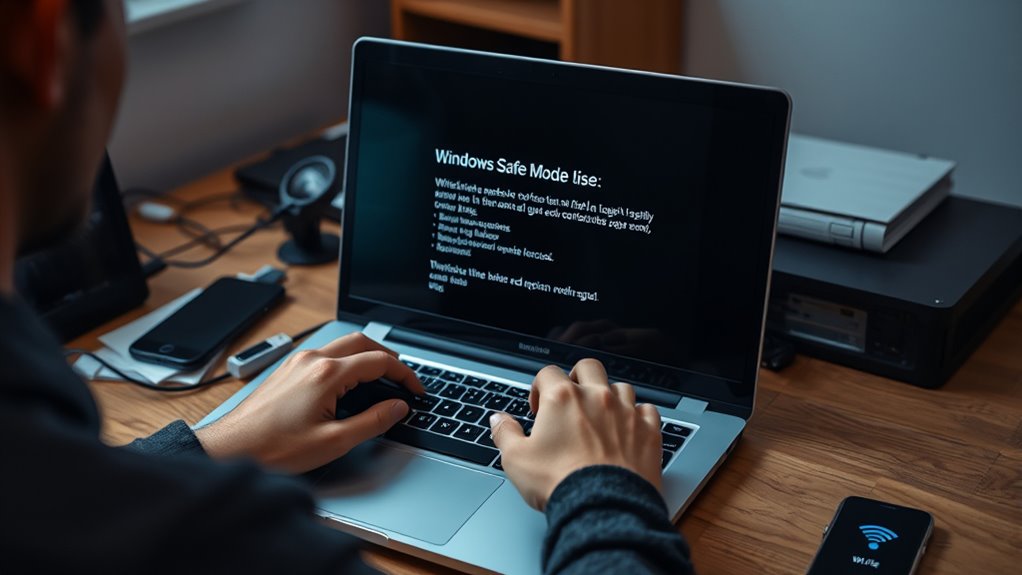
To effectively begin cleaning a virus from your computer, you should start by entering Safe Mode. This limits the virus’s activity and prevents it from spreading further. First, access your boot options, which vary by device—typically by pressing F8, F12, or holding Shift during startup. Once in Safe Mode, change your network settings to disconnect from the internet; this stops malware from communicating with external servers. To do this:
- Select the option to disable or disconnect Wi-Fi or Ethernet.
- Confirm network disconnection to prevent malware updates or data theft.
- Avoid re-establishing the internet connection until after your scan.
- Use Safe Mode with Networking if you need internet access for specific troubleshooting. This guarantees you’re working in a safer environment to remove the virus effectively.
- Be aware that understanding Dark Psychology tactics can help you recognize malicious software or social engineering scams attempting to exploit your system.
- Understanding the importance of cybersecurity principles can aid in preventing future infections and protecting your data.
- Additionally, familiarizing yourself with system recovery techniques can help restore your device to a secure state if needed.

Brixwell 39-226 Release Key DIE CAST for Detachable Window RESTRICTOR Stays
DIE CAST METAL BUILD: Constructed from die cast metal, this window restrictor key fits common safety lock setups…
As an affiliate, we earn on qualifying purchases.
As an affiliate, we earn on qualifying purchases.
Run a Trusted Antivirus or Anti-Malware Scan

Running a trusted antivirus or anti-malware scan is an essential step in removing a virus from your computer. Choose reliable antivirus software known for effective malware removal to guarantee thorough detection. Launch the program and initiate a full system scan, allowing it to examine all files and running processes. This process helps identify malicious threats that might be hidden or difficult to detect manually. Be patient, as scans can take some time depending on your system’s size. Avoid interrupting the scan to maximize malware removal effectiveness. Once completed, review the scan results carefully. Quarantine or remove any detected threats as recommended by your antivirus software. Performing regular system maintenance and updates can also help prevent future infections. Regularly updating your security software ensures your defenses are current against emerging threats. Running this scan is a critical part of cleaning your system and preventing further damage caused by malware. Additionally, using up-to-date security software ensures your defenses are current against emerging threats. Incorporating security best practices can further enhance your overall protection.

Network Security, Firewalls, and VPNs
As an affiliate, we earn on qualifying purchases.
As an affiliate, we earn on qualifying purchases.
Remove the Detected Threats and Clear Temporary Files
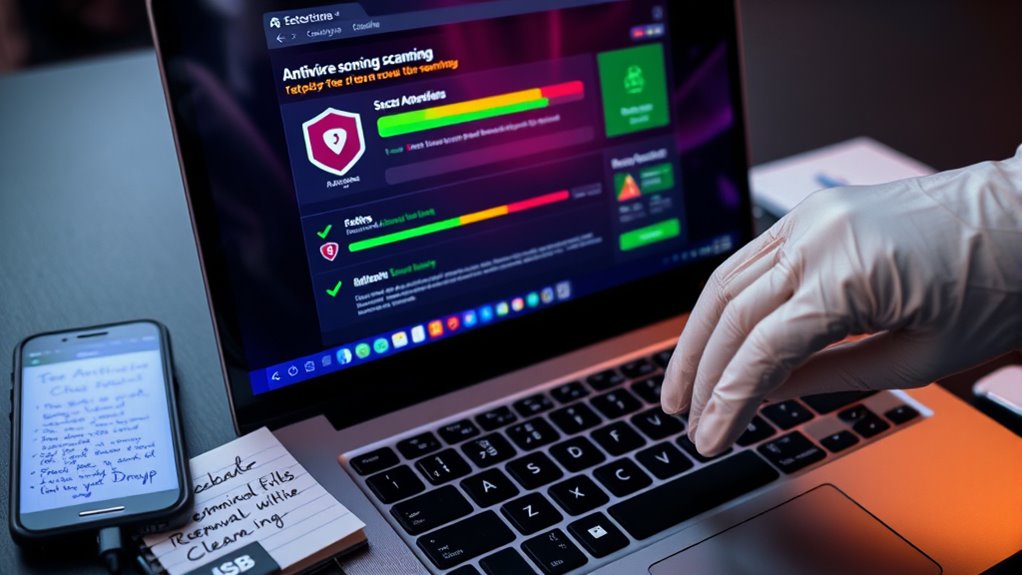
After your antivirus or anti-malware scan finishes, the next step is to remove the threats it detected and clear out temporary files. This virus removal process guarantees your system is clean and prevents reinfection. First, review the threat detection report carefully. Then, follow the prompts to quarantine or delete the malicious files. To keep your system optimized, clear temporary files that may harbor remnants of the virus. You can do this by:
- Using your antivirus program’s cleanup tool
- Manually deleting files from temp folders
- Running disk cleanup utilities
- Restarting your computer in safe mode for thorough removal
Successfully removing threats and clearing temporary files is essential to restoring your system’s health and stopping malware from lingering or spreading.
Take Preventive Measures to Protect Your System in the Future

Implementing proactive security measures is essential to shield your system from future infections. Start by configuring your firewall correctly to block unauthorized access and monitor suspicious activity. Regularly update your firewall settings to adapt to new threats. Additionally, practice good password management by creating strong, unique passwords for each account and changing them periodically. Use a password manager to keep track of your credentials securely. Keep your operating system and all software up to date, as updates often include critical security patches. Avoid clicking on unknown links or downloading files from untrusted sources. By combining a well-configured firewall with diligent password management, you markedly reduce the risk of future infections, helping to keep your system safe and secure over time. Incorporate security best practices such as multi-factor authentication to further enhance your defenses. To further strengthen your security, regularly review your security settings and audit your system for vulnerabilities, including checking for potential exploits that hackers might use.
Frequently Asked Questions
Can a Virus Damage My Hardware Components?
A virus typically can’t directly cause hardware damage or component failure, but it can indirectly harm your hardware. Malicious software might overwork your CPU, cause overheating, or corrupt system files, leading to hardware issues over time. If you ignore virus symptoms, it could result in hardware malfunctions or failures. To protect your components, always run antivirus scans and address infections promptly, preventing potential damage to your hardware components.
How Do I Know if My Antivirus Software Is Effective?
You can tell if your antivirus software is effective by checking its malware detection and antivirus features. Look for regular updates, real-time scanning, and quick threat alerts. Run full system scans periodically to see if it detects any malware. If it consistently identifies and quarantines threats, your antivirus is functioning well. Keep an eye on its performance and update it regularly to ensure maximum protection against new malware.
Should I Wipe My Entire System to Remove a Virus?
Wiping your system might seem like the ultimate purge, but it’s often overkill. Instead, you should verify your antivirus updates are current and run trusted malware removal tools first. Think of it as giving your computer a spa day, not a complete demolition. Only wipe your system if malware persists after these efforts, and you’re confident you can back up important data beforehand.
Can Viruses Be Hidden in My Cloud Backups?
Yes, viruses can hide in your cloud backups due to cloud backup risks. Malicious files or hidden malware might get stored if your backups include infected data. When you restore, you could reintroduce the threat. To stay safe, regularly scan your backups with updated antivirus software before restoring, and consider keeping a clean backup copy offline or on a different storage service.
What Are the Signs of a Rootkit Infection?
You might notice a rootkit infection when your system becomes unusually slow or experiences unexplained system slowdowns. Rootkits are stealthy, hiding deep within your operating system, making them hard to detect. Other signs include strange system behavior, unexpected pop-ups, or unknown processes running in the background. If you suspect a rootkit, run a trusted anti-malware scan and consider professional help, as these infections evade typical detection methods.
Conclusion
Think of your computer like a garden. When a virus invades, it’s like weeds threatening your plants. By acting quickly—identifying the trouble, isolating the weeds, and removing them—you protect your entire garden. With careful tending and preventive habits, you’ll keep your digital landscape healthy and thriving. Remember, a vigilant gardener always stays ahead of the weeds, ensuring your computer remains a beautiful, safe space for growth and creativity.