Your laptop battery drains quickly when high-power apps, outdated settings, or hardware age cause excessive energy use. To extend battery life, identify and close resource-hungry processes, lower display brightness, disable unnecessary background activities, and keep your system updated. Using built-in tools helps monitor consumption and catch issues early. Proper battery maintenance and charging habits also make a big difference. Keep going to discover more effective tips to maximize your device’s battery longevity.
Key Takeaways
- Power-hungry applications and background processes can significantly drain your battery; monitor and close unnecessary ones regularly.
- High display brightness, resolution, and extended screen-on time increase power consumption; adjust display settings for better battery life.
- Excessive notifications and unoptimized startup programs cause unnecessary background activity; manage these to conserve power.
- Aging or damaged batteries lose capacity and drain faster; replace them and follow proper charging habits to extend battery life.
- Keeping system software updated, organizing storage, and monitoring power usage help maintain overall efficiency and prolong battery longevity.
Top picks for "laptop battery drain"
Open Amazon search results for this keyword.
As an affiliate, we earn on qualifying purchases.
Identifying Power-Hungry Applications and Processes
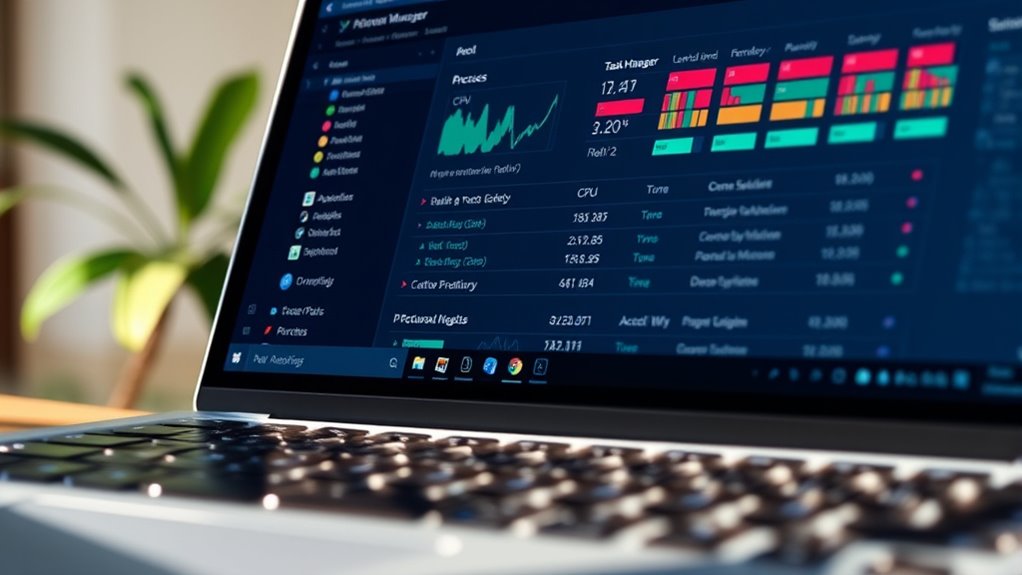
To effectively address battery drain, you need to pinpoint which applications and processes are consuming the most power. High power consumption often comes from resource hogs that strain your system without your knowledge. Open your task manager or activity monitor to identify these power-hungry applications. Look for programs running in the background or consuming excessive CPU, memory, or network resources. These resource hogs drain your battery quickly, especially when they operate unnoticed. Once identified, you can decide whether to close, disable, or replace them with more efficient alternatives. Regularly monitoring these processes helps you maintain better control over your laptop’s power usage. Understanding contrast ratio and its impact on display efficiency can also help optimize your device’s performance and power consumption. Optimizing display settings can further extend your battery life. By managing resource-intensive applications, you’ll extend your battery life and improve overall device performance.
Adjusting Your Display Settings for Better Battery Life
Since the display is one of the most power-consuming components on your laptop, adjusting its settings can substantially extend your battery life. Lowering your screen brightness reduces power usage without sacrificing visibility. Additionally, decreasing the display resolution can lighten the load on your graphics hardware, saving energy. Here’s a quick comparison:
| Setting | Effect on Power | Recommendation |
|---|---|---|
| Screen brightness | High | Reduce to the lowest comfortable level |
| Display resolution | High | Use native or lower resolution if possible |
| Screen timeout | High | Shorten to turn off sooner |
Being aware of power-hungry components can further help optimize your laptop’s battery life. For example, turning off background applications and disabling wireless features when not in use can make a significant difference. Managing display settings effectively not only conserves energy but also helps prevent overheating and prolongs your device’s overall lifespan. Adjusting these display settings is especially effective when combined with other power management techniques.
Managing Background Activities and Notifications
To extend your battery life, you should limit background apps and disable unnecessary notifications. These activities drain power even when you’re not actively using your device. Additionally, managing startup programs helps prevent unnecessary apps from running in the background when you turn on your laptop. Monitoring system resources can also help identify power-hungry processes and optimize performance. Being aware of cookie categories and how they impact privacy can further help you customize your device’s settings for better energy efficiency.
Limit Background Apps
Background apps often run silently in the background, consuming power without your knowledge. These background processes can drain your battery quickly, especially if multiple apps stay active when you’re not using them. To extend your battery life, limit these app limitations by closing unnecessary programs and adjusting settings to prevent them from running automatically. Check your task manager or activity monitor to identify power-hungry background processes and shut them down. Many apps have settings that allow you to disable background activity, so take advantage of these options. By managing background apps effectively, you reduce unnecessary power consumption, helping your laptop last longer on a single charge. Monitoring power management settings can further optimize battery life. Staying vigilant about background app control is a simple yet impactful way to preserve your battery life. Additionally, regularly updating your device’s software can improve battery efficiency and fix bugs that cause excessive power drain.
Disable Unnecessary Notifications
Disabling unnecessary notifications can substantially boost your laptop’s battery life by preventing constant alerts from waking your device or running background processes. Effective notification management reduces the frequency of app alerts that activate your screen or keep background services running. To optimize battery life, review your notification settings and turn off alerts for apps that don’t require immediate attention. This prevents unnecessary interruptions and conserves power. You can do this through your system settings or individual app preferences. By minimizing unnecessary notifications, you reduce the workload on your laptop’s processor and display, helping your battery last longer throughout the day. Managing notifications is a simple yet powerful step to extend your device’s battery life and improve overall performance.
Manage Startup Programs
Managing startup programs is essential for reducing unnecessary background activities that drain your laptop’s battery. When you have too many startup programs enabled, they run automatically when your system boots, consuming power even if you’re not actively using them. Disabling unneeded startup programs improves system optimization, making your laptop more efficient and prolonging battery life. To do this, open your Task Manager or System Configuration tool, then review the list of programs set to launch at startup. Turn off any apps or services that aren’t essential. This simple step reduces background activity, saves power, and ensures your system runs smoothly. Regularly managing startup programs is a smart way to extend your laptop’s battery life and keep your device operating at its best.
Optimizing Your Operating System for Efficiency

Optimizing your operating system can considerably extend your laptop’s battery life by reducing unnecessary processes and conserving energy. Effective system optimization focuses on improving power management and minimizing background activity that drains your battery. You can achieve this by adjusting settings to prioritize efficiency, such as enabling battery saver modes and dimming the display. Regular updates also ensure your OS runs smoothly and efficiently. Additionally, managing background apps and disabling non-essential services help reduce power consumption. Monitoring system processes can help identify which tasks are draining your battery the most. Incorporating software testing methodologies into your routine can further identify and troubleshoot issues that may be impacting system efficiency. Employing power management tools can provide real-time insights into energy consumption and suggest improvements. Using these tools to analyze system performance can lead to targeted adjustments that further conserve battery life. A well-optimized system not only preserves energy but also enhances overall performance, making your laptop more reliable and longer-lasting.
Checking and Replacing Old or Faulty Batteries

You should regularly check for signs of battery wear, like shorter usage times or unexpected shutdowns. If your battery isn’t holding a charge like it used to, it’s probably time to replace it. Doing so can substantially improve your laptop’s performance and extend its lifespan. Additionally, keeping your device’s battery maintenance in check can help prevent premature battery failure. Regularly updating your device’s SSD organization tips for audio production can also contribute to overall system efficiency, ensuring your laptop runs smoothly and conserves power. Being aware of wave and wind can inform you about advanced features that may affect device longevity and safety practices, indirectly supporting overall device care. Proper piercing care and hygiene practices can also prevent complications that may indirectly affect your device usage by reducing discomfort and ensuring overall health.
Signs of Battery Wear
Over time, your laptop battery can show clear signs of wear that indicate it’s nearing the end of its lifespan. You might notice a decline in battery capacity, causing shorter usage times. If your battery has gone through many charge cycles, it won’t hold a charge as well as when it was new. Other signs include unexpected shutdowns even with some charge remaining, or the battery percentage dropping quickly. These indicators suggest the battery’s health is deteriorating and it’s time to contemplate replacement. Regularly check your battery’s performance to catch wear early. Keeping an eye on these signs helps prevent sudden shutdowns and maintains your device’s efficiency. Understanding the lifecycle and performance metrics of batteries can also help you make informed decisions about when to replace or recondition your battery. Additionally, utilizing battery health monitoring tools can provide more precise insights into your battery’s condition and longevity, helping you track how your battery capacity diminishes over time and plan accordingly. Knowing the typical charge cycle limits can help you better plan for battery replacements and avoid unexpected device outages.
Replacing for Better Performance
When signs of battery wear become apparent, checking the condition of your laptop’s battery is the first step toward restoring performance. If your battery no longer holds a charge or drains quickly, a battery replacement can provide a significant performance upgrade. Replacing an old or faulty battery is often straightforward and can breathe new life into your device. Make certain you choose a compatible, high-quality replacement to maximize longevity and efficiency. Installing a new battery not only improves runtime but also stabilizes system performance, reducing unexpected shutdowns. This simple upgrade can extend your laptop’s usability and save you money on new devices. Regularly replacing worn batteries keeps your laptop functioning smoothly and helps you avoid the frustration of sluggish performance caused by degraded power sources.
Implementing Proper Charging Habits and Tips
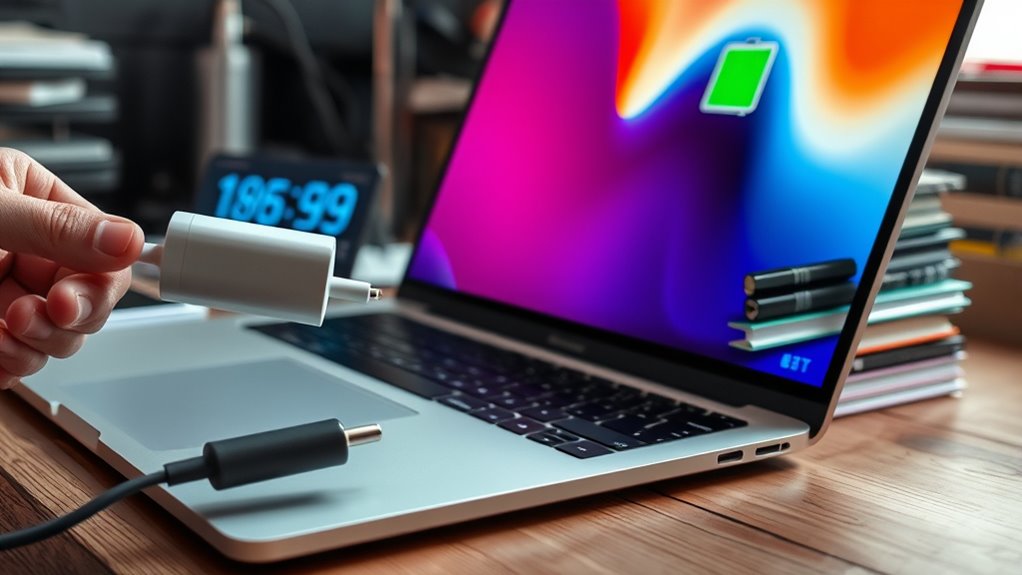
Maintaining proper charging habits can considerably extend your laptop battery’s lifespan. Practicing good charging etiquette ensures you avoid unnecessary strain on your battery. For example, don’t keep your laptop plugged in constantly or let the battery drain completely too often. Instead, aim for partial charges between 20% and 80%. Regular battery calibration helps your system accurately report remaining charge; to do this, fully charge your laptop to 100%, then let it discharge to around 5-10% before recharging. This process resets the battery’s power indicator, improving accuracy. Additionally, avoid exposing your device to extreme temperatures during charging and storage, which can degrade the battery’s health over time. Understanding proper battery maintenance can help you maximize battery life and performance.
Using Built-In Tools and Software for Battery Monitoring
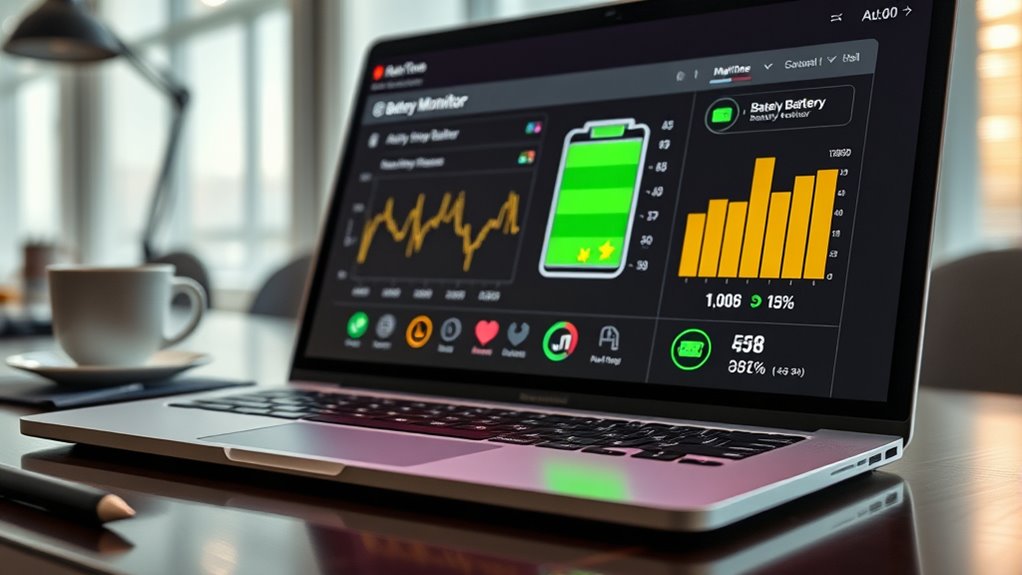
Using built-in tools and software to monitor your laptop’s battery health provides a convenient way to track performance and identify potential issues early. These tools offer battery health diagnostics, revealing how well your battery is functioning and whether it’s nearing the end of its lifespan. Additionally, power usage graphs display real-time data on which apps or processes consume the most power, helping you optimize settings. Regularly checking these metrics allows you to spot abnormal drain patterns or decreased capacity before problems worsen. Most operating systems, like Windows and macOS, include native battery management features that provide insights without installing extra software. By leveraging these built-in tools, you can make smarter decisions to extend your laptop’s battery life and maintain ideal performance over time.
Frequently Asked Questions
How Can I Identify Hidden Power-Consuming Apps on My Laptop?
To identify hidden power-consuming apps on your laptop, check your task manager or activity monitor. Look for apps with high power usage or CPU activity that you might not recognize. Use app management tools to close or uninstall unnecessary programs draining your battery. Regularly monitoring power consumption helps you spot hidden apps, optimize your device, and extend battery life by keeping only essential apps running.
What Are the Best Manual Settings to Extend Battery Life?
Want to stretch your battery life? You should turn on power saving modes and lower your display brightness. These settings reduce energy consumption by limiting background activity and dimming your screen, which uses most power. Do you really need your screen at full brightness all the time? Adjust these manually in your system settings, and you’ll notice your battery lasts longer between charges. Simple steps make a big difference!
How Do Background Updates Affect My Battery Lifespan?
Background updates and processes constantly run in the background, consuming power and draining your battery faster. Software updates, especially automatic ones, can increase battery usage because they require your laptop to work harder, often during idle times. To extend your battery life, disable unnecessary background processes and set updates to manual or scheduled times. This way, your laptop conserves energy and helps prolong battery lifespan.
When Should I Replace My Laptop Battery for Optimal Performance?
You should replace your laptop battery when calibration shows reduced capacity or the battery no longer holds a charge. If your battery percentage drops quickly or your device shuts down unexpectedly, it’s time for a replacement. Follow the replacement criteria, which include signs of swelling or age over two to three years. Regular calibration helps assess performance, ensuring you replace the battery before it causes hardware issues or performance drops.
Are There Specific Charging Routines That Can Prolong Battery Health?
To prolong your battery health, follow proper charging routines by avoiding frequent full discharges and keeping your battery between 20% and 80%. Regularly perform battery calibration to maintain accurate charge readings. Limit charging cycles by unplugging your laptop once it reaches full capacity and using it on AC power when possible. These habits help reduce wear, extend battery lifespan, and guarantee ideal performance over time.
Conclusion
By tuning your settings, managing background apps, and staying mindful of your charging habits, you can transform your laptop into a well-tuned engine running smoothly and efficiently. Imagine your battery as a delicate spark, flickering brighter or dimmer with each choice you make. With a few simple adjustments, you’ll keep that spark alive longer, allowing your device to serve you faithfully, like a trusted compass guiding you through your busy day without losing its way.