Standing desks can boost your health and productivity by reducing back pain, improving posture, and increasing focus. While they involve higher upfront costs, ergonomic accessories make the shift smoother and more comfortable. Many tech workers notice less fatigue and better energy, making the investment worthwhile. If you’re curious about how to optimize your workspace and weigh the long-term benefits, there’s plenty more to explore below.
Key Takeaways
- Standing desks reduce back pain and improve posture, supporting health benefits for tech workers.
- They boost focus, energy, and productivity by encouraging movement and reducing fatigue.
- Ergonomic accessories enhance comfort and help prevent repetitive strain injuries during prolonged use.
- Initial costs are higher, but long-term health and efficiency gains can outweigh expenses.
- Balancing standing and sitting optimizes comfort, making standing desks a worthwhile investment for many tech professionals.
Top picks for "desk stand traditional"
Open Amazon search results for this keyword.
As an affiliate, we earn on qualifying purchases.
Health Benefits and Risks of Standing Desks
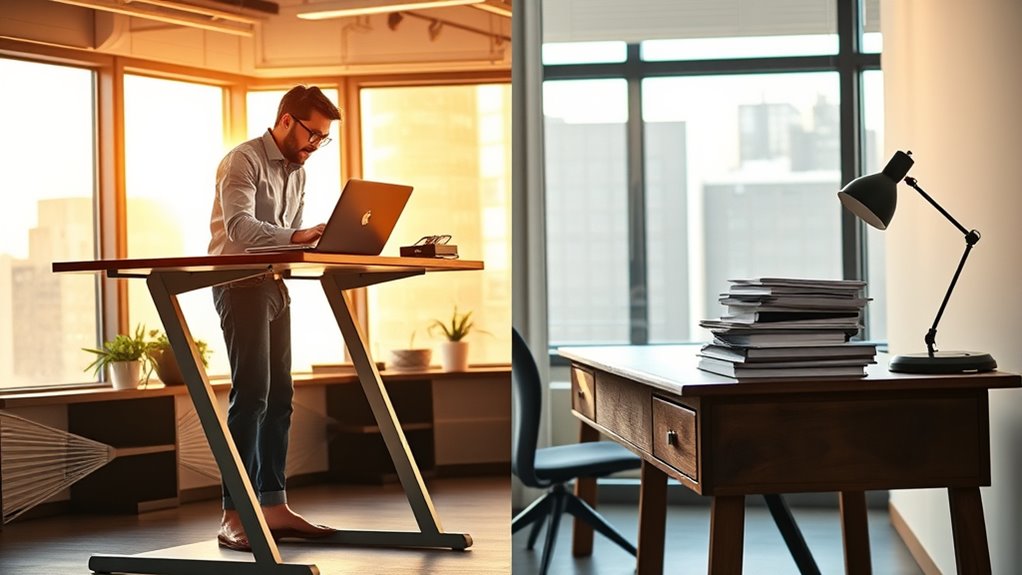
Standing desks offer several health benefits, such as reducing the risk of back pain and improving posture compared to traditional sitting desks. When you incorporate ergonomic accessories like anti-fatigue mats, monitor risers, and adjustable keyboard trays, you further support your sedentary health. These accessories help you maintain proper alignment, decrease strain, and stay comfortable during long hours. Standing more often can lower the chances of developing issues like spinal compression and muscle stiffness. Additionally, at-home beauty tech devices like microcurrent tools can promote better skin health, demonstrating how technology can support overall well-being. Research also indicates that incorporating European cloud innovation into your work setup can optimize digital security and data management. Incorporating ergonomic design principles into your workspace setup can further enhance comfort and productivity. Proper desk height adjustments are essential to prevent discomfort and maintain ergonomic integrity while standing. However, it’s important to balance standing and sitting, as prolonged standing can cause leg fatigue and varicose veins. Using ergonomic accessories guarantees you adopt a healthier working posture, minimizing risks associated with sedentary habits while maximizing the benefits of a standing desk. Additionally, understanding wrist ergonomics can help prevent repetitive strain injuries during long work sessions.
Impact on Productivity and Focus
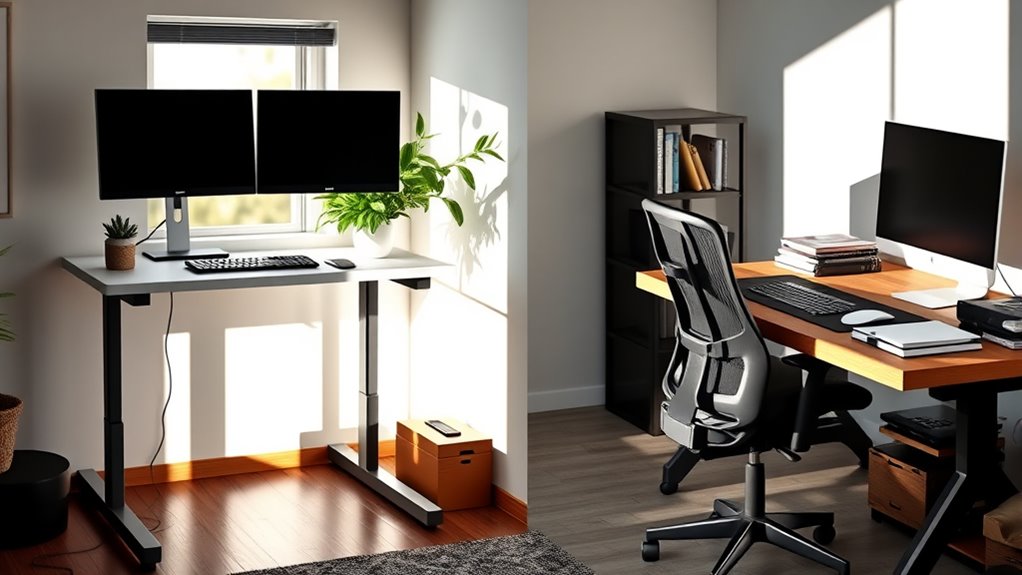
While some people worry that switching to a standing desk might distract them, many find it actually boosts their focus and productivity. Standing can help maintain energy levels and reduce fatigue, keeping you engaged with your tasks. However, there’s a potential distraction to contemplate—fidgeting or adjusting your desk might divert your attention. On the plus side, standing can facilitate better social interaction, encouraging more spontaneous conversations with colleagues. This can lead to quick problem-solving and idea-sharing. Here are some ways it impacts your work:
Standing desks can improve focus and foster spontaneous conversations that boost productivity.
- Increased alertness and concentration
- Reduced mental fatigue
- Easier collaboration and quick chats
- Less discomfort that distracts from tasks
- Avoidance of the sluggish feeling that hampers focus
- Ergonomic benefits can enhance your overall effectiveness during the workday.
- Incorporating adjustable workstation features can help optimize comfort and minimize potential distractions during long work hours.
- Using ergonomic accessories can further support your posture and reduce strain during extended periods of standing.
- Additionally, choosing the right supportive footwear can help improve comfort and reduce fatigue when using a standing desk.
Comfort and Ergonomics Considerations

Comfort and ergonomics play a big role in choosing your workspace, as easy adjustments can make a significant difference. You might find that comfort levels vary depending on your posture and setup, whether you’re sitting or standing. Considering how effortlessly you can tweak your desk to suit your needs is key to staying comfortable throughout the day. Additionally, selecting the right ergonomic accessories can further enhance comfort and support during long work hours. Incorporating smart home features, such as adjustable lighting or climate control, can also contribute to a more comfortable and personalized workspace environment. For instance, understanding how home energy options integrate with your workspace setup can help maintain a comfortable environment while optimizing energy use. Moreover, being mindful of Free Floating design principles can help create a clutter-free and adaptable workspace that promotes better posture and ease of movement. Paying attention to ergonomic design principles can ensure your workspace supports your health and productivity over time.
Ergonomic Adjustments Ease
Adjusting ergonomic features on a standing desk tends to be more straightforward than on a traditional desk, making it easier for you to customize your workspace for comfort. With simple adjustment techniques, you can quickly set the height or angle to suit your needs. Standing desks often come with user-friendly controls, allowing smooth progressions between sitting and standing. Ergonomic accessories, like keyboard trays or monitor arms, add flexibility and improve posture. To enhance your experience, consider:
- Using adjustable keyboard trays for better wrist positioning
- Adding monitor arms for ideal eye level
- Incorporating anti-fatigue mats for comfort
- Using cable management tools for neatness
- Employing footrests to reduce strain
- Being aware of best ergonomic practices to optimize your setup and prevent discomfort.
These adjustments help you create a personalized, ergonomic setup, supporting comfort and productivity throughout your workday.
Comfort Level Variability
Although standing desks offer greater ergonomic adjustability, your comfort level can still vary based on individual preferences and body needs. You might find that adding ergonomic cushions helps reduce pressure on your hips and lower back, increasing comfort during long periods of standing. A footrest can also improve posture by supporting your feet, preventing fatigue and discomfort. Additionally, ergonomic accessories are available to further customize your workspace and enhance comfort. Incorporating these body measurements ensures proper fit and reduces strain. As with all ergonomic solutions, understanding posture alignment can help prevent long-term musculoskeletal issues. Moreover, considering environmental considerations like proper workspace setup can further improve comfort and safety. However, even with these accessories, you may experience variability in comfort due to differences in body shape, height, or existing health conditions. Some people prefer sitting for certain tasks, while others find standing more natural. Personal adjustments are key to maximizing comfort, so experiment with ergonomic cushions and footrests to find the ideal setup that minimizes strain and enhances your overall ergonomic experience. Incorporating style considerations can further improve your setup by aligning with your personal preferences and work habits.
Cost and Setup Expenses
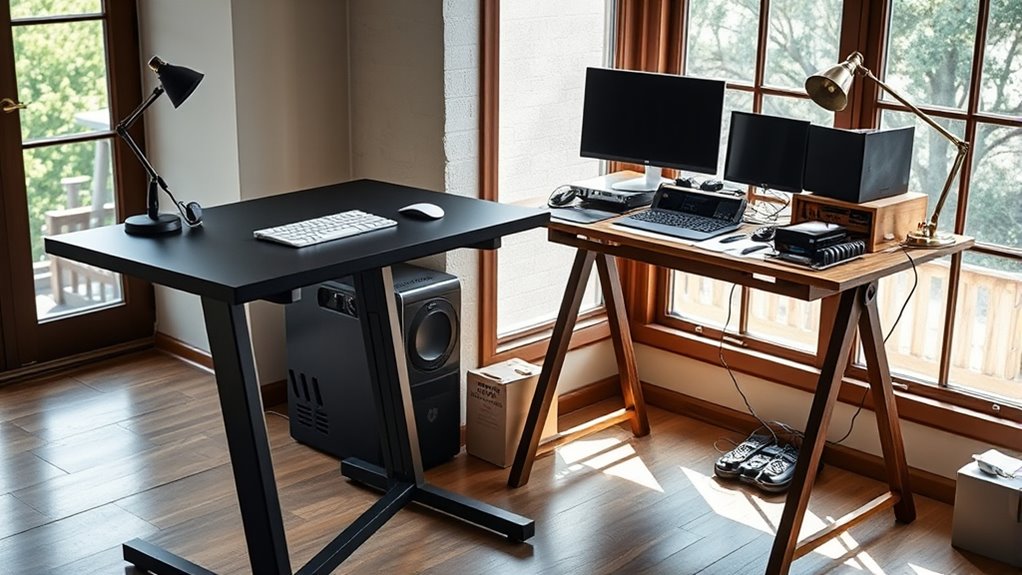
When considering a standing desk, you’ll notice the initial purchase cost can be higher than a traditional desk. Installation and setup fees may add to your expenses, especially for adjustable models. However, it’s worth weighing these upfront costs against potential long-term savings through improved health and productivity. Investing in the right total‑cost clarity can also make your setup more ergonomic and efficient, further enhancing your workspace. Additionally, understanding reliable backup power options can ensure your workspace remains functional during outages, protecting your investment and productivity. Incorporating ventilation considerations can also help maintain a comfortable environment, especially during extended use.
Initial Purchase Cost
Initial purchase costs for standing desks are generally higher than those for traditional desks, primarily due to their advanced features and sturdy build quality. While the upfront investment might seem steep, it can influence your office aesthetics, giving your workspace a modern, professional look. Plus, a well-designed standing desk can enhance your brand image, showcasing innovation and worker well-being. To help you evaluate, consider these factors:
- Premium materials and adjustable height features
- Built-in cable management and ergonomic accessories
- Long-term durability and fewer replacements
- Customizable options for style and finish
- Perception of a forward-thinking, health-conscious workplace
Although the initial cost is higher, investing in ergonomic design can lead to improved comfort and productivity over time. Additionally, the perception of the desk as a cost-effective investment over its lifespan can justify higher upfront expenses. Though pricier initially, these aspects can boost your workspace’s appeal and reflect positively on your company’s image.
Installation and Setup Fees
While standing desks often come with a higher purchase price, their installation and setup costs can add to the overall investment. Some models require professional assembly to guarantee safety and stability, which can incur extra fees. Additionally, you might need to adjust your office decor to accommodate the new setup, especially if you want to maintain an aesthetic appeal. Moving cords, attaching accessories, or customizing height mechanisms can also lead to unexpected expenses. If you opt for a desk that needs special brackets or additional furniture, these costs can quickly add up. Overall, consider these setup expenses when budgeting, as they influence the total cost of switching to a standing desk and how seamlessly it integrates into your workspace.
Long-term Financial Benefits
Investing in a standing desk can lead to significant long-term savings by reducing health-related costs and increasing productivity. Although the initial setup might seem costly, the benefits outweigh the expenses over time. With desk customization, you can tailor your workspace for better comfort, which minimizes strain and fatigue. Plus, ergonomic accessories like supportive mats and adjustable monitors help prevent injuries, saving you money on medical bills. Consider these long-term benefits:
- Lower healthcare costs due to improved posture
- Increased productivity reducing time off
- Fewer ergonomic-related injuries
- Extended lifespan of your furniture with proper desk customization
- Reduced need for frequent replacements or upgrades
Making this investment pays off as you experience fewer health issues and enhanced efficiency, ultimately saving you money and supporting your well-being for years to come.
Long-Term Effects on Body Posture
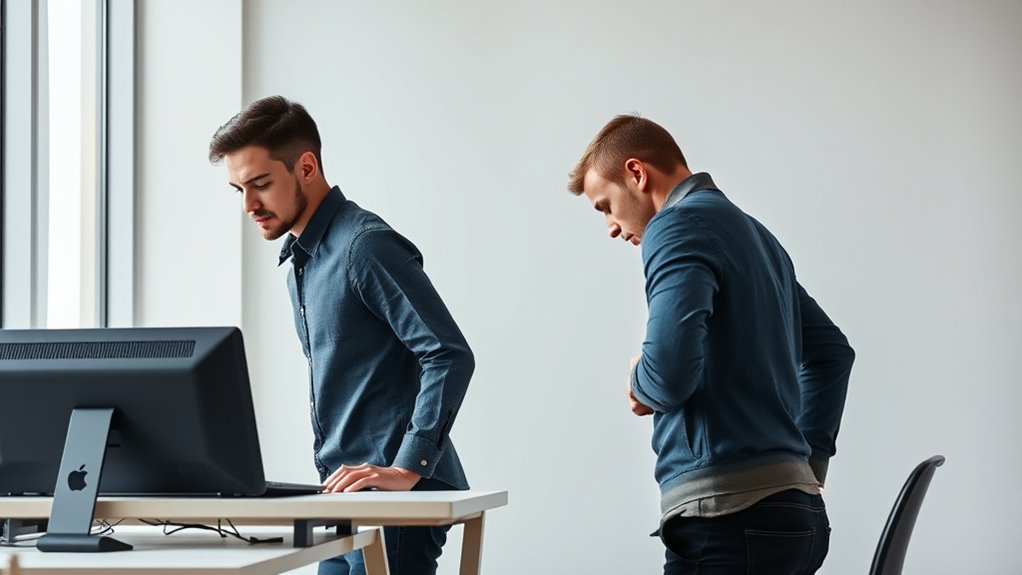
Over time, the type of desk you choose can markedly influence your body posture and overall musculoskeletal health. Standing desks promote better posture correction by encouraging you to stand upright and align your spine properly. This helps reduce the risk of slouching and uneven weight distribution that can develop with traditional desks. Conversely, sitting for long periods can strain your spinal health, leading to discomfort and long-term issues like herniated discs. Using a standing desk may support a more natural spinal curve and strengthen postural muscles, but only if you maintain proper ergonomics. Regular movement and posture awareness are essential. Ultimately, your choice impacts how well your body maintains healthy alignment over years, making it vital to consider long-term spinal health when selecting your workstation.
User Experiences and Case Studies
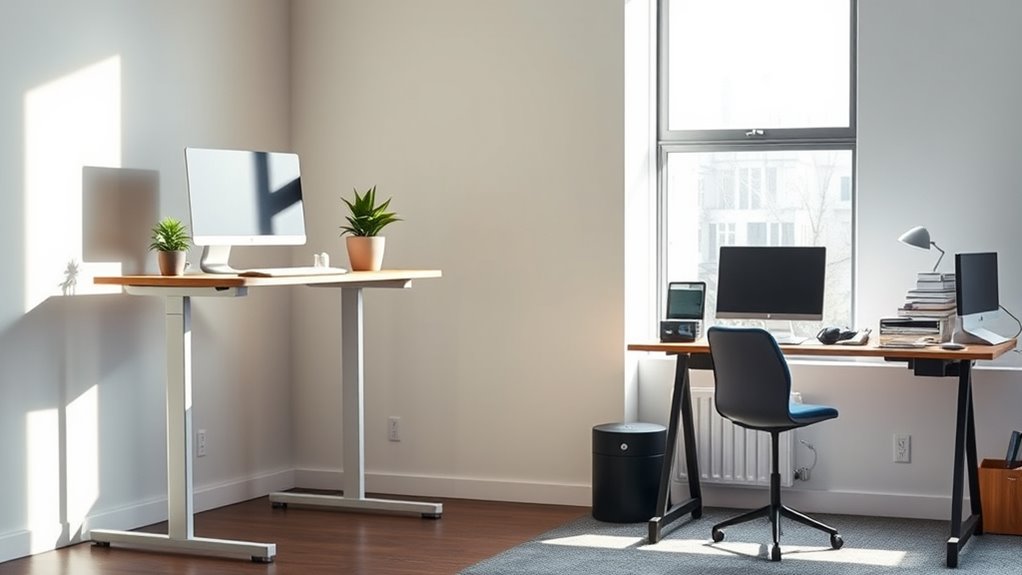
Many users report noticeable improvements in comfort and productivity after switching to a standing desk, with firsthand accounts highlighting reduced back pain and increased energy. As a remote worker, you might find that standing helps break up long hours at your computer. Case studies show that integrating ergonomic accessories, like anti-fatigue mats and adjustable monitor stands, enhances the experience. People also note better focus and less fatigue over the day. Some shared experiences include:
- Feeling more alert during virtual meetings
- Experiencing less shoulder strain
- Finding it easier to stretch and move around
- Improving posture with ergonomic tools
- Maintaining energy levels longer
These real-world accounts suggest that, with the right setup, a standing desk can truly boost your remote work routine.
Making the Decision: Is It Right for You?
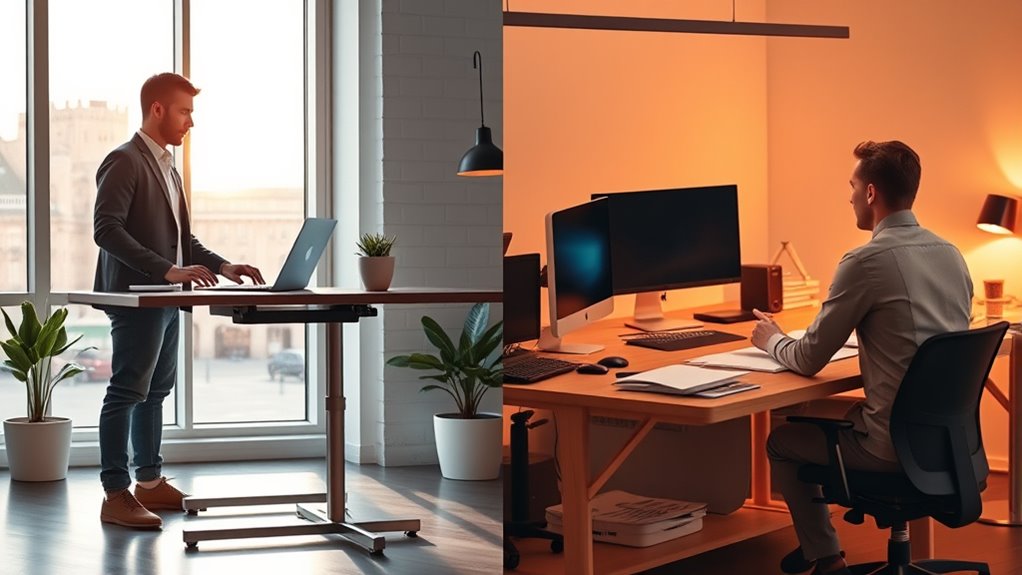
Deciding whether a standing desk is right for you depends on your specific work habits, health considerations, and personal preferences. If you value desk aesthetics, a sleek standing desk can modernize your workspace. It can also positively impact the environment by reducing energy use if you opt for eco-friendly materials. However, it’s essential to assess whether standing for long periods suits your comfort, or if you prefer the familiarity of a traditional desk. Consider these factors:
| Aspect | Consideration |
|---|---|
| Desk aesthetics | Modern design vs. traditional look |
| Health impact | Reduced back pain vs. potential fatigue |
| Environmental impact | Eco-friendly materials matter |
| Personal comfort | Standing vs. sitting preferences |
| Work habits | Frequency of movement and breaks |
Frequently Asked Questions
How Do Standing Desks Affect Long-Term Mental Health?
Standing desks can positively affect your long-term mental health by boosting mental health benefits and enhancing cognitive performance. When you switch between sitting and standing, you reduce stress and improve focus, which helps prevent burnout and mental fatigue. Over time, this variation promotes better mood stability and mental clarity. By incorporating a standing desk into your routine, you support your overall well-being and keep your mind sharp for the long haul.
Are There Specific Brands or Models Recommended for Tech Workers?
You should consider brands like Fully and UPLIFT, which offer excellent ergonomic features tailored for tech workers. These models promote better posture and reduce strain, making them a smart investment. If you’re on a budget, look into Vari or Flexispot—they provide affordable options with adjustable heights and sturdy designs. Prioritize ergonomic features like adjustable height, smooth progression, and stable construction to guarantee comfort and productivity during long work hours.
Can Standing Desks Help Reduce Overall Sedentary Behavior?
They say, “A little change goes a long way,” and standing desks can definitely help reduce your sedentary behavior. By alternating between sitting and standing, you experience ergonomic benefits and posture improvement, which can lessen discomfort and boost energy. Incorporating a standing desk encourages movement, making your workday more active and less sedentary, ultimately supporting better health and productivity.
What Are Common Mistakes to Avoid When Transitioning to a Standing Desk?
When moving to a standing desk, avoid common mistakes like neglecting ergonomic adjustments and not customizing your desk height. You should set your desk so your elbows are at a 90-degree angle and your monitor is at eye level. Don’t ignore discomfort; adjust your desk regularly and take breaks. Proper ergonomic setup ensures comfort and reduces strain, making your switch to standing more effective and sustainable.
How Do Standing Desks Impact Collaboration and Communication in Teams?
Standing desks can positively influence office dynamics and team productivity by encouraging more spontaneous interactions and open communication. When you switch to a standing desk, you’re more likely to engage with colleagues and collaborate seamlessly. However, be mindful that standing can sometimes cause fatigue, which might hinder collaboration. Overall, with proper breaks, standing desks can foster a more energetic environment, boosting team synergy and effectiveness.
Conclusion
Choosing between a standing and traditional desk is like finding the right pair of shoes—you need comfort, support, and the right fit. While standing desks can boost your health and focus, they aren’t a one-size-fits-all solution. Weigh the benefits and risks carefully, and consider your work habits. Ultimately, making the right choice is about tuning into your body’s signals—like a compass guiding you toward better comfort and productivity every day.