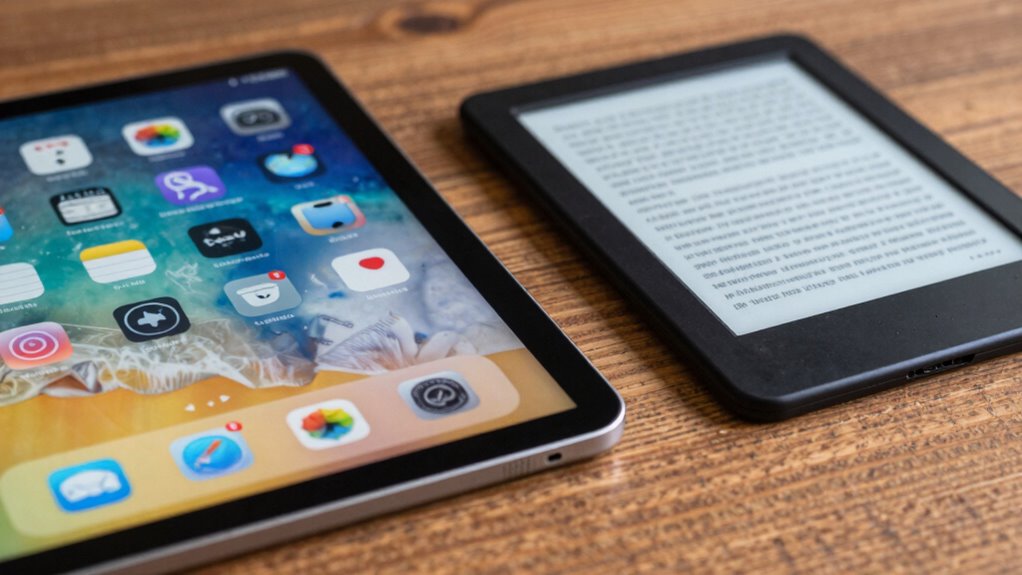

If you already have a tablet, you might wonder if a Kindle or e-reader is necessary. Tablets are versatile, supporting apps, videos, and browsing, but they produce glare and drain batteries quickly. E-readers deliver a glare-free, paper-like display that’s easier on your eyes and lasts weeks on a single charge. Their compact design makes them ideal for long, comfortable use. Keep exploring to discover which device better fits your lifestyle and reading habits.
Key Takeaways
- E-readers like Kindle offer glare-free screens that are more comfortable for long reading sessions compared to tablets.
- Tablets provide multimedia, apps, and internet access, making them more versatile but less specialized for reading.
- E-readers typically have longer battery life, often lasting weeks, unlike tablets which require daily recharging.
- For outdoor reading or bright environments, e-ink displays outperform tablets by reducing glare and eye fatigue.
- If you mainly read e-books, a dedicated Kindle or e-reader enhances comfort; tablets are better if you want multifunctionality.
Top picks for "tablet reader really"
Open Amazon search results for this keyword.
As an affiliate, we earn on qualifying purchases.
Display Technology and Reading Comfort
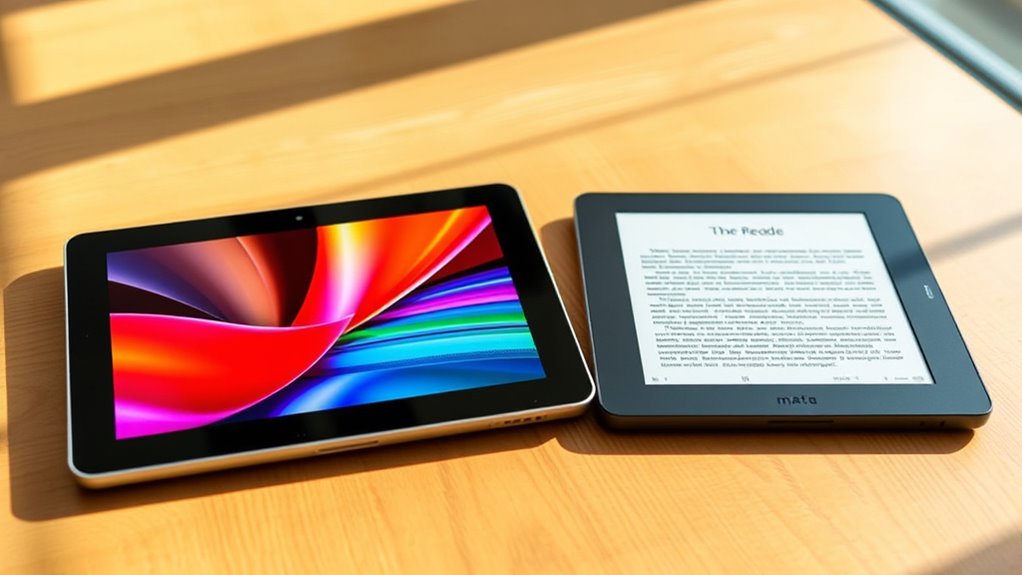
When comparing tablets and e-readers, display technology plays a crucial role in reading comfort. Tablets often have screens that produce glare, making it harder to read in bright sunlight or well-lit rooms. This can strain your eyes and reduce overall comfort. E-readers, on the other hand, use e-ink displays that mimic paper, considerably reducing screen glare and providing a more natural reading experience. Additionally, e-readers typically offer extensive font customization options, allowing you to adjust size, style, and spacing to suit your preferences. This flexibility enhances readability and reduces eye fatigue. With a focus on display technology, e-readers deliver a more comfortable and eye-friendly reading experience than most tablets, especially during long reading sessions or outdoor use. Embracing innovative display technology can further improve your reading experience by providing clearer visuals and reducing eye strain during extended use. As technology advances, energy-efficient displays are increasingly being integrated into newer models, offering even better comfort and sustainability. Incorporating adaptive brightness features can also help optimize screen visibility in various lighting conditions, further enhancing reading comfort. Moreover, advancements in screen resolution contribute to sharper text and images, making reading even more pleasant.
Battery Life and Usage Duration
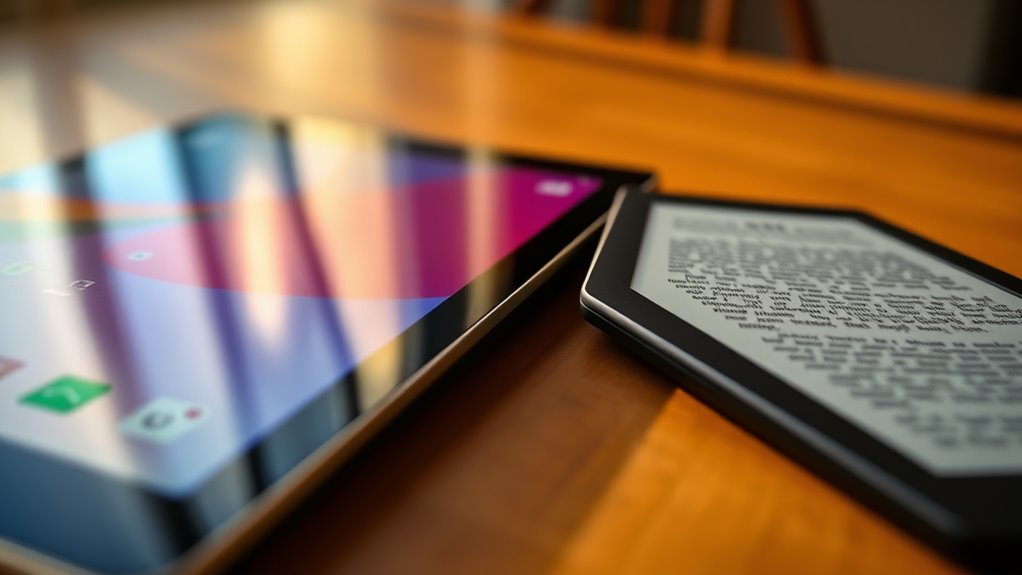
Battery life is a key factor to contemplate when choosing between tablets and e-readers. E-readers typically offer longer battery life because they use e-ink screens that consume minimal power, allowing you to read for weeks without recharging. Tablets, with their vibrant displays and multi-purpose features, often need daily charging. Screen glare can drain your device’s battery faster, especially in bright sunlight or with high brightness settings. An ergonomic design also influences usage duration; lighter, well-balanced e-readers reduce fatigue during extended reading sessions. If you prioritize long-lasting battery life for reading without frequent recharges, an e-reader is the better choice. Additionally, power consumption varies significantly between the two device types, impacting how often you’ll need to recharge. For extended reading sessions, the ergonomic design of an e-reader can also make a noticeable difference in comfort and usability. Tablets are more versatile but generally require more frequent charging, especially with intensive use or bright screens.
Portability and Device Size
Portability and device size play a significant role in choosing between a tablet and an e-reader. If you’re always on the go, a compact e-reader fits easily into your bag, making it more convenient to carry around. E-readers are typically lighter, with better weight distribution, so they won’t strain your hand during long reading sessions. Unlike tablets, e-readers minimize screen glare, providing a more comfortable reading experience outdoors or in bright light. Tablets, however, tend to be larger and heavier, which can be cumbersome to hold for extended periods. Their size also means they might not slip easily into small bags or pockets. Consider how you’ll carry your device daily, and whether screen glare or weight distribution impacts your comfort and convenience. Additionally, the air fryer technology used in e-readers helps reduce eye strain during prolonged reading, making them a more comfortable option for extended use.
Content Ecosystems and Compatibility
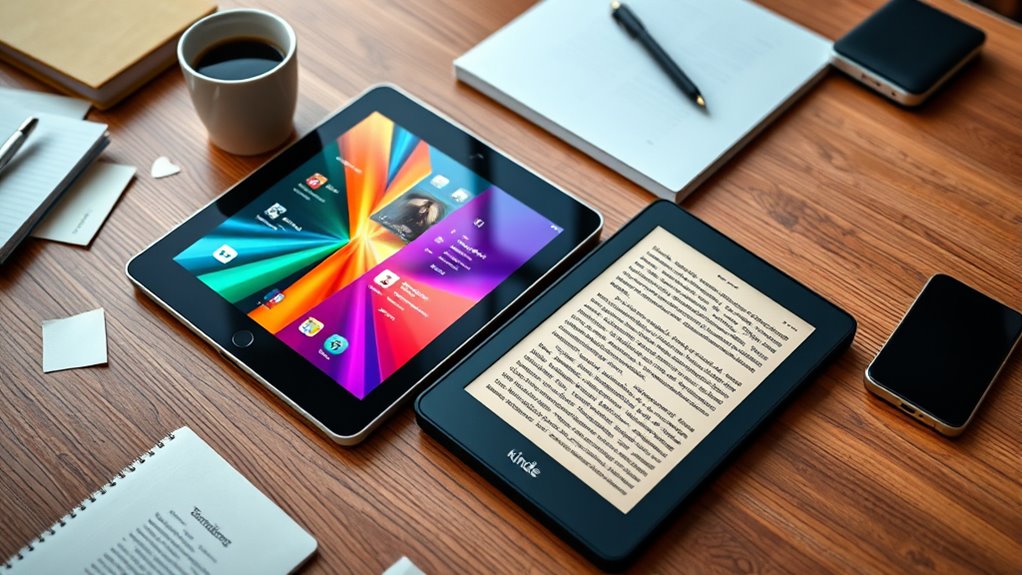
Choosing between a tablet and an e-reader often depends on the content ecosystems they support. If you rely on specific app ecosystems or cloud integration, your choice becomes clearer. Tablets typically offer access to a wide range of apps and seamless cloud syncing, making it easy to access diverse content. E-readers, on the other hand, usually work within a closed ecosystem focused on e-books and PDFs, limiting compatibility. Here’s a quick comparison:
| Feature | Tablet | E-Reader |
|---|---|---|
| App Ecosystem | Extensive (multiple stores) | Limited (mainly e-book apps) |
| Cloud Integration | Robust (multiple services) | Basic (primarily for downloads) |
| Compatibility | Broad (various formats) | Narrow (optimized for e-books) |
| Content Variety | Wide (books, videos, apps) | E-books, PDFs only |
| Syncing Capabilities | Easy across devices | Usually limited to e-books |
A key difference is that tablets often support a wide range of multimedia formats, unlike e-readers which are primarily designed for text-based content. Additionally, the content ecosystem you choose can significantly affect your overall experience, especially if you prefer diverse media types beyond just reading material. The availability of additional features like note-taking and web browsing can further influence your decision. Moreover, some e-readers now support basic internet browsing, but it remains limited compared to tablets. Understanding your content needs can help determine which device better fits your lifestyle.
Additional Features and Functionality
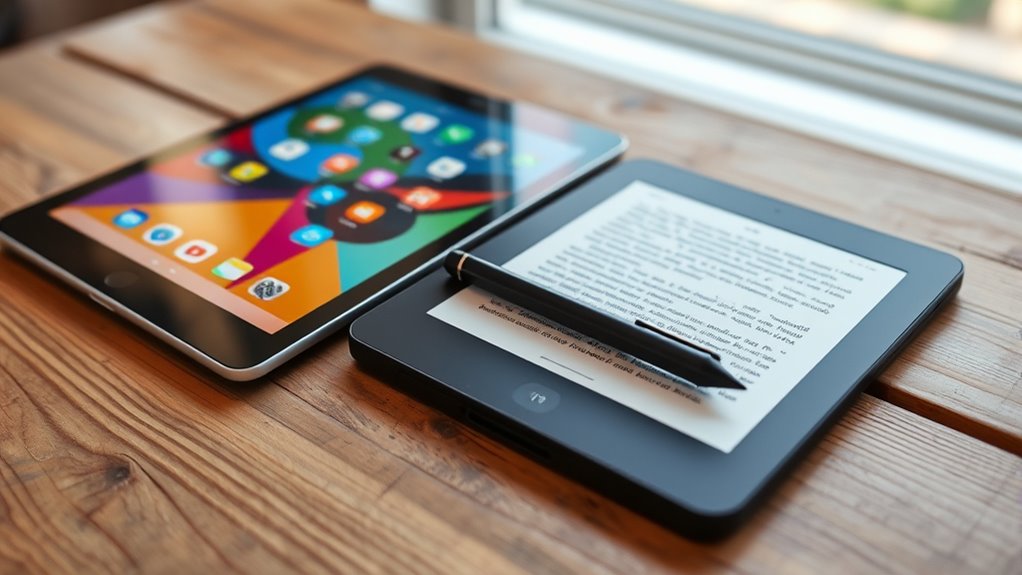
While both tablets and e-readers offer basic functionalities like reading and browsing, their additional features can substantially influence your experience. Tablets excel with accessory options such as styluses, keyboards, and external storage, which enhance productivity and creativity. They also support extensive software customization, allowing you to personalize interfaces, install apps, and adjust settings to suit your preferences. This flexibility makes tablets suitable for a variety of multimedia tasks, from watching videos to editing documents. E-readers, on the other hand, focus mainly on reading with limited extra features, often lacking extensive accessory options or customization options. This makes tablets more versatile for multimedia, note-taking, and multitasking. However, if your primary goal is reading, the simplicity and tailored experience of an e-reader might be enough. Consider what extra functionalities matter most to you before deciding. Smart home integration is another aspect to consider, as tablets can sometimes connect with home automation systems to control lighting, climate, or security remotely. Additionally, some tablets offer professional services like project management support that can be beneficial for certain users. Moreover, the battery life of e-readers typically surpasses that of tablets, making them ideal for long reading sessions without frequent recharging. Furthermore, the security features available on tablets can provide added peace of mind for sensitive or personal information.
Cost and Investment Considerations
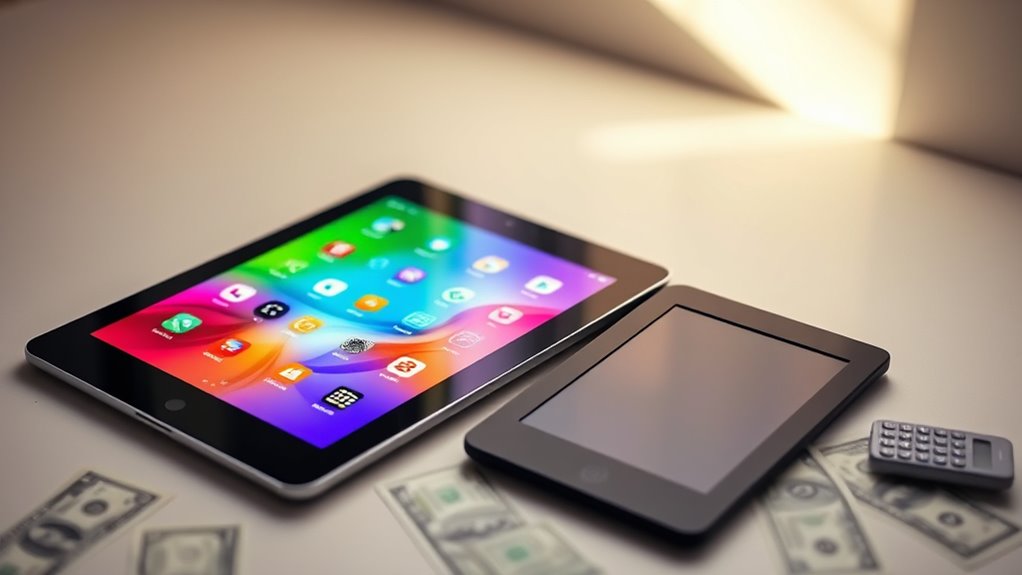
When comparing tablets and e-readers, considering the costs involved is key to making an informed choice. The price comparison between the two devices varies considerably, especially when you look at upfront costs. Tablets often have a higher initial price but offer multiple functionalities, while e-readers are generally more affordable and specialized for reading. Think about how much you’re willing to invest upfront and whether the device’s features justify the cost. If you’re on a tight budget, an e-reader might be the smarter choice. However, if you need a device that supports apps, browsing, and media, a tablet’s higher price could be justified. Additionally, considering cybersecurity and data protection when using these devices can influence your overall investment decision. It’s also important to evaluate the potential risks associated with digital security breaches, especially if you plan to store sensitive information on your device. Implementing proper security measures can help mitigate these risks and protect your personal data. Being aware of device vulnerabilities can further help you safeguard your digital information and maintain privacy across both device types. Moreover, understanding the cost of repairs and warranty options can also impact your long-term investment in either device type.
Frequently Asked Questions
Can I Read PDFS Comfortably on a Tablet Compared to an E-Reader?
Yes, you can read PDFs comfortably on a tablet. Its adjustable screen brightness helps reduce eye strain, especially in different lighting conditions. Plus, you can customize fonts and zoom easily to improve readability. Unlike e-readers, tablets handle high-resolution PDFs smoothly, offering a richer experience. So, if you prioritize adjustable settings and better visual quality, a tablet makes reading PDFs more comfortable than traditional e-readers.
Do Tablets Cause More Eye Strain Than Dedicated E-Readers?
Tablets can cause more eye strain than dedicated e-readers because their screen brightness and blue light emission can tire your eyes. If you lower the brightness and use features like night mode, you improve eye comfort. However, prolonged reading on a tablet might still lead to more discomfort compared to the matte, glare-free screens of e-readers. So, consider adjusting settings for a more comfortable reading experience.
Which Device Offers Better Access to Academic or Professional Content?
You’ll find tablets excel in providing better access to academic or professional content, with over 60% of students using them for digital libraries. Their versatility allows quick navigation, note-taking, and multimedia integration, enhancing content accessibility. Unlike e-readers limited mainly to text, tablets support PDFs, research articles, and complex data, making them ideal for study and work. If you need frequent access to diverse content, a tablet is your best choice.
Are There Specific Apps That Work Better on Tablets for Reading Purposes?
You’ll find that many reading apps work better on tablets because of their customization options. Apps like Kindle, Apple Books, and Google Play Books let you adjust font size, background color, and brightness for a personalized reading experience. Tablets also support features like highlighting, note-taking, and multimedia integration, making them more versatile for reading purposes. So, if you want more control over your reading environment, a tablet with these apps is a great choice.
How Do Privacy and Security Differ Between Tablets and E-Readers?
Over 80% of e-readers use data encryption, making them more secure for reading. You’ll notice that e-readers often have simpler security features like user authentication, which minimizes risks. Tablets, however, handle more personal data and apps, so they require robust security measures. This difference means e-readers generally offer better privacy, while tablets give you more flexibility but demand careful security settings to keep your data safe.
Conclusion
So, if you want the sleek simplicity of dedicated reading without distractions, a Kindle’s perfect. But if you crave versatility—browsing, streaming, gaming—a tablet’s your all-in-one companion. Think of it as choosing between a focused reader and a multitasking powerhouse. Neither is inherently better; it’s about what suits your reading habits and lifestyle. Ultimately, your choice hinges on whether you value a dedicated device or prefer everything in one sleek, versatile package.