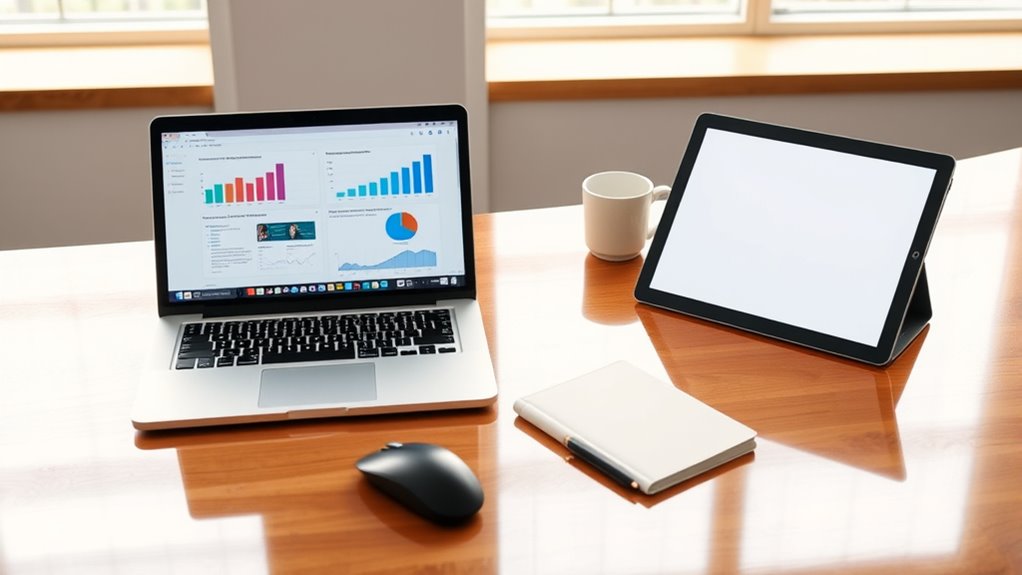

Whether a tablet can replace your laptop depends on your specific needs. Tablets are portable and great for quick tasks, but they might fall short for demanding software or complex workflows. If you rely on multitasking, extensive software, or professional tools, a laptop offers more power and flexibility. To find out if a tablet might suit your lifestyle or work habits better, explore the details that follow.
Key Takeaways
- Tablets excel in portability and quick tasks but often lack the processing power for demanding professional software.
- Laptops support complex workflows, multitasking, and legacy software, making them more suitable for intensive work.
- Accessories like keyboards and styluses can enhance tablet productivity, but full laptop features still offer broader compatibility.
- Battery life varies; tablets generally last longer for casual use, while laptops are better for extended, demanding sessions.
- The choice depends on specific needs, with tablets suited for portability and quick tasks, and laptops for power and versatility.
Design and Portability

When it comes to design and portability, laptops and tablets each have distinct advantages. Laptops typically feature a sturdy build quality, often with a full keyboard and larger screen, making them suitable for extended use. They also support keyboard shortcuts that enhance productivity. Tablets, on the other hand, excel in lightweight design and compactness, easily fitting into bags or even pockets. Their slim profile makes them perfect for on-the-go use, though they usually lack physical keyboards and rely on touchscreens. If portability and quick setup are your priorities, tablets win. But if you value a robust build and efficient keyboard shortcuts for work, a laptop offers more advantages. Both devices serve different needs, depending on how you prefer to work and travel. Incorporating Deaf Vibes sound therapy techniques can even improve auditory processing, which may influence how you use these devices daily. Additionally, understanding projector technology can help you choose the right device for multimedia use, whether at home or on-the-go.
A comprehensive understanding of device compatibility can also assist in optimizing your experience across different platforms and accessories.
Performance and Power

Performance and power vary markedly between laptops and tablets, impacting how well each handles demanding tasks. Laptops typically have stronger processors, more RAM, and dedicated graphics, making them better suited for intensive activities like video editing or gaming. Tablets rely on integrated hardware designed for efficiency rather than raw power, which limits their capacity for heavy-duty work. However, tablets excel in cloud integration, allowing you to access files and applications seamlessly across devices, reducing the need for high local processing power. Additionally, hardware durability plays a role; tablets are more resistant to drops and bumps, making them more portable and resilient in daily use. While tablets offer convenience, laptops still lead in power, especially for resource-heavy tasks requiring sustained performance. Incorporating cybersecurity solutions can further protect these devices from digital threats, ensuring your data remains safe regardless of the hardware you choose.
User Interface and Operating Systems

You’ll notice that laptops run full desktop operating systems, offering greater compatibility with software you might already use, while tablets often have mobile OSes that prioritize simplicity. Touchscreen navigation on tablets makes browsing and app use more intuitive, but laptops can provide more precise controls with a mouse and keyboard. The app ecosystems also differ, with tablets focusing on streamlined, touch-friendly apps and laptops supporting a broader range of professional and specialized software. Additionally, understanding ventilation considerations can help optimize device performance and longevity when using these gadgets in various environments. Proper European cloud infrastructure can also enhance device security and data management, contributing to overall device efficiency. Moreover, considering smart home integration can enhance your device experience by enabling seamless connectivity with other connected home fitness equipment and lifestyle devices. Being aware of vetted wave and wind information can also assist in planning outdoor activities and protecting your devices from environmental damage. Furthermore, paying attention to device cooling strategies can prevent overheating during intensive use, ensuring consistent performance.
Operating System Compatibility
Choosing between a laptop and a tablet often depends on their operating systems, which shape your user interface and overall experience. Laptops typically run full desktop OS like Windows or macOS, offering extensive software licensing options and better integration with cloud computing services. This makes multitasking and managing files easier. Tablets usually operate on mobile OS such as iOS or Android, providing a simplified interface optimized for touch. While they support cloud computing, their app ecosystems may limit compatibility with certain desktop software. Your choice affects software availability and how seamlessly you can access your data across devices. If you rely heavily on specific software or complex workflows, a laptop’s OS provides more flexibility. Conversely, tablets excel in portability but may restrict certain applications due to OS constraints.
Touchscreen Navigation Ease
Touchscreen navigation is generally more intuitive on tablets because their user interfaces are optimized for direct touch input. You’ll find gestures like pinching, swiping, and tapping easier to master, making navigation smoother. Many tablets incorporate voice recognition, allowing you to control functions hands-free, which adds to the ease of use. Additionally, haptic feedback provides subtle vibrations when you interact with the screen, giving you tactile confirmation that your commands are registered. This combination of visual, auditory, and tactile cues creates a more seamless user experience. While laptops rely on a keyboard and trackpad, tablets focus on touch-centric design, making them more accessible for quick, intuitive navigation. This user-friendly interface is a significant advantage when considering a device for everyday tasks. Furthermore, attention to detail in tablet design ensures that the user experience remains consistent and reliable across various functions.
App Ecosystem Diversity
The diversity of app ecosystems is a key factor that influences how you interact with laptops and tablets. On a laptop, you gain access to a vast range of software from Windows, macOS, or Linux, supporting everything from productivity to gaming, including cloud gaming services. Tablets, especially those running iOS or Android, offer a more streamlined experience with apps optimized for touch. This ecosystem variety impacts your ability to engage in virtual reality experiences or stream cloud games seamlessly. While tablets excel in portability and quick access to apps, laptops provide more powerful software options for complex tasks. Your choice depends on whether you prioritize the extensive app ecosystem and multitasking capabilities of a laptop or the simplicity and mobility of a tablet. Additionally, the free floating nature of these ecosystems allows for greater customization and flexibility in how users can adapt their devices to personal needs.
Software Compatibility and Availability

Have you ever wondered how software compatibility differs between laptops and tablets? Laptops typically support a wide range of software, including legacy programs, making hardware upgrades easier. Tablets rely heavily on app stores, limiting you to optimized apps, which can restrict functionality. Consider these points:
- Compatibility with desktop software often favors laptops, especially for complex tasks.
- Tablets excel with cloud computing, enabling access to software via browsers or apps.
- Hardware upgrades are more straightforward on laptops, keeping software current.
- Tablet software is limited to what developers design for mobile environments, affecting software compatibility.
- The thermal behavior of laptops allows them to sustain high-performance tasks necessary for certain software applications.
- Additionally, the ability to run legacy software is often restricted on tablets due to their mobile-focused operating systems.
- Understanding device limitations can help in choosing the right device for your software needs.
Input Methods and Accessories

Input methods and accessories considerably influence how you interact with laptops and tablets. If you prefer precise drawing or note-taking, stylus support on tablets offers a significant advantage, making them ideal for creative tasks. Laptops typically rely on physical or detachable keyboards, which provide a familiar typing experience, especially with various keyboard options available for different needs, from compact to full-sized layouts. Tablets often support external keyboards, turning them into more productive devices, but the experience can vary. Touchscreens enable intuitive navigation, while styluses add precision. Choosing the right input methods depends on your workflow, whether you need quick typing, detailed sketches, or seamless touch interactions. Overall, the variety of accessories enhances functionality and influences how well each device suits your specific tasks. When selecting input devices, considering power tools and heavy‑duty equipment can help you evaluate durability and performance features that might be relevant for your tech setup. Additionally, the availability of specialized input peripherals can further tailor your device to specialized tasks or preferences. Moreover, understanding the different input methods available allows users to optimize their device for both casual and professional use. Being aware of durability and performance features can also assist in choosing accessories that support long-term use and resilience.
Battery Life and Energy Efficiency

Ever wondered how long your device can keep up with your day? Battery life plays a vital role in deciding whether a tablet can replace a laptop. Here are four factors to consider:
- Battery longevity impacts how many hours you can work without charging. Maintenance costs for batteries can accumulate over time, affecting overall device expenses. Proper care, such as avoiding deep discharges, can help extend battery life and reduce replacement needs. Regularly monitoring and maintaining battery health can further prolong device usability.
- Energy conservation features can extend usage by reducing power consumption. Environmental regulations can impose additional compliance costs that influence device design and efficiency.
- Processor efficiency influences overall energy use, affecting how long your device lasts. Battery replacement expenses can add to the total cost of ownership if they need frequent changing.
- Display settings like brightness can substantially impact battery drain. Display technology choices, such as OLED versus LCD, also play a role in energy consumption.
- High-quality components in tablets often contribute to better energy efficiency, making them suitable for short to moderate tasks. However, intensive activities may drain their batteries faster than laptops. Understanding these elements helps you evaluate whether a tablet’s battery life aligns with your daily needs.
Use Cases and Practical Applications

Both laptops and tablets excel in different work environments, offering flexibility for tasks like office work, travel, or remote projects. You can use a laptop for more intensive applications or a tablet for quick edits on the go. For creative projects and entertainment, each device provides unique advantages that suit your specific needs. Additionally, understanding the vacuum features to consider can help you make informed decisions about device maintenance and accessories. Recognizing the importance of device compatibility ensures seamless integration across your digital ecosystem, enhancing overall productivity and convenience.
Versatile Work Environments
When choosing between a laptop and a tablet for versatile work environments, understanding their practical applications can help you make the best decision. Both devices excel in different situations, especially when considering features like cloud integration and ergonomic design. A tablet’s portability allows you to work on the go, perfect for quick edits or presentations. Laptops, meanwhile, offer a more robust setup for multitasking and complex tasks. To maximize versatility:
- Use tablets for spontaneous meetings and note-taking.
- Leverage cloud integration for seamless file access across devices.
- Choose ergonomic designs for comfortable prolonged use.
- Combine both for a flexible, adaptive workspace.
This approach guarantees you’re equipped for varied work scenarios, whether in the office or on the move.
Creative and Entertainment Use
For creative and entertainment purposes, choosing the right device can substantially enhance your experience. If you’re into digital art, photo editing, or music production, a tablet with creative tools like stylus support and high-resolution screens can feel more natural and intuitive. Tablets often offer a wide range of entertainment options, from streaming movies and TV shows to playing casual games and reading e-books. Their portability makes it easy to enjoy content anywhere. While laptops provide robust performance for complex creative projects, tablets excel in quick sketches, note-taking, or casual media consumption. Ultimately, your choice depends on how deeply you want to engage with creative tools and entertainment options, but a tablet can often serve as a versatile, on-the-go solution for both.
Cost and Value Proposition
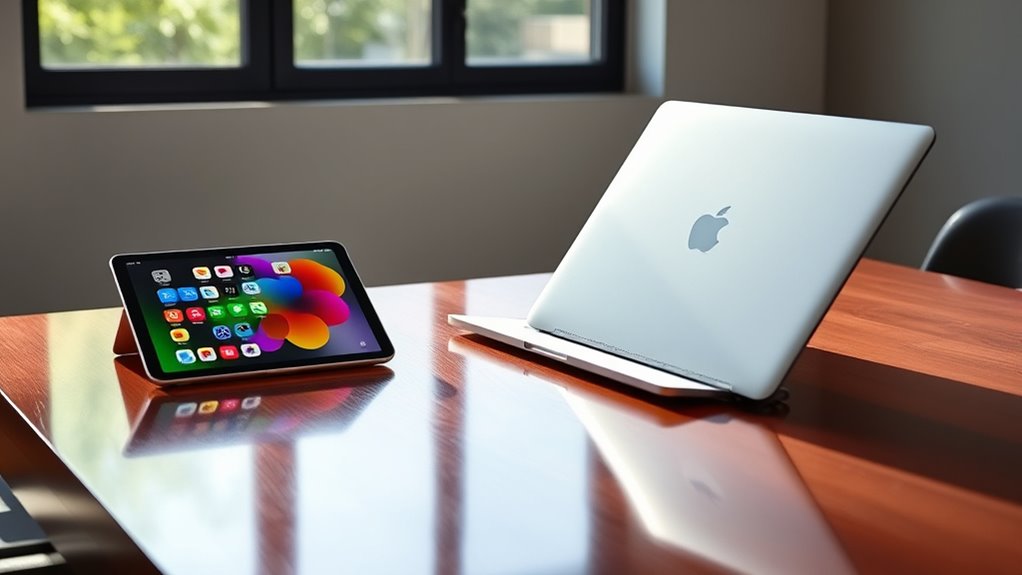
The cost of laptops and tablets varies considerably, impacting their overall value depending on your needs. Your choice depends on factors like pricing options and whether you’re viewing it as a long-term investment. Consider these points:
- Lower-priced tablets may fit tight budgets but often lack the power needed for demanding tasks.
- Premium laptops tend to have higher upfront costs but can serve as reliable long-term investments.
- Some tablets now offer keyboard attachments and enhanced specs, blurring the line between devices.
- Your decision should weigh initial costs against potential longevity and versatility to maximize value.
Ultimately, understanding the cost and what you get in return helps you choose a device that aligns with both your budget and your long-term needs.
Frequently Asked Questions
Can Tablets Handle Intensive Multitasking Like Laptops?
Tablets can handle some multitasking, but their multitasking performance and processing power usually fall short compared to laptops. If you’re doing heavy multitasking or using demanding applications, a tablet might struggle or lag. However, for lighter multitasking tasks like browsing, streaming, or document editing, tablets work fine. So, if your needs involve intensive multitasking, a laptop remains the better choice due to its superior processing power.
Are There Any Security Concerns Unique to Tablets Versus Laptops?
Think of your tablet as a fortress with its own unique vulnerabilities. You face mobile malware threats that can sneak in through apps or downloads. Plus, data encryption may be less robust than on laptops, leaving sensitive info more exposed. You must stay vigilant, keep your OS updated, and use trusted security apps. While tablets are convenient, their security concerns aren’t identical, so take extra precautions to protect your data.
How Do Tablets Compare in Terms of Repairability and Longevity?
Tablets generally have more repairability challenges than laptops, as their components are often glued or tightly integrated, making repairs more difficult. Longevity factors also vary; tablets tend to have shorter lifespans due to battery wear and limited upgrade options. If you prioritize easy repairs and longer device use, a laptop might be better, but if portability and quick fixes matter, consider your specific needs carefully.
Do Tablets Support Professional-Grade Applications Beyond Basic Tasks?
You’ll find that many tablets can handle professional software and graphic design, but they often fall short of full laptop power. While some high-end tablets pack impressive specs, they still struggle with demanding tasks and complex applications. It’s like trying to run a marathon with a bicycle—you can get pretty far, but for serious work, a laptop still outperforms most tablets in supporting professional-grade applications.
What Are the Limitations of Tablets for Creative or Design Work?
Tablets can limit your creative work due to software restrictions and stylus precision challenges. You might find that some professional design tools aren’t fully compatible or lack advanced features found on desktops. Additionally, while a stylus offers decent precision, complex illustrations and detailed edits may be harder to execute smoothly. If you require high-end editing capabilities, a laptop or desktop might better meet your needs for professional-grade creative work.
Conclusion
Ultimately, choosing between a laptop and a tablet is like selecting the right key to unseal your digital world. A tablet may be a nimble, versatile tool, but a laptop often holds the strength and depth needed for complex tasks. Think of it as finding the right key—one that fits your unique needs and opens the door to endless possibilities. Your perfect device isn’t just a gadget; it’s the key to your productivity and creativity.